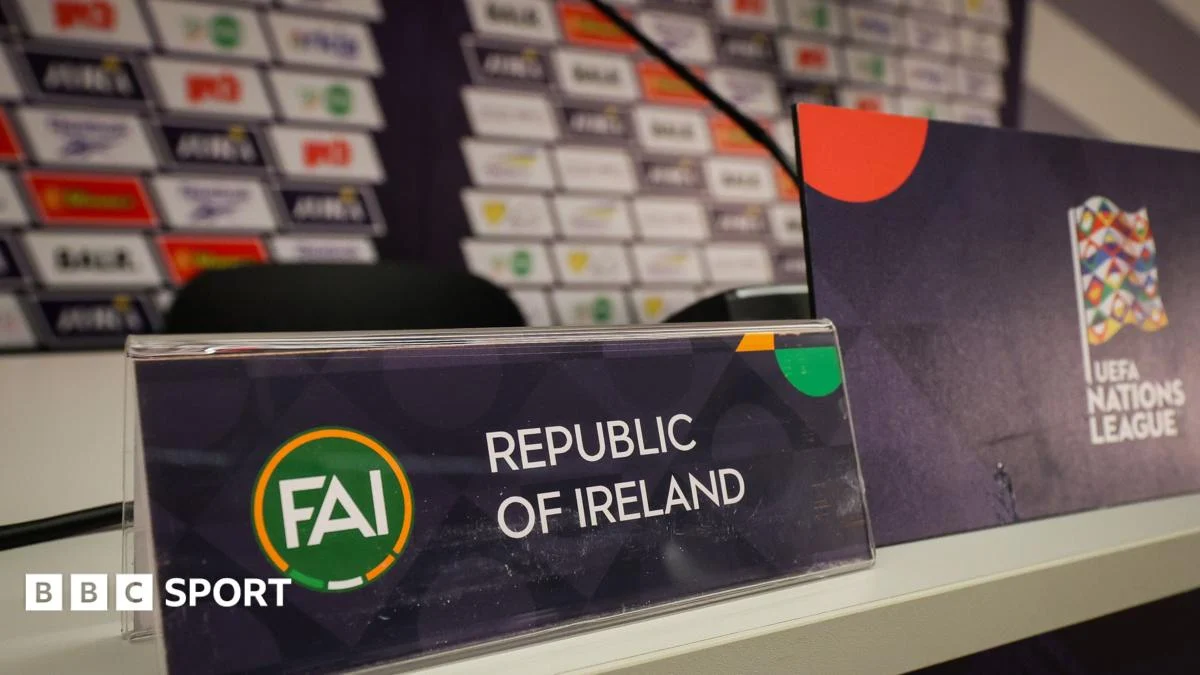
The Republic of Ireland’s pre-match news conference, slated for Sunday ahead of their Uefa Nations League fixture against Israel in Hungary, has been unexpectedly delayed. This postponement comes at a critical juncture, with significant pressure mounting on the team to withdraw from the scheduled games due to the ongoing Israel-Gaza war. The "Stop The Game" campaign, spearheaded by the advocacy group Irish Sport for Palestine, has gained considerable traction, drawing support from prominent figures within Irish football. The circumstances surrounding the delay have only amplified the uncertainty and tension surrounding this controversial fixture.
Mounting Pressure and a Divided Footballing Landscape
The Uefa Nations League fixture, scheduled to be held in Debrecen, Hungary, is the first of two encounters between the Republic of Ireland and Israel in Group B3. The return leg is slated for October 4th in Bačka Topola, Serbia. The controversy ignited immediately after the draw placed these two nations in the same group, prompting widespread condemnation and calls for a boycott from various quarters of Irish society.
The "Stop The Game" campaign has been particularly vocal, urging the Football Association of Ireland (FAI) and the national team to sever ties with these fixtures as a symbolic protest against the escalating violence and humanitarian crisis in Gaza. Their campaign highlights the devastating impact of the conflict, citing figures of civilian casualties and the destruction of infrastructure. The group’s efforts have resonated with a segment of the public and garnered backing from influential figures in Irish football.
Among those who have publicly supported the boycott are former Republic of Ireland manager Brian Kerr and ex-international player James McClean. Kerr, known for his outspoken nature and deep connection to Irish football, has articulated his stance on moral grounds, emphasizing the need for solidarity and a refusal to participate in events that could be perceived as tacit approval of the ongoing conflict. McClean, a player who has often been vocal on social and political issues, has also lent his support, underscoring the gravity of the situation in Gaza.
However, the narrative is not monolithic. While the calls for a boycott have dominated headlines, there exists a less vocal, yet present, contingent of Irish football supporters who believe the matches should proceed as scheduled, with fans in attendance. Their reasoning often centers on the principle of separating sport from politics and the importance of maintaining sporting connections, even in challenging geopolitical climates. This internal division within the supporter base adds another layer of complexity to an already fraught situation.
A Confusing Chronology of Delays
The disruption to the pre-match preparations began on Sunday morning. Heimir Hallgrimsson, the Republic of Ireland manager, and a player were scheduled to address the media at 09:15 BST (10:15 local time) at the stadium in Debrecen, prior to the team’s training session. However, shortly before the scheduled start, a Uefa official entered the press room to inform waiting journalists that the conference had been postponed until after training, which was then anticipated to commence around 11:30 BST (12:30 local time).
This initial delay, while disruptive, was understandable given the sensitive nature of the upcoming match and the ongoing external pressures. Yet, the situation rapidly evolved into one of deeper confusion. Minutes after the postponement announcement, the same Uefa official reappeared to deliver further news: the Republic of Ireland’s training session itself had also been postponed. Crucially, no new time was provided for either the training session or the postponed news conference. This lack of clarity from Uefa officials fueled speculation and heightened the sense of disarray surrounding the team’s immediate future.
The fixture has been a source of controversy since the draw, and this series of postponements has only exacerbated the existing tensions. On Friday, a team meeting was held, providing players with an opportunity to voice their opinions and concerns regarding both the upcoming match in Hungary and the subsequent fixture in Serbia. The expectation was that the players would issue a unified statement during Saturday’s news conference, offering clarity on their collective stance. However, the unexpected delays have cast a shadow over these plans, introducing significant uncertainty. Reports have also emerged suggesting that at least one player within the squad has expressed a desire to withdraw from the team due to the ethical quandaries presented by the fixtures.
Adding to the confusion, it was later revealed that the news conference, initially planned to take place at the stadium, was to be relocated to the team hotel. This last-minute change of venue, coupled with Uefa’s inability to provide concrete explanations for the various postponements, has left media representatives and observers in a state of bewilderment.
Background and Context: The Israel-Gaza War
The controversy surrounding the Republic of Ireland’s Uefa Nations League fixtures against Israel is inextricably linked to the ongoing conflict between Israel and Palestinian militant groups, primarily Hamas. The current phase of heightened conflict began on October 7, 2023, when Hamas launched a surprise attack on Israel, resulting in approximately 1,200 deaths and the taking of 251 hostages.
In response, Israel initiated a large-scale military operation in the Gaza Strip. According to the Hamas-run health ministry in Gaza, which the United Nations considers a reliable source, the ensuing offensive has led to the deaths of over 73,000 people. The humanitarian situation in Gaza has been described as catastrophic, with widespread destruction of infrastructure, a severe shortage of essential resources, and a significant displacement of the civilian population.
This grim reality has prompted international outcry and calls for de-escalation and a lasting ceasefire. Within this global context, sporting bodies and athletes have faced increasing scrutiny and pressure to take stances or boycott events that might be seen as normalizing or ignoring the suffering of civilians. The decision by Uefa to schedule matches between Ireland and Israel in this climate has been widely criticized as insensitive and ill-timed.
Supporting Data and Global Reactions
The scale of the human tragedy in Gaza is reflected in numerous reports from international organizations. The United Nations has repeatedly warned of a deepening humanitarian crisis, with widespread famine, disease, and displacement. Aid agencies have struggled to deliver sufficient supplies due to ongoing hostilities and access restrictions. The sheer number of civilian casualties, particularly women and children, has been a focal point of international condemnation.
Globally, various sporting organizations and individuals have faced similar pressures. In some instances, teams have withdrawn from competitions, while in others, protests have been staged. The debate over whether sport should be a platform for political expression or remain a neutral space is ongoing and often divisive. In the context of the Israel-Gaza conflict, the lines have become particularly blurred, with many arguing that silence or continued participation can be interpreted as endorsement.
The "Stop The Game" campaign in Ireland has drawn parallels with similar movements in other countries, highlighting a growing sentiment that sporting events should not proceed unaffected by significant geopolitical events that involve widespread human suffering. The Irish campaign has meticulously documented the humanitarian impact of the conflict, using this data to bolster their arguments for a boycott.
Official Responses and Uefa’s Stance
As of now, official statements from the Football Association of Ireland (FAI) regarding the boycott calls have been measured. The FAI has acknowledged the concerns raised by various groups and individuals but has consistently stated its commitment to fulfilling its Uefa Nations League obligations. The organization has emphasized that the decision to play or not play is governed by Uefa regulations.
Uefa, the governing body for European football, has maintained a position of neutrality regarding the political aspects of the conflict. Their primary focus has been on ensuring the smooth running of its competitions and adhering to its statutes. While Uefa has previously taken stances on geopolitical issues affecting football, such as the suspension of Russian teams following the invasion of Ukraine, their approach to the Israel-Gaza conflict has been to permit matches to proceed unless specific security concerns are raised that render them unfeasible or dangerous.
The repeated postponements of the Republic of Ireland’s pre-match activities suggest an internal deliberation process within the Irish camp, likely influenced by player sentiment and the external pressure. The FAI’s communication strategy thus far has aimed to balance its contractual obligations with the need to address the deeply felt concerns of its stakeholders.
Broader Impact and Implications
The controversy surrounding these fixtures has implications that extend beyond the immediate sporting context. It highlights the increasing intersection of sport and politics in the modern era. The pressure on athletes and sporting organizations to take a moral stance on global issues is growing, forcing them to navigate complex ethical landscapes.
For the Republic of Ireland team, the situation presents a significant challenge to team cohesion and morale. The internal discussions and the potential for player withdrawals underscore the profound impact that external events can have on a sporting squad. Manager Heimir Hallgrimsson faces the difficult task of maintaining focus and unity amongst his players amidst such a divisive backdrop.
Furthermore, the incident raises questions about Uefa’s scheduling decisions and its sensitivity to geopolitical realities. The decision to schedule matches between nations involved in a protracted and devastating conflict, without apparent consideration for the humanitarian crisis, has drawn criticism and could lead to future scrutiny of the organization’s policies.
The prolonged uncertainty and the delayed communication from official channels have contributed to a sense of unease and speculation. The eventual resolution of this situation, whether through the team proceeding with the matches, a potential withdrawal, or further unforeseen developments, will undoubtedly be closely watched, not only within the footballing world but also by those advocating for a more politically conscious approach to international sport. The Republic of Ireland’s engagement with these fixtures has become a focal point for broader discussions on ethics, responsibility, and the role of sport in a turbulent world.