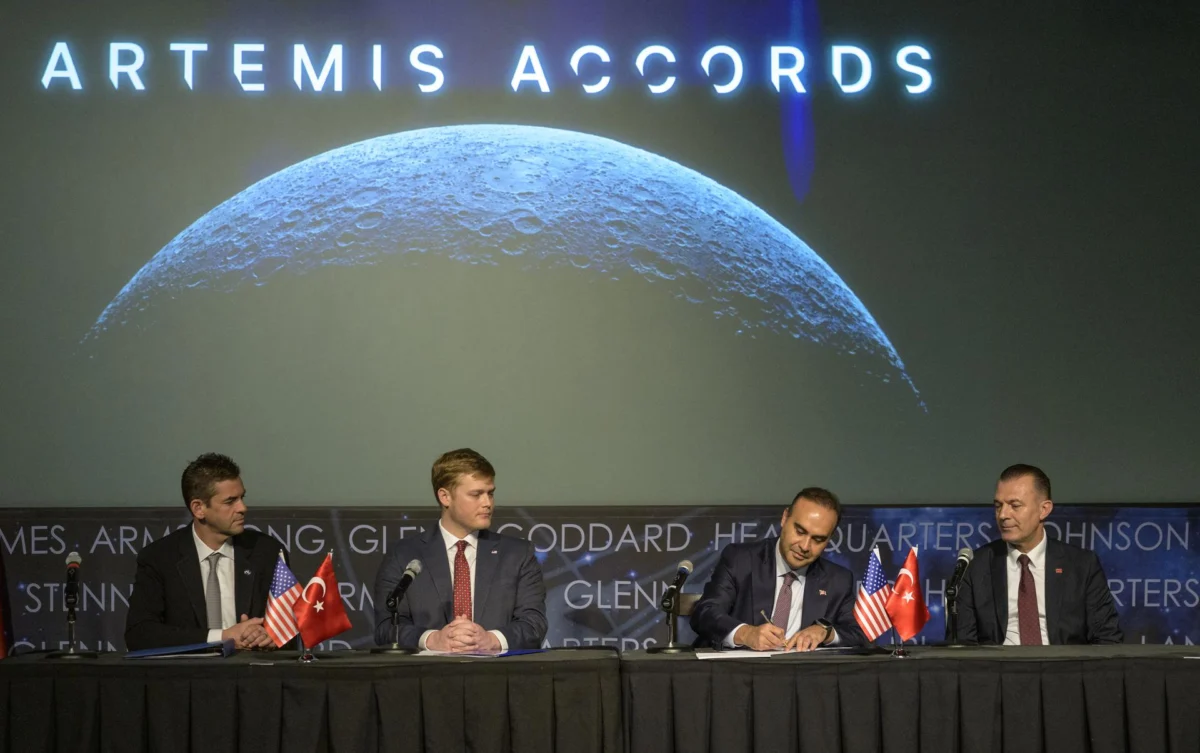
In a pivotal moment for international space cooperation, the Republic of Türkiye officially joined the growing coalition of nations committed to the peaceful and transparent exploration of the cosmos, signing the Artemis Accords on Monday, August 31, 2026. The ceremony, held at NASA’s headquarters in Washington D.C., marked Türkiye as the 71st country to endorse the foundational principles guiding humanity’s return to the Moon and future endeavors on Mars. This accession underscores a shared vision for a sustainable and collaborative future in space, aligning Türkiye’s burgeoning national space program with a globally recognized framework for responsible lunar and Martian activities.
The signing event was presided over by NASA Administrator Jared Isaacman, who warmly welcomed Türkiye into the Artemis Accords family. Minister of Industry and Technology Mehmet Fatih Kacır signed the Accords on behalf of Türkiye, symbolizing the nation’s high-level commitment. Also in attendance were Yusuf Kıraç, President of the Turkish Space Agency (TUA), and U.S. Deputy Assistant Secretary of State for Space and Environment Connor Tomlinson, highlighting the diplomatic and strategic significance of the event for both nations.
The Artemis Accords: A Framework for Responsible Space Exploration
The Artemis Accords, initiated in 2020 by NASA and the U.S. Department of State in collaboration with seven other founding nations, represent a critical step towards establishing a common set of principles for civil space exploration. These principles build upon the 1967 Outer Space Treaty (OST), which serves as the bedrock of international space law, by providing a practical framework for safe, transparent, and sustainable activities in the lunar environment and beyond. The original eight signatories – Australia, Canada, Italy, Japan, Luxembourg, the United Arab Emirates, the United Kingdom, and the United States – recognized the increasing global interest in lunar activities, both from governmental and private entities, necessitating clear guidelines to prevent conflict and foster cooperation.
The core tenets of the Artemis Accords, which Türkiye has now formally adopted, are designed to enhance safety, coordination, and sustainability in the rapidly expanding domain of space exploration. These include:
- Peaceful Purposes: All activities conducted under the Accords must be exclusively for peaceful purposes, aligning with Article IV of the Outer Space Treaty. This commitment ensures that space exploration serves humanity’s collective benefit rather than nationalistic or militaristic aims.
- Transparency: Signatories agree to conduct their activities in a transparent manner, publicly describing their policies and plans. This fosters trust and reduces the potential for misunderstandings, ensuring that all participants are aware of each other’s intentions.
- Interoperability: Nations are encouraged to develop interoperable systems and standards. This facilitates the safe and robust exchange of data, personnel, and hardware, which is crucial for complex international missions like the Artemis program.
- Emergency Assistance: A fundamental humanitarian principle, signatories commit to providing assistance to astronauts in distress, regardless of their nationality, in accordance with the Agreement on the Rescue of Astronauts, the Return of Astronauts and the Return of Objects Launched into Outer Space.
- Registration of Space Objects: All space objects, including lunar landers and rovers, must be registered in accordance with the 1975 Convention on Registration of Objects Launched into Outer Space. This promotes accountability and helps track active space assets.
- Release of Scientific Data: Scientific data obtained from lunar and Martian exploration is to be shared publicly and in a timely manner, promoting widespread scientific discovery and benefiting all of humanity.
- Protection of Heritage Sites: Recognizing the historical and scientific value of sites such as the Apollo landing sites, signatories commit to protecting outer space heritage.
- Space Resources: The Accords address the controversial topic of space resource utilization, affirming that such activities should be conducted in a safe and sustainable manner and in compliance with the Outer Space Treaty. While the OST prohibits national appropriation of outer space, the Accords interpret this as allowing for the extraction and utilization of resources by private and national entities, provided it does not constitute sovereign appropriation. This provision has been a key driver for commercial interest and international debate.
- Deconfliction of Activities: To prevent harmful interference, signatories commit to coordinating their activities and creating "safety zones" around operational areas, ensuring that different missions can operate in proximity without collision or disruption.
- Orbital Debris Mitigation: Nations agree to mitigate the generation of harmful space debris and to safely dispose of spacecraft at the end of their missions, contributing to the long-term sustainability of the space environment.
The rapid expansion of the Accords, from eight founding members to 71 in just six years, demonstrates a growing global consensus around these principles, establishing them as a de facto standard for responsible space operations in the new era of lunar exploration.
Türkiye’s Ascending Space Ambitions and Recent Milestones
Türkiye’s decision to join the Artemis Accords is a natural progression of its increasingly ambitious and successful national space program. Established in 2018, the Turkish Space Agency (TUA) has been instrumental in charting a course for the nation’s strategic engagement in space. In 2021, Türkiye unveiled its National Space Program 2021-2030, a comprehensive roadmap outlining ten ambitious goals, including sending a Turkish citizen to space, developing indigenous satellite technologies, and launching a lunar mission. The recent achievements in human spaceflight and upcoming lunar endeavors underscore Türkiye’s serious commitment to becoming a significant player in the global space arena.
A significant milestone was achieved in 2024 with the flight of Türkiye’s first astronaut, Alper Gezervaci. Gezervaci participated in Axiom Mission 3, a commercial spaceflight to the International Space Station (ISS), where he spent several weeks conducting a series of scientific experiments and research alongside NASA astronauts and other international crew members. His mission, facilitated by the burgeoning private spaceflight sector, provided invaluable experience and data, marking Türkiye’s entry into the exclusive club of nations with human spaceflight capabilities. The research conducted on the ISS spanned various fields, including microgravity physiology, material science, and genetic studies, contributing to a broader understanding of human adaptation to space and the potential for off-Earth manufacturing.
Later that same year, Türkiye further cemented its human spaceflight aspirations with Tuva Atasever’s suborbital flight on Virgin Galactic 07. While a suborbital mission offers a shorter duration in microgravity compared to an orbital flight, it provides critical opportunities for conducting experiments and physiology research in a space-like environment. Atasever’s flight expanded Türkiye’s research capabilities and demonstrated diverse avenues for its citizens to experience space, further inspiring public interest and scientific engagement within the country. These two missions not only showcased Türkiye’s capabilities but also fostered crucial partnerships with leading international and private space entities.
Looking ahead, Türkiye is poised to achieve another major feat with the impending launch of its first lunar mission, AYAP-1. This robotic mission aims to reach lunar orbit, potentially followed by a soft landing, with objectives focused on scientific exploration, technology demonstration, and resource mapping. AYAP-1 represents a significant technological leap for Türkiye, placing it among a select group of countries capable of developing and launching their own missions to Earth’s celestial neighbor. The mission is expected to gather critical data on lunar geology, exosphere, and potential water ice deposits, contributing to the global understanding of the Moon and paving the way for future Turkish deep-space endeavors. This endeavor aligns perfectly with the Artemis Accords’ emphasis on scientific discovery and shared knowledge.
Statements and Strategic Implications
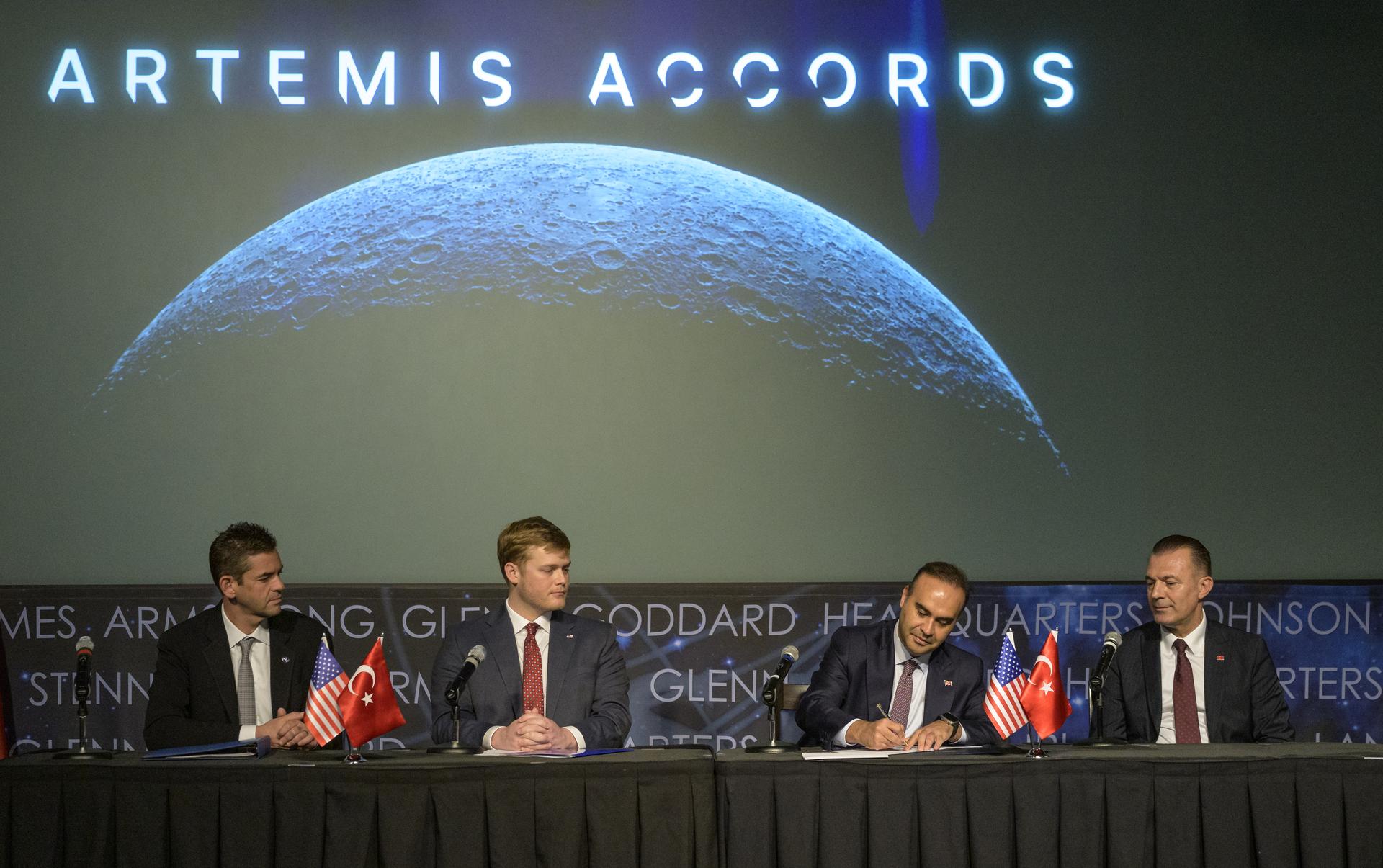
The signing ceremony provided a platform for key figures to articulate the significance of Türkiye’s participation. NASA Administrator Jared Isaacman reiterated the agency’s long-standing philosophy that "NASA never undertakes these grand endeavors alone." He highlighted President Trump’s directive, issued last year, to accelerate NASA’s return to the lunar surface, establish humanity’s first enduring presence on another world with a "Moon Base," and lay the foundation for manned exploration of Mars. Isaacman emphasized that the Artemis Accords principles are not merely theoretical but are being actively put into practice on the lunar surface. He extended an open invitation to every signatory nation to contribute major pieces of hardware, scientific payloads, technology demonstrations, CubeSats, and other capabilities to future Artemis missions, illustrating the tangible opportunities that accompany membership.
Turkish Minister of Industry and Technology Mehmet Fatih Kacır expressed profound pride in Türkiye’s accession. "By signing the Artemis Accords, the Republic of Türkiye reaffirms its unwavering commitment to peaceful, transparent, and sustainable space exploration," Minister Kacır stated. "Our nation’s growing capabilities in space, exemplified by the missions of our astronauts Alper Gezervaci and Tuva Atasever, and our upcoming AYAP-1 lunar mission, are a testament to our dedication. We believe that international cooperation is paramount for humanity’s success in space, and these Accords provide the ideal framework for us to contribute to and benefit from a shared future beyond Earth." He further underscored how the principles of the Accords resonate deeply with Türkiye’s own national space strategy, which prioritizes responsible conduct and collaborative partnerships.
Yusuf Kıraç, President of the Turkish Space Agency, echoed these sentiments, emphasizing the strategic benefits for TUA. "This signing opens doors to unparalleled opportunities for our scientists, engineers, and industries," Kıraç commented. "Collaborating with NASA and the 70 other signatory nations will accelerate our technological development, provide access to invaluable expertise, and integrate Turkish innovation into the global architecture of lunar and Martian exploration. It is a defining moment for our agency and our nation’s aspirations in space."
U.S. Deputy Assistant Secretary of State for Space and Environment Connor Tomlinson highlighted the diplomatic significance of Türkiye’s entry. "The United States welcomes Türkiye as the 71st signatory to the Artemis Accords, further strengthening the international consensus on responsible behavior in space," Tomlinson remarked. "This growing coalition of like-minded nations sharing common values for space governance is crucial as humanity ventures deeper into the cosmos. Türkiye’s commitment reinforces the multilateral nature of space exploration and enhances our collective ability to achieve ambitious goals, fostering stability and cooperation in an increasingly active domain."
Hosting the International Astronautical Congress (IAC) in Antalya
Türkiye’s signing of the Artemis Accords comes with impeccable timing, as the country prepares to host the prestigious International Astronautical Congress (IAC) in Antalya this October. The IAC is the world’s premier global space event, attracting thousands of participants from space agencies, industry, academia, and government each year. It serves as a crucial platform for discussing the latest advancements, policies, and challenges in space exploration.
The fact that Türkiye will host this high-profile event just weeks after formally joining the Artemis Accords positions it as a central hub for global space diplomacy and collaboration. Dozens of Artemis Accords signatories are expected to attend the IAC in Antalya, providing a unique opportunity for direct engagement and discussions on the future of peaceful and transparent space exploration. This convergence will allow Türkiye to showcase its commitment to the Accords’ principles, facilitate bilateral and multilateral dialogues, and potentially forge new partnerships for future Artemis missions. The IAC will undoubtedly serve as a crucial forum for articulating how the Accords translate into practical collaboration on the lunar surface and beyond.
Broader Implications and the Golden Age of Space Exploration
Türkiye’s accession to the Artemis Accords carries significant geopolitical, economic, and scientific implications. Geopolitically, it strengthens the Accords’ legitimacy and global reach, signaling a commitment to a U.S.-led framework for lunar governance. This comes at a time when other nations, notably China and Russia, are pursuing alternative initiatives such as the International Lunar Research Station (ILRS), making the alignment of nations under the Artemis framework increasingly important for shaping future norms and standards in space. Türkiye’s participation lends further credibility to the Accords as a widely accepted pathway for responsible space activity.
Economically, joining the Accords opens substantial opportunities for Turkish industry, academia, and startups. Participation in Artemis missions could translate into contracts for hardware development, scientific instrumentation, and technology services. This integration into the global space supply chain could stimulate innovation, create high-tech jobs, and foster economic growth within Türkiye, aligning with its broader goals for technological self-sufficiency and export.
Scientifically, Türkiye’s scientists and researchers will gain increased access to NASA’s vast resources, data, and collaborative projects related to lunar and deep-space exploration. This will enhance Türkiye’s capacity for cutting-edge research, contribute to global scientific knowledge, and provide invaluable experience for its scientific community. The data sharing principles of the Accords ensure that the benefits of discovery are broadly distributed.
The Artemis Accords are not merely a set of rules; they are an invitation to collectively shape what NASA Administrator Isaacman refers to as the "Golden Age of space exploration and innovation." By signing, nations like Türkiye are not just committing to principles; they are opening the door to active participation in humanity’s ambitious return to the Moon and the subsequent journey to Mars. This shared endeavor promises to push the boundaries of human ingenuity, inspire future generations, and unlock scientific discoveries that benefit all of humankind, under a banner of peaceful cooperation and transparency.
The addition of Türkiye to this ever-expanding coalition marks another critical step towards a truly international and sustainable future in space, ensuring that the next chapter of human exploration is written collaboratively, peacefully, and for the benefit of all.