

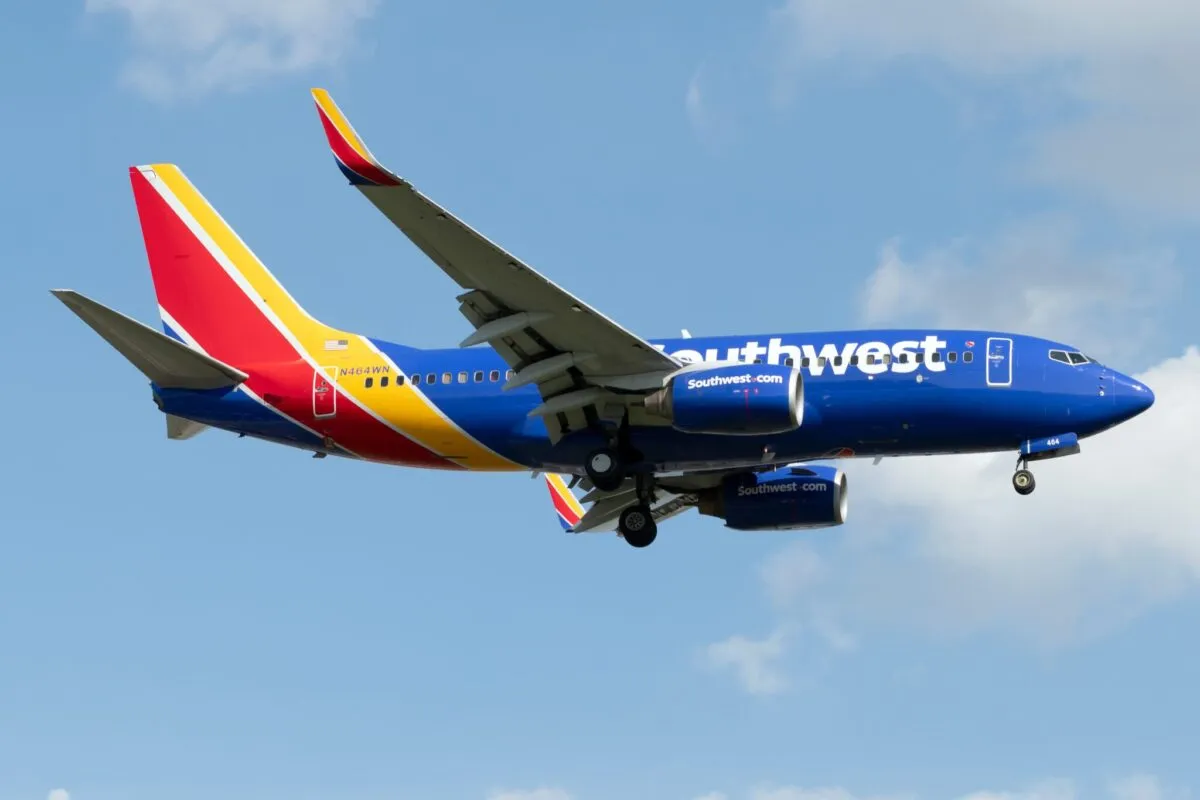
Southwest Airlines is actively preparing to enter the airport lounge market, marking one of the most significant departures from its historic low-cost, no-frills business model since the carrier’s inception over five decades ago. During a post-earnings conference call with analysts and investors on Thursday, Southwest Chief Executive Officer Bob Jordan provided the clearest indication to date that the airline is moving toward establishing its own network of physical lounges. While Jordan stopped short of a formal unveiling of locations or timelines, he confirmed that internal development is well underway, signaling a pivot intended to capture high-value travelers and deepen the carrier’s relationship with its financial partners.
The potential introduction of lounges represents a fundamental shift for an airline that has long prided itself on simplicity, a single-class cabin, and a democratic approach to the passenger experience. However, as the domestic aviation market evolves and consumer preferences lean increasingly toward premium amenities, Southwest is repositioning itself to compete more directly with legacy carriers like Delta Air Lines, United Airlines, and American Airlines. The move is also a strategic play to bolster the airline’s lucrative co-branded credit card partnership with JPMorgan Chase, providing a new tier of incentives for cardholders and loyalty members.
The Strategic Rationale: Premiumization and Loyalty Growth
The primary driver behind the lounge initiative is the "premiumization" of the airline industry. In recent years, legacy carriers have reported that a disproportionate share of their revenue growth comes from premium cabins and loyalty program fees rather than base fares. By offering lounges, Southwest aims to attract business travelers and high-spending leisure passengers who currently choose competitors specifically for the pre-flight amenities.
CEO Bob Jordan emphasized that the lounges are not merely an operational addition but a tool for financial expansion. "The whole purpose is to expand co-brand opportunities, expand the card set and provide to our customers something that they really want," Jordan stated during the call. By creating an exclusive space for top-tier Rapid Rewards members and specific credit card holders, Southwest can drive higher engagement with its loyalty ecosystem.
Financial data supports this shift. Revenue from loyalty programs and co-branded credit cards has become a critical buffer against the volatility of fuel prices and labor costs. For Southwest, which has historically relied on high-frequency, short-haul domestic flights, the ability to generate "high-margin" revenue through credit card spend is essential for long-term margin recovery. Industry analysts suggest that a robust lounge offering could increase the "stickiness" of the Southwest brand, making it more difficult for frequent flyers to switch to competitors.
A Chronology of Transformation: From 2023 to the Present
The lounge announcement does not exist in a vacuum; it is part of a broader, rapid transformation of the Southwest product suite. To understand the significance of this move, one must look at the timeline of changes the airline has implemented or announced over the last 18 months:
- Early 2023: Southwest begins a massive $2 billion investment in cabin upgrades, including larger overhead bins and enhanced Wi-Fi capabilities, responding to years of customer feedback regarding the aging interior of its Boeing 737 fleet.
- May 2024: The airline announces it will move away from its iconic "open seating" model. For the first time in its history, Southwest will implement assigned seating, a change necessitated by data showing that 80% of current customers and 86% of potential customers prefer assigned seats.
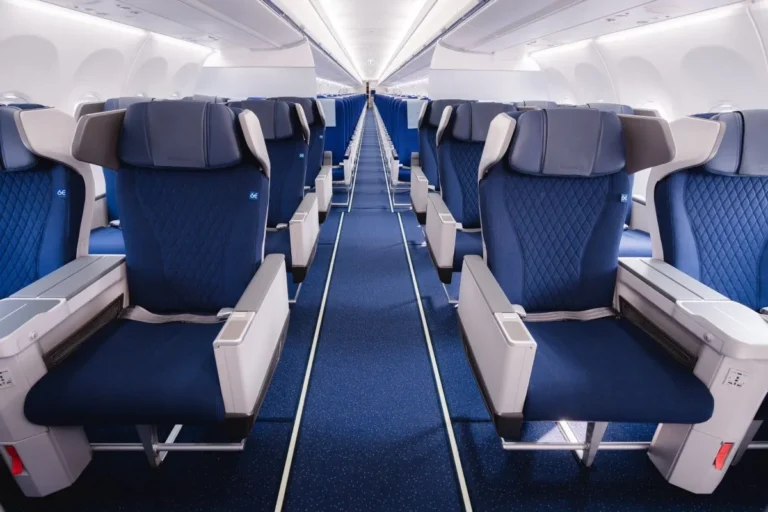
- July 2024: Southwest reveals plans to introduce "Even More Space" seating—a premium economy-style product with extra legroom. This marks the end of the airline’s strictly egalitarian cabin configuration.
- September 2024: At its Investor Day, the airline outlines a comprehensive plan to boost EBIT (earnings before interest and taxes) by $4 billion by 2027. The plan includes the introduction of red-eye flights and formalizing partnerships with global distribution systems to attract more corporate travel.
- October 2024: CEO Bob Jordan teases the development of airport lounges during the Q3 earnings call, confirming that the carrier is looking to fill the final major gap in its premium offering.
Financial Performance and the Pressure for Change
The shift toward a premium model comes at a time when Southwest is facing intense pressure from both the market and activist investors. In mid-2024, Elliott Investment Management acquired a significant stake in Southwest, calling for a leadership overhaul and a modernization of the airline’s business strategy. Elliott argued that Southwest’s traditional "point-to-point" and "no-frills" model was outdated and failing to deliver shareholder value in a post-pandemic environment.
Southwest’s third-quarter 2024 financial results highlighted the urgency of these changes. While the airline reported a net income of $67 million, it has struggled with rising operating expenses, which increased by 5.8% year-over-year. The airline’s operating margin has been under pressure due to increased labor costs following new contract agreements with pilots and flight attendants, as well as delivery delays from Boeing regarding the 737 MAX aircraft.
By diversifying its revenue streams through lounges and premium seating, Southwest expects to mitigate these headwinds. The airline projected that the new initiatives, including assigned seating and lounges, would contribute significantly to its goal of achieving a return on invested capital (ROIC) well above its cost of capital within the next three years.
The Competitive Landscape: Benchmarking Against the "Big Three"
The decision to enter the lounge space puts Southwest in direct competition with the established "Big Three" legacy carriers and the growing influence of independent credit card lounges.
- The Legacy Advantage: Delta (SkyClub), United (United Club), and American (Admirals Club) have spent decades refining their lounge networks. These spaces are no longer just quiet areas with snacks; they have evolved into luxury environments with chef-curated menus, spa services, and high-end bars. Southwest will need to decide whether its lounges will be "functional and comfortable" in line with its brand, or "luxury-focused" to compete with Delta.
- The Credit Card War: American Express (Centurion Lounges), Chase (Sapphire Lounges), and Capital One have disrupted the traditional airline lounge model by opening their own branded spaces. Since Southwest’s primary goal is to boost its Chase co-branded card portfolio, it is likely that any Southwest lounge would be developed in close coordination with JPMorgan Chase, potentially mirroring the success of the Chase Sapphire Lounge network.
- Market Gaps: Southwest has a dominant presence in airports like Dallas Love Field (DAL), Houston Hobby (HOU), and Baltimore/Washington International (BWI). In many of these mid-tier or secondary hubs, legacy carrier lounge presence is either minimal or non-existent. This provides Southwest with a "home-field advantage" to capture the loyalty of travelers in these specific regions.
Operational Hurdles: Real Estate and Implementation
While the prospect of lounges is enticing for marketing and loyalty teams, the operational execution presents significant challenges. The most pressing issue is airport real estate. Many of the terminals where Southwest is the primary tenant are currently at or near capacity.
"Work is underway," as Jordan noted, likely involves complex negotiations with airport authorities in key hubs like Nashville, Denver, and Phoenix. Unlike legacy carriers that often have large, multi-story hubs with legacy lounge footprints, Southwest’s facilities were often designed for high-turnover, high-efficiency boarding rather than long-term passenger dwell time.
Furthermore, Southwest operates an all-Boeing 737 fleet. This fleet consistency is the bedrock of its operational efficiency. However, the lack of long-haul international flights—which typically justify the cost of lounge access for other airlines—means Southwest must rely entirely on domestic business travelers and high-tier credit card holders to make the lounges financially viable.
Broader Impact and Industry Implications
The transformation of Southwest Airlines signals a broader trend in the aviation industry: the "death of the middle." For years, airlines were categorized as either "Low-Cost Carriers" (LCCs) or "Full-Service Carriers" (FSCs). Today, that line is blurring. Southwest is moving "up-market" to protect its margins, while legacy carriers are introducing "Basic Economy" to compete on price with LCCs like Spirit and Frontier.
If Southwest successfully integrates lounges and assigned seating without sacrificing its reputation for customer service (often cited as the "Southwest Heart"), it could redefine what it means to be a "major" domestic airline. However, the risk remains that by adopting the trappings of legacy carriers, Southwest may lose the operational simplicity that once made it the most profitable airline in the world.
The reaction from labor groups and regular passengers has been mixed. While frequent flyers welcome the amenities, some "Southwest Purists" fear that the introduction of lounges and assigned seating will lead to increased fares and a loss of the quirky, accessible culture that defined the airline under co-founder Herb Kelleher.
Official Responses and Outlook
In response to the strategic shift, Southwest’s leadership has remained steadfast in the belief that evolution is necessary for survival. Chief Operating Officer Pete Van de Ven has noted that the airline’s operational data clearly shows a shift in how people travel. Passengers are spending more time in airports and are willing to pay for a more seamless, comfortable experience from the curb to the gate.
The investment community has reacted with cautious optimism. Following the Q3 earnings call, several analysts raised their outlook on Southwest, citing the potential for the new revenue initiatives to offset Boeing-related delivery delays. However, the true test will come in 2025, when the first assigned seats are expected to go on sale and the first concrete details of the lounge network are likely to be revealed.
As Southwest Airlines prepares for its next chapter, the potential for airport lounges stands as a symbol of its metamorphosis. No longer just the "scrappy underdog" from Texas, Southwest is positioning itself as a sophisticated, premium-capable carrier ready to fight for the most profitable segments of the American traveling public. Whether it can maintain its soul while building its lounges remains the billion-dollar question for the industry.