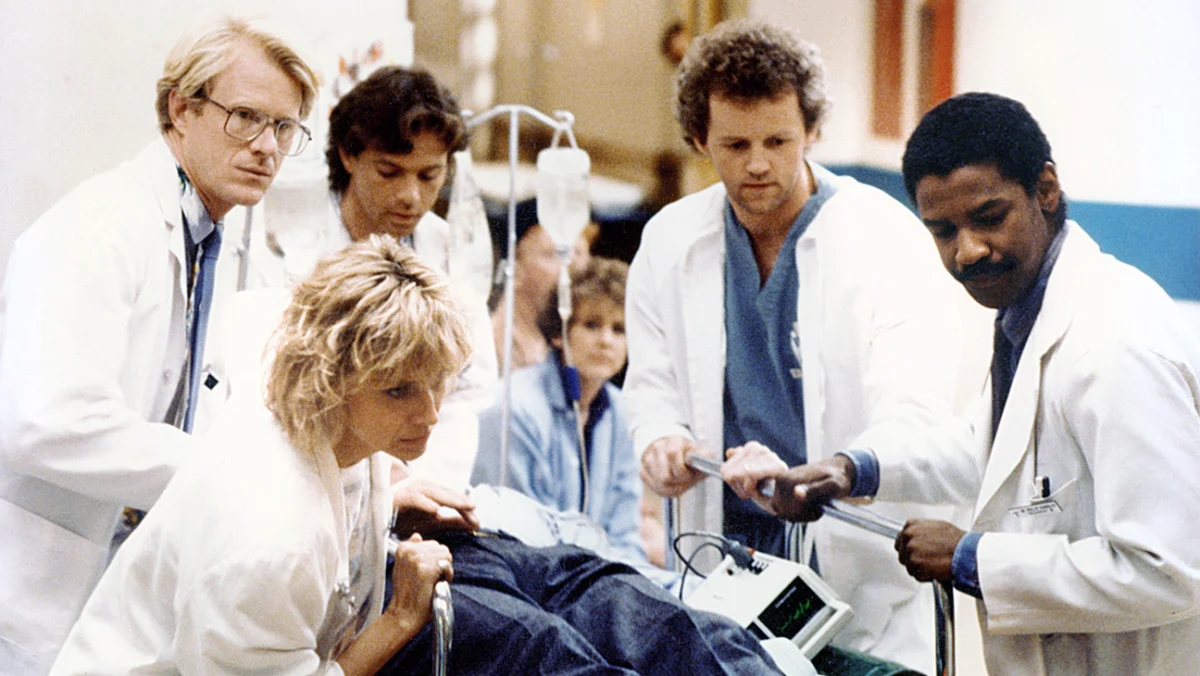
More than three decades after its final broadcast, St. Elsewhere continues to resonate as a watershed moment in television history. Though it never achieved stratospheric ratings during its original run on NBC from 1982 to 1988, the medical drama, created by Joshua Brand and John Falsey, profoundly impacted the landscape of serialized television, particularly within the medical genre. Its legacy is cemented not only by its pioneering narrative techniques and the significant careers it launched but also by one of the most audacious and debated series finales ever aired.
The show chronicled the daily lives of the dedicated, often beleaguered, staff and patients at the fictional St. Eligius Hospital in Boston, a struggling inner-city facility. In an era when hospital dramas typically presented a sanitized, orderly vision of healthcare, with clear-cut heroes and resolved patient outcomes, St. Elsewhere dared to be different. This departure from convention, shared with its contemporary Hill Street Blues from the same production company, MTM Enterprises, was a deliberate choice that initially met with skepticism.
A New Era of Gritty Realism in Medical Dramas
Prior to St. Elsewhere, medical dramas like Marcus Welby, M.D. and Trapper John, M.D. largely adhered to a formula: a central, often stoic, physician whose personal life remained compartmentalized from their professional duties, and a healthcare system depicted as efficient and largely benevolent. St. Elsewhere, however, embraced a more complex and often disheartening reality. It introduced overlapping, serialized storylines that mirrored the messy, interconnected nature of real life and healthcare. Its medical professionals were not infallible paragons but flawed individuals grappling with personal demons, ethical dilemmas, and the profound emotional toll of their work. The show unflinchingly portrayed the limitations of medicine, where patients could not always be saved, and the system itself was often underfunded and overwhelmed.
This commitment to realism was a stark contrast to the prevailing television norms. A November 1982 review from The Hollywood Reporter by critic Richard Hack captured this sentiment, stating, "So real and graphic is the drama being presented here that we cannot believe that 20 million people across this country will find it entertaining enough to flip to." The prediction of limited viewership, however, proved to be shortsighted, as the show’s innovative approach ultimately captivated audiences and critics alike.
Critical Acclaim and Award Recognition
Despite the initial reservations about its accessibility, St. Elsewhere garnered significant critical acclaim and numerous accolades throughout its six-season run. The series was nominated for the Primetime Emmy Award for Outstanding Drama Series in all six of its seasons, a testament to its consistent quality. While it never secured that top honor, the show amassed a total of 13 Emmy Awards, including a remarkable six wins in its critically lauded fourth season in 1986.
The acting talent on display was equally celebrated. William Daniels, who portrayed the stoic Dr. Mark Craig, earned two Emmy Awards for Outstanding Lead Actor in a Drama Series. Bonnie Bartlett, as his estranged wife, Ellen, also won an Emmy for Outstanding Supporting Actress in a Drama Series. Ed Flanders, as the hospital’s chief of surgery, Dr. Donald Westphall, was honored with an Emmy for Outstanding Lead Actor in a Drama Series. These individual triumphs underscored the depth of talent assembled by the casting directors and the strength of the show’s writing.
A Launchpad for Stardom
Beyond its established stars, St. Elsewhere became a renowned incubator for emerging talent, providing crucial early exposure for actors who would go on to achieve significant fame. Denzel Washington, who portrayed Dr. Philip Chandler, used his role on the show as a vital stepping stone in his illustrious career. Mark Harmon, before his long-running success on NCIS, honed his acting chops as the enigmatic Dr. Robert Caldwell. David Morse, known for his intense and versatile performances, also gained early recognition for his role as Dr. Jack "Boomer" Morrison. Even comedian Howie Mandel found an unexpected dramatic outlet, playing the offbeat Dr. Wayne Fiscus, showcasing a range that surprised many viewers. The show’s willingness to cast and develop these future stars further solidified its reputation as a significant force in Hollywood.
The Unforgettable "The Last" Finale
Perhaps the most enduring and talked-about aspect of St. Elsewhere‘s legacy is its groundbreaking series finale, "The Last," which aired on May 25, 1988. In a move that defied convention and left an indelible mark on television history, the episode proposed that the entire six-year narrative of the show might have been an elaborate fantasy conceived by the mind of Tommy Westphall (Chad Allen), the autistic son of Dr. Donald Westphall.
The reveal came in the final moments, as Tommy’s father, Dr. Westphall, is shown at home with his son, describing the fictional hospital and its characters to Tommy, who is drawing a picture. The implication was that Tommy, a patient at St. Eligius in the early seasons, had been dreaming the entire series. This meta-narrative twist was not only audacious but also profoundly melancholic, suggesting that the struggles, triumphs, and human connections witnessed over hundreds of episodes were contained within the imagination of a young, unwell boy.
The finale sparked immediate and widespread debate among viewers and critics. Some lauded its originality and daring, viewing it as a fittingly complex and thought-provoking conclusion to a series that consistently pushed boundaries. Others felt blindsided and disappointed, perceiving it as a cynical dismissal of the characters and storylines they had invested in. Regardless of individual reactions, the finale undeniably cemented St. Elsewhere‘s place in the pantheon of television’s most memorable and discussed endings.
The Enduring Impact on Television
The influence of St. Elsewhere on subsequent television programming, particularly medical dramas, is undeniable. Its emphasis on ensemble casts, serialized storytelling, and realistic portrayals of flawed characters paved the way for future hits. Shows like ER, which debuted in 1994, inherited St. Elsewhere‘s commitment to a more grounded and complex depiction of hospital life. Later series, including Grey’s Anatomy and the more recent The Pitt, also bear the hallmarks of St. Elsewhere‘s pioneering narrative style. The show demonstrated that audiences were ready for more nuanced, character-driven dramas that reflected the complexities of the human condition, even within the high-stakes environment of a hospital.
The creation of St. Elsewhere by Brand and Falsey, under the auspices of MTM Enterprises, represented a significant shift in television production. MTM, known for its quality programming and willingness to take creative risks, provided a fertile ground for shows that challenged conventional storytelling. The success of St. Elsewhere, despite its initial rating challenges, signaled to networks that investing in riskier, more artistically ambitious projects could ultimately yield critical acclaim and a dedicated audience.
The show’s narrative structure, characterized by its intricate plotting and character development, set a new standard for serialized television. Viewers were encouraged to invest in the long-term arcs of the characters, experiencing their growth, setbacks, and evolving relationships over multiple seasons. This approach fostered a deeper connection between the audience and the on-screen world, a model that has become a cornerstone of modern prestige television.
A Look Back at the Timeline
- 1982: St. Elsewhere premieres on NBC on October 26, introducing its groundbreaking, realistic portrayal of a Boston hospital.
- 1983-1985: The series steadily builds a critical following and garners Emmy nominations, establishing its reputation for quality.
- 1986: The show enjoys its most successful Emmy year, winning six awards, including for its acclaimed fourth season.
- 1988: St. Elsewhere airs its final episode, "The Last," on May 25, featuring the controversial "Tommy Westphall" twist.
- Post-1988: The show’s influence continues to be felt, with many subsequent dramas citing it as a major inspiration.
The impact of St. Elsewhere extends beyond its narrative innovations and career launches. It contributed to a broader cultural conversation about healthcare, the dedication of medical professionals, and the inherent challenges within the system. By presenting a more human and often unvarnished look at hospital life, the show fostered empathy and understanding among its viewers.
In conclusion, St. Elsewhere was far more than just a television series; it was a cultural phenomenon that dared to reimagine what a medical drama could be. Its legacy is a testament to the power of bold storytelling, exceptional talent, and the enduring impact of a show that punched far above its weight, leaving an indelible mark on the history of television.