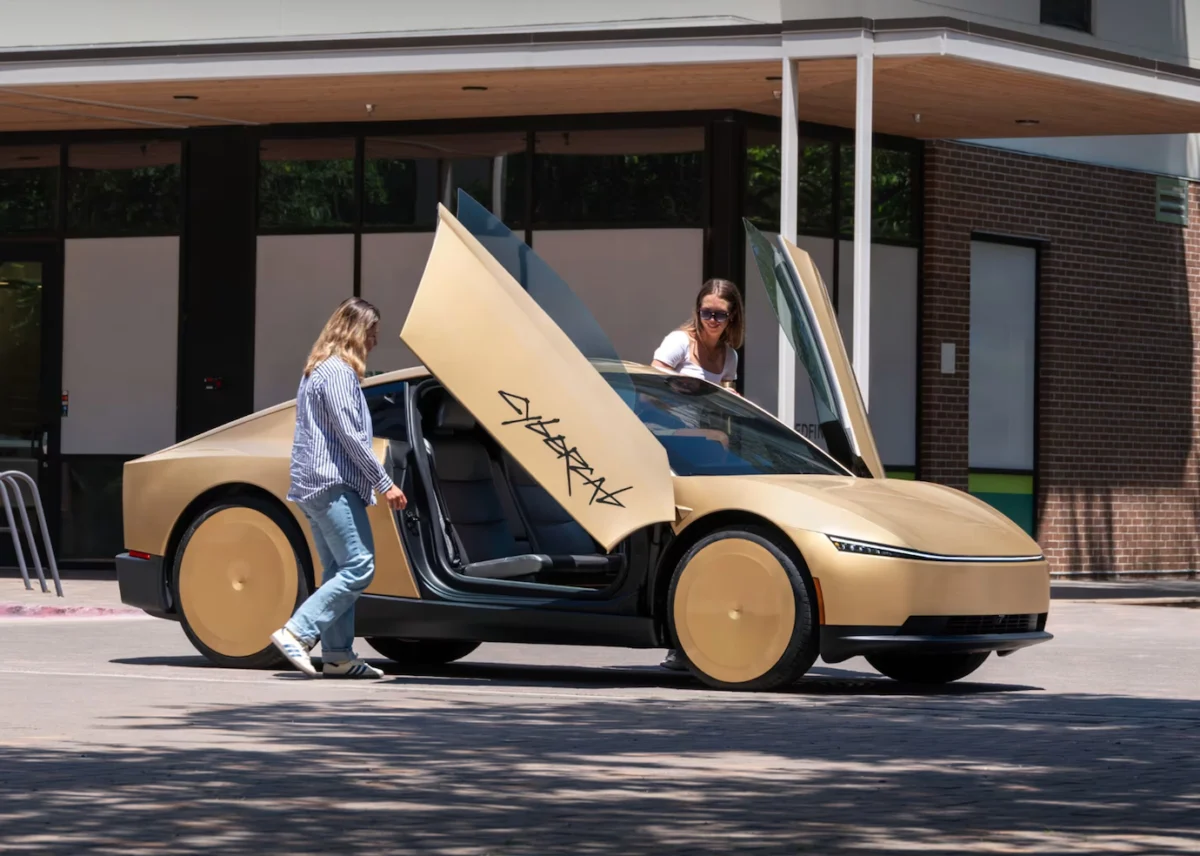
The much-anticipated private unveiling of Tesla’s Cybercab has concluded, marking a stark departure from the company’s characteristic large-scale, boisterous, and globally livestreamed product launches. This subdued approach for a product central to CEO Elon Musk’s long-held vision for autonomous transportation has sparked considerable discussion and speculation within the industry. Unlike previous Tesla spectacles, reports indicate that Musk himself did not deliver a keynote speech, and the entire presentation lasted approximately 15 minutes, a surprisingly brief duration for a vehicle poised to redefine the company’s future.
A Decades-Long Vision: The Road to Robotaxis
The concept of fully autonomous taxis, or "robotaxis," has been a cornerstone of Elon Musk’s long-term strategy for Tesla, frequently highlighted in investor calls and public statements. His vision, stretching back nearly a decade, posited that Tesla vehicles would not only be personal transportation devices but also income-generating assets for their owners, capable of operating autonomously as part of a ride-hailing network. This ambition was initially tied to the development of Tesla’s Full Self-Driving (FSD) software, a camera-only system that has been progressively rolled out to customers, albeit with ongoing scrutiny regarding its capabilities and safety.
Musk’s pronouncements often set aggressive timelines, promising millions of robotaxis on the road by specific dates that have consistently been pushed back. For instance, in 2019, he boldly predicted that Tesla would have over a million robotaxis operating by the end of 2020. While FSD has advanced, it has not yet achieved the Level 5 autonomy required for driverless operation in all conditions without human intervention, which is the prerequisite for a true robotaxi service. The Cybercab, a purpose-built autonomous vehicle, represents a dedicated step towards realizing this long-held dream, distinguishing itself from modified consumer vehicles utilizing FSD.
The Unveiling and Information Dissemination Strategy
The decision to host a private event, accessible only to a select group of die-hard fans and influencers, stands in stark contrast to Tesla’s usual marketing playbook. Past launches, such as the Cybertruck or the Model 3, were global media spectacles, meticulously choreographed and livestreamed to millions. This shift in strategy for the Cybercab launch may reflect a more cautious approach, potentially influenced by the heightened regulatory scrutiny surrounding autonomous driving technologies and Tesla’s FSD system. By controlling the narrative through a curated audience, Tesla might aim to manage initial perceptions more closely, allowing enthusiastic supporters to disseminate information organically, rather than facing immediate, widespread media critique.
Details about the Cybercab were not delivered through a comprehensive public presentation. Instead, information was strategically scattered across various channels: official PDFs released by the company, updated terms of service within Tesla’s "Robotaxi" app, and firsthand accounts from the privileged few who attended the event. This fragmented release of critical information places the onus on the public and media to piece together the full picture, adding an element of mystery but also potential for misinterpretation.
Immediate Regulatory Response: NHTSA Investigation
The launch was met with immediate regulatory action. The National Highway Traffic Safety Administration (NHTSA) wasted no time in announcing an investigation into Tesla’s Cybercab rollout. This swift response underscores the intense scrutiny autonomous vehicle developers face from federal safety regulators. NHTSA’s mandate is to ensure the safety of vehicles on American roads, and any new technology, especially one promising full autonomy, naturally triggers a thorough review.
Tesla’s "camera-only" approach to autonomy, relying solely on computer vision and neural networks without supplementary sensors like lidar, has been a point of contention and debate within the autonomous vehicle industry. While Tesla maintains that human drivers rely primarily on vision, and its system mirrors this, many competitors and safety experts advocate for a multi-sensor suite (including lidar and radar) for redundancy and robustness, particularly in challenging environmental conditions. The NHTSA investigation will likely delve into the safety validation of this vision-centric system, the robustness of its AI, and its operational parameters.
Key Technical and Operational Details Revealed
Despite the unconventional release strategy, several significant details about the Cybercab’s design and operational parameters have emerged, offering a glimpse into Tesla’s engineering philosophy and potential challenges.
1. Age Restrictions and Child Safety Protocols:
One of the most notable revelations is the explicit prohibition against minors under the age of 13 riding in the Cybercab "at this time." This restriction is particularly intriguing given that Tesla’s existing "Robotaxi" Model Y SUVs permit minors between the ages of 8 and 17, provided they are accompanied by an adult. All children under 18 must be accompanied by an adult in both vehicle types.
A deeper dive into the Cybercab’s design reveals a potential underlying reason for this restriction: the absence of standard LATCH (Lower Anchors and Tethers for Children) child seat anchors. Instead, child seats can only be secured using the vehicle’s seat belts. Tesla has often championed cost-cutting measures by eliminating "unnecessary" parts, but the exclusion of LATCH anchors for child safety equipment is a surprising omission, especially given the commonality of these anchors in modern vehicles and Elon Musk’s public advocacy for increasing birth rates. This design choice raises questions about Tesla’s priorities regarding universal safety features versus manufacturing efficiency. The temporary nature of the "at this time" clause suggests that Tesla may be evaluating the safety implications of its design for younger children, or perhaps working on alternative solutions or validations before fully opening the service to this demographic. The current limitations could be due to liability concerns, the unproven efficacy of sensor systems in detecting and protecting smaller, less standardly positioned occupants, or the inherent challenges of securing child seats without LATCH systems, which are designed for ease of use and maximum safety.
2. Comprehensive Crash Protocol:
Autonomous vehicles, while designed to prevent collisions, are not immune to them. Tesla has detailed a multi-step protocol for the Cybercab in the event of a crash, demonstrating a focus on passenger safety and post-collision management. Upon impact, the system is designed to:
- Inflate airbags.
- Automatically unlock doors.
- Activate hazard warning lights and interior lights.
- Disable the high-voltage battery.
- Move windows to the "vent" position.
- Apply brakes to bring the vehicle to a controlled stop and park.
- Initiate a two-way connection with Tesla’s rider support team via the infotainment system.
The automatic unlocking of doors is a particularly crucial detail. Tesla has faced significant criticism, and even regulatory action, regarding its reliance on electronic door latches in its production vehicles. These electronic systems, while modern and sleek, have raised concerns about passenger egress in emergencies, particularly if the vehicle’s power system is compromised. Just last month, Tesla was part of a multi-automaker recall of 3 million cars in China over an investigation into electronic door latches that could potentially trap occupants after a crash. This new protocol for the Cybercab appears to directly address these past concerns by prioritizing immediate door unlocking in a collision scenario.
3. Manual Door Release Accessibility:
Building on the door latch discussion, another frequent criticism leveled at Tesla’s existing vehicle lineup is the difficulty in locating the manual interior door releases during an emergency. In many Tesla models, these manual releases are often small, subtly placed, and not immediately intuitive for first-time occupants. The Cybercab, while still utilizing electronic door latches for automatic opening at the start or end of a ride (and an external button for manual opening), has seemingly addressed this feedback. The manual release mechanism is reportedly positioned in a "very obvious spot on the armrest of each door." This design choice reflects a pragmatic response to safety concerns and user experience feedback, acknowledging the critical importance of quick and unambiguous egress in an emergency.
4. Brake-by-Wire Technology:
In a further embrace of advanced electronic control systems, the Cybercab employs a brake-by-wire system. This technology replaces the traditional hydraulic braking system, which relies on fluid pressure to actuate brake calipers, with electronic actuators. As Elon Musk noted in a social media post, "Having electric brakes avoids the complexity of a hydraulic system: no need to rout [sic] plumbing all around the car." The purported benefits include reduced complexity, lower manufacturing costs, potentially faster response times, and greater flexibility for integrating advanced driver-assistance systems (ADAS).
Tesla has been a pioneer in implementing such systems; it was the first major automaker to deploy a steer-by-wire system in its Cybertruck, which severs the physical connection between the steering wheel and the front wheels. The adoption of brake-by-wire in the Cybercab continues this trend, highlighting Tesla’s commitment to electronically controlled vehicle dynamics and minimalist design. While these systems offer advantages, they also introduce new engineering challenges related to redundancy, fail-safe mechanisms, and regulatory approval for critical safety functions.
5. Limited Window Functionality:
Curiously, the Cybercab’s windows "cannot be fully opened at this time." The documentation released by Tesla does not provide an explanation for this limitation. Potential reasons could include structural integrity requirements for the autonomous vehicle, maintaining a controlled internal environment for passenger comfort or sensor performance, security considerations (preventing objects from being thrown in or out), or simply a cost-saving measure by eliminating complex window mechanisms. Further clarification from Tesla would be needed to understand the rationale behind this design choice.
6. High-Power USB-C Charging:
For passenger convenience, the Cybercab is equipped with USB-C outlets that deliver 90W of power. This is significantly higher than the typical 15-20W found in most automotive USB ports, and even surpasses many laptop chargers. This feature caters to the modern passenger’s need for rapid charging of power-hungry devices, such as laptops, tablets, and high-end smartphones, aligning with the expectation of a premium, tech-forward ride-sharing experience. It reflects an understanding of passenger needs during transit, especially for a vehicle intended for potentially longer autonomous journeys.
Broader Impact and Implications
The Cybercab’s launch, despite its subdued nature, carries immense implications for Tesla, the autonomous vehicle industry, and urban mobility.
Tesla’s Business Model Transformation: The Cybercab represents a pivotal step in Tesla’s evolution from primarily an automotive manufacturer to a diversified technology and service provider. If successful, it could unlock a new revenue stream based on "transportation-as-a-service," fundamentally altering Tesla’s business model and market valuation. The ability to generate consistent revenue from a fleet of self-driving vehicles could provide a more stable financial foundation than cyclical car sales.
Competitive Landscape and Market Disruption: The autonomous ride-hailing market is increasingly competitive, with players like Waymo (Google’s self-driving unit), Cruise (General Motors), and Zoox (Amazon) already deploying or testing services in limited capacities. Waymo, in particular, has a significant head start in operating fully driverless services in multiple cities. Tesla’s stated goal to offer Cybercab services at a "much less than a Waymo" price point suggests an aggressive strategy to capture market share, potentially disrupting existing taxi and ride-sharing services. However, achieving this at scale while maintaining safety and profitability remains a considerable challenge. The recent setbacks experienced by Cruise, which paused operations after a serious incident in San Francisco, highlight the fragility of public trust and the critical importance of flawless safety records in this nascent industry.
Regulatory Hurdles and Public Trust: The immediate NHTSA investigation underscores the significant regulatory hurdles Tesla faces. Beyond federal scrutiny, state and local governments will also play a crucial role in permitting and overseeing autonomous vehicle operations. Proving the safety and reliability of its camera-only system to regulators and the general public will be paramount. Public acceptance hinges on trust, which can be easily eroded by accidents or safety incidents. Tesla’s history of FSD incidents and ongoing investigations will undoubtedly influence the regulatory and public perception of Cybercab.
Scaling and Infrastructure: Deploying a large-scale robotaxi fleet requires not only advanced technology but also robust infrastructure for charging, maintenance, cleaning, and remote monitoring. Tesla’s existing Supercharger network could be an advantage, but managing a fleet of thousands or millions of driverless vehicles presents unprecedented logistical challenges.
Future Outlook: The Cybercab, with its unconventional launch and intriguing design choices, positions Tesla at a critical juncture. It embodies Elon Musk’s long-held vision but also brings to the forefront the complexities and challenges of bringing truly autonomous transportation to the masses. The coming months and years will be crucial in determining whether Tesla can navigate the regulatory landscape, earn public trust, and scale its ambitious robotaxi service to realize its transformative potential. The success of the Cybercab will not only shape Tesla’s future but also significantly influence the trajectory of urban mobility worldwide.