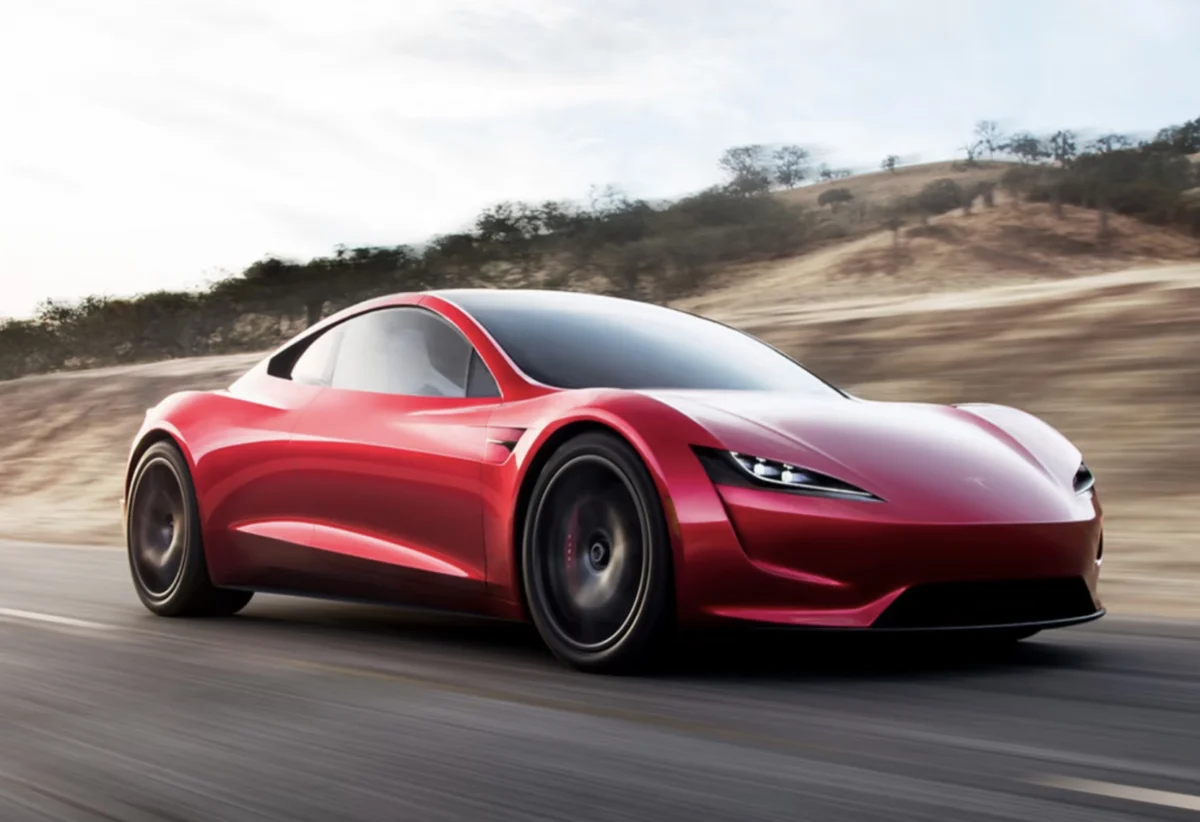
The highly anticipated second generation of the Tesla Roadster, a vehicle that has captivated the automotive and tech worlds since its initial reveal, appears poised for a public unveiling on October 1st, 2026. After years of speculation, missed deadlines, and a complete design overhaul, electric vehicle pioneer Tesla published a cryptic message on its X (formerly Twitter) account on Saturday, September 12, 2026, stating simply, "Go for launch," accompanied by a graphic featuring the date "10.01." This announcement has reignited excitement among enthusiasts and industry observers, who have been tracking the development of what promises to be one of the most technologically advanced and performance-oriented production cars ever conceived.
A History of Ambitious Promises and Persistent Delays
The journey of the second-generation Tesla Roadster has been characterized by a blend of audacious promises and significant delays, a pattern not entirely unfamiliar to followers of Elon Musk’s ventures. First unveiled as a surprise "one more thing" during the Tesla Semi truck event in November 2017, the original concept stunned attendees and the global audience with performance claims that seemed to defy the laws of physics. At its initial presentation, Musk touted a 0-60 mph acceleration time of 1.9 seconds, a quarter-mile time of 8.8 seconds, a top speed exceeding 250 mph, and an astonishing 620-mile range on a single charge. These figures, if realized, would position the Roadster as the fastest production car in the world, electric or otherwise.
However, the path from concept to production has been fraught with challenges. What was initially slated for a 2020 market entry has been consistently pushed back, with Musk himself providing updated timelines that have repeatedly shifted. The reasons cited for these delays have varied, from focusing engineering resources on higher-volume vehicles like the Model 3 and Model Y, to supply chain disruptions, and more recently, the need to complete what Musk described as a "radical" redesign. This iterative postponement has become a hallmark of Tesla’s product development cycle, often leaving early reservation holders, who placed $50,000 deposits (and $250,000 for the Founders Series) years ago, in a state of prolonged anticipation.
One notable public exchange highlighting this frustration occurred last year between Elon Musk and OpenAI CEO Sam Altman. Altman publicly expressed his impatience, noting that "7.5 years has felt like a long time to wait" after placing his reservation. Musk retorted, insisting that Altman had received a refund, underscoring the sometimes-contentious relationship between early adopters and Tesla’s evolving production schedule. This spat served as a public reminder of the long development cycle and the high stakes involved for both the company and its most dedicated customers.
The "SpaceX Package" and the Pursuit of Unprecedented Performance
Central to the Roadster 2’s mystique is the optional "SpaceX Package," a feature that transcends conventional automotive engineering. The graphic accompanying Tesla’s recent "Go for launch" post prominently features what appears to be a cold gas thruster system, echoing Musk’s long-standing promise of technology derived from his aerospace company, SpaceX. This package is envisioned to incorporate ten small rocket thrusters, powered by compressed air, strategically placed around the vehicle. The purported function of these thrusters is not merely for acceleration, but to enhance handling, braking, and even, as Musk has famously hinted, to allow the car to "fly" or "hover" for short durations.
The concept of a production car utilizing cold gas thrusters presents immense engineering challenges and regulatory hurdles. While such systems are common in spacecraft for attitude control, integrating them safely and effectively into a road-legal vehicle, particularly for performance enhancement, is unprecedented. The implications for vehicle dynamics, structural integrity, and passenger safety are profound. If successful, this technology would represent a paradigm shift in automotive design, blurring the lines between terrestrial vehicles and aerospace technology. It would not only redefine the supercar segment but also showcase Tesla’s ambition to push the boundaries of what is technologically feasible in a consumer product.
A Radical Redesign: From 2017 Concept to Future Reality

Recent reports from sources like The Information have corroborated earlier hints from Musk, suggesting that the 2017 design of the Roadster 2 has been completely abandoned in favor of a new, more radical iteration. This decision, while potentially contributing to the protracted delays, underscores Tesla’s commitment to delivering a product that genuinely represents a leap forward, rather than a mere incremental improvement. The specific details of this new design remain shrouded in secrecy, but it is expected to build upon Tesla’s evolving design language while incorporating the necessary structural and aerodynamic elements to accommodate the extreme performance capabilities, including the potential integration of the SpaceX thruster system.
The evolution of the design reflects Tesla’s relentless pursuit of innovation and perfection, even if it means significant re-engineering efforts. This willingness to discard and restart highlights the company’s engineering-first culture, prioritizing groundbreaking technological achievement over strict adherence to initial timelines. The new design is expected to be more aerodynamic, potentially lighter through advanced material usage, and optimized to handle the immense forces generated by its proposed propulsion system.
Market Context and Competition in the Hyper-EV Segment
Since the Roadster 2’s initial announcement in 2017, the electric vehicle landscape, particularly in the high-performance segment, has evolved considerably. While the Roadster’s initial performance claims were largely unrivaled, a new breed of electric hypercars has emerged, some of which are already in production or nearing market launch. Competitors such as the Rimac Nevera, which boasts a 0-60 mph time of 1.85 seconds and a top speed of 258 mph, and the Lotus Evija, with its immense power output, have set new benchmarks. These vehicles demonstrate that the theoretical performance figures of the Roadster are indeed achievable, intensifying the pressure on Tesla to deliver on its promises.
The market for ultra-luxury, high-performance electric vehicles is a niche but highly visible segment. Success here not only generates revenue from high-net-worth individuals but also serves as a powerful halo product, enhancing brand perception and showcasing technological prowess across the entire product lineup. For Tesla, the Roadster is more than just a car; it’s a statement of intent, a demonstration of what is possible when conventional limitations are challenged. Its eventual launch will be scrutinized not just for its performance metrics but also for its build quality, user experience, and overall execution, areas where early Tesla models sometimes faced criticism.
Production Realities and Future Outlook
Despite the imminent unveiling, Elon Musk has already tempered expectations regarding immediate production. He has previously stated that even after the official reveal, the Roadster 2 will not enter full production for another 12 to 18 months. This indicates that the October 1st event will likely showcase a production-intent prototype rather than a vehicle ready for immediate customer deliveries. The gap between unveiling and mass production is crucial for finalizing manufacturing processes, conducting extensive road testing, securing regulatory approvals, and scaling up supply chains for specialized components.
Scaling production for a complex, low-volume hypercar like the Roadster presents its own unique set of challenges. Unlike Tesla’s mass-market vehicles, which benefit from highly automated assembly lines, the Roadster will likely require more bespoke manufacturing processes, specialized labor, and meticulous quality control. Furthermore, the integration of advanced technologies like the SpaceX thrusters will necessitate entirely new manufacturing techniques and safety protocols.
The successful launch and subsequent production of the Roadster 2 would solidify Tesla’s reputation not just as a leader in electric mobility, but as an innovator capable of pushing the absolute limits of automotive engineering. Conversely, any further significant delays or compromises on the promised features could risk damaging the brand’s credibility, particularly among its most ardent and patient supporters. As October 1st approaches, the automotive world holds its breath, eager to see if Tesla can finally deliver on a promise that has been nearly a decade in the making, and whether the second-generation Roadster will indeed redefine the future of high-performance driving. The event will undoubtedly be a pivotal moment for Tesla, potentially marking the culmination of years of ambitious development and setting a new benchmark for what an electric vehicle can truly be.