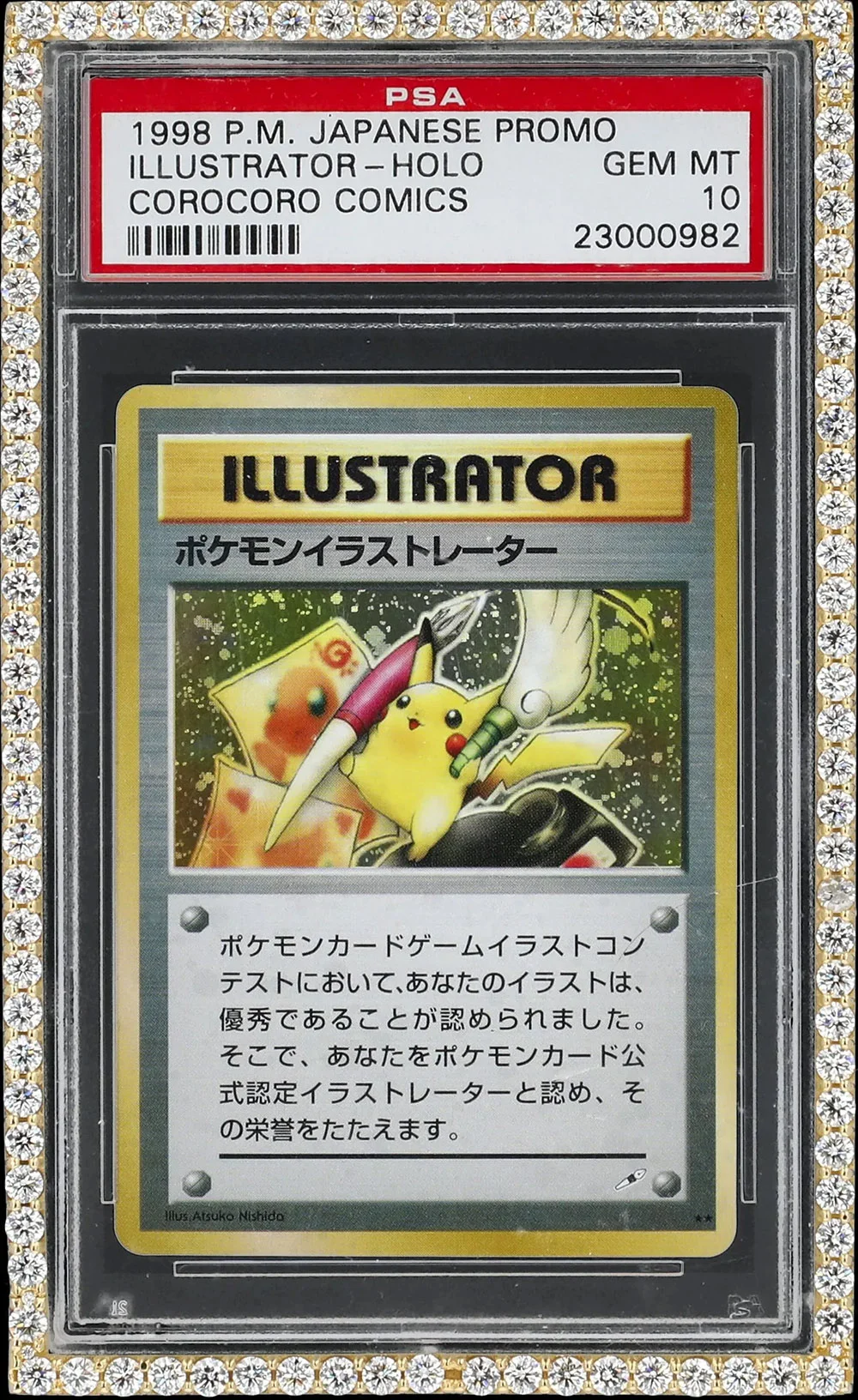
The rarified world of high-value collectibles was set ablaze earlier this year when a single Pokémon card shattered previous records, fetching an astonishing $16.5 million. The unprecedented sale cemented the status of the elusive Pokémon brand as a serious contender in the global asset market. The buyer, AJ Scaramucci, founder of the venture capital firm Solari Capital and son of investor Anthony Scaramucci, has since leveraged this monumental acquisition to launch Treasure Trove, a new venture dedicated to what he terms "alternative assets." This initiative signals a significant shift in how such items are perceived, moving them from niche hobbies to strategic investments.
Scaramucci’s foray into this arena is marked by a bold, calculated approach, distinct from the often passion-driven motivations of traditional collectors. His recent acquisition of a near-mint 1963 Tales of Suspense No. 39, the comic book that introduced Iron Man to the world, for $2 million, further underscores his ambition. This purchase, exclusively reported by The Hollywood Reporter, places Treasure Trove at the forefront of a burgeoning market that blends pop culture significance with significant financial potential. The comic, graded 9.8 by Certify Guarantee Company, is a singular specimen, joining only a handful of other Silver Age comics to achieve such a high valuation, including the first appearances of Spider-Man (Amazing Fantasy No. 15) and the Fantastic Four (Fantastic Four No. 1).
The Rise of Alternative Assets: A New Investment Paradigm
AJ Scaramucci’s journey into the collecting world, which began during the COVID-19 pandemic, is characterized by a pragmatic, data-driven perspective. Unlike many seasoned collectors who are driven by nostalgia and deep-seated fandom, Scaramucci approaches collectibles with the same analytical rigor he applies to traditional financial markets. "I see collectibles in the same way I see my gold and Bitcoin investing," he stated in an interview with The Hollywood Reporter. This perspective, however, has not been universally welcomed within the established collecting community.
Critics have labeled Scaramucci and individuals like him as "speculators," accusing them of artificially inflating prices and contributing to a speculative bubble akin to the historical Dutch Tulip Mania. The concern is that this influx of capital, driven by investment rather than pure passion, could destabilize the market and alienate long-time enthusiasts.
Scaramucci, however, dismisses these criticisms by drawing parallels to the fine art market, where paintings by masters like Monet and Dalí regularly command prices in the tens or hundreds of millions of dollars. He views comic books and trading cards as emerging asset classes with comparable, if not superior, long-term growth potential. "A comic book or a Pikachu card, I view these things as fine art," Scaramucci explained. "They’re just an up and coming asset classes. So I think a world where comic books could indeed sell for $50 to $100 million, I don’t think that should surprise anybody when it happens. I think it really is inevitable."
Strategic Partnerships and Media Presence
To bolster the credibility of Treasure Trove and navigate the complex landscape of high-value acquisitions, Scaramucci has assembled a distinguished advisory board. This group includes prominent figures from the collectibles industry: Ken Goldin, founder of Goldin Auctions; Jim Halperin and Steve Ivy, co-founders of Heritage Auctions; and toy executive and collector Jeremy Padawar. The strategic intent behind this board is multifaceted. It aims to lend an air of legitimacy to Treasure Trove’s endeavors, while simultaneously leveraging the auction houses’ extensive networks to source rare and significant pieces.
Furthermore, Scaramucci is implementing a robust media strategy that includes creating documentary-style videos. These productions will chronicle the company’s acquisition journeys, highlight the stories behind the coveted items, and delve into the cultural significance of the characters and franchises involved. This approach not only builds brand awareness but also educates a wider audience about the evolving nature of the collectibles market.

"Collectibles have evolved from passion assets to a serious global asset class, and Treasure Trove is building for what comes next," Padawar commented to THR. This sentiment underscores the belief that Treasure Trove is not merely participating in the market but is actively shaping its future trajectory.
The Pokémon Card Phenomenon: A Deep Dive into a $16.5 Million Investment
The $16.5 million acquisition of a rare Pokémon card was not a whimsical purchase but a calculated move based on extensive market analysis. Scaramucci elaborated on the rationale behind this record-breaking deal, emphasizing the unparalleled success of the Pokémon franchise.
"Pokémon is the highest grossing franchise of all time. It’s done $288 billion of lifetime sales in 30 years," Scaramucci stated. "It’s outpaced Star Wars, Marvel, and Harry Potter combined." He further highlighted the sheer volume of the Pokémon card market, with an estimated 85 billion cards printed over three decades. The total value of authenticated and graded Pokémon cards, according to Scaramucci, approaches $30 billion.
The specific card in question, a Pikachu Illustrator card graded PSA 10 (Gem Mint), is considered unique. "So that is the asset class value that is Pokémon cards. So, a mere $16.5 million for the number one collectible in the highest grossing franchise of all time, in my view, was an absolute no-brainer," he asserted. Treasure Trove holds a strong conviction that this particular card, as a one-of-one asset, will eventually reach a valuation of $100 million.
Iron Man’s Debut: A $2 Million Investment in Cinematic History
The acquisition of Tales of Suspense No. 39, the first appearance of Iron Man, for $2 million, represents another strategic investment in a cornerstone of modern pop culture. Scaramucci’s personal connection to the character, having grown up during the rise of the Marvel Cinematic Universe (MCU), adds a layer of personal resonance to the business decision.
"As a collector, I do have a genuine passion for all the things that we acquire," Scaramucci admitted. "But I also view them as investments in scale cultural assets. I grew up in an era of the Marvel Cinematic Universe. I was in high school in 2008 when Tony Stark made his appearance on the big screen."
The MCU has become the highest-grossing film franchise of all time, with box office revenues nearing $35 billion. Scaramucci anticipates this figure will surpass $40 billion within the next four to five years. He also points out that Iron Man has generated more box office revenue than Superman, whose debut in Action Comics No. 1 (CGC 9.0) previously held the record for comic book sales at $15 million.
"So at $2 million, we saw this as the unbelievably undervalued and under-appreciated collectible asset, and we’re very proud to own it," Scaramucci declared. The comic’s previous sale price of $840,000 just two years prior indicates a substantial appreciation, a trend Scaramucci believes is indicative of its long-term value.

Market Dynamics and Scaramucci’s Vision
The acquisition of Tales of Suspense No. 39 was a private transaction with a passionate collector who had held the item since its previous sale. The rarity of a Silver Age comic from the 1960s achieving a 9.8 grade is exceptionally high. According to CGC population reports, only one unrestored copy of this particular comic has achieved this coveted grade out of approximately 3,000 graded.
When questioned about the $2 million valuation, Scaramucci expressed confidence in its future appreciation. "I think this comic is worth significantly more," he stated. He dismissed the idea of a quick flip, emphasizing Treasure Trove’s long-term investment philosophy. "Our view at the Treasure Trove is we’re building what we call the cultural store of value," he explained. "So, in the same way gold is the physical store of value, where Bitcoin is the digital store of value, we are building the cultural store of value."
This "cultural store of value" concept draws inspiration from the "Berkshire Hathaway model," focusing on identifying assets with enduring appeal across decades and generations. Scaramucci confirmed that the $2 million transaction for the Iron Man comic was an all-cash deal, wired directly to the seller, differentiating it from potential trade-based acquisitions.
Identifying and Housing Future Treasures
Scaramucci’s approach to identifying collectibles is a blend of art and science, mirroring his investment strategies at Solari Capital. He analyzes companies and securities based on their operational strength and market position, and applies similar heuristics to collectibles. For instance, the Iron Man comic benefits from Disney’s continuous investment in propagating and nurturing its intellectual property, which in turn generates significant collectible interest.
Treasure Trove’s role, as Scaramucci describes it, is to actively underwrite, perform due diligence, and acquire "grail assets" – truly unique items with a history of compounding returns that exceed market rates. He envisions Treasure Trove becoming a dominant force in the multi-trillion dollar collectibles market, although he acknowledges the significant capital wielded by established billionaires like Jeff Bezos and Ken Griffin. "While we’re not quite there yet, that is indeed the aspiration," he noted.
Regarding the safekeeping of these valuable assets, Scaramucci intends to move beyond traditional private vaults. Treasure Trove plans to partner with museums across the country and eventually globally, to create exhibits and installations. This initiative aims to make these cultural artifacts accessible to the public, fostering appreciation and education.
The Future of Treasure Trove: Beyond Comics and Cards
Treasure Trove’s acquisition strategy extends beyond comic books and trading cards. The company has expressed keen interest in the "dinosaur space," specifically targeting the "big three grails": T-Rex, Triceratops, and Stegosaurus fossils. Furthermore, they are actively exploring the "manuscript space," with a particular focus on significant Americana documents.
"We’ve started with Americana manuscripts, things like the Emancipation Proclamation, the Declaration of Independence, Bill of Rights, US Constitution," Scaramucci revealed. "These are all things that are incredibly scarce, incredibly hard to authenticate, but they’re all on our list." This ambitious agenda underscores Treasure Trove’s commitment to building a comprehensive collection of historically and culturally significant items, positioning them as a pivotal player in the evolving landscape of alternative asset investment. The company’s strategic vision, coupled with significant financial backing and industry expertise, suggests a future where items once confined to hobbyist collections will be recognized as legitimate, high-value investments with enduring cultural and financial significance.