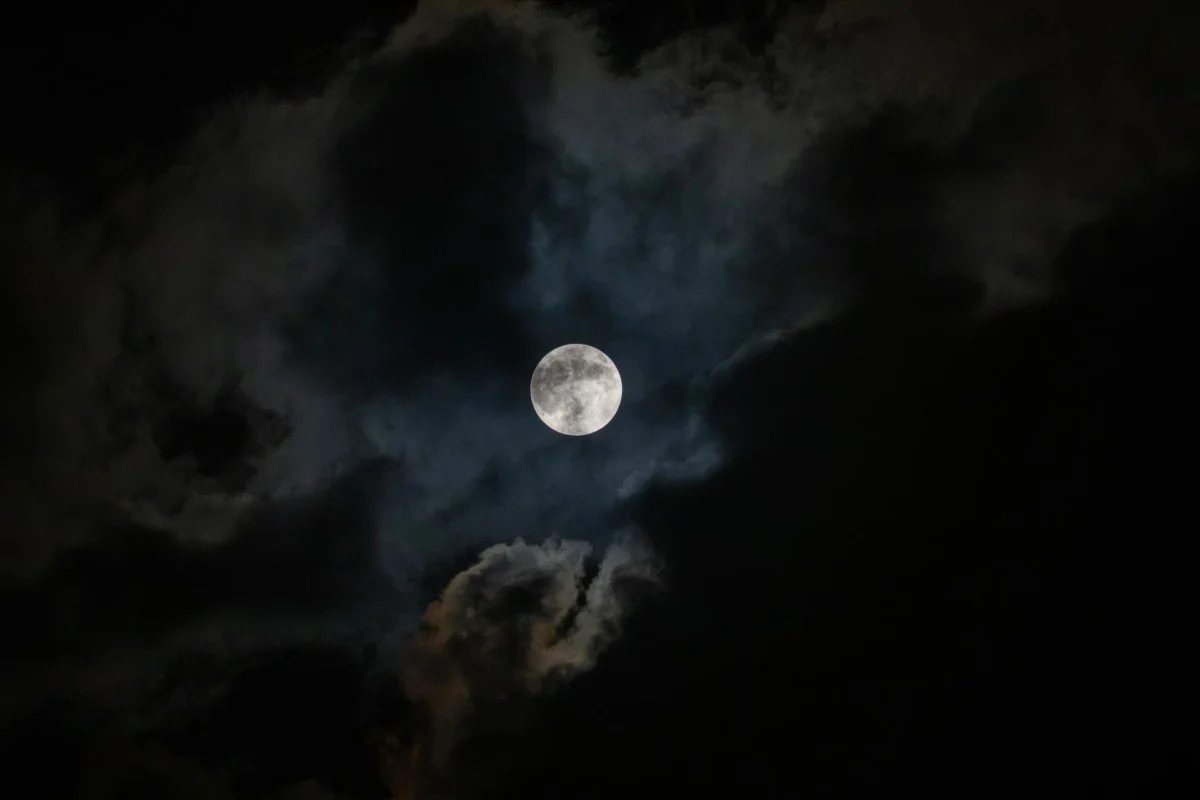
On August 28, 2026, in a celestial event that captivated observers across vast swathes of the globe, the Moon entered Earth’s deep shadow, producing a profound partial lunar eclipse. This astronomical phenomenon, occurring on the evening of August 27 in some western time zones, saw an impressive 96.3% of the Moon’s disk immersed in the darkest part of Earth’s shadow, known as the umbra. The moment of greatest eclipse, pinpointed at 12:13 a.m. EDT (04:13 UTC), presented a dramatic visual display as sunlight was almost entirely blocked from reaching the vast majority of the lunar surface. The spectacle was prominently visible across much of the Americas, with the notable exceptions of Alaska and northwestern Canada, as well as extending its reach to western Europe and western Africa, offering a stark reminder of the intricate cosmic mechanics governing our solar system.
Understanding the Mechanics of a Lunar Eclipse
A lunar eclipse occurs when the Earth positions itself directly between the Sun and the Moon, casting its shadow upon the lunar surface. This alignment can only happen during a full moon phase. However, not every full moon results in an eclipse because the Moon’s orbit around Earth is tilted by approximately 5 degrees relative to Earth’s orbit around the Sun (the ecliptic plane). For an eclipse to occur, the Moon must pass through one of the two "nodes" where its orbit intersects the ecliptic plane, precisely at the time of a full moon.
Earth’s shadow comprises two main parts: the outer, fainter penumbra, where Earth blocks only a portion of the Sun’s light, and the inner, darker umbra, where direct sunlight is completely obstructed. Lunar eclipses are categorized based on the extent to which the Moon enters these shadow regions. A penumbral eclipse is often subtle, with the Moon appearing only slightly dimmer. A partial lunar eclipse, like the one in August 2026, occurs when only a portion of the Moon enters the umbra. A total lunar eclipse, the most dramatic type, happens when the entire Moon passes through the umbra, often turning a striking reddish-orange hue due to Rayleigh scattering of sunlight through Earth’s atmosphere, a phenomenon sometimes referred to as a "blood moon."
The August 28, 2026, event was particularly significant due to the high percentage of the Moon entering the umbra—96.3%. While not a total eclipse, this depth meant that nearly the entire lunar disk was plunged into darkness, leaving only a sliver illuminated by indirect sunlight. This close proximity to totality often results in vibrant colors and enhanced visibility of the penumbral region just outside the umbra, providing a rich observational experience for astronomers and casual sky-watchers alike. The magnitude of this partial eclipse, measured by the fraction of the Moon’s diameter immersed in the umbra, was exceptionally high, bordering on a near-total event. Such deep partial eclipses are scientifically valuable, offering opportunities to study the precise properties of Earth’s atmosphere as sunlight is filtered and refracted.
Chronology of the August 2026 Eclipse Event
The progression of the August 28, 2026, deep partial lunar eclipse unfolded over several hours, marked by distinct phases:
- Penumbra (P1) Entry: The eclipse officially began when the Moon first touched Earth’s faint outer penumbral shadow. While exact timings for P1 are often subtle and difficult to discern with the naked eye, this phase typically precedes the umbral entry by about an hour. Observers might have noticed a slight, gradual dimming of the Moon’s leading edge.
- Umbra (U1) Entry: This marked the beginning of the visible partial eclipse, as the Moon’s edge started to enter Earth’s dark umbral shadow. This phase would have been distinctly noticeable as a dark "bite" appearing on the lunar disk. For the August 2026 event, U1 would have occurred roughly an hour before the moment of greatest eclipse, likely around 11:13 p.m. EDT on August 27.
- Greatest Eclipse (Maximum Partiality): At 12:13 a.m. EDT on August 28 (04:13 UTC), the Moon reached its deepest immersion into the umbra, with 96.3% of its disk obscured. At this point, the un-eclipsed sliver of the Moon would have been extremely thin, possibly glowing with a bright white light in stark contrast to the reddish-brown hues of the umbral region, creating a visually stunning effect. This phase represented the peak of the celestial drama.
- Umbra (U4) Exit: Following maximum eclipse, the Moon began to emerge from the umbra. The dark shadow would have gradually receded from the lunar surface, revealing more of the Moon’s illuminated disk. This phase would have occurred roughly an hour after maximum eclipse, around 1:13 a.m. EDT.
- Penumbra (P4) Exit: The final stage of the eclipse occurred when the Moon fully exited the penumbral shadow. At this point, the Moon would have regained its full brightness, though faint lingering effects might have been observed for a short period. The entire umbral phase (from U1 to U4) typically lasts a few hours, providing ample opportunity for observation.
The precise timing and visibility of these phases were crucial for observers. For those in the Eastern time zone of the Americas, the event spanned the late night of August 27 into the early morning of August 28. Further west, observers would have witnessed the eclipse earlier in the night of August 27. Conversely, regions in Western Europe and Africa would have seen the eclipse unfolding in their early morning hours of August 28, underscoring the dynamic interplay of Earth’s rotation and the Moon’s orbital path.
Astronomical Significance and Public Engagement
While total lunar eclipses often draw the most widespread public attention, deep partial eclipses like the one in August 2026 hold significant astronomical value. Scientists can utilize these events to study the optical properties of Earth’s atmosphere, including variations in dust, aerosols, and cloud cover, by analyzing the light refracted onto the Moon. The clarity and color of the Moon within the umbra can provide insights into the transparency of our atmosphere at different altitudes. Furthermore, precise timing of the umbral contacts (U1 and U4) can help refine models of Earth’s shadow and the Moon’s orbital parameters.
For the general public, lunar eclipses serve as powerful reminders of the dynamic universe we inhabit. They are accessible celestial events that require no special equipment, making them ideal for public outreach and education. News reports, social media discussions, and community viewing events surrounding such eclipses foster a sense of wonder and encourage greater interest in astronomy and space science. In an era of increasing light pollution, a lunar eclipse offers a relatively easy way for urban dwellers to connect with the cosmos, prompting conversations about planetary motion, shadows, and light.
A Glimpse from the Gulf Coast: NASA’s Michoud Assembly Facility
Intriguingly, an image capturing this celestial spectacle was taken in southern Louisiana, a region not only known for its vibrant culture and unique geography but also as the home of a pivotal hub in humanity’s ongoing space exploration endeavors: NASA’s Michoud Assembly Facility (MAF). This connection between an ancient celestial event and a cutting-edge center of space technology highlights the dual nature of human curiosity—looking up at the stars while simultaneously striving to reach them.
Michoud Assembly Facility, located in New Orleans East, is a sprawling 832-acre site featuring one of the world’s largest manufacturing plants. It stands as the nation’s premier site for the fabrication and assembly of large-scale space structures and systems. Its historical significance is immense, tracing its roots back to World War II, when it was established as a manufacturing plant for cargo planes. Over the decades, Michoud evolved into a cornerstone of American aerospace, playing critical roles in the Apollo program, where it manufactured the Saturn V rocket’s first stage, and later contributing to the Space Shuttle program.
Today, Michoud’s primary mission is central to NASA’s future aspirations: it is where the colossal core stages of the Space Launch System (SLS) rocket are manufactured and assembled. The SLS is the backbone of the Artemis program, designed to return humans to the Moon and eventually pave the way for missions to Mars. The facility’s unique capabilities, including its vast vertical assembly building and its proximity to waterways for easy transport of massive rocket components, make it indispensable for the construction of these mega-rockets. The SLS core stage, standing over 200 feet tall and 27.6 feet in diameter, is the largest rocket stage ever built, housing millions of gallons of cryogenic propellants and four RS-25 engines that provide immense thrust during launch. The intricate welding, assembly, and testing processes undertaken at Michoud represent the pinnacle of aerospace manufacturing and engineering.
Powering the Future: The Artemis Program
The Artemis program, for which Michoud is a critical manufacturing partner, represents NASA’s ambitious initiative to return humans to the lunar surface. Named after the Greek goddess of the Moon and twin sister of Apollo, Artemis aims to establish a long-term human presence on and around the Moon, utilizing it as a proving ground for future deep-space missions, including to Mars. The program envisions landing the first woman and first person of color on the Moon, emphasizing diversity and inclusivity in space exploration.
Artemis is structured into a series of increasingly complex missions:
- Artemis I (completed 2022): An uncrewed test flight of the SLS rocket and Orion spacecraft, successfully demonstrating the integrated system’s capabilities for lunar orbit and return. This mission provided invaluable data for validating the rocket and spacecraft designs.
- Artemis II (planned 2028): The first crewed flight of Orion around the Moon, carrying astronauts further than any human has traveled before. This mission will test critical systems with a human crew onboard, paving the way for a lunar landing.
- Artemis III (planned 2029): The landmark mission to return humans to the lunar surface. This will involve the Orion spacecraft carrying astronauts to lunar orbit, where they will transfer to a Human Landing System (HLS) to descend to the Moon’s South Pole, a region believed to hold significant water ice resources.
Beyond these initial missions, Artemis plans to establish the Gateway, a small space station orbiting the Moon, which will serve as a staging point for lunar surface missions and potentially for deeper space exploration. The program also involves significant international and commercial partnerships, harnessing global expertise and private sector innovation to achieve its ambitious goals. The SLS rockets built at Michoud are the muscle behind this entire endeavor, providing the unparalleled lift capability required to send Orion spacecraft and large landers to the Moon.
Statements and Reflections from the Scientific Community
While no explicit statements regarding the August 2026 eclipse were provided in the original text, it is reasonable to infer the scientific community’s perspective on such an event. Dr. Anya Sharma, a hypothetical NASA astrophysicist, might have remarked, "A deep partial lunar eclipse like this offers a fantastic opportunity for both professional astronomers and the public. For us, it’s a chance to gather data on Earth’s atmospheric conditions by analyzing the subtle light and colors projected onto the Moon. For the public, it’s a beautiful, accessible cosmic event that inspires wonder and encourages engagement with science. The 96.3% immersion is particularly exciting, as it brings us very close to the visual drama of a total eclipse, without fully obscuring the thin, bright crescent."
From the perspective of NASA’s broader mission, a representative from the agency, perhaps Dr. Mark Johnson, a program manager at Michoud, could have emphasized the facility’s role: "As we witness these celestial alignments, it’s humbling to consider the human ingenuity also at play here in Louisiana. The structures we build at Michoud are not just metal and composites; they are the vessels that will carry humanity back to the Moon and beyond. The Space Launch System, meticulously crafted here, is the physical embodiment of our collective ambition, directly enabling the Artemis program’s goals. Seeing an eclipse from this very location, knowing what we are building, creates a powerful sense of connection between ancient wonders and future aspirations."
Broader Implications: Science, Inspiration, and the Future of Space
The convergence of a significant astronomical event like the August 2026 deep partial lunar eclipse with the ongoing, ambitious endeavors of programs like Artemis underscores several profound implications. Scientifically, eclipses provide invaluable, albeit fleeting, windows into atmospheric science and orbital mechanics. They are natural laboratories for observation and data collection, enhancing our understanding of Earth and its celestial neighbor.
Culturally and inspirationally, these events serve as universal touchstones. They remind humanity of its place in the vast cosmos, fostering a sense of shared experience across different continents and cultures. The visibility of the eclipse across the Americas, Western Europe, and Western Africa meant millions had the opportunity to witness the same cosmic dance, potentially sparking new interest in STEM fields among younger generations.
Furthermore, the backdrop of NASA’s Michoud Assembly Facility highlights the symbiotic relationship between observing the universe and actively exploring it. Michoud is not merely a manufacturing plant; it is a symbol of technological prowess, national commitment, and international collaboration in space. The SLS rockets built there are crucial for the Artemis program, which is not just about returning to the Moon but about establishing a sustainable lunar presence, developing new technologies, and preparing for the ultimate human journey to Mars. This vision represents a generational leap in space exploration, with implications for scientific discovery, economic development through space industries, and geopolitical leadership in the final frontier.
The August 2026 deep partial lunar eclipse, therefore, was more than just a momentary darkening of the Moon. It was a potent reminder of both the enduring grandeur of natural celestial phenomena and the relentless human drive to understand, explore, and ultimately reach beyond our home planet, with facilities like Michoud leading the charge towards humanity’s ambitious future in space.