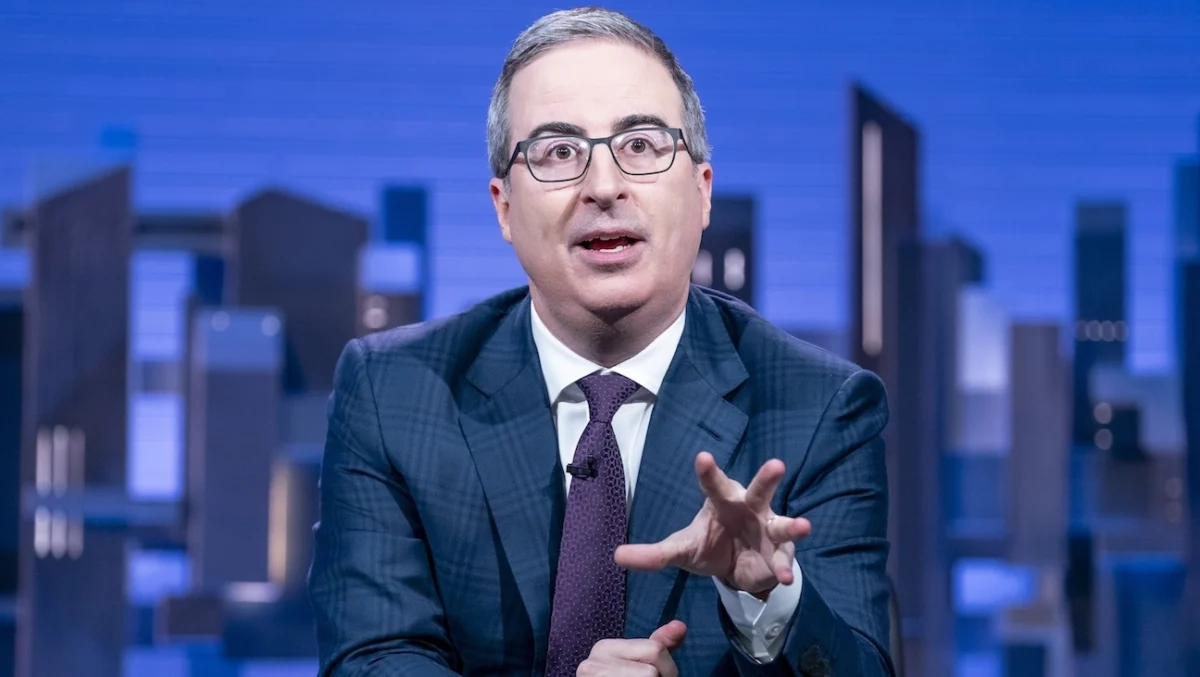
Comedian and satirist John Oliver dedicated a significant portion of his recent Last Week Tonight episode to dissecting what he termed a "less-covered story of the week": The Great American Road Trip, a reality television project spearheaded by U.S. Secretary of Transportation Sean Duffy. The series, intended to coincide with the nation’s 250th anniversary, has come under intense scrutiny for its funding, content, and the perceived conflict of interest arising from its association with a high-ranking government official.
Genesis of "The Great American Road Trip"
The concept for The Great American Road Trip was formally introduced in May with the release of a trailer. A press statement accompanying the announcement described the series as a "five-part journey [that] encourages Americans to step away from their screens for a vital civic experience." The stated aim was to explore the nation’s diverse landscapes, from "small towns to iconic landmarks," capturing "unscripted moments and shared values" to foster a deeper appreciation for America. The series was positioned as a free offering on YouTube, designed for broad accessibility by "every American family."
The trailer featured Secretary Duffy articulating the show’s central theme: "To love America is to see America." He further elaborated on the project’s purpose, stating, "It’s more than a road trip. It’s a civic experience. It’s one of the most powerful ways to understand the vast, beautiful, complicated place we call home." Notably, the trailer included an appearance by former President Donald Trump, adding a layer of political endorsement to the initiative.
Oliver, however, offered a scathing critique of the trailer’s aesthetics and messaging. He characterized the soundtrack as "generic ‘hey ho’ folk rock," described Trump’s cameo as giving "insane grandma’s new boyfriend vibes," and pointed out the "conspicuous close up of the Toyota logo" and "seemingly AI-generated images of cars." He sarcastically commented, "No one’s ever thought to film a real car before," highlighting what he perceived as a manufactured and inauthentic presentation.
Family Ties and Controversial Comparisons
The promotional narrative for The Great American Road Trip was further amplified by Sean Duffy’s wife, Fox News Channel host Rachel Campos Duffy. In a segment shown by Oliver, she presented the series as a panacea for national disunity. "I’m going to be really honest, we live in a Pornhub world," she stated, contrasting it with the show’s purported wholesomeness. "This is really wholesome, good family stuff. This is what families need to do is just get together. That’s what our kids want from us."
Oliver’s retort was sharp, questioning the appropriateness of her public declaration. "Is it? Because I think what every kid really wants is for their mum not to say the word ‘Pornhub’ on national TV," he quipped. He further satirized her assertion by noting that "families getting together is very much its own category" on the platform she referenced, implying a fundamental misunderstanding of her own analogy.
Funding and Ethical Concerns
The most significant controversy surrounding The Great American Road Trip centered on its funding. Several issues coalesced to raise red flags: the prevailing high cost of gasoline, the perception that Secretary Duffy was prioritizing a reality show over his governmental duties, and the ultimate source of the production’s capital.
Secretary Duffy asserted that taxpayer money had not funded the series. Instead, he stated that it was financed through a nonprofit production company named Great American Road Trip Inc. However, an investigation revealed that this organization’s website listed 17 sponsors, many of which were companies that fall under the purview and regulation of the Department of Transportation, the very agency headed by Secretary Duffy.
Oliver seized on this revelation, deeming it "not great." He posited that the only answer worse than "the American taxpayer" for who funded the show would be "a bunch of companies I oversee and regulate." He then escalated the absurdity by suggesting an even more egregious scenario involving personal connections like "Jeffrey Epstein." This pointed criticism underscored the appearance of impropriety and potential for undue influence.
Delayed Debut and Content Discrepancies
The series was initially slated for a June release, but the mounting scrutiny appears to have prompted a delay. Oliver noted that the "all the scrutiny seemed to delay it," leading to the "quietly dumped on YouTube" release of all six episodes in the preceding week.
Oliver also delved into Secretary Duffy’s past as a reality television personality, referencing his participation in MTV’s The Real World: Boston and his meeting with his wife on Road Rules: All Stars. He suggested that Duffy’s return to the reality TV format was unsurvivable. However, Oliver highlighted inconsistencies in Duffy’s recollections of his experiences on these earlier shows.
During The Great American Road Trip, Duffy revisited the house where the Real World: Boston cast resided and, according to Oliver, "tries to rewrite some history." Specifically, when reflecting on a past conflict with housemate Kameelah Phillips, Duffy denied ever calling her a "bitch." Oliver countered this claim by presenting a clip from The Real World in which Duffy explicitly states, "I walked up ahead of the group and I called her a bitch." Oliver’s rejoinder, "You did call her that. Call me CVS, Sean, because I will always bring the receipts," emphasized the documented contradiction.
Furthermore, Oliver challenged Duffy’s characterization of the show as a "nationwide storytelling movement." He argued that the series was, in fact, "basically just an expensively produced test run of a Duffy family reality show." Oliver pointed to episodes that focused minimally on travel or national themes, but heavily featured "manufactured reality TV drama" surrounding the Duffys, such as planning family parties or documenting their daughter’s college selection process.
A particularly striking example cited by Oliver involved a conversation between Sean and Rachel Duffy and their daughter regarding her aspirations to attend Harvard. The parents expressed reservations, with Sean articulating a belief that Harvard "has professionalized figuring out how they can take good young girls like you and I think corrupt their minds."
Oliver expressed incredulity at this sentiment. "What the fuck are you talking about?" he demanded. He questioned why the focus remained in their kitchen rather than on the road trip itself and critiqued the relatability of a family’s "conflict" being the decision of whether their daughter can attend Harvard due to their own perceived success in raising her. He concluded his critique with a sardonic observation about the true concern for Harvard graduates: "Be worried that if she goes there, like every other Harvard grad, she’s never gonna shut the fuck up about it."
Low Viewership and Lingering Ethical Questions
The lack of significant promotion and the perceived lack of viewer interest led Oliver to conclude that "hardly anyone" had watched the show, citing low viewership numbers on YouTube. He expressed indifference to the Duffys potentially becoming "the next Duggars or Jon and Kate [Gosselin] or Alec and Hilaria Baldwin," referring to other families who have starred in reality television.
However, Oliver stressed that the ethical implications of using the Department of Transportation as a platform for a personal reality show were deeply concerning. He described the situation as "ethically dubious on so many levels," suggesting that this might explain why "everyone involved in The Great American Road Trip seems like they’d rather just sweep it under the rug."
His final assessment of the series was stark: "Having watched all three hours of this god-awful show, from gender reveals to the Duffys renewing their vows for no clear reason, it feels less like the country’s been taken on a road trip by Sean Duffy and a lot more like we’ve all been taken for a fucking ride." The commentary highlighted the perceived exploitation of public office for personal or familial gain, raising questions about accountability and the ethical boundaries within government service.