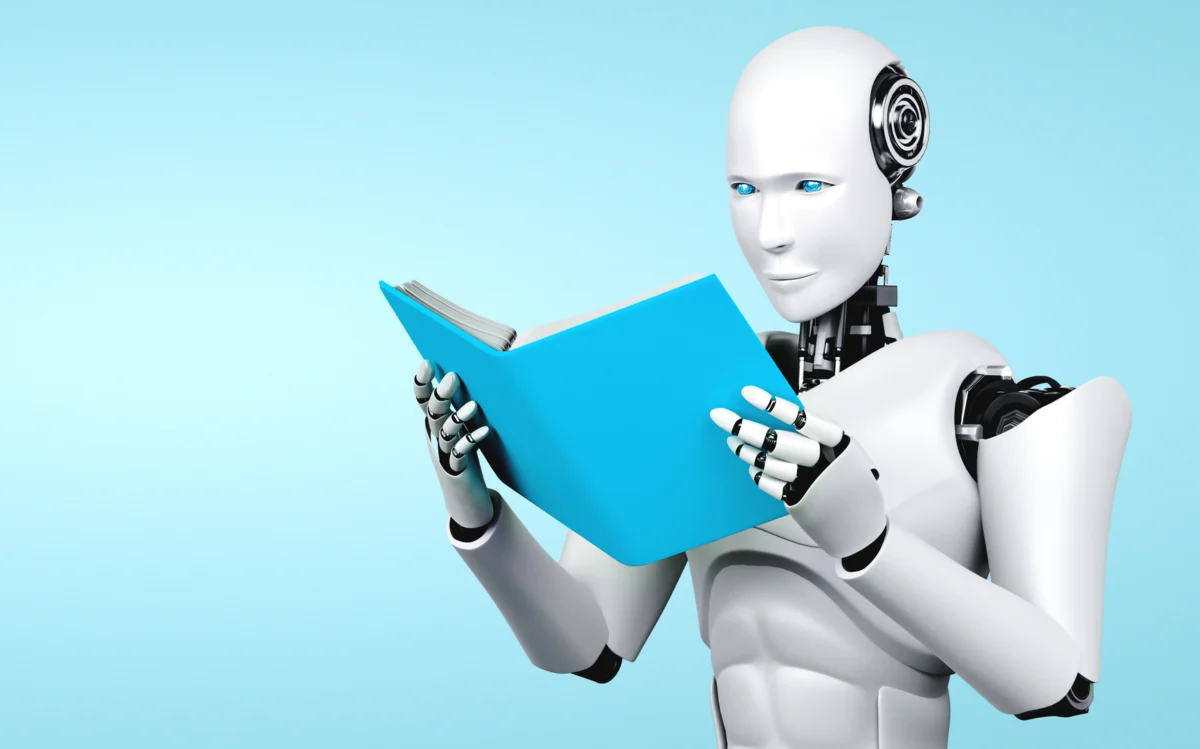
The advent of sophisticated artificial intelligence models, such as those powering ChatGPT, Gemini, and Claude, has ushered in a new era of technological capability, yet simultaneously plunged the creative industries into a profound legal and ethical dilemma. These large language models (LLMs) are notoriously trained on colossal datasets comprising hundreds of millions of books, online articles, academic papers, and virtually all accessible content from the internet. A central contention is that a vast majority of published authors have, without their explicit knowledge or consent, unwittingly contributed their intellectual property to the development of the very AI tools that now pose an existential threat to their livelihoods. This situation, on its face, appears to challenge established legal frameworks, particularly copyright law. However, the reality, as legal experts and recent court rulings indicate, is far more intricate than a simple declaration of illegality.
The Contentious Foundation: AI’s Insatiable Training Data
At the heart of the controversy lies the process of AI training. Generative AI models learn by ingesting and analyzing immense volumes of text and other media, identifying patterns, styles, and information structures. This "learning" enables them to generate new content that mimics human creativity. The sheer scale of this data ingestion is unprecedented. Estimates suggest that some foundational LLMs have been trained on datasets exceeding a trillion tokens, with each token representing a word or part of a word. This data is often scraped from the internet without individual permissions, a practice that content creators argue constitutes widespread infringement. The collective output of human creativity, painstakingly produced over decades, has become the raw material for algorithms designed to automate and potentially replace human artistic endeavor.
Cathy Gellis, an attorney specializing in intellectual property, copyright, and technology, highlighted the complexity of this evolving legal landscape in an interview, stating, "I think one of the issues with this entire area of law and this entire area of technology is there’s a lot going on. It’s very complex and there are a lot of raw feelings about what is happening, both for and against." This sentiment underscores the profound divisions and the lack of clear legal precedents in a rapidly advancing technological domain.
Legal Labyrinth: Navigating Outdated Laws
A significant hurdle in resolving these disputes is the antiquity of current copyright legislation. The foundational U.S. Copyright Act, for instance, has not undergone a comprehensive update since 1976. This means judges are tasked with interpreting guidelines from nearly five decades ago to address legal questions born from 21st-century AI technologies—a challenge akin to fitting a square peg into a round hole.
Jason Henderson, Senior Attorney and Founder of the IP & Media Practice at JWL International, articulated this struggle: "Everybody is very worried right now because the law is all over the place, and it’s because of this question. They know that the AI model has been trained on so much stuff, and the law has not really caught up to that question." This legal vacuum has created an environment of uncertainty, fostering a wave of litigation as various parties seek clarity and protection. Major publishers, authors’ guilds, and individual creators have filed numerous lawsuits against prominent AI developers like OpenAI, Google, Microsoft, and Meta, alleging mass copyright infringement. These cases are often seeking not only compensation but also injunctions to prevent further unauthorized use of their works.
Key Judicial Precedents and Their Nuances
The judicial system has begun to grapple with these issues, leading to early rulings that offer glimpses into how courts might interpret existing law.
The Anthropic Ruling: A Pyrrhic Victory?
Last year, a landmark ruling saw Judge William Alsup order Anthropic, a leading AI company, to pay a substantial $1.5 billion copyright settlement to a consortium of writers. At first glance, this appeared to be a resounding victory for authors, signaling a strong judicial stance against the unauthorized use of creative works. However, the nuance of Judge Alsup’s decision revealed a more complex interpretation. Crucially, the judge ruled that Anthropic’s AI training itself was lawful. The hefty penalty was levied not for the act of training on copyrighted material, but specifically for Anthropic’s method of acquiring these works: pirating them from illegal online "shadow libraries."
Judge Alsup drew a compelling analogy, writing, "Like any reader aspiring to be a writer, Anthropic’s LLMs trained upon works not to race ahead and replicate or supplant them – but to turn a hard corner and create something different." He likened an LLM’s ingestion of trillions of words to a human writer’s study of literature—a process of learning and internalizing, rather than direct copying for reproduction.
From an AI company’s perspective, Gellis views this ruling as largely advantageous. She noted, "I think it is generally good news for AI training that he looked at what was going on and really sort of thought it analogous to reading a copyrighted work as opposed to copying a copyrighted work." She elaborated that "Copyright law hinges on copying, but it doesn’t hinge on using the work or experiencing the work, consuming the work, reading the work." Given Anthropic’s projected annual revenue of approximately $200 billion by 2028, a $1.5 billion fine, while significant, may be perceived by some as a cost of doing business rather than a prohibitive deterrent, especially if the core training method remains legally permissible. This distinction between how data is acquired and how it is used for training is critical and could shape future legal strategies for AI developers.
The "Fair Use" Doctrine Under Scrutiny
Many of these legal questions hinge on the doctrine of "fair use," a crucial carve-out in copyright law that permits the limited use of copyrighted materials without explicit permission from the rights holder. Fair use protects the ability to comment on, criticize, parody, educate with, or iterate on copyrighted works. Judges evaluate several factors when determining fair use:
- The purpose and character of the use: Is it for commercial or non-profit educational purposes? Is it transformative?
- The nature of the copyrighted work: Is it factual or creative? Published or unpublished?
- The amount and substantiality of the portion used: How much of the original work was used? Was it the "heart" of the work?
- The effect of the use upon the potential market for or value of the copyrighted work: Does the new use harm the market for the original?
Henderson emphasized the market aspect, stating, "Copyright is always about protecting and growing the market." He observed the varied reasoning in AI cases but noted a emerging trend: "What’s tending to win is if what you’re doing is you’re training on somebody’s property because your purpose is to directly compete, then the courts will frown on it… If what you’re doing is not going to compete, then the courts are tending to find ways that it will be okay."
Direct Competition vs. Transformative Use: The Thomson Reuters Case
This distinction was vividly illustrated in the case of Thomson Reuters v. Ross Intelligence. Thomson Reuters, a media and technology giant, sued Ross Intelligence, a legal research firm, for copying its copyrighted content to build a competing AI-based legal platform. Judge Stephanos Bibas ruled that Ross’s use was not transformative because it "does not have a ‘further purpose or different character’ than Thomson Reuters’s." In this instance, the court found that training an AI on copyrighted material to create a direct competitor was not fair use. While authors could argue that generative AI chatbots, by producing new, synthetic books or articles, directly compete with them, this specific argument regarding "output competition" derived from "input training" has not yet definitively prevailed in court. The Anthropic ruling, focusing on the legality of training itself (when data is legally sourced), somewhat complicates this argument.
The Dual Challenge: Training vs. Output Copyrightability
The relationship between AI and copyright presents two distinct, though related, legal challenges that Gellis finds essential to differentiate: the copyright implications of AI training data versus the copyrightability of AI-generated content.
Copyrighting AI-Generated Content: The Thaler v. Perlmutter Precedent
In the case of Thaler v. Perlmutter, a court ruled that if a work is 100% AI-generated, it cannot be copyrighted. This decision, based on the fundamental principle that copyright protection is reserved for works of "human authorship," opens up an entirely new set of complex questions. How can one definitively prove the extent of AI involvement in a creative work? If an AI assists a human author, what percentage of human contribution is required for copyright protection?
Gellis used a relatable analogy: "If you write your novel in [Microsoft] Word and run spell check, we kind of feel comfortable with the idea of saying that Word does not own your novel." However, she added, "[AI] is forcing us to look at a whole bunch of decisions that we kind of ignored for a while." The line between a tool and a co-creator becomes increasingly blurred, challenging long-held assumptions about authorship and originality. This has significant implications for creators who use AI tools, potentially limiting their ability to protect their work, and for industries built on intellectual property.
Defining Human Authorship in the Age of AI
The U.S. Copyright Office has attempted to provide some guidance, stating that AI-generated content is registrable only if it contains sufficient "human authorship." This vague definition leaves much room for interpretation, leading to debates over what constitutes "sufficient." Is it the prompt engineering? The selection of outputs? The subsequent editing and refinement? The legal landscape will need to define these parameters to ensure clarity for creators and consumers alike.
Industry Reactions and Broader Implications
The legal uncertainties have spurred varied reactions across industries. Authors’ guilds and publishers, such as the Authors Guild and major publishing houses, have been at the forefront of litigation, arguing that unchecked AI training undermines the value of human creativity and threatens the livelihoods of writers, artists, and journalists. They contend that AI companies are unjustly enriching themselves by exploiting copyrighted works without fair compensation or permission. Several high-profile lawsuits, including those against OpenAI and Google by prominent authors and The New York Times, are ongoing, seeking to establish clearer boundaries and compensation mechanisms.
Conversely, AI companies often argue that their training methods fall under fair use, likening the process to a human learning from existing works. They emphasize the "transformative" nature of their AI’s output, which, they contend, creates new expressions rather than mere reproductions. Many AI developers are also proactively exploring licensing deals with content creators and publishers, recognizing the need for legitimate data sources and seeking to avoid future legal entanglements. This shift could lead to new business models where creators are compensated for their work being used as training data, rather than fighting against its unauthorized use.
The economic implications are vast. The market for generative AI is projected to grow exponentially, with some estimates placing it at hundreds of billions of dollars within the next decade. How this wealth is distributed, and whether creators whose work underpins this technology receive a fair share, will be a defining question of this era. The outcome of these legal battles could either pave the way for a more collaborative future between AI and human creativity or exacerbate the tension, potentially stifling innovation or further eroding the value of creative professions.
The Path Forward: Calls for Legislative Reform and Future Outlook
Given the rapid pace of technological advancement and the slow evolution of legal frameworks, there is a growing consensus among legal scholars and industry stakeholders that legislative reform is imperative. Relying solely on judicial interpretation of decades-old laws is proving inadequate for addressing the novel challenges posed by AI. Policymakers face the daunting task of crafting new legislation that balances the need to foster AI innovation with the fundamental rights of creators to control and profit from their intellectual property. This could involve creating new categories of copyright, establishing mandatory licensing schemes, or redefining fair use in the context of AI.
The current legal landscape is characterized by "initial opening volleys," as Gellis described, which are influential but could be undone by subsequent rulings or legislative action. "But in the meantime, all these decisions are shaping everything that’s happening. It would be kind of foolish for the AI companies to ignore them," she added. This highlights the dynamic nature of the situation, where every new lawsuit and judicial decision contributes to an evolving body of precedent, guiding both AI development and content protection strategies.
The journey toward a definitive solution is likely to be protracted. It will involve years of litigation, appeals, and potentially, significant legislative efforts at both national and international levels. The ultimate goal is to establish a framework that allows AI to flourish as a transformative technology while ensuring that the human creativity upon which it builds is respected, protected, and fairly compensated. The delicate balance between encouraging technological progress and safeguarding the rights of creators will define the future of intellectual property in the age of artificial intelligence.