The concept of humanoid robots has long captured the human imagination, often fueled by visionary figures like Tesla CEO Elon Musk with his Optimus robot and the awe-inspiring, dynamic demonstrations from Boston Dynamics’ Atlas. While the hype has been persistent, a convergence of technological advancements and strategic investments is now translating this long-held fascination into tangible progress, ushering in a new era for robotics. Beyond the captivating videos and ambitious pronouncements, significant strides in physical capabilities, coupled with revolutionary breakthroughs in artificial intelligence, are making complex robots capable of learning and executing a vast array of tasks. Researchers increasingly believe that the advanced AI techniques underpinning large language models (LLMs) can be effectively adapted to empower embodied AI systems, enabling robots to understand, interact with, and learn from their physical environments with unprecedented sophistication. This potent combination of enhanced hardware and intelligent software is creating a robust tailwind, drawing a new wave of companies into the burgeoning market of humanoid robotics, with Chinese automakers emerging as particularly aggressive and well-funded contenders.
China’s Automotive Giants Pivot to Humanoids: A New Frontier
The strategic pivot by Chinese automakers into humanoid robotics marks a significant development in the global technology landscape. These companies, already formidable players in the fiercely competitive electric vehicle (EV) market, are leveraging their extensive manufacturing infrastructure, deep expertise in automation, and substantial capital reserves to pursue new avenues of growth and technological dominance. This month has seen a flurry of activity underscoring this trend, signaling a broader industrial strategy to integrate advanced robotics into future economic models.
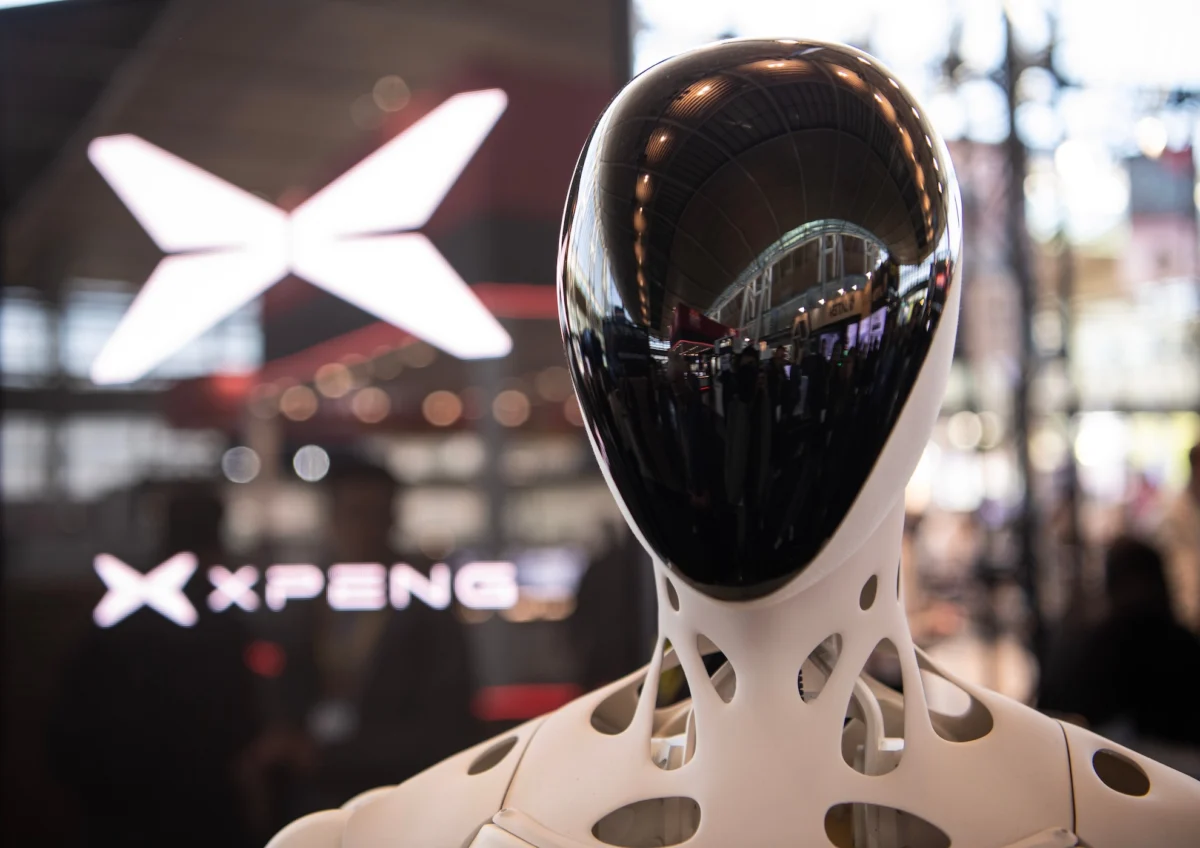
A prime example of this aggressive push is Xpeng’s robotics unit, which recently concluded a monumental fundraising round. Earlier this week, the unit successfully raised more than $900 million, securing a post-money valuation exceeding $6.3 billion. This financing round, described by the company as the largest single-round private financing ever recorded in China’s "embodied AI" industry, was led by prominent investment firms including IDG Capital, with significant participation from Gaorong Ventures, Tencent, and Alibaba. Embodied AI refers to AI systems that are directly integrated into physical machines, allowing them to perceive, reason, and act within the real world, distinguishing them from purely software-based AI. This substantial investment underscores the profound confidence investors have in the potential of humanoid robots and Xpeng’s capacity to lead in this nascent but rapidly expanding sector.
Leadership Vision and Financial Commitment
The strategic alignment of Xpeng with the humanoid robotics sector is no accident; it reflects a deliberate vision articulated by its leadership. According to Michael Dunne, CEO of the San Diego- and Singapore-based advisory firm Dunne Insights, Xpeng stands out among Chinese automakers for its close observation and emulation of Tesla’s pioneering initiatives. "It’s the most focused on autonomy, it’s the first to commit in a big way to humanoid robots," Dunne told TechCrunch. He further characterized Xpeng founder He Xiaopeng as a tech billionaire renowned for his agility and ability to make swift strategic adjustments. Dunne posited that Xiaopeng foresees "razor-thin profit in cars on the near horizon," making the robotics sector appear "much more promising" as a future revenue stream and technological frontier.
This commitment extends beyond corporate strategy; it is also reflected in personal financial backing. Both He Xiaopeng and Xpeng co-president Brian Gu have personally invested substantial sums into the robotics unit, demonstrating their profound belief in its future. As reported by the Wall Street Journal, the duo contributed approximately $100 million to the recent fundraising round, a testament to their conviction and a powerful signal to the market about the seriousness of Xpeng’s robotic ambitions.
Xpeng’s primary focus in this endeavor is "Iron," a humanoid robot designed with a realistic human shape and built specifically for commercial deployment. The emphasis on commercial viability from the outset suggests a clear pathway from research and development to practical application, aiming to quickly move beyond prototypes to scalable industrial solutions.
Manufacturing Prowess Meets AI Ambition
Chinese automakers possess a distinct advantage in the global race for humanoid robot development: their unparalleled manufacturing capabilities. "They have all the hardware to get the job done," Dunne observed, highlighting China’s established prowess in efficient, large-scale production. This manufacturing infrastructure, honed over decades of producing everything from consumer electronics to complex automotive components, provides a significant head start in bringing sophisticated robotic hardware to fruition.
However, the hardware advantage is only one side of the equation. The more challenging frontier, as Dunne points out, is the AI component. "Question is if they can catch Tesla on the AI side of the equation," he remarked. This sentiment underscores the critical importance of AI development, particularly in areas like machine learning, computer vision, and natural language processing, which are essential for robots to operate autonomously, adapt to new environments, and perform complex tasks effectively. The integration of advanced AI, especially techniques inspired by large language models, is crucial for humanoid robots to transition from pre-programmed machines to truly intelligent, adaptable, and general-purpose assistants. The ability of LLMs to process and generate human-like text can be translated into robotic control systems, allowing robots to understand complex instructions, learn from demonstrations, and generalize their knowledge to novel situations, vastly expanding their potential applications.
A Broader Chinese Ecosystem Emerges
Xpeng is not an isolated case; its aggressive foray into humanoid robotics is indicative of a wider trend among Chinese automotive manufacturers. This month alone has seen other significant moves from competitors. AiMOGA, the robotics unit of China’s Chery Automobile, has reportedly commenced preparations for an initial public offering (IPO), signaling its intent to raise capital from public markets and accelerate its development efforts. Concurrently, BYD, one of the world’s largest EV manufacturers, unveiled its own humanoid robot, dubbed "Xiao Di." These announcements are merely the tip of the iceberg, as other prominent Chinese automakers, including Changan, GAC, Li Auto, SAIC, and Seres, are also actively engaged in developing their own humanoid robot platforms. This collective push suggests a coordinated national strategy, possibly supported by government initiatives, to secure a leading position in the next generation of industrial and consumer robotics. The sheer number of major players dedicating resources to this field within China highlights the perceived strategic importance and economic potential of humanoid robots for future industries.
The Global Race: Established Players and Innovative Startups
The competitive landscape for humanoid robotics is global, featuring a diverse array of companies ranging from well-established industrial giants to nimble startups, all pursuing the shared objective of scalable commercial deployment. Beyond China, key players are making significant advancements and investments.
Among the pioneering forces in advanced robotics, Boston Dynamics, now owned by Hyundai, continues to push the boundaries of humanoid capabilities with its Atlas robot. Hyundai’s strategic vision involves integrating Atlas directly into its manufacturing processes. The Korean automaker plans to introduce the Atlas humanoid robot to its Georgia factory this year, with an ambitious goal to deploy these robots for critical tasks such as parts sequencing by 2028. To facilitate this, Hyundai has partnered with Google’s AI research lab DeepMind to accelerate Atlas’s development, specifically focusing on enhancing its AI and learning capabilities. Furthermore, Hyundai is establishing a U.S. facility called a Robot Metaplant Application Center, dedicated to teaching robots how to map and execute intricate movements like lifts and turns, thereby optimizing their utility in complex industrial environments. This approach signifies a practical, phased integration strategy, moving from experimental deployment to full-scale operational use within a controlled manufacturing setting.
Beyond these giants, several innovative startups are also making waves. Companies like Agility Robotics, Apptronik, and Figure are all intensely focused on developing commercially viable humanoid robots. Agility Robotics, known for its bipedal Digit robot, has already begun piloting its robots in logistics and warehouse operations. Apptronik, with its Apollo robot, is also targeting industrial applications, aiming to automate repetitive and physically demanding tasks. Figure AI, backed by substantial venture capital, is developing a general-purpose humanoid robot designed for various labor shortage applications. These startups often leverage agile development methodologies and cutting-edge research to quickly iterate and bring new capabilities to market.
The automotive sector, recognizing the transformative potential of robotics, is seeing even more diversified engagement. Mobileye, a leading developer of self-driving technology and a subsidiary of Intel, made a significant move earlier this year by acquiring humanoid robot startup Mentee Robotics for $900 million. This acquisition highlights the convergence of autonomous driving AI with embodied AI, suggesting that technologies developed for self-driving cars—such as perception, mapping, and decision-making—are highly transferable to humanoid robotics. Even Rivian, the electric truck manufacturer, is exploring robotics through its Mind Robotics spinout. While Rivian’s robots are reportedly not expected to conform to the traditional humanoid form factor seen elsewhere, this venture underscores a broader industry-wide recognition of robotics as a crucial area for future innovation and efficiency. This diversity in form factor indicates that while humanoids offer versatility, companies are also exploring purpose-built robotic solutions tailored to specific industrial needs.
Driving Forces: Technology, Economics, and Market Potential
The current surge in humanoid robot development is propelled by a confluence of technological breakthroughs, economic imperatives, and a vast untapped market potential. On the technological front, the rapid advancements in AI, particularly the advent of large language models and reinforcement learning techniques, are enabling robots to learn faster, adapt more flexibly, and interact more naturally with humans and their environments. Improvements in robotics hardware, including more dexterous manipulators, sophisticated sensors, and energy-efficient actuators, are making robots more physically capable and robust.
Economically, the global manufacturing sector faces persistent labor shortages, rising labor costs, and the demand for increased efficiency and precision. Humanoid robots offer a compelling solution to these challenges, capable of performing repetitive, dangerous, or physically demanding tasks in factories, warehouses, and logistics centers. Beyond manufacturing, the potential applications extend to a myriad of service industries, healthcare, elder care, and even domestic assistance, promising to revolutionize how work is done and how humans interact with technology. The market for humanoid robots is projected to grow substantially, with some analysts forecasting it to reach tens of billions of dollars within the next decade, driven by increased automation demands across various sectors.
Furthermore, national strategic interests play a significant role. Governments, particularly in countries like China, view AI and advanced robotics as critical technologies for future economic competitiveness and national security. Initiatives such as "Made in China 2025" explicitly prioritize the development of high-tech manufacturing, including robotics, aiming to reduce reliance on foreign technology and establish domestic leadership. This governmental backing provides a conducive environment for substantial investment and rapid development within the robotics sector.
Challenges and the Road Ahead
Despite the palpable excitement and significant investments, the path to widespread commercial deployment of humanoid robots is not without its challenges. Achieving AI parity with human cognitive abilities, especially in complex, unstructured environments, remains a formidable hurdle. Robots need to exhibit greater common sense, adaptability, and decision-making capabilities to seamlessly integrate into diverse human-centric workspaces. The cost of manufacturing, operating, and maintaining these advanced machines also needs to decrease significantly to enable mass adoption. Robustness and reliability are paramount, as commercial deployment demands robots that can operate continuously and safely with minimal downtime.
Ethical considerations, including job displacement, data privacy, and the societal impact of autonomous agents, require careful navigation and policy frameworks. Public acceptance will also be crucial; the successful integration of humanoids into daily life will depend on their perceived utility, safety, and ability to complement human labor rather than solely replace it.
Conclusion: A Transformative Era for Robotics
The current wave of investment and innovation in humanoid robotics, particularly from the automotive industry and spearheaded by Chinese firms like Xpeng, marks a transformative period. What was once the domain of science fiction and specialized research labs is rapidly transitioning into a tangible industry poised for significant growth and disruption. The convergence of advanced AI, improved hardware, and strategic capital infusion is accelerating the development cycle, promising a future where intelligent, adaptable humanoid robots become an integral part of our industrial and societal fabric. While challenges remain, the sheer scale of investment, the strategic vision of industry leaders, and the accelerating pace of technological breakthroughs suggest that the era of embodied AI is not just hype, but a rapidly unfolding reality with profound implications for global economies and the future of work. The race is on, and the stakes are higher than ever, as companies worldwide vie for leadership in shaping this next frontier of automation and artificial intelligence.