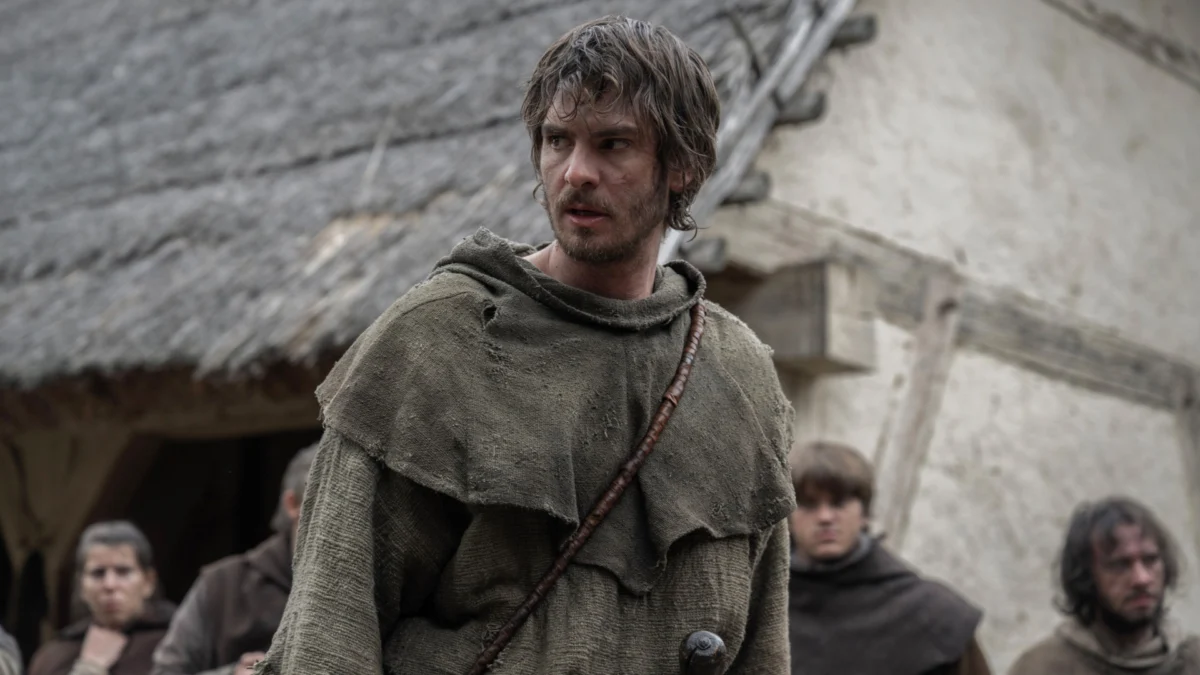
Focus Features has unveiled a significant recontextualization of their upcoming period drama, previously known simply as The Uprising, revealing that the film is, in fact, a reimagining of the Robin Hood legend. Starring Andrew Garfield in a role that has now been confirmed as the iconic outlaw, the movie, slated for a September 10th release in U.S. theaters, is set against the backdrop of the tumultuous 1381 English Peasants’ Revolt. This strategic shift in marketing, revealed this week on social media, has generated considerable surprise and discussion among fans and industry observers, many of whom had anticipated a more straightforward historical drama focusing on the real-life events of the revolt led by Wat Tyler against the reign of King Richard II.
The film, directed by acclaimed filmmaker Paul Greengrass, will now officially be subtitled The Rise of Robin Hood. A revised plot synopsis, disseminated via the social media platform X, clarifies the film’s narrative intent: "Set against the true events of the Uprising that helped inspire the legend of Robin Hood," the synopsis states, "Andrew Garfield’s character forms an army of the people to face the King’s might in a fight for justice." This revelation marks a departure from earlier marketing which alluded to the film telling "the birth of a legend" without specifying which one.
A New Legend Forged in Historical Turmoil
Andrew Garfield’s character is listed on IMDb as "Ploughman," a designation that initially suggested a more grounded portrayal of a peasant involved in the historical revolt. The film’s ensemble cast includes notable actors such as Jamie Bell, Stephen Dillane, Tom Hollander, Jonny Lee Miller, Thomasin McKenzie, and Cosmo Jarvis, who is portraying the historical figure Wat Tyler. The narrative is now understood to chronicle the Ploughman’s transformation from an ordinary farmer into a legendary outlaw, a trajectory that, while familiar in Robin Hood lore, is now being transposed onto a historical event that occurred centuries after the traditional settings for Robin Hood tales.
The decision to reveal this crucial narrative element so close to the film’s theatrical debut has been met with a mixed reaction on social media. Some fans expressed disappointment, viewing the shift as a missed opportunity to explore the Peasants’ Revolt as a standalone historical epic. "This actually kinda bums me out because as a history nerd I thought someone was actually tackling the Peasants’ Revolt, which is a time in history that could make for some epic films we never see," commented one user on X. The surprise was palpable for many, with another user exclaiming, "It’s a fucking Robin Hood movie?!" This sentiment garnered significant traction, accumulating over 13,000 likes. A prevalent theme in the online discourse is perplexity regarding the intentional conflation of historical fact – the Peasants’ Revolt and its key figures – with fictional folklore.
This development positions The Uprising: The Rise of Robin Hood as the second film bearing the iconic outlaw’s name to be released this year. It follows the less successful The Death of Robin Hood, a production from A24 starring Hugh Jackman, which reportedly failed to recoup its production costs at the box office.
Contextualizing the Peasants’ Revolt of 1381
To understand the historical weight behind The Uprising: The Rise of Robin Hood, it is essential to delve into the context of the 1381 Peasants’ Revolt. This significant popular uprising in medieval England was a response to a confluence of severe socio-economic pressures. The period following the Black Death (1347-1351) had already destabilized the existing feudal order. While the plague drastically reduced the population, leading to a scarcity of labor and an increase in the bargaining power of surviving peasants, the ruling class sought to reassert control and maintain their economic dominance.
Key catalysts for the revolt included:
- Poll Taxes: Successive attempts by the Crown to levy poll taxes – a fixed tax per person – proved to be the immediate trigger. The third poll tax, implemented in 1380, was particularly burdensome, demanding a significant sum from every adult regardless of their income, a stark contrast to earlier taxes that were often based on land ownership or wealth.
- Feudal Obligations: Many peasants were still bound by manorial obligations, including labor services and rents, which had become increasingly anachronistic and oppressive in a shifting economic landscape.
- Judicial Corruption and Abuses: Widespread corruption within the legal and administrative systems, coupled with the perceived incompetence and extravagance of the royal court, fueled public resentment.
- Social and Religious Grievances: The preaching of radical clerics, such as John Ball, who articulated a vision of social equality and criticized the established church and aristocracy, resonated deeply with the disenfranchised populace. Ball’s famous sermon, "When Adam delved and Eve span, who was then the gentleman?" encapsulated the burgeoning sense of injustice and the questioning of hereditary privilege.
The revolt began in Kent and Essex and quickly spread across southern and eastern England. Rebels marched on London, entering the city and demanding reforms. They targeted symbols of royal authority and the established order, including the Savoy Palace of John of Gaunt, a powerful noble, and the Tower of London. Wat Tyler emerged as a prominent leader, articulating the rebels’ demands, which included the abolition of serfdom, fairer taxation, and the redistribution of land.
The revolt reached its apex on June 14, 1381, when King Richard II, then only 14 years old, met with Wat Tyler at Smithfield. In a moment of dramatic confrontation, Tyler was killed – accounts differ on whether he was stabbed by the Mayor of London, William Walworth, or by the King himself, or an altercation that followed. His death proved to be a turning point, and the subsequent swift and brutal suppression of the rebellion by the royal forces led to widespread executions and further hardship for the peasantry. While the revolt was ultimately crushed, its impact was profound, contributing to the gradual erosion of serfdom and leaving an indelible mark on English social and political history.
Garfield’s Perspective on Historical Resonance
In a recent Esquire profile, published shortly after the Robin Hood reveal, Andrew Garfield discussed his role as the "Ploughman," elaborating on the character’s motivations and the film’s thematic relevance. He described his character as "a fictional everyman farmer whose wife and children have died in the Black Death and, when the King’s men come looking for even more tax money to fund foreign wars, has nothing to lose by taking a stand." Garfield highlighted his character’s unexpected prowess with a scythe, suggesting a transition from agrarian tools to instruments of rebellion, a detail that hints at the genesis of the outlaw persona.
Garfield articulated his understanding of the historical period, stating, "The truth of that period of time was that there were brutal conditions for working-class people, brutal taxation post-plague, incompetence in government, abusive practices, with the underclass being seen as sub-human creatures from the perspective of those in power." When questioned about the applicability of these conditions to contemporary society, Garfield offered a stark affirmation: "Yeah, here and in the United States, and all around the world."
He further characterized the film as a "Rorschach Test," suggesting its potential to be interpreted through various political lenses. Garfield acknowledged the film’s ability to tap into complex societal anxieties, noting that while some might embrace its themes of rebellion and justice, others could project more divisive ideologies onto it. His comments hint at the film’s ambition to be more than just a historical reenactment, aiming instead for a commentary on enduring struggles for equality and the abuse of power.
Marketing Strategy and Fan Reception: A Contentious Reveal
The timing and manner of the Robin Hood reveal have sparked considerable debate. Releasing this information so late in the marketing cycle, rather than integrating it from the outset or preserving it as a plot twist, has left many social media users feeling perplexed. The emphasis on the historical event of the Peasants’ Revolt initially drew in an audience interested in a more direct engagement with that specific period of English history. The subsequent pivot to a Robin Hood narrative, while potentially broadening the film’s appeal, has alienated some who felt a genuine interest in the historical accuracy of the Peasants’ Revolt was being overshadowed.
The juxtaposition of factual historical events with the enduring mythology of Robin Hood presents a narrative challenge. Robin Hood stories have traditionally been set in the 12th and 13th centuries, often depicting a conflict between the common people and the corrupt Sheriff of Nottingham or Prince John, during the absence of King Richard the Lionheart. Placing this archetype within the context of the 1381 Peasants’ Revolt, a historically documented and complex event with its own set of leaders and grievances, is a bold creative choice. It raises questions about how the film will navigate the historical record while simultaneously embracing the romanticized elements of the Robin Hood legend.
The film’s producers at Focus Features have yet to issue a formal statement addressing the fan reactions or elaborating on the creative rationale behind this strategic marketing decision. The Hollywood Reporter reached out for comment but had not received a response by the time of publication. This silence, combined with the late reveal, contributes to the ongoing speculation and discussion surrounding the film’s artistic and commercial intentions.
Broader Implications and Industry Context
The decision to reframe The Uprising as The Rise of Robin Hood has broader implications for how historical narratives are adapted and marketed in the contemporary film industry. In an era where audiences often crave both historical authenticity and familiar archetypes, this film attempts to bridge that gap by grounding a legendary figure within a concrete historical upheaval. The success of this approach will likely hinge on the film’s ability to balance the dramatic potential of the Peasants’ Revolt with the inherent appeal of the Robin Hood mythos, without alienating either historical purists or fans of swashbuckling adventure.
The film’s release also comes at a time when stories of social inequality, class struggle, and rebellion are resonating with audiences worldwide. Andrew Garfield’s own commentary on the enduring relevance of the historical conditions depicted in the film suggests an intention to create a work that speaks to present-day concerns. The "Rorschach Test" analogy he employed hints at a desire for the film to provoke thought and dialogue, inviting viewers to draw parallels between the injustices of the 14th century and contemporary societal issues.
The film’s success will also be measured against its box office performance and critical reception, particularly in light of the aforementioned The Death of Robin Hood‘s financial struggles. The market for such historical epics, especially those with a legendary twist, can be unpredictable. The unique marketing approach for The Uprising: The Rise of Robin Hood may prove to be a masterstroke in generating buzz, or it could be perceived as a misstep that muddied its initial narrative clarity. The coming months, leading up to the September 10th release, will undoubtedly see further discussion and analysis of this intriguing cinematic endeavor. The film’s exploration of a foundational myth within a pivotal historical moment promises to be a significant talking point within the landscape of historical dramas and fantasy adaptations.