VENICE – Oscar-winning filmmaker Laura Poitras, renowned for her unflinching examinations of state power and surveillance, has unveiled her latest work, "They’re Here," a potent 25-minute documentary that plunges viewers into the heart of Minneapolis’s defiant resistance against what she describes as the "paramilitary occupation" by Immigration and Customs Enforcement (ICE) last year. Speaking at the Venice Film Festival, Poitras articulated a profound sense of urgency driving the project, asserting that the film aims to dismantle the normalization of state-sanctioned violence by immersing audiences in the visceral terror experienced by those targeted.
"We believed in a sense of urgency in documenting this," Poitras stated during a press conference Monday, her words resonating with the gravity of the film’s subject matter. "What we’re seeing in the United States is a nightmare, and we feel what’s happening in the mainstream media is that this kind of violence is being normalized. We believe very strongly in the power of cinema to denormalize this violence and to show what’s happening, so that you can feel the sense of terror."
This marks Poitras’s first directorial effort since the critically acclaimed Nan Goldin documentary "All the Beauty and the Bloodshed," which captivated audiences at Venice in 2022, securing the festival’s prestigious Golden Lion award before earning an Academy Award nomination. Poitras’s previous Oscar win came in 2015 for "Citizenfour," a seminal documentary that chronicled Edward Snowden’s groundbreaking revelations about global NSA surveillance programs.
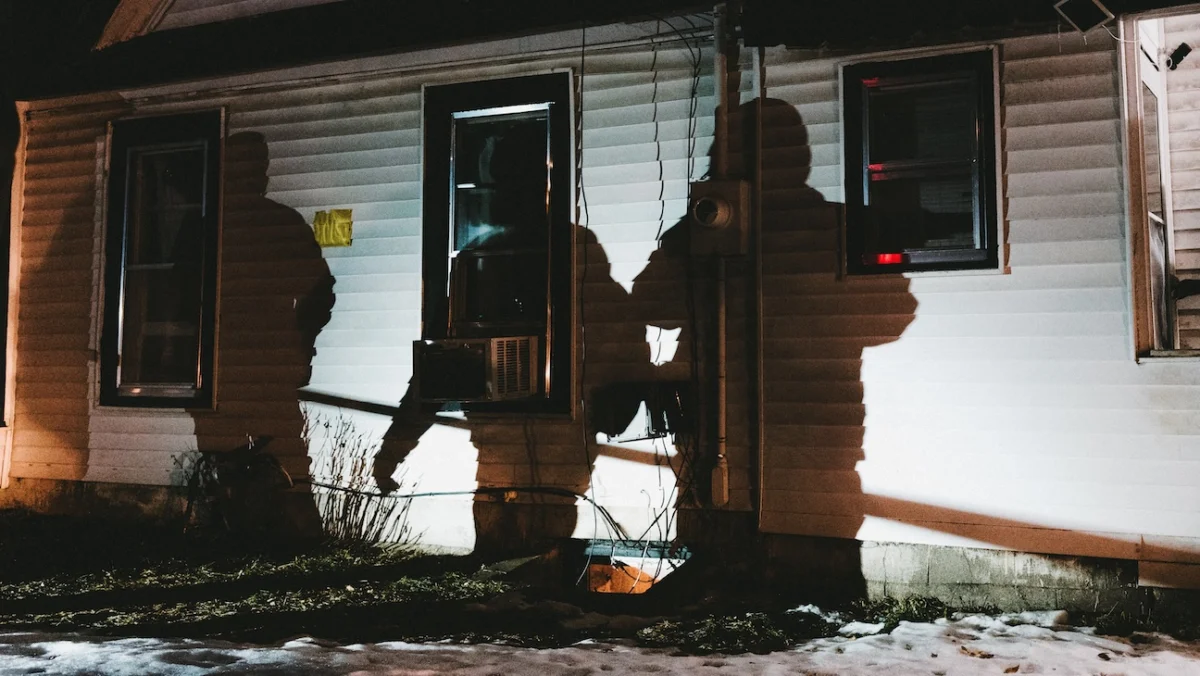
"They’re Here" is co-directed by Minneapolis-based journalist and documentarian Rachel Lauren Mueller, whose local perspective lends an intimate and grounded authenticity to the film’s dystopian narrative. The documentary adopts a style reminiscent of dystopian science fiction cinema, a deliberate artistic choice designed to mirror and amplify the unsettling reality it portrays. The film opens with serene imagery of a picturesque, wintry American Midwest landscape, a stark contrast to the chilling vision of America in 2025 that unfolds. In this imagined near-future, under the shadow of a Trump presidency, masked figures are depicted abducting children, while residents are forced to conceal themselves in car trunks simply to commute to work safely. The unsettling narrative extends to everyday scenes, such as vacationers at a Minneapolis airport, who gaze out at shackled prisoners being forcibly loaded onto planes nearby.
The film masterfully reconstructs the resistance movement through a mosaic of sources, including raw dashcam footage, crowdsourced data visualizations, and intimate ground-level recordings. This multifaceted approach meticulously details the cat-and-mouse tactics employed by both the residents of Minneapolis and the masked agents of ICE.
A Dystopian Lens on Present-Day Realities
Poitras elaborated on the film’s aesthetic and thematic choices, emphasizing that the use of dystopian and horror genres was not an attempt to distance the audience from reality, but rather to bring them closer to its disturbing truths. "We were using the genres or language of dystopian cinema or horror to take us closer to reality, not to take us further away, and not to make fiction from reality," she explained in Venice. "This actually is the reality – the reality is a nightmare. The entire country is under attack, and immigrants are living in fear throughout the United States right now."
Rachel Lauren Mueller echoed this sentiment, drawing a direct line between the film’s narrative and the increasing extremism witnessed during the Trump administration. "Over the two Trump terms, we’ve seen that things have gotten more extreme, but people become used to certain things," Mueller stated. "So I think the real role of this film is to shake that up a bit – to change things from a space of intellectualization about these numbers and these images that we see, and to have it become more visceral again."
Roots of Resistance and Solidarity
The genesis of "They’re Here," according to Poitras, stems from a profound sense of solidarity with the immigrant communities who have made Minneapolis their home. The film is a testament to the human connections forged in the face of adversity. "It came from a real sense of, ‘These are our neighbors, and we don’t want them stolen from us. We want these people to stay safe,’" Poitras articulated, highlighting the community-driven nature of the resistance.
A Dual Narrative of Hope and Alarm
Poitras presented a nuanced perspective on the Trump administration’s response to the Minneapolis resistance, characterizing it as a "great success" in its immediate impact while simultaneously issuing a stark warning about the ongoing scale of ICE operations. The film documents the significant community mobilization that led to ICE withdrawing a substantial portion of its agents from the city. "At the end of the film, we say how these tens and hundreds of thousands of residents responded, and that ICE removed 80 percent of its agents. So there was a real response to this kind of resistance, which I think we can all take hope from," she explained.
However, this note of optimism is tempered by alarming data. Poitras pointed to ICE’s formidable annual budget of $70 billion, an "astronomical amount of money," and revealed a disturbing surge in deportations. "Additionally, in the last two months, 90,000 people were abducted," she stated, referring to the period of June and July preceding the festival. "So it’s this is a record high that has happened in June and July. So ICE is absolutely still active. Their tactics just look very different now." This highlights a strategic shift in ICE operations, moving from overt, large-scale raids to potentially more targeted or clandestine methods, making surveillance and documentation even more critical.
Background and Chronology of the Minneapolis Resistance
The events depicted in "They’re Here" are rooted in a period of heightened tension in Minneapolis, particularly in the wake of the murder of George Floyd in May 2020. While the film focuses on ICE’s actions, the broader context of racial injustice and the subsequent calls for police reform created an environment where federal intervention, especially concerning immigration enforcement, became a focal point of community concern and opposition.
The documentary specifically chronicles events that transpired during the Trump administration’s tenure, a period marked by an assertive and often controversial approach to immigration policy. ICE operations, particularly those targeting undocumented immigrants, intensified, leading to widespread fear and activism in cities across the nation. Minneapolis, with its diverse population and a history of progressive activism, became a site of significant local resistance against perceived federal overreach and the humanitarian consequences of these policies.
While the exact timeline of the "paramilitary occupation" mentioned by Poitras is detailed within the film, reports from the period indicate instances of ICE agents operating in cities without the full cooperation of local law enforcement, leading to community outcry and organized protests. The film appears to capture and dramatize the collective efforts of residents who organized to protect their neighbors from federal immigration enforcement, employing various tactics to track and counter ICE movements, and to provide sanctuary and support to those at risk. This resistance often involved community watch programs, public awareness campaigns, and legal advocacy, all aimed at disrupting ICE operations and advocating for more humane immigration policies.
Broader Implications and Analysis
The premiere of "They’re Here" at the Venice Film Festival, a platform renowned for showcasing groundbreaking cinema, signals the film’s potential to spark significant dialogue on a national and international level. Poitras’s deliberate choice to frame the documentary through a dystopian lens serves a crucial purpose: to jolt audiences out of complacency and to underscore the alarming parallels between fictional narratives of oppression and the lived experiences of many in the United States.
The film’s analysis of ICE’s operational capacity and recent deportation figures raises critical questions about the balance of power between federal agencies and local communities, as well as the ethical implications of immigration enforcement policies. The vast budget allocated to ICE, coupled with record-breaking apprehension numbers, suggests a persistent and evolving strategy of immigration enforcement, even as public and local governmental resistance attempts to curb its impact.
The success of the Minneapolis resistance, as highlighted by Poitras, offers a tangible example of community power in action. The significant reduction in ICE agents deployed in the city demonstrates that organized, large-scale civilian opposition can indeed influence federal agency operations. This aspect of the film serves as a powerful reminder of the civic duty to remain vigilant and engaged in challenging governmental actions that are perceived as unjust or harmful.
However, the film’s cautionary notes about the evolving tactics of ICE are equally vital. The suggestion that ICE may be adapting its methods to become less visible, while its overall activity remains high, underscores the need for continued scrutiny and documentation. This implies that the fight for immigrant rights and community protection will require ongoing innovation and resilience from activists and documentarians alike.
"They’re Here" is screening in the Venice Open – Out of Competition section, a strand dedicated to nonfiction and special presentations, underscoring its status as a significant artistic and political statement. The film’s world premiere in the Sala Grande on Monday afternoon marked a pivotal moment for its reception by critics and audiences. Produced by Rachel Lauren Mueller, Laura Poitras, and longtime Poitras collaborator Yoni Golijov, with ARTE France serving as a co-producer, the film benefits from a strong creative team. Submarine Entertainment Sales is handling U.S. distribution rights, indicating a planned broader release and further engagement with these critical issues within the American context. The documentary’s impact is anticipated to extend beyond the festival circuit, contributing to the ongoing discourse surrounding immigration, state power, and the resilience of communities in the face of systemic challenges.