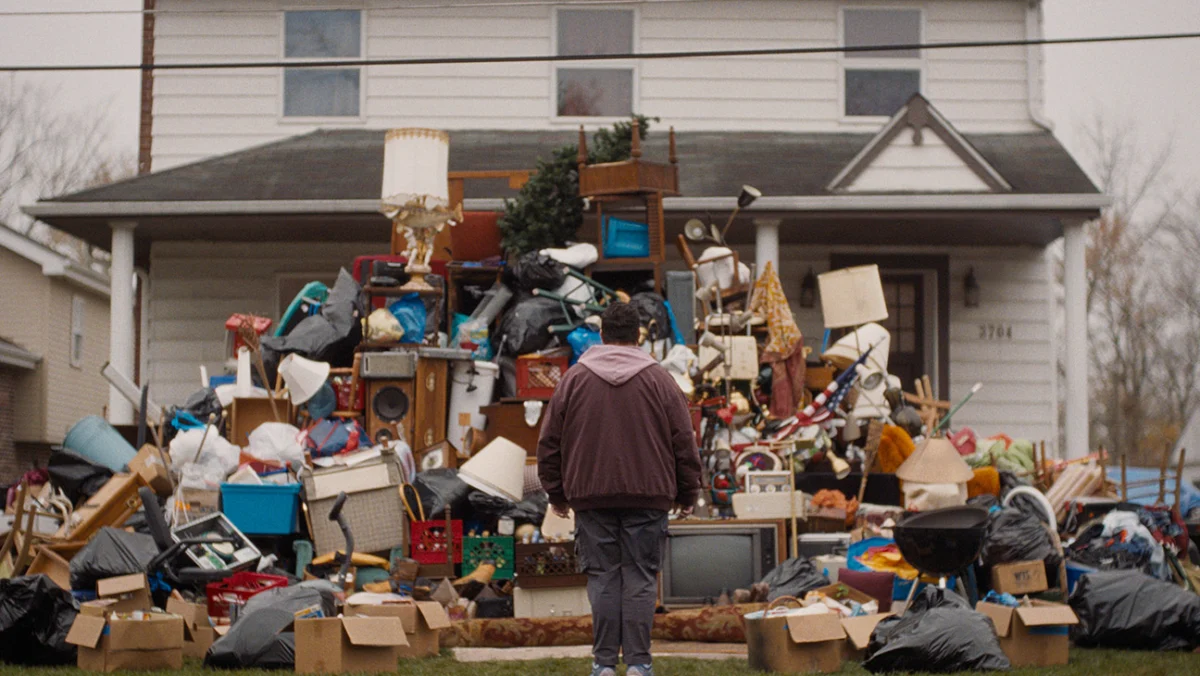
The Toronto International Film Festival (TIFF), a prestigious cinematic event that annually draws global attention to the latest in film, played host to the world premiere of Kris Rey’s poignant dramedy, Trash Mountain, on Friday evening. The film, co-written by and starring comedian Caleb Hearon alongside Zooey Deschanel, delves into the complex terrain of love and grief, a subject Hearon found deeply personal, having navigated the unexpected loss of his own father. The premiere sparked a thoughtful discussion among the filmmakers and audience members about the delicate balance between humor and heartache, particularly when drawing from lived experiences.
From Personal Tragedy to Cinematic Catharsis
Caleb Hearon, already recognized for his sharp wit in projects like the sequel to The Devil Wears Prada and an HBO Max comedy special, approached Trash Mountain with a deliberate intention to explore beyond his established comedic persona. The film centers on Gavin, a young gay man from Chicago who is compelled to return to his rural Missouri hometown following the death of his hoarder father. Upon his return, Gavin, who appears to have distanced himself from significant relationships, finds himself in an emotionally charged reunion with his estranged half-sister, Abbi, portrayed by Zooey Deschanel.
"No. If anything, I’m eager to prove that I’m not just a clown," Hearon stated to the TIFF audience, addressing the inherent challenges of weaving humor into a narrative steeped in loss. This sentiment underscores his desire to showcase a broader emotional range and explore the multifaceted nature of human experience through his art. The film’s narrative is directly influenced by Hearon’s personal journey through grief, with the character of Gavin serving as an avatar for his own experiences. While his real-life father is not a physical presence on screen, his impact is profoundly felt, particularly as Gavin and Abbi sift through the tangible remnants of his life.
The Metaphor of the Hoard: Navigating the Debris of a Life
The central metaphor of Trash Mountain lies in the literal mountain of refuse that has accumulated in the father’s yard, a sprawling testament to a life of accumulation and perhaps, avoidance. As Gavin and Abbi begin the arduous task of clearing this physical debris, they are forced to confront the emotional detritus of their shared past. This process of sifting through the accumulated possessions becomes a powerful catalyst for their reconciliation and a means of processing their father’s legacy.
The act of sorting through the father’s belongings highlights the intrinsic value and emotional weight that objects can carry. What one person discards as junk can hold profound sentimental value for another, serving as tangible links to cherished memories and lost loved ones. This theme resonated deeply with Zooey Deschanel, who shared a personal anecdote during the post-premiere Q&A. Deschanel revealed that she had brought a scarf worn by her late grandfather to the set as a prop, a conscious decision to imbue the character and the film with a deeper layer of personal connection.
"I have them in my closet, and every time I see them I think of my grandfather," Deschanel explained. "These objects can be conduits for people that have passed." This statement eloquently articulates a universal human experience: the way material possessions can act as powerful anchors to memory, facilitating a continued connection with those who are no longer physically present. Deschanel, known for her roles in films like All the Real Girls and The Good Girl, brought her own lived experiences of loss and remembrance to her portrayal of Abbi, further enriching the film’s exploration of grief.
The Writing Process: A Delicate Dance Between Laughter and Tears
Co-writing Trash Mountain with Ruby Caster presented Hearon and Caster with the significant challenge of navigating the fine line between comedy and tragedy. The inherent humor in Hearon’s comedic background could easily tip into inappropriate territory when dealing with sensitive themes of grief and loss. Caster, speaking at the TIFF event, admitted to initial wariness about Hearon’s comedic sensibilities during the writing process, specifically her concern about the script straying into jokes that might trivialize the emotional weight of the subject matter.
"She was wary with Hearon as a skilled comedian in writing the wrong joke that crossed a line between drawing laughter and tears around grief," the original report states. This delicate balance was a constant consideration. Hearon, in his characteristic style, lightened the tension during the discussion by humorously acknowledging Caster’s concerns: "You stepped across a lot of lines. And I want to talk about that, here, tonight." This exchange exemplifies the very tension the film aims to explore – the inherent human tendency to use humor as a coping mechanism, even in the face of profound sadness.
The success of Trash Mountain lies in its ability to integrate these seemingly disparate elements seamlessly. The comedy in the film is not intended to mock grief but rather to offer moments of levity and relatability, reflecting how life’s absurdities often persist even amidst sorrow. This approach allows the audience to connect with the characters on a deeper, more authentic level, acknowledging the complex emotional landscape that grief often entails.
A Stellar Ensemble and the Broader Context of TIFF
Beyond Hearon and Deschanel, Trash Mountain boasts a strong supporting cast, including acclaimed actress Jackie Weaver, and emerging talents Jaboukie Young-White, Kyle Martin, and Holmes. The film also benefits from the creative vision of executive producer Lilly Wachowski, known for her groundbreaking work in science fiction filmmaking. The involvement of such diverse and accomplished individuals signals a commitment to telling nuanced stories that resonate with contemporary audiences.
The premiere at TIFF places Trash Mountain within a larger context of artistic discourse and industry recognition. TIFF, established in 1976, has grown to become one of the most influential film festivals in the world, renowned for its role in launching independent films and showcasing diverse voices. The festival typically attracts over 450,000 attendees, including industry professionals, filmmakers, and film enthusiasts, providing a crucial platform for films like Trash Mountain to gain visibility and critical attention. The festival’s programming often reflects current societal dialogues, and a film exploring grief and family dynamics in a contemporary setting aligns with this ethos. The festival runs annually through mid-September, with this year’s event concluding on September 20th.
Thematic Resonance and Potential Impact
Thematically, Trash Mountain taps into several resonant contemporary issues. The exploration of hoarding, a recognized mental health condition, sheds light on the complexities of family relationships and the often-unseen struggles of individuals. Furthermore, the film’s portrayal of a young gay man navigating familial estrangement and returning to his roots speaks to themes of identity, belonging, and the enduring power of family, however fractured.
The film’s success at its premiere suggests a strong potential for audience connection. In an era where mental health and personal well-being are increasingly discussed, stories that offer catharsis and understanding are particularly valuable. Trash Mountain‘s ability to blend humor with profound emotional depth positions it as a film that can spark important conversations about loss, family, and the human capacity for resilience. The critical reception from TIFF will undoubtedly shape its subsequent release and distribution, potentially making it a significant talking point in the independent film landscape. The engagement from a festival audience, known for its discerning tastes and appreciation for authentic storytelling, bodes well for the film’s future impact. The presence of industry professionals at such premieres also means that Trash Mountain could find itself on the radar for awards consideration in the upcoming season, further amplifying its message.