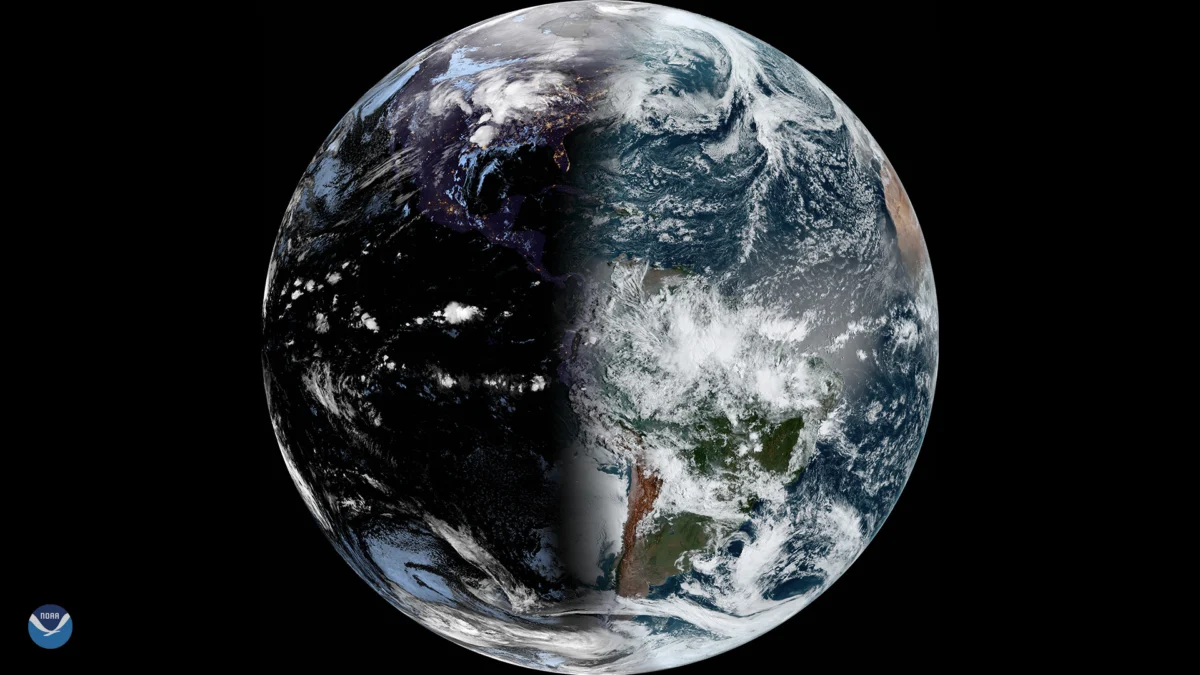
The equinox, a precise astronomical event occurring twice annually, stands as a fundamental marker in Earth’s orbital journey around the Sun, signaling profound shifts in seasonal patterns across the globe. For millennia, humanity has observed and revered these moments, recognizing them as harbingers of changing weather, agricultural cycles, and the very rhythm of life on Earth. In 2026, these pivotal celestial occurrences are slated for March 20 and September 23, each marking a precise instant when the Sun’s center aligns directly with our planet’s equator, distributing sunlight almost equally across both hemispheres. Far from being mere calendar annotations, equinoxes encapsulate a rich tapestry of scientific mechanics, historical significance, and cultural resonance that continues to fascinate and inform our understanding of the cosmos.
The Astronomical Mechanism: Earth’s Orbital Dance and Axial Tilt
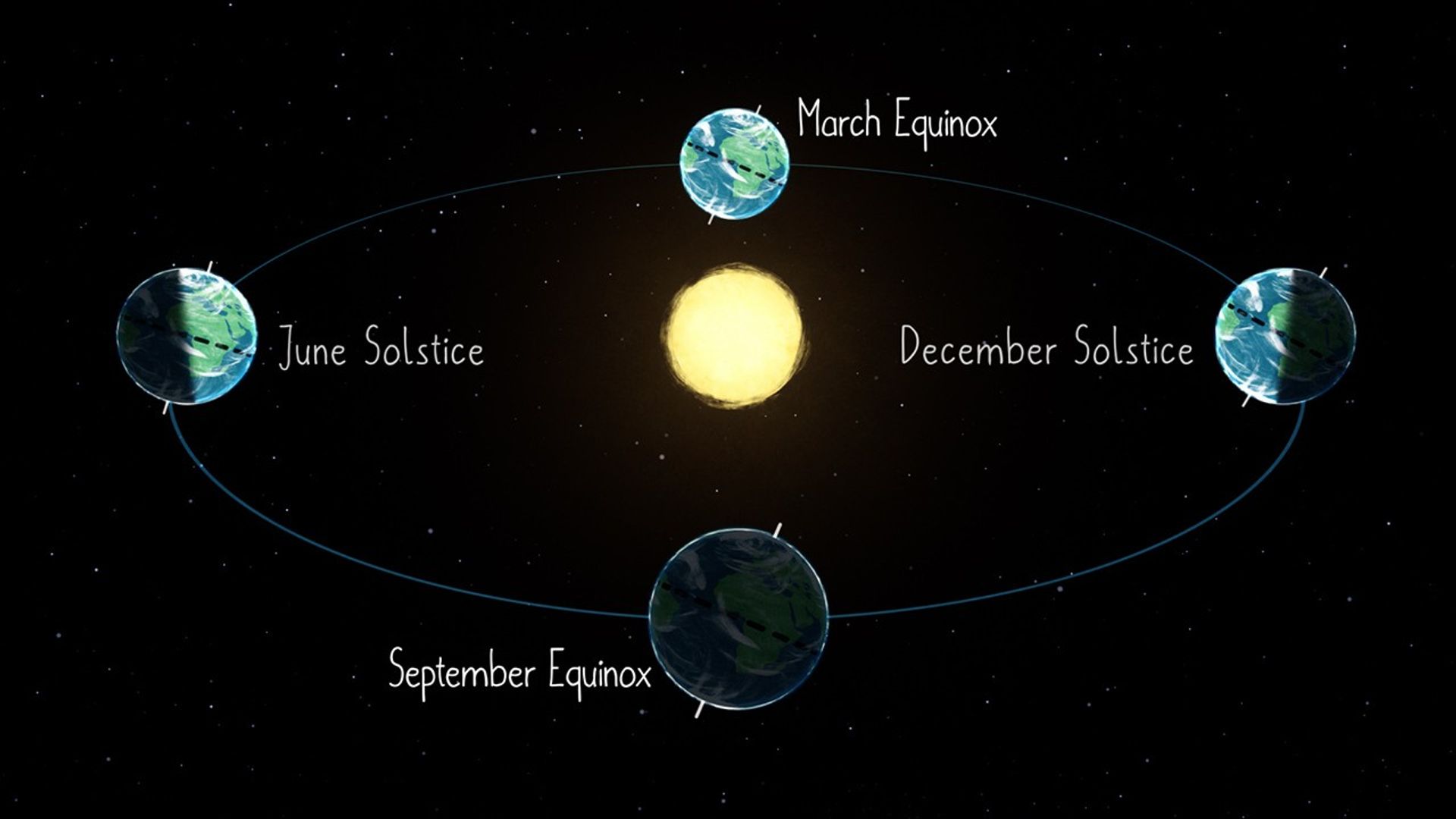
At the heart of the equinox phenomenon lies Earth’s consistent axial tilt of approximately 23.5 degrees relative to its orbital plane around the Sun, known as the ecliptic. This tilt is the primary driver of our planet’s seasons. As Earth traverses its elliptical path over 365.25 days, its axis consistently points towards the North Star, Polaris. Consequently, different parts of the globe receive varying intensities of sunlight throughout the year. During the solstices (summer and winter), one hemisphere is maximally tilted towards or away from the Sun, leading to the longest and shortest days, respectively.
The equinoxes represent the two specific points in Earth’s orbit when its axis is neither tilted towards nor away from the Sun. At these moments, the Sun’s rays fall perpendicularly on the equator, causing the subsolar point—the point on Earth’s surface directly beneath the Sun—to precisely cross the celestial equator. This alignment means that both the Northern and Southern Hemispheres receive nearly equal amounts of direct solar illumination. The term "equinox" itself, derived from the Latin "aequus" (equal) and "nox" (night), aptly describes this near-equal distribution of daylight and darkness across most latitudes. It is a precise astronomical event, not a full day, but rather an exact moment in time when this celestial geometry is achieved.
The 2026 Equinoxes: Key Dates and Global Timings
For the year 2026, the astronomical community has precisely calculated the timings for both equinoxes, allowing for global observation and anticipation. The first of these, often referred to as the Vernal Equinox in the Northern Hemisphere or the Autumnal Equinox in the Southern Hemisphere, will occur on March 20, 2026, at precisely 14:46 Coordinated Universal Time (UTC). For observers in the Eastern Daylight Time (EDT) zone, this translates to 7:46 AM EDT. This event heralds the astronomical beginning of spring for those north of the equator and autumn for those south of it.
The second equinox of 2026, marking the onset of autumn in the Northern Hemisphere and spring in the Southern, will take place on September 23, 2026, at 00:05 UTC. Due to time zone differences, this will occur on September 22, 2026, at 5:05 PM Pacific Daylight Time (PDT) for observers in that region. These precise timings underscore the sophistication of modern astronomical calculations, a stark contrast to the observational methods employed by ancient civilizations. The consistent predictability of these events, governed by fundamental orbital mechanics, serves as a testament to the enduring order of our solar system.
Beyond the traditional "vernal" and "autumnal" labels, which are hemisphere-specific, astronomers often employ the more universally descriptive terms "northward equinox" for March and "southward equinox" for September. These terms accurately reflect the apparent movement of the Sun’s path in the sky, which begins its northward journey after the March equinox, reaching its peak at the June solstice, before turning southward again, crossing the equator at the September equinox, and continuing its southward trajectory until the December solstice. This cyclical movement is a direct consequence of Earth’s tilt and its orbit.
Beyond "Equal Night": Nuances of Day and Night Length
While the etymology of "equinox" suggests perfectly equal day and night, the reality is slightly more nuanced. The day of the equinox is not precisely 12 hours of daylight and 12 hours of darkness for every location on Earth. This slight discrepancy is attributed to two primary factors: the angular size of the Sun and atmospheric refraction.

Firstly, the Sun is not a point source of light but a spherical body with an apparent diameter of about 0.5 degrees. Sunrise is officially defined as the moment the Sun’s upper limb (edge) appears above the horizon, and sunset is when its upper limb disappears. This definition alone adds several minutes of daylight, as the entire solar disk must pass the horizon.
Secondly, and more significantly, Earth’s atmosphere acts like a lens, refracting or bending sunlight. As light from the Sun enters our atmosphere, it is bent downwards, causing the Sun to appear higher in the sky than it actually is. This effect is most pronounced at the horizon. Consequently, we can see the Sun even when it is geometrically below the horizon, effectively extending daylight by several minutes both at sunrise and sunset. The amount of refraction varies with atmospheric conditions and latitude, meaning the exact moment of "equilux" (when day and night are truly equal) can vary by a few days from the equinox itself, depending on one’s location. For instance, in mid-latitudes, the equilux typically occurs a few days before the vernal equinox and a few days after the autumnal equinox. This minor deviation highlights the intricate interplay between celestial mechanics and terrestrial atmospheric physics.
A Historical Perspective: Ancient Observatories and Early Astronomy
The observation and prediction of equinoxes represent some of humanity’s earliest and most sophisticated astronomical achievements. Long before the advent of telescopes or atomic clocks, ancient civilizations across the globe recognized the critical importance of these celestial turning points. Their survival often depended on accurate seasonal predictions for agriculture, hunting, and managing resources.
Many monumental structures around the world bear testament to this ancient astronomical prowess. Stonehenge in England, a Neolithic monument dating back over 4,500 years, is famously aligned with the solstices, but also shows alignments that would have aided in marking the equinoxes. Chichen Itza, the ancient Mayan city in Mexico, features the El Castillo pyramid, where on the equinoxes, the play of light and shadow creates the illusion of a serpent (Kukulkan) descending its steps. Newgrange in Ireland, an ancient passage tomb, is spectacularly illuminated by the rising Sun on the winter solstice, but its design also reflects a broader understanding of the Sun’s annual cycle, including its equinoctial positions.
These ancient observatories were not merely architectural marvels; they were sophisticated scientific instruments, enabling priests, shamans, and early astronomers to track the Sun’s apparent movement along the horizon, predict seasonal changes, and establish calendars. The ability to forecast equinoxes allowed for the precise timing of planting and harvesting, the organization of religious festivals, and the structuring of societal life. This deep, practical connection to celestial events fostered a rich mythological and spiritual understanding of the cosmos, intertwining science, religion, and daily existence.
The Equinox in Culture and Mythology
Beyond its scientific definition, the equinox holds profound cultural and symbolic meaning across diverse civilizations. The spring equinox, often associated with rebirth, renewal, and fertility, is celebrated with festivals marking the return of warmer weather and the awakening of nature. Easter, Persian Nowruz, and various pagan spring festivals (like Ostara) are often tied to or influenced by the timing of the vernal equinox, symbolizing new beginnings and the triumph of light over darkness.
Conversely, the autumnal equinox is widely celebrated as a time of harvest, gratitude, and preparation for the colder, darker months. Festivals like Mabon (a pagan harvest festival), Sukkot in Judaism, and various Thanksgiving traditions around the world reflect themes of abundance, reflection, and storing provisions. The balance inherent in the equinox, where day and night are nearly equal, often symbolizes harmony, equilibrium, and the cyclical nature of life, death, and rebirth. These cultural interpretations, though varied, consistently underscore humanity’s enduring connection to the rhythms of the natural world, as dictated by our planet’s celestial dance.
Scientific and Environmental Implications
The equinoxes have tangible scientific and environmental implications that extend beyond calendar marking. These periods represent crucial transitions in global climate patterns. As the Sun’s energy is distributed nearly equally across the hemispheres, it influences atmospheric circulation and ocean currents. While not causing dramatic immediate shifts, the equinoxes mark the midpoint of these transitions, facilitating the gradual change from one extreme season to the next.
For agriculture, the precise timing of equinoxes historically provided critical benchmarks for planting and harvesting cycles. Modern agriculture still relies on seasonal understanding, though supported by more advanced meteorological data. Biologically, the changing photoperiod (length of daylight) around the equinoxes triggers various responses in flora and fauna, such as plant flowering, leaf senescence, animal migration, and breeding cycles. Many species are highly sensitive to day length, using it as an environmental cue.
In the realm of space exploration, understanding the Sun’s position relative to Earth is paramount. Satellites in Earth orbit, particularly those relying on solar panels for power, must constantly adjust their orientation to maximize energy capture. During the equinoxes, when the Sun is directly over the equator, the illumination geometry can simplify certain operational aspects for equatorial-orbiting satellites but may also present unique thermal challenges as sunlight directly strikes surfaces for extended periods. Missions planning solar-powered operations on other celestial bodies with axial tilts, like Mars, also rely on similar principles to predict optimal energy collection.
The Broader Cosmic Context: Earth’s Precession and the Shifting Sky
While the equinoxes occur reliably twice a year, their precise location against the backdrop of distant stars is not static over millennia. This slow, grand celestial shift is due to a phenomenon called axial precession, also known as the precession of the equinoxes. Earth’s axis, while tilted, also wobbles slowly like a spinning top, completing one full wobble cycle approximately every 25,800 years.
This wobble causes the celestial poles to trace a large circle in the sky, meaning that the North Star will not always be Polaris. More significantly for the equinoxes, it causes the "vernal equinox point"—the intersection of the celestial equator and the ecliptic—to slowly drift westward through the constellations of the zodiac. This shift is the astronomical basis for the astrological concept of the "Age of Aquarius" succeeding the "Age of Pisces," as the vernal equinox point gradually moves from the constellation Pisces into Aquarius.
This long-term astronomical phenomenon adds another layer of depth to our understanding of the equinoxes, demonstrating that even seemingly fixed celestial markers are part of a larger, dynamic cosmic dance. It underscores the ever-changing nature of our view of the cosmos, even as the fundamental mechanics governing our seasons remain constant on human timescales.
Expert Insights and Official Explanations
Organizations like NASA and the Jet Propulsion Laboratory (JPL) play a crucial role in disseminating accurate and accessible information about astronomical phenomena like the equinoxes. Through public outreach, scientific publications, and educational resources, they clarify the complex mechanics behind these events. As exemplified by experts like Kat Troche, who contributed to the original article, these institutions translate intricate orbital dynamics and atmospheric physics into understandable explanations for the general public.
The precision with which these events are predicted is a testament to centuries of accumulated astronomical knowledge, from the earliest naked-eye observers to modern space-borne observatories. This consistent scientific consensus ensures that humanity, whether planning agricultural cycles, cultural celebrations, or space missions, can rely on accurate information regarding Earth’s rhythmic journey through the solar system.
In conclusion, the equinoxes are far more than simple dates on a calendar. They are intricate astronomical events, precisely calculated and deeply woven into the fabric of human history, culture, and science. From the ancient monoliths marking the Sun’s path to the modern satellite navigating its solar arrays, the equinoxes continue to serve as powerful reminders of our planet’s elegant cosmic ballet and humanity’s enduring connection to the vast universe around us. As we anticipate the March and September equinoxes of 2026, we are invited to reflect on this profound celestial balance and its myriad implications for life on Earth.