

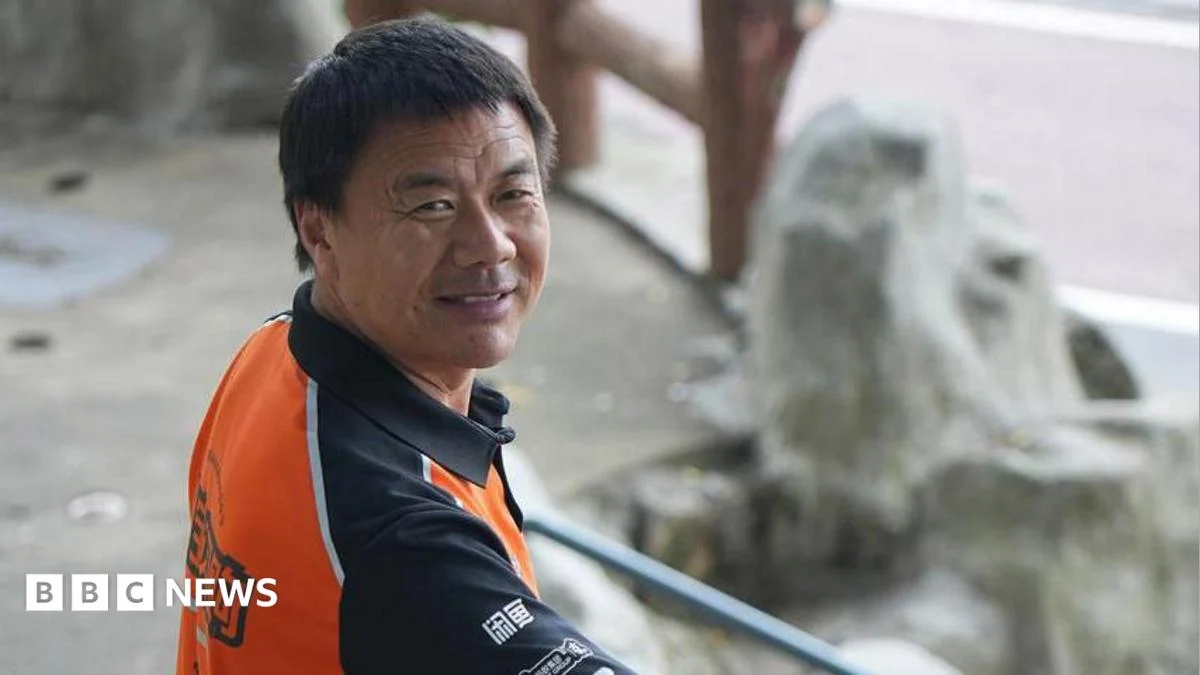
A collection of poignant poems, some meticulously scribbled on slips of paper during brief respites between demanding food deliveries, has propelled Wang Jibing, a 56-year-old delivery rider, to national literary prominence, securing him one of China’s most prestigious literary honours: the Lu Xun Literary Prize. His winning collection, "Low Flight," offers an intimate and unvarnished glimpse into the daily trials and triumphs of delivery riders, a rapidly expanding but often overlooked segment of China’s colossal gig economy workforce. The award, named after Lu Xun, widely revered as the father of modern Chinese literature, signifies a remarkable recognition of voices from the country’s blue-collar sector.
The announcement of Wang’s victory on July 15, as reported by state media outlet Global Times, sent ripples across the nation, catapulting a man who spent decades toiling in various odd jobs into the literary spotlight. His narrative is not merely one of personal triumph but also underscores a burgeoning trend in China where the lived experiences of blue-collar workers are increasingly finding expression and acclaim within the literary world, offering critical insights into the profound pressures of contemporary Chinese society.
The Lu Xun Literary Prize: A Benchmark of Chinese Literature
The Lu Xun Literary Prize stands as one of the most esteemed literary accolades in China, established in 1986 by the China Writers Association. Awarded triennially, it celebrates excellence across various literary categories including novels, novellas, short stories, reportage, poetry, essays, literary criticism, and translations. Its namesake, Lu Xun (1881-1936), was a towering figure in 20th-century Chinese literature, known for his incisive social commentary and satirical critiques of traditional Chinese society, works that continue to resonate with contemporary readers. The prize, therefore, carries immense symbolic weight, honouring writers whose works embody a spirit of social consciousness and literary innovation, much like Lu Xun himself. Past recipients often represent the pinnacle of Chinese literary achievement, making Wang Jibing’s inclusion a significant testament to the evolving landscape of Chinese literature and its increasing inclusivity. While the precise monetary value of the award is not always publicly disclosed, reports from 2014 indicated a prize sum of 100,000 Chinese yuan (approximately $14,800 or £11,000 at the time), a substantial sum that, while not life-changing for many established writers, represents considerable financial recognition for someone like Wang.
Wang Jibing’s Journey: From Hardship to Literary Acclaim
Born in Jiangsu province, Wang Jibing’s early life was marked by economic hardship, forcing him to leave school as a teenager. This early departure set him on a path of relentless manual labour, a common trajectory for many in rural China seeking livelihoods in the country’s burgeoning urban centres. Over the decades, Wang embraced a diverse array of physically demanding jobs, from the arduous work of construction sites to the meticulous task of scavenging for waste, and the entrepreneurial spirit required to sell goods at a street stall. Each role, while providing a means of survival, also offered a unique vantage point into the diverse fabric of Chinese society and the struggles of its working class.
It was around 2019, at the age of 52, that Wang transitioned into the role of a food delivery rider, a profession that has exploded in scale with the rapid expansion of China’s digital economy. This new vocation, while demanding, provided him with a unique blend of solitude and observation, elements that proved fertile ground for his latent literary aspirations. Despite the physical toll and the relentless pressure of deadlines, his love for reading, a passion cultivated despite his truncated formal education, persisted. For over a decade, he had been quietly honing his craft, sharing his poems and essays on social media platforms, a testament to the democratizing power of digital communication in China.
The Gig Economy: A Backdrop for "Low Flight"
Wang Jibing’s "Low Flight," published in 2024, is not merely a personal reflection but a collective voice, inspired by extensive interviews and surveys he conducted with approximately 200 fellow delivery riders. This methodical approach lends the collection a documentary quality, providing an authentic and multifaceted portrayal of a demographic often reduced to anonymous figures zipping through city streets. The title itself, drawn from one of his poignant lines – "Who says spreading your wings means flying high? Flying low is also flying" – encapsulates the spirit of resilience, pragmatism, and quiet dignity found amidst the daily grind. It challenges conventional notions of success and ambition, celebrating the essential, often unsung, contributions of those who keep urban life functioning.
China’s gig economy is a behemoth, estimated to employ hundreds of millions of people across various sectors, with food delivery constituting a significant portion. These workers, predominantly migrant labourers from rural areas, navigate a challenging landscape characterized by long working hours, often precarious incomes tied to algorithmic demands, lack of comprehensive social security, and intense competition. Reports frequently highlight the physical and mental toll of such work, including traffic accidents, burnout, and the constant pressure to meet tight deadlines imposed by digital platforms. Wang’s poetry, therefore, serves as a crucial humanizing force, transforming statistical data and policy debates into tangible, relatable experiences. His work sheds light on the unseen labour and the often-overlooked humanity behind the seamless digital convenience enjoyed by millions.
Viral Recognition and the Power of Social Media
Wang Jibing’s literary journey gained significant momentum in 2022 when his poem, "Man in a Hurry," went viral online. This particular piece was directly inspired by a frustrating incident in 2019, where he spent hours on a single delivery due to an incorrect address provided by a customer. The poem resonated deeply with countless readers, many of whom were either gig workers themselves or sympathetic to their plight, recognizing the shared experience of systemic frustrations and the relentless pace of modern life. This viral success demonstrated the powerful role of social media in China in amplifying voices that might otherwise remain unheard, bypassing traditional publishing gatekeepers and connecting directly with a vast audience.
The widespread acclaim for "Man in a Hurry" led to the publication of his first poetry collection in 2023, aptly titled "Man in a Hurry: Poems of a Food Delivery Rider." This initial success laid the groundwork for "Low Flight" and ultimately, the Lu Xun Literary Prize. The immediate and widespread media attention following his prize win, while a source of pride, also brought considerable "mental pressure" to Wang, as he confessed to the Global Times, highlighting the sudden shift from relative anonymity to national recognition.
A Broader Movement: Blue-Collar Voices in Chinese Literature
Wang Jibing’s achievement is not an isolated incident but rather indicative of a broader and increasingly significant literary movement in China, where blue-collar workers are stepping forward to share their stories. This trend reflects a growing societal awareness and literary appetite for narratives that explore the realities of contemporary Chinese life from the perspective of its working class.
One prominent example is Hu Anyan, a former courier whose 2023 memoir, "I Deliver Parcels in Beijing," became an overnight bestseller in China and garnered international media attention, with an English translation published last year. Hu’s memoir offered a similarly unvarnished account of the physical and emotional challenges of working as a courier in China’s sprawling capital, providing a valuable counter-narrative to official portrayals of urban development.
Another seminal work in this genre is "I Am Fan Yusu," an autobiographical essay penned by migrant worker Fan Yusu in 2017. Her raw and unflinching account of personal struggle, poverty, and resilience as a migrant worker captivated the Chinese internet, sparking an unprecedented outpouring of discussion and empathy. The response was so overwhelming that Fan Yusu, unaccustomed to such public scrutiny, had to temporarily leave her home to escape the endless media requests, a testament to the profound impact her narrative had on the national consciousness.
These literary successes collectively challenge traditional literary canons, which have historically focused on elite or intellectual perspectives. They underscore a growing demand for authenticity and diverse representation within Chinese literature, moving beyond grand historical narratives to embrace the micro-histories of everyday individuals.
The Enduring Legacy of Lu Xun and Contemporary Resonance
The choice of Lu Xun as the namesake for China’s premier literary prize is particularly apt in this context. Lu Xun, known for his piercing insights into social inequalities and human suffering, utilized literature as a tool for social critique and awakening. His works, such as "The True Story of Ah Q" and "Kong Yiji," satirized the feudalistic remnants and intellectual stagnation he perceived in early 20th-century China.
Remarkably, Lu Xun’s legacy continues to resonate powerfully with younger generations in contemporary China. Just a few years ago, Kong Yiji, a character from his short story who clung to outdated scholarly ideals despite his poverty, became a poignant meme symbolising the disillusionment among Chinese youth struggling to find stable employment and meaningful careers in a highly competitive job market. This modern reinterpretation of a century-old literary character highlights the enduring relevance of Lu Xun’s observations on social hierarchy, economic precarity, and the psychological impact of societal pressures. Wang Jibing’s win, under the aegis of such a figure, reinforces the idea that true literature often emerges from the crucible of lived experience and possesses the power to illuminate societal truths.
Implications and Future Outlook
Wang Jibing’s win is more than just a personal accolade; it carries significant implications for various facets of Chinese society and culture. For the millions of gig economy workers, it offers a powerful symbol of recognition and validation, potentially inspiring others to share their stories and drawing much-needed attention to their working conditions and welfare. It could potentially spark broader discussions about labor rights, social safety nets, and the human cost of rapid economic development in China.
For Chinese literature, the prize signals a further democratisation of voices and themes. It encourages a broader acceptance of non-traditional literary backgrounds and an expanded definition of what constitutes valuable literary subject matter. This trend enriches the literary landscape by introducing fresh perspectives and narratives rooted in diverse social strata.
Despite achieving this remarkable literary honour, Wang Jibing has stated his intention to continue working as a delivery rider until he turns 60. His reasons, as reported by Global Times, are twofold: "Financially I don’t need this job to make a living, but I love the vibe of the work and it keeps me fit." He further emphasized his commitment to an authentic life: "I want a down-to-earth life and the award will never change who I am." This steadfast dedication to his chosen profession, even after achieving literary fame, speaks volumes about his character and reinforces the authenticity of his literary voice. It suggests that his writing is not merely a means of escape from his work but an intrinsic part of his engagement with the world, a direct outcome of his lived experience. His decision to remain a delivery rider, even as a celebrated author, further solidifies his role as a genuine representative of the blue-collar workforce, ensuring that his future literary endeavors will continue to be grounded in the realities that shaped his award-winning poetry.