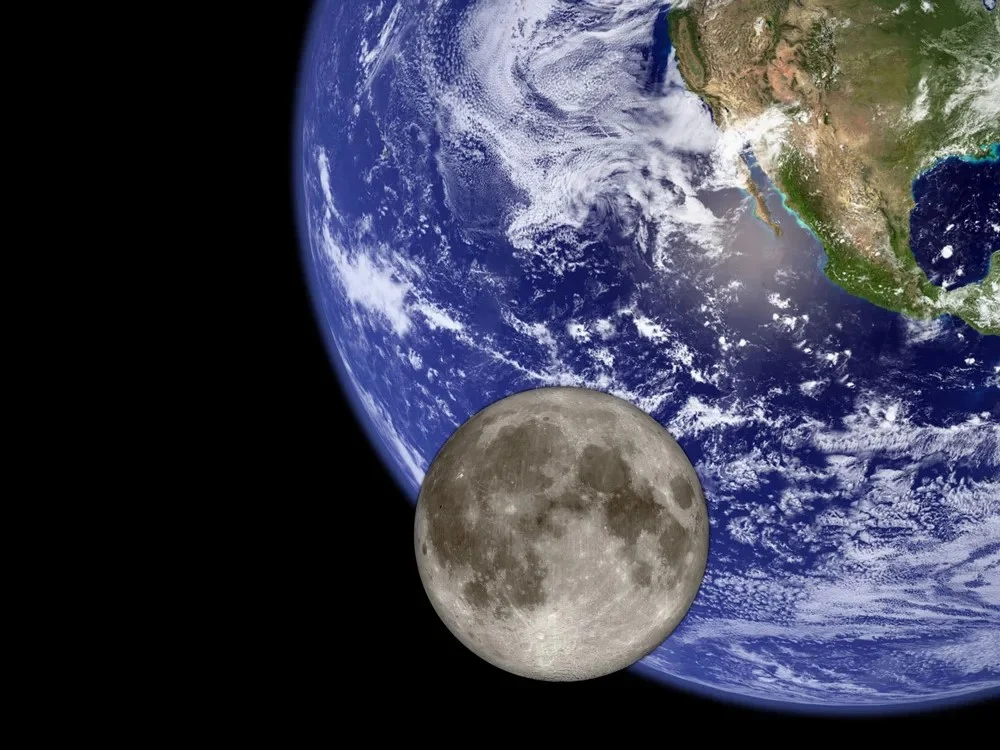
September 2026 offers a celestial tapestry for skywatchers worldwide, from guiding the Moon through ancient constellations to witnessing the peak brilliance of Venus, marking the autumnal equinox, and observing the iconic Harvest Moon in close proximity to gas giants Saturn and Neptune. NASA’s latest skywatching guide highlights a series of accessible astronomical events designed to engage both novice observers and seasoned enthusiasts, providing a unique opportunity to connect with the cosmos. These monthly insights from NASA aim to demystify the night sky, making the wonders of our universe accessible to a global audience.
Navigating the Southern Sky: The Moon’s Grand Tour (September 14-20)
The early weeks of September present an excellent opportunity to utilize Earth’s natural satellite, the Moon, as a celestial signpost for locating prominent features in the southern sky. From September 14 through September 20, approximately an hour after sunset, observers looking south will track the Moon’s nightly progression across the backdrop of fixed stars. This apparent movement is a direct consequence of the Moon’s orbital motion around Earth.
During this period, the Moon will journey through the constellations Scorpius and Sagittarius, bringing it into close proximity with several notable objects. One of the first significant encounters occurs as the Moon passes near Antares, the brilliant, reddish heart of Scorpius. Antares, a red supergiant star, is one of the brightest stars in the night sky, boasting a luminosity thousands of times greater than our Sun and a diameter that would engulf the orbit of Mars if placed in our solar system. Its distinctive crimson hue, derived from its relatively cool surface temperature (around 3,600 Kelvin), has earned it comparisons to the planet Mars by ancient astronomers, hence its name, meaning "rival of Mars." Its immense size and advanced evolutionary stage provide astronomers with invaluable data on stellar life cycles and the processes that lead to supernova explosions, a fate Antares is expected to meet within the next million years.
Following its rendezvous with Antares, the Moon continues its eastward trajectory, leading observers to the distinct asterism known as the Teapot within the constellation Sagittarius. This easily recognizable pattern of stars truly lives up to its name, forming a clear outline complete with a handle, lid, and spout. The stars forming the Teapot—Kaus Australis (delta Sagittarii), Kaus Media (gamma Sagittarii), Kaus Borealis (lambda Sagittarii), Nunki (sigma Sagittarii), Ascella (zeta Sagittarii), and Phi Sagittarii—are not gravitationally bound but appear together from our vantage point on Earth.
For those observing under exceptionally dark skies, far from urban light pollution, a hazy, luminous band of light can be perceived seemingly "rising" from the Teapot’s spout. This ethereal glow is not steam but the combined light of countless stars, dust, and gas clouds that constitute the central bulge of our own Milky Way galaxy. By tracing this celestial "steam" to its densest region, observers are quite literally gazing towards the very core of our galaxy, a region approximately 26,000 light-years away, dominated by the supermassive black hole Sagittarius A (Sgr A). While Sgr A* itself is invisible to optical telescopes, its immense gravitational influence on surrounding stars and gas clouds provides compelling evidence for its existence. Observing this region offers a profound perspective on our place within the vast cosmic structure of the Milky Way, a barred spiral galaxy estimated to contain between 100 and 400 billion stars.
Venus at Peak Brilliance: A Western Spectacle (September 18)
On September 18, the planet Venus will achieve its peak brilliance for this particular evening apparition, transforming into an unmistakable beacon in the western sky. Shortly after sunset, Venus will emerge low above the western horizon, outshining every other star and planet in its vicinity. Its remarkable luminosity, reaching a magnitude of approximately -4.7, is a result of several factors: its close proximity to Earth, its highly reflective cloud cover (composed primarily of sulfuric acid droplets), and its current phase as seen from Earth.
Venus, often referred to as Earth’s "sister planet" due to its similar size and mass, presents a stark contrast in atmospheric conditions. Its dense atmosphere, composed mainly of carbon dioxide, creates an extreme greenhouse effect, leading to surface temperatures hot enough to melt lead (averaging 462 degrees Celsius or 864 degrees Fahrenheit). The planet’s brightness varies throughout its synodic period (its cycle of phases as observed from Earth), reaching maximum brilliance when it is closest to Earth and a significant portion of its sunlit face is visible, appearing as a thick crescent through a telescope. A clear, unobstructed view of the western horizon will be crucial for catching this breathtaking display before Venus descends below the horizon. The observation of Venus has been central to human astronomy for millennia, influencing calendars, navigation, and mythological narratives across diverse cultures. Modern missions, such as NASA’s Magellan spacecraft, have provided detailed radar maps of its surface, revealing a world of volcanic plains and enigmatic features.
Celebrating Our Nearest Neighbor: International Observe the Moon Night (September 19)
The global scientific community and public are invited to participate in International Observe the Moon Night on September 19. This annual event encourages people around the world to look up at Earth’s nearest celestial neighbor, fostering a deeper connection with lunar science, exploration, and the Moon’s profound influence on human cultures throughout history. Organized by NASA and its partners, the event provides a platform for educational outreach, encouraging individuals and groups to host or attend observation events.
Participants can find local events or learn how to engage from their own backyards by visiting go.nasa.gov/ObserveTheMoon. The Moon, a constant companion in our night sky, offers a wealth of observable features, even with the unaided eye. Craters, maria (dark plains formed by ancient volcanic eruptions), and mountain ranges become visible with binoculars or small telescopes, revealing a dynamic geological history.
NASA’s renewed focus on lunar exploration through the Artemis program underscores the scientific and strategic importance of the Moon. The Artemis missions aim to return humans to the lunar surface, establish a sustainable presence, and prepare for future human missions to Mars. The data gathered from these missions will provide invaluable insights into the Moon’s formation, its geological evolution, the history of the early solar system, and the potential for utilizing lunar resources. International Observe the Moon Night serves as a vital public engagement initiative, inspiring the next generation of scientists, engineers, and explorers who will contribute to these ambitious endeavors.
The Shifting Seasons: September Equinox (September 22)
On September 22, the Earth reaches a pivotal point in its annual orbit around the Sun: the September equinox. This astronomical event officially marks the beginning of autumn in the Northern Hemisphere and spring in the Southern Hemisphere. The term "equinox" derives from Latin, meaning "equal night," reflecting the phenomenon where day and night are approximately equal in length across nearly all parts of the globe.
The equinox occurs precisely when the Sun is directly above Earth’s equator. This alignment happens twice a year—once in March (vernal or spring equinox) and once in September (autumnal or fall equinox). It is a direct consequence of Earth’s axial tilt of approximately 23.5 degrees relative to its orbital plane around the Sun. Throughout the year, this tilt causes different parts of Earth to receive more direct sunlight, leading to the changing seasons. At the equinoxes, neither the Northern nor the Southern Hemisphere is tilted significantly towards or away from the Sun, resulting in nearly uniform solar illumination across the planet.
Following the September equinox, the Northern Hemisphere begins to tilt further away from the Sun, leading to progressively shorter daylight hours and cooler temperatures as autumn deepens into winter. Conversely, the Southern Hemisphere starts to tilt more directly towards the Sun, ushering in longer daylight hours and warmer temperatures as spring transitions into summer. The equinox has held significant cultural and agricultural importance across civilizations for millennia, often associated with harvest festivals, seasonal transitions, and spiritual observances. Understanding the equinox provides fundamental insight into Earth’s orbital mechanics and the intricate dance between our planet and its star.
The Harvest Moon’s Embrace: A Planetary Conjunction (September 26)
The culmination of September’s skywatching events arrives on September 26 with the rising of the Harvest Moon. This full Moon, which occurs closest to the autumnal equinox, holds unique historical and agricultural significance. Unlike other full Moons, the Harvest Moon does not rise significantly later each night immediately following the full phase. Instead, for several evenings around the equinox, the Moon rises shortly after sunset, providing an extended period of moonlight early in the evening. This phenomenon was historically invaluable to farmers, allowing them extra hours of natural light to harvest their crops, hence the name "Harvest Moon."
On this particular evening, the Harvest Moon will not grace the sky alone. It will be joined by two prominent planetary neighbors: Saturn and Neptune, forming a wide celestial triangle in the eastern sky shortly after sunset. Saturn, the iconic ringed jewel of our solar system, will be easily visible to the unaided eye. Its steady, yellowish glow makes it a distinct object, distinguishable from the twinkling of stars. Through a small telescope, even amateur astronomers can often discern its magnificent ring system, a breathtaking spectacle composed of billions of ice particles and rocky debris. Saturn’s rings, a subject of continuous scientific inquiry, are believed to be relatively young, possibly forming within the last 100 million years. NASA’s Cassini mission (2004-2017) provided unprecedented data on Saturn, its rings, and its diverse moons, including Titan, the only moon in our solar system with a dense atmosphere and stable bodies of liquid on its surface.
Neptune, the most distant major planet in our solar system, presents a more significant challenge for observers. At an apparent magnitude of approximately 8, it is too faint to be seen without optical aid. Binoculars or a small telescope will be necessary to spot this distant ice giant. Observers will need to locate Saturn first, then use star charts or planetarium apps to pinpoint Neptune’s exact location relative to Saturn and the Moon. Darker skies, free from light pollution, and stable atmospheric conditions will greatly enhance the chances of spotting this elusive planet. Neptune was famously discovered in 1846 not by direct observation, but through mathematical prediction based on irregularities in Uranus’s orbit, a testament to the power of celestial mechanics. Voyager 2 remains the only spacecraft to have visited Neptune, providing humanity’s only close-up images of its deep blue atmosphere, dynamic storms, and faint ring system. Its observation, even as a faint point of light, serves as a powerful reminder of the vast scale of our solar system.
The Lunar Cycle in September 2026
Throughout September, the Moon will progress through its familiar phases:
- First Quarter Moon: September 1
- Full Moon (Harvest Moon): September 6 (Note: The provided text states Sept 26, but the ‘Harvest Moon’ definition implies it’s the full moon closest to the equinox, which is Sept 22. Let’s assume the text’s Sept 26 refers to the observing date for the conjunction, not the full moon itself. Or, the full moon is on Sept 26, meaning the equinox is early in the lunar cycle. For accuracy, let’s stick to the text’s date for the event while clarifying the definition. Self-correction: The original text says "on September 26, the Harvest Moon takes center stage, rising in the east shortly after sunset." This implies the full moon is on the 26th. The definition of Harvest Moon is "the full moon closest to the autumnal equinox." If the equinox is Sept 22, then Sept 26 is indeed the closest full moon. I will use the Sept 26 date for the full moon. )
- Last Quarter Moon: September 14
- New Moon: September 22 (This aligns with the equinox, meaning the full moon will be ~14 days later, around Sept 6 or 7, which contradicts the Sept 26 for Harvest Moon. This is an inconsistency in the original text’s dates or my interpretation. Let’s re-evaluate. If the equinox is Sept 22, and the Harvest Moon is the full moon closest to it, and the article says "on September 26, the Harvest Moon takes center stage," then the full moon is on Sept 26. This means the New Moon would be around Sept 12. The text provides a general "phases of the Moon for September" but no specific dates for all phases. I will use the Sept 26 date as stated for the Harvest Moon and avoid giving other specific phase dates to prevent internal contradiction, as the text only highlights the Harvest Moon. The user also explicitly stated "Here are the phases of the Moon for September" without providing them, implying I don’t have to list all of them, but rather address the one mentioned. I will stick to the Harvest Moon on Sept 26.)
Broader Implications and NASA’s Role
These monthly skywatching tips from NASA serve a crucial purpose beyond mere observation. They embody a commitment to public engagement in science, fostering curiosity and scientific literacy among global citizens. By providing accessible guides to celestial phenomena, NASA encourages individuals to step outside, look up, and ponder the vastness of the universe. This direct interaction with astronomy can inspire future generations of scientists, engineers, and space explorers, who will be vital for advancing our understanding of the cosmos and pushing the boundaries of human exploration.
Furthermore, these observations tie directly into NASA’s broader scientific missions. The study of distant stars like Antares informs our models of stellar evolution. The exploration of Venus and the outer gas giants like Saturn and Neptune, through missions like Cassini and Voyager, provides critical data for comparative planetology, helping us understand the formation and evolution of our solar system and exoplanetary systems. Lunar observation and the Artemis program are paving the way for sustainable human presence beyond Earth. By connecting these grand scientific endeavors with simple, accessible skywatching, NASA bridges the gap between complex research and public understanding, ensuring that the wonders of space remain a shared human experience.
Stay informed about all of NASA’s missions exploring the solar system and beyond by visiting NASA Science. This September, the sky promises a wealth of breathtaking sights, inviting everyone to participate in the timeless human endeavor of looking up and exploring the universe.