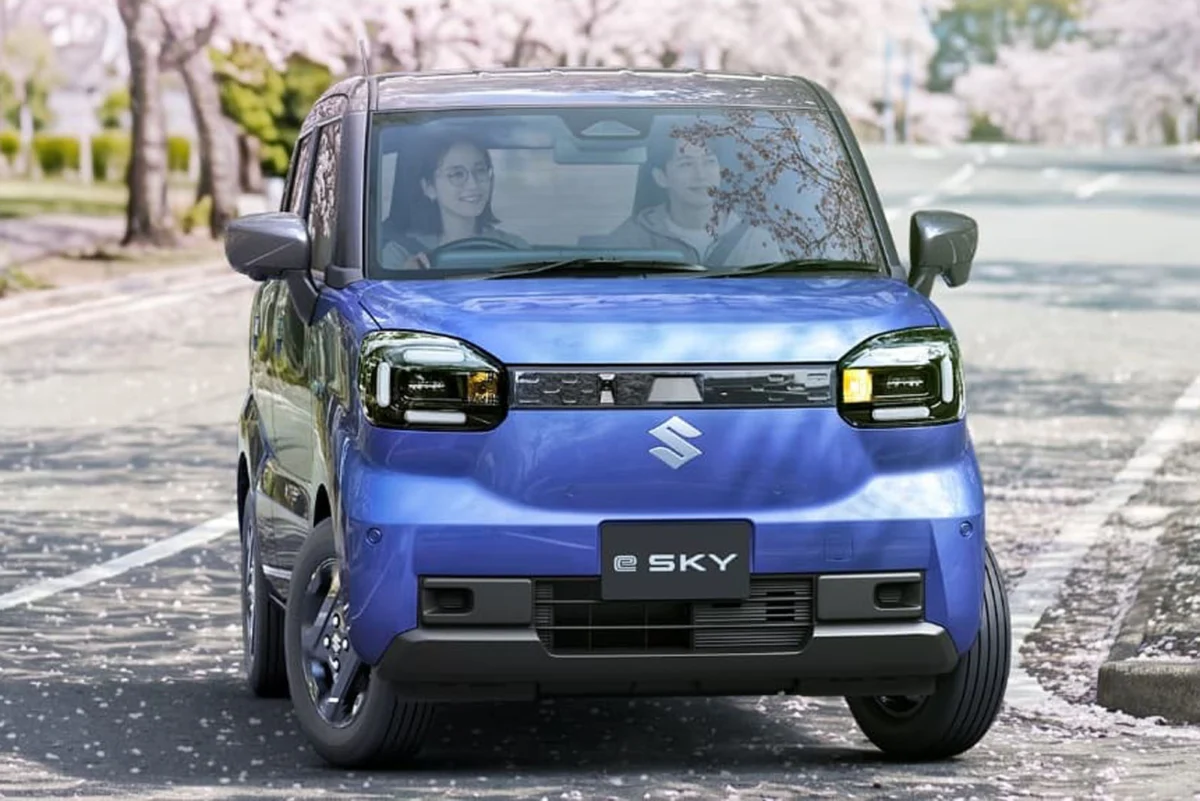
Suzuki has officially pulled back the curtain on the e-Sky, an all-electric city car destined for the United Kingdom market next year, positioning it as a direct challenger to upcoming compact rivals like the Renault Twingo and the Honda Super-N. This landmark reveal marks Suzuki’s first foray into the electric "kei car" sector, a category deeply rooted in Japanese automotive culture but increasingly relevant to the congested urban environments of Western Europe. Developed under the strict dimensional constraints of Japan’s unique vehicle classification system, the e-Sky emphasizes efficiency, space maximization, and affordability, signaling a strategic pivot for the brand as it navigates the transition toward a fully electrified lineup.
Design Philosophy and Aesthetic Evolution
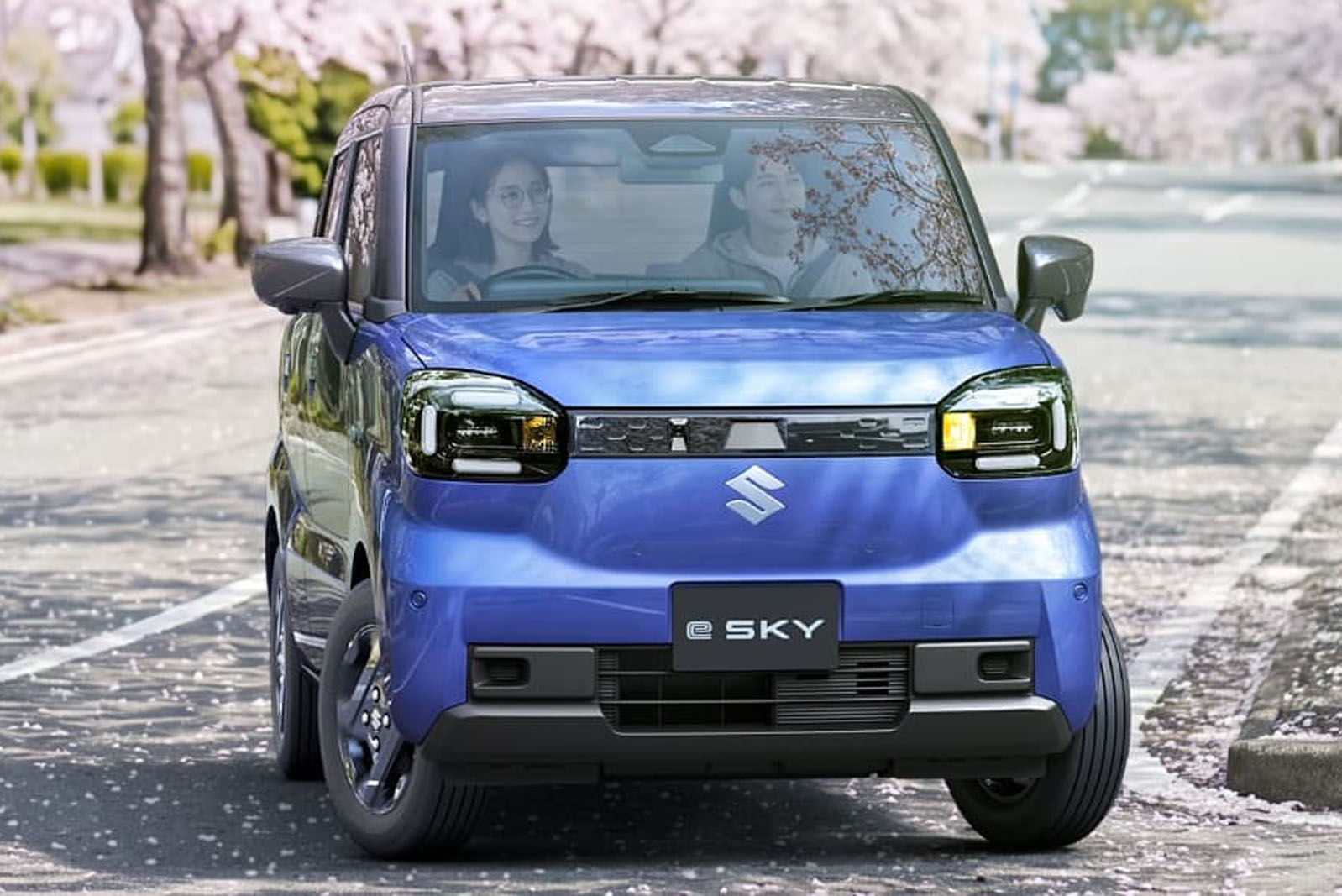
The production-ready e-Sky remains remarkably faithful to the concept car showcased at the Tokyo motor show last year, retaining the boxy, upright silhouette that has become a hallmark of the manufacturer’s small-car expertise. This "tall-boy" design is not merely an aesthetic choice but a functional necessity dictated by the car’s minimal footprint. By utilizing a high roofline and vertical sides, Suzuki engineers have maximized internal cabin volume, ensuring that despite its compact exterior dimensions, the vehicle can comfortably accommodate adult passengers and provide a degree of practical storage rarely seen in the A-segment.
Visually, the transition from concept to production has resulted in several refinements aimed at manufacturing feasibility and regulatory compliance. The most prominent change is found in the lighting architecture. While the original concept featured ultra-slim, futuristic LED strips that spanned the width of the front fascia, the production e-Sky adopts a "chunkier," more robust set of headlights and taillights. These conventional units lend the car a more grounded, approachable appearance, aligning it with Suzuki’s reputation for building durable, no-nonsense vehicles. The exterior retains a minimalist charm, characterized by short overhangs and large windows that promise excellent visibility for urban maneuvering.
Technical Specifications and Performance Metrics
While Suzuki has opted to keep the full technical dossier under wraps until a formal autumn briefing, the e-Sky is expected to adhere closely to the technical parameters governing the Japanese kei car class. In its domestic market, these vehicles are restricted to a maximum power output of 63bhp (47kW). It is widely anticipated that the e-Sky will utilize a single, front-mounted electric motor delivering this specific output, prioritizing smooth, immediate torque for stop-start city driving rather than high-speed performance.
One of the most significant data points emerging from Japanese media reports is the e-Sky’s projected range. Early estimates suggest the vehicle will be capable of traveling approximately 193 miles on a single charge. If these figures are validated under the WLTP (Worldwide Harmonised Light Vehicles Test Procedure) cycle used in Europe, the e-Sky would hold a substantial advantage over its primary competitors. For comparison, the Honda Super-N—a modified version of the Honda N-One E tailored for export—offers a range of approximately 128 miles.
The discrepancy in range and power between the e-Sky and the Super-N highlights different engineering philosophies. The Honda Super-N has been modified for international markets with a more potent 94bhp motor and a wider body to appeal to Western tastes for performance and "road presence." It remains an open question whether Suzuki will follow a similar path for the UK-bound e-Sky. The company faces a choice: maintain the ultra-efficient, lightweight 63bhp configuration to preserve the 193-mile range, or retune the motor for higher output at the expense of battery longevity. Given Suzuki’s traditional focus on value and efficiency, many industry analysts expect the brand to prioritize range and cost-effectiveness.
Chronology of Development and Launch Timeline
The journey of the e-Sky began in earnest at the 2023 Tokyo motor show, where it served as a centerpiece of Suzuki’s vision for carbon neutrality. Over the past twelve months, the project has moved rapidly through the testing and homologation phases. The timeline for the e-Sky’s rollout is now clearly defined:
- Autumn 2024: Full technical specifications, including battery capacity, charging speeds, and final interior features, will be officially disclosed.
- Early 2025: Production is expected to ramp up at Suzuki’s specialized small-car facilities.
- Spring 2025: The e-Sky is scheduled to make its commercial debut in the UK, marking the beginning of Suzuki’s aggressive EV offensive.
- 2026: Suzuki plans to introduce its third electric vehicle. While details remain scarce, Suzuki UK leadership has explicitly confirmed that this subsequent model will not be an electric version of the Swift, suggesting a dedicated EV platform or a new crossover entry.
Strategic Importance and Market Positioning
The introduction of the e-Sky is a cornerstone of Suzuki’s broader strategy to maintain its relevance in a rapidly changing European market. For years, the A-segment (city cars) has been under threat as manufacturers abandon smaller models due to the high costs of meeting tightening emissions and safety standards. With the e-Sky, Suzuki is positioning itself to fill the void left by the departure of icons like the Ford Fiesta and the electrification of the Fiat 500.
David Kateley, the Managing Director of Suzuki UK, has been vocal about the importance of this specific model. In recent statements, Kateley emphasized that the "A-segment BEV (Battery Electric Vehicle) is vitally important" to the brand’s UK operations. He noted that the company is "very excited about its prospects," particularly as it addresses a growing demand for affordable, zero-emission urban transport.
Pricing is perhaps the most critical factor in the e-Sky’s anticipated success. Suzuki expects to launch the vehicle with a starting price of under £20,000. This pricing strategy is designed to achieve parity with the combustion-engined Suzuki Swift supermini, removing the "green premium" that has historically deterred many buyers from switching to electric power. At this price point, the e-Sky will not only compete with other EVs but will also act as a viable alternative for used car buyers looking to enter the new car market for the first time.
Regulatory Context: The ZEV Mandate
Beyond consumer sales, the e-Sky plays a vital role in Suzuki’s regulatory compliance. The United Kingdom has implemented a strict Zero Emission Vehicle (ZEV) mandate, which requires car manufacturers to ensure that a certain percentage of their annual sales are zero-emission models. For 2024, the target is 22%, with the threshold rising annually toward 100% by 2035.
As a brand that has historically relied on highly efficient petrol hybrids, Suzuki needs a high-volume electric seller to avoid significant financial penalties. The e-Sky, with its accessible price and urban utility, is perfectly positioned to drive the sales volume necessary to meet these mandates. Its arrival in Spring 2025 will provide a timely boost to Suzuki’s fleet emissions profile, allowing the brand to continue offering its popular hybrid models while transitioning its core customer base to electric propulsion.
Comparative Analysis: Suzuki e-Sky vs. The Competition
The burgeoning sub-£20,000 EV market is becoming a key battleground for 2025 and 2026. The e-Sky enters a landscape that includes the Renault Twingo Legend and the Honda Super-N, as well as the Dacia Spring and the Citroën e-C3.
- Versus Honda Super-N: While the Honda offers more power (94bhp) and a more aggressive stance, the Suzuki e-Sky counters with a significantly longer reported range (193 miles vs. 128 miles). For urban dwellers, the extra 65 miles of range may prove more persuasive than a quicker 0-30 mph time.
- Versus Renault Twingo: Renault’s upcoming Twingo revival leans heavily on retro-modern styling and a targeted price of under €20,000 (£17,000). Suzuki’s advantage lies in its reputation for reliability and its "function-first" design, which often results in superior interior packaging compared to more style-focused French rivals.
- Versus Dacia Spring: The Dacia Spring is currently the UK’s cheapest EV, but it has faced criticism for its basic interior and limited safety features. Suzuki’s e-Sky is expected to offer a more "complete" car experience, with higher-quality materials and more advanced driver assistance systems, justifying a slightly higher price point.
Broader Impact and Industry Implications
The launch of the e-Sky reflects a broader trend in the automotive industry: the return to "right-sized" vehicles. As EVs have grown larger and heavier to accommodate massive batteries, the e-Sky represents a counter-movement toward efficiency through lightness and compact dimensions. By focusing on the specific needs of city dwellers—short trips, easy parking, and low running costs—Suzuki is demonstrating that electrification does not always require 100kWh batteries or 300-mile ranges.
Furthermore, the e-Sky’s success could pave the way for more Japanese-style kei cars to enter the European market. Traditionally seen as too small or underpowered for Western roads, the instant torque and silent operation of electric motors have made the kei car format more viable than ever for international export. If Suzuki can prove that a 63bhp city car can satisfy the needs of a UK commuter, it may encourage other manufacturers like Daihatsu or Mitsubishi to reconsider their European strategies.
Conclusion
The Suzuki e-Sky is more than just a new model; it is a litmus test for the viability of affordable, small-scale electric mobility in the UK. By leveraging the constraints of the kei car class to create a spacious, efficient, and cost-effective vehicle, Suzuki is addressing the two biggest hurdles to EV adoption: price and practicality. As the automotive world looks toward the autumn for final technical confirmation, the e-Sky stands as a promising beacon for the future of the A-segment, suggesting that the era of the affordable city car is far from over—it is simply being reinvented for a zero-emission age. With a launch set for Spring 2025, the e-Sky is poised to become a familiar sight on British streets, providing a crucial link in Suzuki’s journey toward a sustainable automotive future.