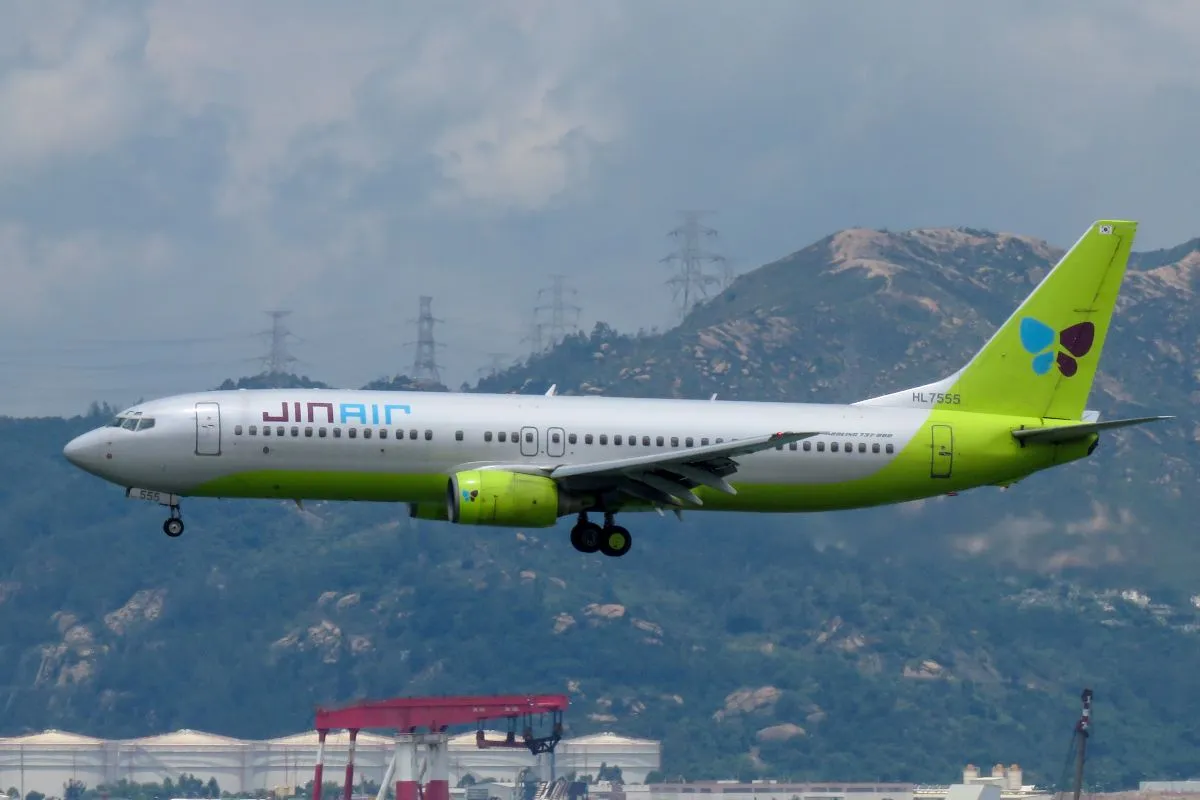
The South Korean aviation industry is standing on the precipice of its most significant transformation in decades following the formal agreement to consolidate three of the nation’s prominent low-cost carriers (LCCs) into a single, unified entity. Under a landmark deal signed on Friday, Jin Air, Air Busan, and Air Seoul will merge under the Jin Air brand, creating a "mega-LCC" that is poised to become the largest budget airline in South Korea by fleet size and market reach. This strategic consolidation, approved by the respective boards of all three carriers, marks the final stages of a massive restructuring effort initiated by the Hanjin Group and its flagship subsidiary, Korean Air.
The newly expanded Jin Air is scheduled to begin integrated operations on March 17, 2027, provided it secures all necessary shareholder and regulatory clearances. This merger represents more than just a corporate reorganization; it is the culmination of a complex "domino effect" that began when Korean Air moved to acquire its long-time rival, Asiana Airlines. With Korean Air officially taking majority control of Asiana Airlines in December 2024, the integration of their respective low-cost subsidiaries became an operational necessity to eliminate redundancies and leverage economies of scale in an increasingly competitive Asian travel market.
The Strategic Vision Behind the Mega-LCC
The primary objective of this three-way merger is the creation of a globally competitive low-cost carrier capable of challenging regional giants. By combining the assets of Jin Air (the LCC subsidiary of Korean Air) with Air Busan and Air Seoul (the LCC subsidiaries of Asiana Airlines), Hanjin Group aims to streamline operations and dominate the short-to-medium haul segments.
According to reports from the Korea Herald, the boards of the three airlines finalized the merger agreement after months of internal deliberations regarding asset valuation and operational synergy. The consolidated entity will maintain the Jin Air name, a brand that has already established a significant presence in the North Asian and Southeast Asian corridors. The move is expected to simplify the consumer experience, moving away from three distinct brand identities, booking systems, and loyalty programs toward a single, robust platform.
Fleet Composition and Operational Scale
The most striking aspect of the merger is the sheer scale of the resulting fleet. Upon completion, the new Jin Air will operate a combined fleet of 58 aircraft. This figure is particularly significant as it surpasses the fleet size of Jeju Air, which has long held the position of South Korea’s leading low-cost carrier.
The integration of the three fleets presents both opportunities and logistical challenges:
- Jin Air: Historically a Boeing-centric operator, Jin Air utilizes a mix of Boeing 737-800s, 737-8s, and wide-body Boeing 777-200ERs. The inclusion of wide-body aircraft allows Jin Air to service long-haul budget routes that many of its competitors cannot.
- Air Busan and Air Seoul: These carriers have traditionally operated Airbus-heavy fleets, primarily consisting of the A320 and A321 families, including the highly efficient A321neo.
Managing a mixed fleet of 58 aircraft from two different manufacturers—Boeing and Airbus—will require a sophisticated approach to maintenance, repair, and overhaul (MRO) services, as well as pilot training and certification. However, industry analysts suggest that the diversity of the fleet will allow the new Jin Air to optimize its route network, using smaller narrow-body jets for domestic and short-haul regional flights while deploying larger aircraft for high-demand routes to destinations like Japan, Vietnam, and Thailand.
A Chronology of the Korean Aviation Consolidation
The path to the March 2027 launch of the unified Jin Air has been years in the making. To understand the significance of this merger, one must look at the timeline of the broader Korean Air-Asiana Airlines acquisition:
- November 2020: Amid the global pandemic and the financial instability of Asiana Airlines’ parent company, Korean Air announced its intent to acquire its rival for approximately $1.6 billion.
- 2021–2023: The deal faced rigorous scrutiny from international antitrust regulators. The European Union, the United States, and Japan expressed concerns regarding a potential monopoly on key international routes.
- February 2024: The European Commission gave conditional approval for the merger after Korean Air agreed to divest Asiana’s cargo business and support the entry of a competitor (T’way Air) on several European routes.
- December 2024: Korean Air officially completed the majority acquisition of Asiana Airlines, setting the stage for the formal merger of the parent companies scheduled for December 17.
- May 2025 – 2026: A period of internal restructuring is expected, focusing on the integration of IT systems, personnel, and flight schedules.
- March 17, 2027: The official launch date for the integrated Jin Air, marking the end of Air Busan and Air Seoul as independent brands.
Addressing Regional Concerns and Official Reactions
While the merger is viewed as a victory for corporate efficiency, it has not been without controversy, particularly regarding the status of Air Busan. Based in South Korea’s second-largest city, Air Busan has long been a source of regional pride and a vital contributor to the local economy of Busan and the surrounding Gyeongsang province.
Local government officials and business leaders in Busan have expressed concern that the merger might lead to a reduction in flights from Gimhae International Airport in favor of Seoul’s Incheon International Airport. There were initial calls for Air Busan to be sold separately to a local consortium to maintain its regional identity. However, Hanjin Group has maintained that a unified LCC is the only way to ensure the long-term viability of the business.
In a statement following the board approval, a spokesperson for the integration committee noted, "The merger of Jin Air, Air Busan, and Air Seoul is a strategic necessity to ensure the competitiveness of the South Korean aviation industry on the global stage. We are committed to maintaining a balanced regional presence while leveraging the combined strengths of all three carriers to provide better service and more diverse travel options for our passengers."
Market Implications and Competitive Landscape
The emergence of a 58-aircraft mega-LCC will fundamentally alter the competitive dynamics of the Northeast Asian aviation market. For years, Jeju Air has been the dominant low-cost player in Korea, but the new Jin Air will possess a larger fleet and the backing of the Hanjin Group’s extensive logistics and maintenance infrastructure.
Other players in the market, such as T’way Air and Air Premia, are also adjusting their strategies. T’way Air, in particular, has benefited from the Korean Air-Asiana merger by taking over several long-haul routes to Europe (including Paris, Rome, and Barcelona) as part of the regulatory remedy packages. This has created a bifurcated LCC market: a massive, consolidated Jin Air on one side, and several smaller, aggressive competitors looking to fill the gaps left by the merger on the other.
For passengers, the merger is expected to have mixed implications. On one hand, a unified airline offers a more seamless travel experience, with a larger network of connecting flights and a more robust loyalty program. On the other hand, the reduction in the number of independent airlines could potentially lead to less price competition on certain domestic and regional routes where the new Jin Air will hold a dominant market share.
Future Outlook: The Road to 2027
The period between now and March 2027 will be critical for the management teams of the three airlines. Integrating three distinct corporate cultures, labor unions, and operational procedures is a Herculean task. One of the most sensitive issues will be labor integration. Each airline has its own pay scales, seniority lists, and benefit packages. Ensuring a smooth transition for pilots, cabin crew, and ground staff will be essential to preventing operational disruptions.
Furthermore, the "new" Jin Air will need to modernize its digital infrastructure. Consolidating three separate reservation systems into a single platform is a high-stakes IT project that must be handled with precision to avoid the technical glitches that have plagued other major airline mergers globally.
Despite these challenges, the financial rationale remains strong. By consolidating three management teams into one, the company expects to save significantly on overhead costs. Centralized purchasing for fuel, aircraft parts, and catering will also provide greater bargaining power, ultimately improving the bottom line in an industry known for its thin profit margins.
As the December 17 deadline for the parent company merger approaches, the South Korean aviation sector is watching closely. The birth of the mega-LCC under the Jin Air banner signifies the end of an era of fragmented competition and the beginning of a new chapter where scale and synergy are the primary drivers of success. By March 2027, the regional skies will look remarkably different, with a single, powerful Jin Air flying the flag for South Korea’s low-cost ambitions.