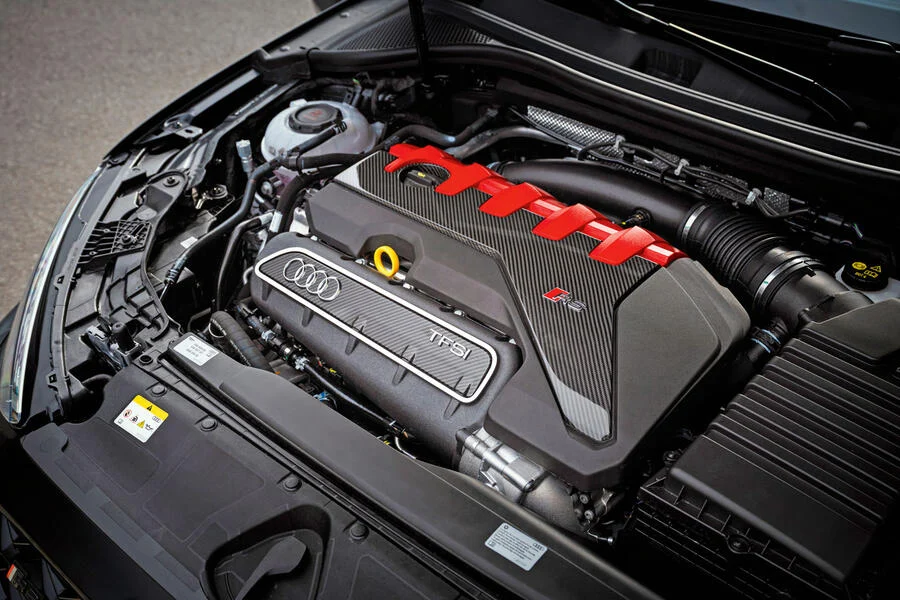
Audi is currently navigating a complex strategic crossroads regarding the future of its iconic 2.5-liter five-cylinder turbocharged engine, a powerplant that has served as the emotional and mechanical heartbeat of the brand’s performance identity for nearly five decades. As the automotive industry shifts toward electrification and faces the implementation of increasingly stringent environmental mandates, the survival of this unique engine configuration remains a subject of intense internal debate within the Volkswagen Group subsidiary. While recent signals from Audi Sport leadership suggest a desire to maintain the engine for another generation, the technical and financial hurdles posed by the upcoming Euro 7 emissions standards present a formidable challenge to the "EA855" unit’s longevity.
A Legacy of Five Cylinders: From the Audi 100 to the RS3
The history of the Audi five-cylinder engine is inextricably linked to the brand’s rise as a premium powerhouse and its "Vorsprung durch Technik" (Progress through Technology) ethos. The configuration was first introduced in 1976, powering the second-generation Audi 100 (C2). At the time, Audi sought to move upmarket and compete with the six-cylinder offerings of BMW and Mercedes-Benz. An inline-five was deemed the ideal solution: it offered more power and smoothness than a traditional four-cylinder while remaining compact enough to be mounted longitudinally ahead of the front axle, a hallmark of Audi’s chassis design.
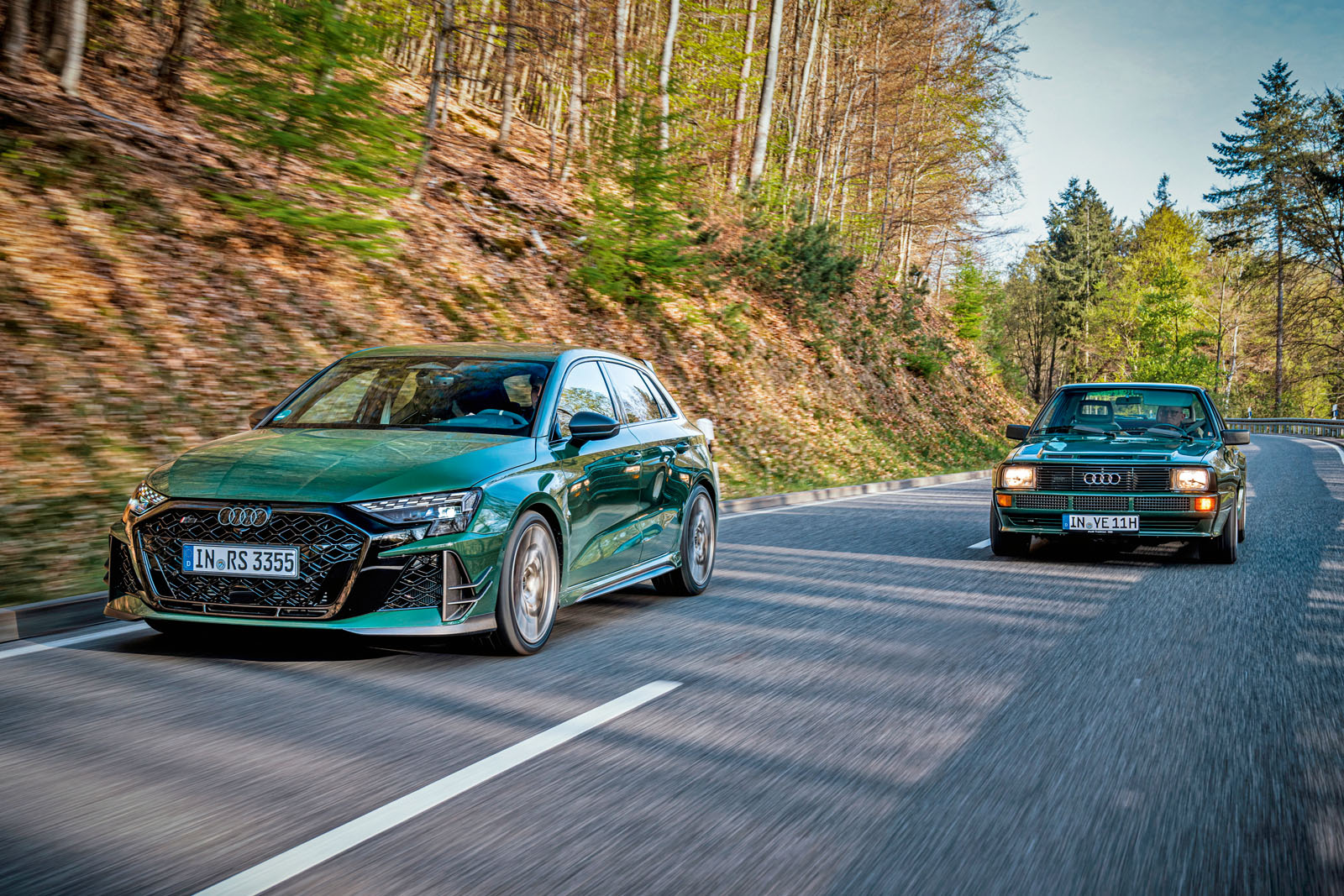
The engine’s legendary status was cemented in the 1980s through the world of rallying. The Audi Quattro, equipped with a turbocharged version of the five-cylinder motor, revolutionized the World Rally Championship (WRC) with its all-wheel-drive system. Drivers like Michèle Mouton, Stig Blomqvist, and Walter Röhrl utilized the engine’s unique torque characteristics and unmistakable 1-2-4-5-3 firing order to dominate the Group B era. This motorsport success transitioned to the road in 1994 with the Audi RS2 Avant—the first-ever RS model—developed in collaboration with Porsche and featuring a 311-horsepower five-cylinder engine.
In the modern era, the engine evolved into the 2.5-liter "EA855" series. While it once occupied a broader space in the portfolio, its presence has contracted as Audi focuses on four-cylinder efficiency and V6/V8 performance. Until recently, the engine was available in the TT RS and the RS Q3, both of which have been phased out or are nearing the end of their production cycles. Today, the engine’s primary home is the Audi RS3, where it produces up to 400 PS (294 kW) and 500 Nm of torque, and the Cupra Formentor VZ5, a limited-run performance crossover from Audi’s sibling brand.
The Regulatory Hurdle: Navigating Euro 7 Standards
The primary threat to the five-cylinder engine’s survival is the Euro 7 emissions regulation, scheduled for implementation in November 2024. These new standards represent a significant tightening of limits on nitrogen oxides (NOx) and particulate matter, while also introducing requirements for onboard monitoring of emissions over the life of the vehicle.
For a low-volume, high-performance engine like the EA855, compliance is not a simple matter of software tuning. Industry analysts and Audi engineers indicate that the engine would require a comprehensive overhaul of its hardware. This would likely include:
- Redesigned Catalytic Converters: More advanced chemical coatings and larger surface areas to handle cold-start emissions.
- Particulate Filters: The integration of more restrictive gasoline particulate filters (GPF) to meet stringent soot count requirements.
- Advanced Injection Systems: Higher pressure fuel injection and more precise electronic control units to optimize combustion cycles.
- Hybridization: The potential addition of a 48V mild-hybrid system or a full plug-in hybrid (PHEV) setup to reduce the engine’s workload during urban driving cycles.
Audi CEO Gernot Döllner has previously expressed skepticism regarding the economic viability of these updates. Given that the engine is only utilized in a handful of niche models, the "refinancing" of the necessary investment is difficult to justify on a traditional balance sheet. The high cost of R&D spread across low production volumes creates a price-per-unit increase that could push models like the RS3 into a price bracket that alienates its core customer base.
Conflicting Perspectives Within Audi Leadership
Despite the financial headwinds, there is a strong internal movement to save the engine, led by Audi Sport boss Rolf Michl. Michl, who has overseen the development of multiple generations of the RS3, views the five-cylinder not just as a mechanical component, but as a vital brand asset that distinguishes Audi from its competitors.
In recent statements, Michl emphasized that the RS3 serves as the "entrance into the RS world," providing an accessible yet visceral performance experience that builds brand loyalty. "Emotion starts in the compact segment," Michl noted, suggesting that the loss of the five-cylinder would strip the RS3 of its primary USP (Unique Selling Proposition) and potentially weaken the Audi Sport sub-brand.
The debate currently sits between the pragmatic financial constraints cited by the Audi AG board and the emotional, heritage-driven arguments of the Audi Sport division. Michl confirmed that evaluations are ongoing, stating that "negotiations" with the broader Audi AG group have not yet reached a final decision point. The fact that the engine is still being "evaluated" rather than outright cancelled suggests that Audi is searching for a creative engineering solution that could satisfy both regulators and enthusiasts.
Technical Specifications and Performance Benchmarks
To understand why Audi is fighting to keep the engine, one must look at the data that defines the current EA855 evo. The 2480cc unit features an aluminum crankcase, which reduced weight by 26kg compared to its predecessor. It utilizes plasma-coated cylinder wires to reduce friction and a hollow-grooved crankshaft for further weight optimization.
Current Performance Data (Audi RS3):
- Power Output: 400 PS (294 kW) at 5,600–7,000 rpm.
- Peak Torque: 500 Nm at 2,250–5,600 rpm.
- Acceleration: 0-100 km/h in 3.8 seconds.
- Top Speed: Up to 290 km/h (with RS Dynamic package).
- Firing Order: 1-2-4-5-3, creating a distinctive harmonic resonance.
The engine’s performance is often compared to the 2.0-liter four-cylinder found in the Mercedes-AMG A45 S (421 PS) and the 3.0-liter inline-six in the BMW M2 (460 PS). While the Mercedes produces more power per liter, the Audi five-cylinder is praised for its broader torque curve and characterful sound, which many enthusiasts find more engaging than a highly-strung four-cylinder.
The Role of the RS3 Competition Limited
The recent launch of the RS3 Competition Limited was initially interpreted by many as a "swansong" for the five-cylinder engine. Priced at approximately £100,000, this ultra-exclusive variant featured track-focused upgrades, including Pirelli P Zero Trofeo R tires, ceramic brakes, and a recalibrated chassis.
However, rather than being a final farewell, the Competition Limited served as a proof of concept for the engine’s enduring market appeal. The rapid sell-out of high-margin, special-edition RS models provides Audi Sport with the data needed to argue for the engine’s continued existence. If customers are willing to pay a premium for the five-cylinder experience, the business case for investing in Euro 7 compliance becomes significantly stronger.
Strategic Implications and the Road to 2030
Audi has already announced that it will launch its final new internal combustion engine (ICE) model in 2026, with a goal of becoming a fully electric brand by 2033 (depending on market conditions). This timeline creates a narrow window for a next-generation five-cylinder engine.
If Audi decides to proceed, the next-gen five-cylinder would likely be the final ICE powertrain developed by Audi Sport. This "final hurrah" could potentially incorporate electrification to offset emissions. A high-performance plug-in hybrid (PHEV) version of the five-cylinder could allow the engine to meet Euro 7 standards by providing significant "zero-emissions" range for city driving while retaining the turbocharged character for performance driving.
Furthermore, the decision impacts the broader Volkswagen Group. Cupra, which uses the engine for its flagship Formentor VZ5, relies on Audi’s engine supply to maintain its "rebel" performance image. If Audi retires the engine, Cupra would also lose its most prestigious powertrain, potentially impacting its brand positioning as it prepares for a global expansion, including the North American market.
Industry Analysis: The Value of Heritage in an Electric Era
As the automotive landscape becomes increasingly homogenized through the use of shared electric vehicle (EV) platforms and motors, brand-specific "soul" is becoming a rare commodity. For Audi, the five-cylinder engine is more than just a motor; it is a link to the legendary Quattro rally cars and a symbol of engineering independence.
Industry analysts suggest that maintaining such a "legacy" engine, even at a loss or break-even point, serves a marketing function that outweighs pure profit margins. It keeps the "petrolhead" community engaged with the brand during the transition to EVs, ensuring that the performance credentials of the RS badge remain intact as they are eventually applied to electric models like the RS e-tron GT.
The coming months will be decisive for the EA855. With Euro 7 implementation looming in November, Audi must soon finalize its product roadmap. Whether the five-cylinder receives a stay of execution through hybrid technology or is ultimately retired in favor of high-output four-cylinder hybrids remains to be seen. However, the advocacy of leaders like Rolf Michl ensures that the engine will not disappear without a significant internal struggle to preserve one of the most celebrated configurations in automotive history.