The fundamental architecture of global travel has undergone a structural transformation, shifting from a destination-first model to a moment-driven economy where live events dictate the flow of international migration. Historically, a traveler would select a destination based on its geography, climate, or cultural landmarks and subsequently seek activities to fill their itinerary; however, in the current market, the sequence has inverted. Today, the announcement of a stadium tour, a championship final, or a niche cultural festival serves as the primary catalyst for the journey, with the destination itself becoming a secondary consideration—a backdrop to a fixed date on the calendar. This shift represents more than a temporary trend; it is a hardening of consumer behavior that is forcing the travel industry to rethink how it captures value, manages infrastructure, and engages with a new demographic of "passion-led" tourists.
The Rise of the Event-First Traveler
The transition toward event-driven travel is backed by significant fiscal data that underscores the scale of this behavioral shift. According to recent quarterly reports from Trip.com Group, entertainment-driven travel emerged as one of the fastest-growing categories in the first quarter of 2026, recording a staggering 74% year-over-year increase. This surge is not merely an anomaly tied to a singular global event but rather a reflection of a broader "passion economy" where consumers prioritize experiences over material goods.
The psychological profile of the modern traveler has evolved to prioritize collective experience and fandom. Skift Research indicates that more than 70% of travelers are now more likely to plan a trip around a live event than they were five years ago. This devotion creates a unique logistical challenge for cities: instead of a steady stream of visitors distributed across a peak season, destinations are now facing massive, concentrated spikes in demand. A single concert tour routing or a high-stakes sporting venue can compress hundreds of thousands of visitors into a single 48-hour window, placing unprecedented pressure on local infrastructure and the hospitality sector.
Economic Multipliers and the "Swiftnomics" Effect
The economic impact of this shift is best exemplified by the "Eras Tour" phenomenon, which provided a blueprint for understanding the modern live economy. During Taylor Swift’s global tour, data from U.S. Travel and various municipal economic bureaus revealed that fans spent an average of $1,300 per show. Crucially, this spending was not confined to the ticket price or the venue itself. The capital "fanned out" across the broader ecosystem, including hotel accommodations, local dining, retail, and public transportation.
Skift Research highlights a critical statistic for destination marketing organizations (DMOs): 84% of event tourists explore the surrounding destination beyond the primary event. This means that while the event organizer provides the "trigger" for the trip, the local economy captures the majority of the total spend. However, the distribution of this wealth is rarely even. The central question facing city planners and tourism boards is whether their local operators—from independent boutiques to municipal transit systems—are positioned to retain this capital or if the value simply passes through the city toward global ticketing platforms and multinational hotel chains.
Chronology of the Experience Shift: From Sightseeing to Participation
To understand the current state of the live economy, one must look at the timeline of travel evolution over the last decade.
- The Pre-2015 Era (Sightseeing Dominance): Travel was largely driven by "bucket list" landmarks. Tourism marketing focused on the Eiffel Tower, the Colosseum, or tropical beaches.
- 2015–2019 (The Instagrammable Moment): The rise of social media shifted the focus toward aesthetics. Travelers sought locations that provided visual social currency.
- 2021–2023 (Revenge Travel and the Experience Pivot): Following the global pandemic, a desire for human connection led to a surge in festival and concert attendance. The "experience" became the product.
- 2024–2026 (The Live Economy Integration): The current phase, where travel and live entertainment have merged into a single vertical. Major airlines, hotel groups, and ticketing platforms are now integrating their services to create seamless "event-to-bed" booking paths.
This chronology suggests that the industry has moved from a passive model of observation to an active model of participation. The "moment" is now the product, and the destination is the service provider.
The Operational Test: Infrastructure and Readiness
For a destination, winning in the live economy is less a feat of marketing and more a test of operational resilience. Because live tourism concentrates demand into short, intense windows, it creates a "stress test" for urban infrastructure.
One of the primary risks identified by industry analysts is the volatility of event-based demand. If a headline act cancels or a championship venue is moved, a city can see thousands of hotel room nights evaporated instantly. Consequently, the new competitive line for destinations is "readiness." This involves building standing capacity and fostering high-level coordination between municipal tourism bodies and private event operators.
Strategic destinations are moving away from treating events as isolated bookings. Instead, they are developing long-term frameworks that turn a one-time spike into repeat visitation. Skift Research has found that a traveler who returns to a city three times with a modest budget typically delivers more cumulative value to the local economy—particularly to locally owned businesses—than a high-spending "one-and-done" visitor who never returns. The goal for modern DMOs is to use the live event as a "handshake" that introduces the visitor to the city, with the hope of converting them into a loyal brand advocate for the destination.
Industry Responses and Strategic Partnerships
The private sector has been quick to react to these shifting demand patterns. Airlines and global hotel groups are no longer passive observers of the event calendar. Major carriers are increasingly adjusting their flight schedules to align with major tour dates or sporting finals, sometimes adding "event-specific" routes to accommodate surges in fan travel.
Similarly, the hospitality industry is evolving. We are seeing the rise of "event-integrated" lodging, where hotels offer shuttle services, themed amenities, and even pre-show activations to capture a larger share of the fan’s wallet. Perhaps most significantly, the technology platforms are merging. Ticketing giants and travel booking engines are exploring partnerships that allow a consumer to purchase a concert ticket, a flight, and a hotel room in a single, unified transaction. This "single booking path" is designed to reduce friction and ensure that the value generated by the event is captured within a controlled ecosystem.
The Skift Live Tourism Summit: A New Forum for Collaboration
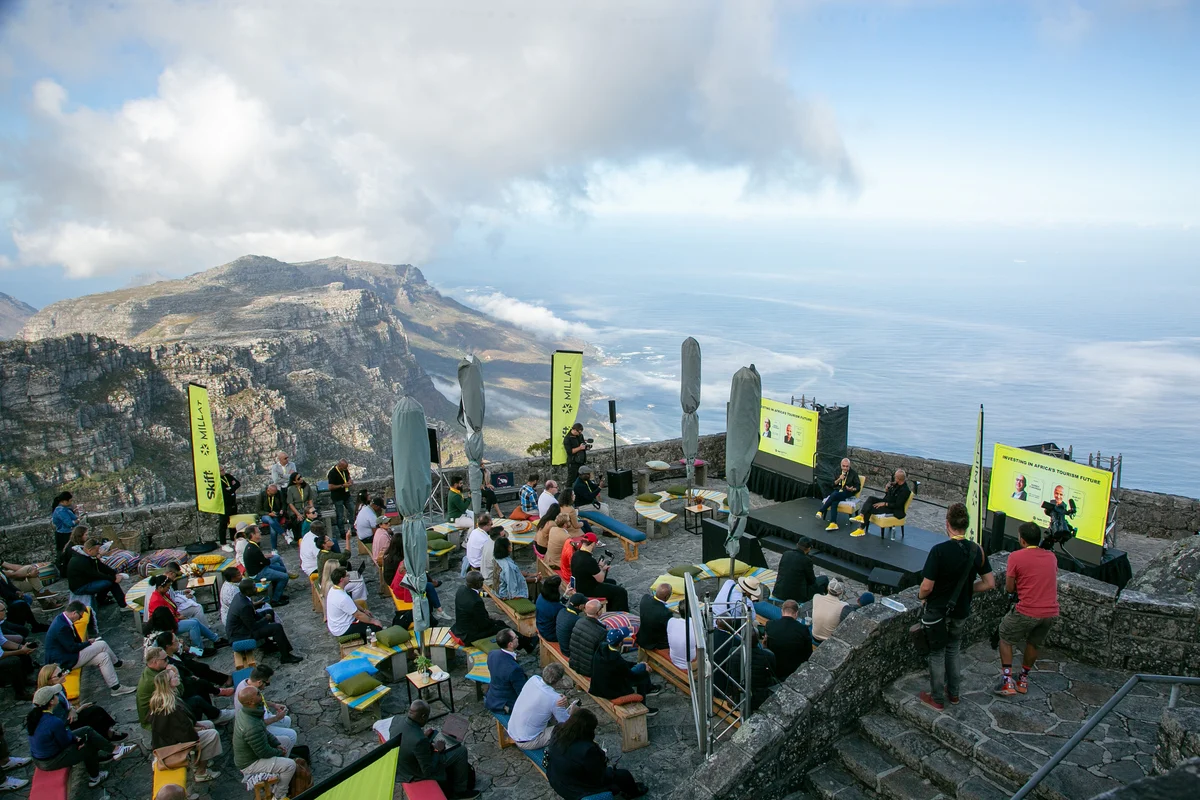
Recognizing the urgent need for a unified strategy, the Skift Live Tourism Summit, presented in partnership with Live Nation, has been convened to address these systemic changes. This summit represents a critical junction where destinations, hospitality operators, and the live entertainment industry meet to negotiate the future of the live economy.
The summit aims to solve the "capture" problem: how to ensure that the massive influx of capital associated with mega-events is shared equitably across the destination’s stakeholders. With Live Nation—a company at the epicenter of the global concert and festival industry—as a primary partner, the conversation is expected to move beyond theoretical marketing and into the mechanics of supply chain management, dynamic pricing, and sustainable crowd management.
Broader Implications for Urban Development and Sustainability
The long-term implications of the live economy extend into the realms of urban planning and environmental sustainability. Cities that successfully position themselves as "live hubs" often see accelerated investment in public transport and venue infrastructure. However, this must be balanced against the risks of "over-tourism" and the strain on local resources.
Destinations that treat live tourism as "standing infrastructure" rather than a series of one-off accidents are the ones pulling ahead. This involves extending the narrative of the event beyond the stadium walls. For instance, a city hosting a major music festival might coordinate with local museums, galleries, and restaurants to create a city-wide "cultural fringe" that encourages visitors to stay longer and spend more widely.
Furthermore, the environmental footprint of hundreds of thousands of people traveling for a single 90-minute event is under increasing scrutiny. The next phase of the live economy will likely involve a push for "green touring" and sustainable event travel, where destinations and promoters work together to offset the carbon impact of fan migration.
Analysis: The Future of the Live Economy
The shift toward live tourism is a symptom of a larger change in consumer values. In an increasingly digital world, the "physicality" of a live event—the shared energy of a crowd and the tangible reality of a performance—has become a premium commodity. For the travel industry, this means that the "product" is no longer just a room or a seat on a plane; the product is the access to a specific moment in time.
The destinations that will thrive in the coming decade are those that stop viewing themselves as mere locations and start viewing themselves as platforms for experiences. This requires a level of agility that many traditional tourism boards are still developing. It requires the ability to react to a tour announcement within hours, the capacity to scale public services for a single weekend, and the strategic foresight to turn a fan’s devotion to an artist into a devotion to a city.
As the Skift Live Tourism Summit approaches, the industry stands at a crossroads. The "flipped order" of travel is now the standard. The challenge for 2026 and beyond is not just attracting the crowd, but mastering the complex business of the live economy to ensure that when the music stops and the stadium lights go down, the destination is left stronger, wealthier, and ready for the next act.