The global transition toward electric mobility has reached a pivotal juncture where vehicle technology often outpaces the infrastructure required to support it. While automotive manufacturers continue to deliver breakthroughs in battery density, thermal management, and rapid-charging capabilities, a significant portion of the population remains tethered to the logistical constraints of urban living. In the United Kingdom, the shift toward electric vehicles (EVs) is no longer a niche movement fueled by early adopters; it is a central pillar of national environmental policy. However, for the millions of citizens residing in terraced housing or apartments without dedicated off-street parking, the transition presents a complex set of legal, safety, and financial hurdles.
As the 2035 deadline for the phase-out of new petrol and diesel car sales approaches, the disparity between driveway owners and on-street parkers has become a focal point for policymakers. While approximately 90% of current EV owners benefit from the convenience and low cost of home charging, this luxury is unavailable to over 40% of UK households. Addressing this "charging divide" is essential for the democratization of electric transport and the achievement of net-zero targets.
The Infrastructure Gap: Data and Demographics
The scale of the challenge is underscored by recent housing and transport statistics. According to data from the Ministry of Housing, Communities & Local Government, roughly 6.6 million households in England alone do not have access to off-street parking. In metropolitan hubs like London, this figure rises significantly, with some boroughs reporting that over 60% of residents rely on communal or kerbside parking.
Current market trends show that EV adoption is highest in regions with high proportions of detached and semi-detached housing. Data from the Society of Motor Manufacturers and Traders (SMMT) indicates a strong correlation between domestic charging availability and EV registration rates. Conversely, in dense urban environments where residents must compete for limited kerbside space, the uptake of plug-in vehicles has been more measured. This disparity is not merely a matter of convenience; it is an economic issue. Residents with driveways can access domestic electricity tariffs, often benefiting from overnight "off-peak" rates as low as 7p to 10p per kWh. In contrast, those reliant on public rapid-charging networks may pay between 50p and 85p per kWh, exacerbated by the 20% VAT rate on public electricity compared to the 5% VAT rate for domestic supply.
Navigating the Legalities of Cross-Pavement Charging
For many urban residents, the most intuitive solution is to run a charging cable from their home, across the public footpath, to their vehicle parked at the kerb. While this appears straightforward, it introduces a complex web of legal liabilities and safety concerns. Under Section 178 of the Highways Act 1980, it is an offense to place a wire or rail across a highway (which includes footpaths) without the consent of the local highway authority.
While few councils have issued outright bans, most remain highly cautious due to the risk of personal injury claims. If a pedestrian trips over a charging cable, the homeowner is generally held legally liable for any resulting injuries. Standard home insurance policies often do not cover third-party liability for incidents occurring on public property, leaving the resident financially vulnerable.
To mitigate these risks, certain best-practice guidelines have emerged for those who must charge across a pavement:
- Cable Placement: Cables must be laid completely flat and should never be suspended in the air.
- Visual Warnings: The use of high-visibility, non-slip cable protectors—typically colored yellow and black—is strongly recommended.
- Immediate Removal: Cables and protectors must be removed as soon as the charging session is complete to minimize the duration of the obstruction.
- Power Source Constraints: Charging should only be conducted from ground-floor or basement sockets. Hanging cables from upper-story windows is discouraged due to the risk of cable fatigue and the inability to secure the line properly.
Furthermore, EV manufacturers and fire safety experts strictly advise against the use of domestic extension leads. Standard household extension cords are not designed to carry the high, sustained current required for EV charging over several hours, which can lead to overheating and fire hazards.
Chronology of UK EV Policy and Infrastructure Development
The current landscape of on-street charging is the result of a decade of evolving government policy and local authority experimentation.
- 2013-2015: The UK government introduces the Electric Vehicle Homecharge Scheme (EVHS), primarily benefiting those with driveways. Early public infrastructure focuses on motorway service stations.
- 2018: The Road to Zero strategy is published, outlining the ambition for at least 50% of new car sales to be ultra-low emission by 2030.
- 2020: The government announces the acceleration of the ban on new petrol and diesel cars to 2030 (later revised to 2035), placing immense pressure on local councils to provide on-street solutions.
- 2022: The Local Electric Vehicle Infrastructure (LEVI) fund is launched, providing £450 million to help councils in England step up the delivery of local chargepoints.
- 2023-2024: Introduction of the Zero Emission Vehicle (ZEV) mandate, requiring manufacturers to meet escalating percentages of EV sales, further driving the need for accessible charging for all demographics.
Innovative Engineering: The Rise of Pavement Channels
Recognizing the limitations of loose cables and protectors, several UK local authorities and private engineering firms have begun trialing "cross-pavement channels." These systems involve installing a shallow, narrow trench—covered by a hinged or recessed lid—into the footpath.
Companies such as Kerbo Charge and Gul-e have pioneered these designs, which allow residents to tuck their charging cable into a dedicated slot that sits flush with the pavement surface. This eliminates the trip hazard while allowing the resident to use their domestic electricity supply. Oxford City Council and Central Bedfordshire Council have been among the first to implement these trials. Initial feedback suggests that these channels are a cost-effective alternative to installing public bollard chargers, which can cost upwards of £5,000 per unit to install and maintain.
Stakeholder Perspectives and Industry Reactions
The push for better on-street charging has drawn responses from across the automotive and legal sectors. The SMMT has repeatedly called for a "nationally coordinated plan" to ensure that the charging infrastructure does not become a lottery based on a resident’s postcode.
Mike Hawes, SMMT Chief Executive, has noted that while vehicle manufacturers are investing billions in new models, the pace of infrastructure rollout remains the single greatest barrier to mass adoption. "To give all drivers the confidence to go electric, we need a charging network that is as accessible and reliable as the petrol station," Hawes stated in a recent industry report.
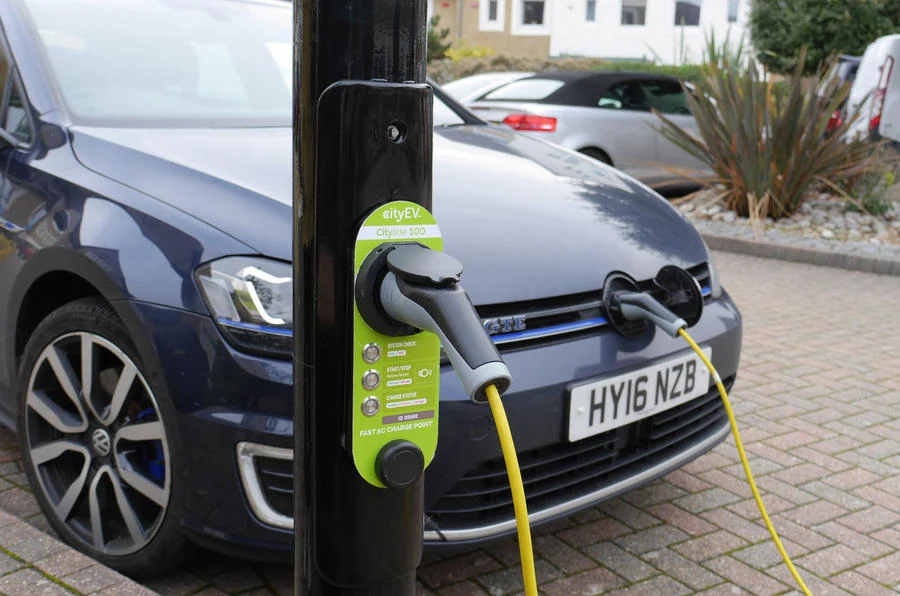
Pedestrian advocacy groups, such as Living Streets, emphasize the need for accessibility. They argue that while EV charging is vital, it must not come at the expense of sidewalk clearance. They advocate for solutions that do not clutter the pavement, expressing a preference for sub-surface channels or lamp-post charging over bulky standalone pedestals that can obstruct wheelchairs and strollers.
Fact-Based Analysis of Economic and Social Implications
The lack of on-street charging creates a significant social equity issue. If only those with private driveways can access cheap domestic energy, the transition to green energy could inadvertently penalize lower-income households or those living in high-density urban areas.
Moreover, the "insurance gap" remains a critical concern. Until a standardized legal framework is established for cross-pavement charging, many residents will remain hesitant to switch to an EV. The current system relies on a patchwork of local council permissions, which varies wildly from one borough to the next. Some councils, such as Portsmouth and Westminster, have proactively installed thousands of lamp-post chargers, while others remain in the early planning stages.
The financial implications also extend to property values. Real estate analysts are beginning to observe that homes with EV charging capabilities—or at least a viable path to installing them—are becoming more attractive to buyers. Conversely, terraced homes in areas with poor public charging infrastructure may see a cooling of interest as the 2035 deadline nears.
Future Outlook: Beyond the Cable
As the UK moves toward a fully electrified fleet, the solutions for on-street residents are expected to diversify. Beyond pavement channels and lamp-post chargers, several emerging technologies may alleviate the pressure:
- Wireless Induction Charging: This technology involves pads embedded in the road surface that charge the vehicle via an electromagnetic field. While currently expensive and less efficient than wired connections, trials are underway for taxis and delivery vans.
- Community Charging Hubs: Rather than every house having its own charger, high-density neighborhoods may see the rise of ultra-rapid charging hubs—effectively modern versions of petrol stations—where a car can be fully charged in 15 to 20 minutes.
- Battery Swapping: While not currently favored by European manufacturers, companies like NIO have demonstrated the viability of swapping a depleted battery for a full one in under five minutes at automated stations.
In conclusion, the challenge of charging an electric vehicle without a driveway is a multifaceted problem that requires a combination of engineering innovation, legislative clarity, and significant public investment. While running a cable across a pavement remains a temporary and often risky "workaround," the development of integrated pavement channels and the expansion of the public network represent the necessary evolution of the British urban landscape. The success of the UK’s EV transition will ultimately be measured by its ability to provide equitable access to charging for every driver, regardless of where they park their car.