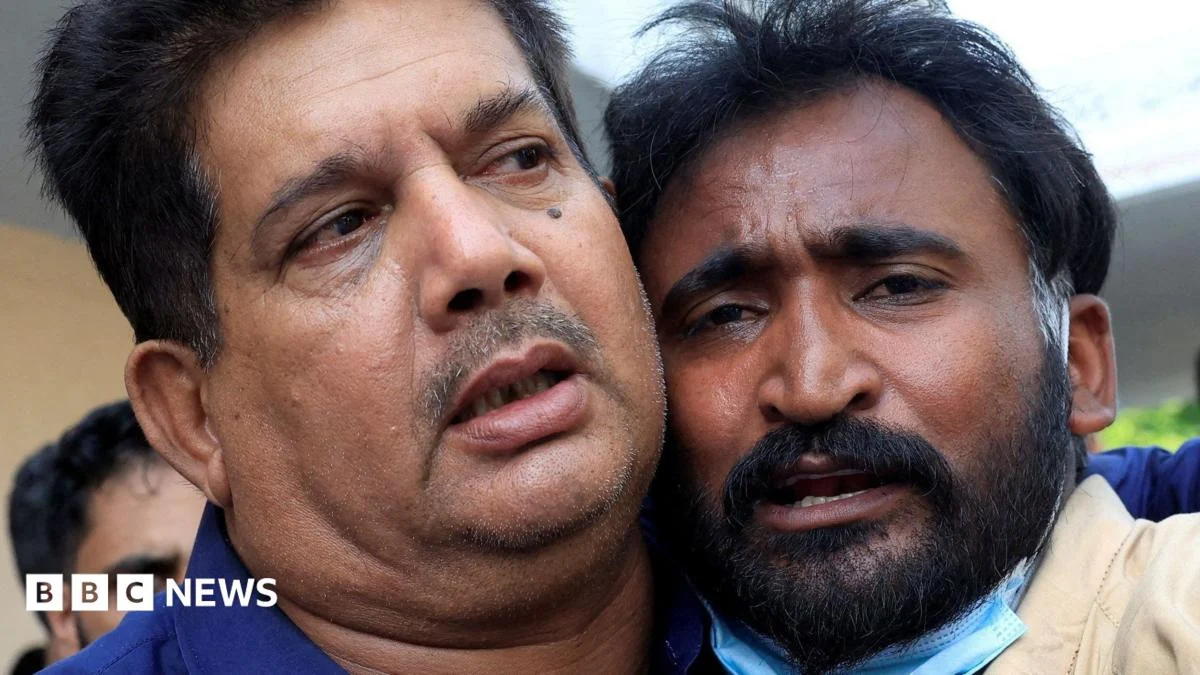
It was just after dawn on Wednesday morning, a time usually reserved for the quiet stirrings of new life, when a horrific blaze erupted at a maternity ward in the Pakistan Institute of Medical Sciences (PIMS) hospital in Islamabad. The inferno, which quickly engulfed the third floor of the mother and child unit, would tragically claim the lives of 14 innocent infants, leaving only one survivor from the 15 babies present. The devastating incident has not only plunged grieving families into unimaginable sorrow but has also ignited a fierce national debate over chronic safety lapses, inadequate emergency responses, and the broader systemic failures plaguing Pakistan’s public infrastructure.
The Dawn of Tragedy: Eyewitness Accounts of Chaos and Despair
The initial moments of the fire were marked by confusion, terror, and a desperate scramble for safety. Hivsa Walid, present with her sister-in-law who had delivered days earlier, recounted the terrifying sequence of events. She first heard a shout, initially thinking it signaled a patient’s death, but then saw plumes of smoke curling through the corridors. Instinct took over. "We didn’t even think about our belongings. We just grabbed the baby and rushed downstairs," Walid described, the infant so new she had yet to be named. "Some patients had delivered their babies just that night. I don’t even know how we managed to get down – it was all a blur." Her account paints a vivid picture of unbridled panic, with individuals acting on raw survival instincts in the absence of clear, coordinated emergency protocols.
As the smoke thickened and the flames grew, the grim reality of the situation began to unfold. Parents, who had been celebrating new life just hours before, found themselves trapped in a nightmare. Khurram Mehmood, 40, shared his heart-wrenching loss with AFP news agency. "I lost my daughter. She was only three days old," he stated, his voice undoubtedly heavy with grief and anger. Mehmood, like many others, spoke of an agonizingly long wait for rescue workers, a delay that witnesses argue was fatal.
Jaweria, the mother of another victim, added a harrowing detail that has since become a focal point of public outrage: "The door to the maternity ward was locked." Her desperate cries and wails for two hours went unanswered, she claimed, with police only arriving after four hours, primarily to investigate rather than rescue. Her anguished question resonated deeply: "Why did the doctors leave the children there?" Her concluding lament, "To hell with you, rescue team and police. Babies burnt to death there, but nobody could save them," encapsulated the raw fury and despair of the affected families.
A Fatal Delay? Contradictory Narratives on Rescue Efforts
The discrepancy between the official narrative and eyewitness accounts regarding the emergency response time is stark and deeply troubling. While Islamabad’s Chief Commissioner Sohail Ashraf asserted that rescue teams reached the scene "immediately" after the emergency call, witness testimonies painted a dramatically different picture. Abdul Ghafoor, another witness, told AFP that he tried to enter the building to rescue patients but was blocked by "thick black smoke inside," unable to reach the maternity ward. He corroborated claims of significant delays, stating, "Rescue teams arrived after almost two hours." Another unnamed witness described people having to "break the door down" and rescue teams being forced to "smash the windows to control the flames," further indicating a chaotic and uncoordinated initial response.
The issue of locked doors is particularly contentious. Rana Imran Sikander, the hospital’s executive director, countered claims that the ward’s door was locked, stating it was "manned." He justified this measure by citing the need to protect newborns from theft, a disturbing reality that has reportedly occurred at government hospitals in the past. However, this explanation failed to assuage the fears and anger of parents like the father of a baby who died, who told Reuters that the building had "no fire security, no proper exits." He added, "All doors were closed, only one door was for us to visit our children. They kept the other doors locked because they feared we would come to see our children too often." This suggests a systemic prioritization of security over emergency preparedness, a fatal oversight in a critical care unit.
Eyewitnesses also claimed a concerning absence of duty staff during the initial phase of the fire, leaving patients and their families to navigate the burgeoning crisis largely on their own. Hivsa Walid highlighted the apparent lack of functional safety protocols: "There should have been fire extinguishers and protocols, but no one was doing anything – everyone was just running." This suggests not only a deficit in equipment but also a critical failure in staff training and emergency drills, which are paramount in any healthcare facility.
PIMS: A Pillar Under Scrutiny
The Pakistan Institute of Medical Sciences (PIMS) is one of the largest and most prominent state-run hospitals in Pakistan’s capital, Islamabad. With its maternal and child health unit boasting 156 beds, it serves a vast population, making it a critical component of the nation’s public healthcare infrastructure. Its stature as a major institution, however, now brings its safety standards and operational protocols under intense scrutiny.
The executive director’s explanation about locked doors, while addressing a legitimate security concern regarding infant abduction, inadvertently highlights a critical dilemma within Pakistan’s public health system: how to balance security with immediate safety and emergency access. This incident suggests that the current approach at PIMS, and potentially other government hospitals, has catastrophically failed this balance, prioritizing one form of risk mitigation (theft) over another, more immediate and life-threatening one (fire). A comprehensive review of hospital design, emergency exits, fire suppression systems, and staff training is clearly overdue.
Systemic Failures: Pakistan’s Recurring Fire Safety Crisis
The tragedy at PIMS is not an isolated incident but rather a grim echo of a recurring pattern in Pakistan. The nation has grappled with numerous major fires in recent years, with poor safety laws, lax building codes, and insufficient enforcement consistently identified as the primary culprits behind steep death tolls. These systemic deficiencies often stem from a combination of rapid, unregulated urbanization, corruption in regulatory bodies, and a general disregard for safety standards in both public and private constructions.
Just in January of this year, a devastating fire at a Karachi shopping mall killed dozens, with survivors explicitly blaming locked exits for the high number of fatalities. This tragic commonality — locked exits obstructing escape during emergencies — points to a widespread, ingrained problem that extends beyond individual institutions. Reports from organizations like the Pakistan Safety Council and various urban planning bodies have frequently highlighted the alarming state of fire safety infrastructure across the country, particularly in older buildings and rapidly constructed commercial or residential complexes that often bypass proper inspections. Many public buildings, including hospitals, are ill-equipped to handle emergencies, lacking functional fire alarms, sprinkler systems, clearly marked and accessible emergency exits, and regular fire drills. The economic constraints often cited for these deficiencies are consistently overshadowed by the immeasurable human cost.
The Investigation and Official Reckoning
The swift and stern reaction from the highest echelons of government underscores the gravity of the PIMS tragedy. Prime Minister Shehbaz Sharif immediately expressed his "deep sorrow and heartfelt regret" over the blaze and ordered authorities to "conduct an immediate investigation." In a decisive move signaling serious accountability, he also suspended Federal Health Secretary Aslam Ghauri, a top official in the health department, pending the outcome of the inquiry. The Prime Minister’s office statement, declaring "Such a situation with children is irreparable," acknowledged the profound and lasting impact of the loss.
The investigation is expected to be multi-faceted, involving various agencies including the police, fire department, building control authorities, and health ministry officials. Its scope will likely extend beyond the immediate cause of the fire (an air-conditioning unit malfunction) to scrutinize broader issues:
- Emergency Response Protocols: Examining the efficacy and timeliness of the hospital’s internal emergency response and the coordination with external rescue services.
- Fire Safety Infrastructure: Assessing the functionality of fire alarms, sprinklers, fire extinguishers, and the accessibility of emergency exits.
- Building Codes Compliance: Determining whether the maternal and child health unit complied with all relevant building and fire safety codes, and if not, identifying the points of failure in oversight and enforcement.
- Staff Training and Preparedness: Evaluating the level of emergency training provided to hospital staff and the frequency of fire drills.
- Security vs. Safety Balance: Re-evaluating the policy of locking or manning ward doors in critical care units and proposing solutions that balance security concerns with emergency egress.
- Accountability: Identifying individuals or departments responsible for any negligence or dereliction of duty that contributed to the tragedy.
The suspension of the Federal Health Secretary sends a clear message that accountability will reach high levels, potentially signaling a more rigorous approach to enforcing safety standards across the public health sector.
The Unquantifiable Loss: Impact on Families and Public Trust
For the families of the 14 infants, the loss is an unquantifiable void, a future stolen before it even began. The emotional trauma experienced by parents like Khurram Mehmood and Jaweria, who witnessed their hopes turn to ashes, will undoubtedly leave indelible scars. Beyond the immediate grief, there is the lingering question of justice and accountability. Their cries for answers, for those responsible to be held to account, resonate with a public increasingly weary of preventable tragedies.
The incident has severely eroded public trust in state institutions, particularly in the healthcare system. For many, a hospital, especially a major state-run facility like PIMS, represents a sanctuary, a place of healing and safety. When that sanctuary becomes a site of such devastating loss due to apparent negligence, it shatters faith in the government’s ability to protect its citizens. This erosion of trust can have far-reaching implications, potentially deterring people from seeking essential medical care in public facilities, further burdening an already fragile private sector, and deepening societal cynicism.
Beyond the Blaze: Calls for Reform and Accountability
The PIMS maternity ward fire must serve as a stark and urgent catalyst for comprehensive reform. The immediate investigation, while crucial, must pave the way for a systemic overhaul of fire safety regulations, building codes, and emergency response mechanisms across all public and private institutions in Pakistan.
Key areas for reform include:
- National Fire Safety Audit: A nationwide audit of all public buildings, especially hospitals, schools, and markets, to assess their adherence to fire safety standards and identify critical deficiencies.
- Strengthening Regulatory Bodies: Empowering and depoliticizing building control authorities and fire departments, ensuring they have the resources and autonomy to enforce regulations rigorously and without compromise.
- Modernizing Building Codes: Updating existing building codes to align with international best practices for fire safety, particularly for healthcare facilities that house vulnerable populations.
- Mandatory Emergency Drills and Training: Implementing mandatory, regular fire drills and comprehensive emergency response training for all staff in public institutions, with a focus on clear evacuation protocols and the use of fire suppression equipment.
- Investment in Infrastructure: Allocating sufficient funds to upgrade fire safety infrastructure in older buildings and ensure new constructions meet stringent safety requirements. This includes installing functional fire alarms, sprinkler systems, and ensuring clear, unobstructed emergency exits.
- Public Awareness Campaigns: Educating the public on fire safety measures, emergency procedures, and their rights regarding safe public spaces.
The tragic loss of 14 infants at PIMS is more than just a hospital fire; it is a profound indictment of systemic negligence and a stark reminder of the urgent need for accountability and comprehensive reform. Pakistan stands at a critical juncture where it must move beyond expressions of sorrow and punitive suspensions to enact lasting changes that prioritize the safety and well-being of its citizens, ensuring that such an unbearable tragedy is never repeated. The memory of these lost lives demands nothing less than a future where safety is not an afterthought, but a fundamental right.