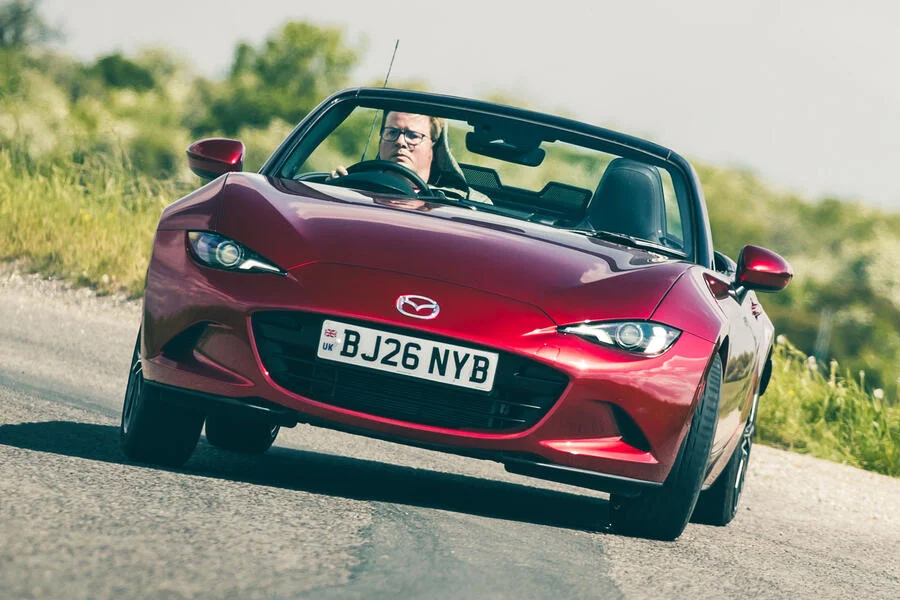
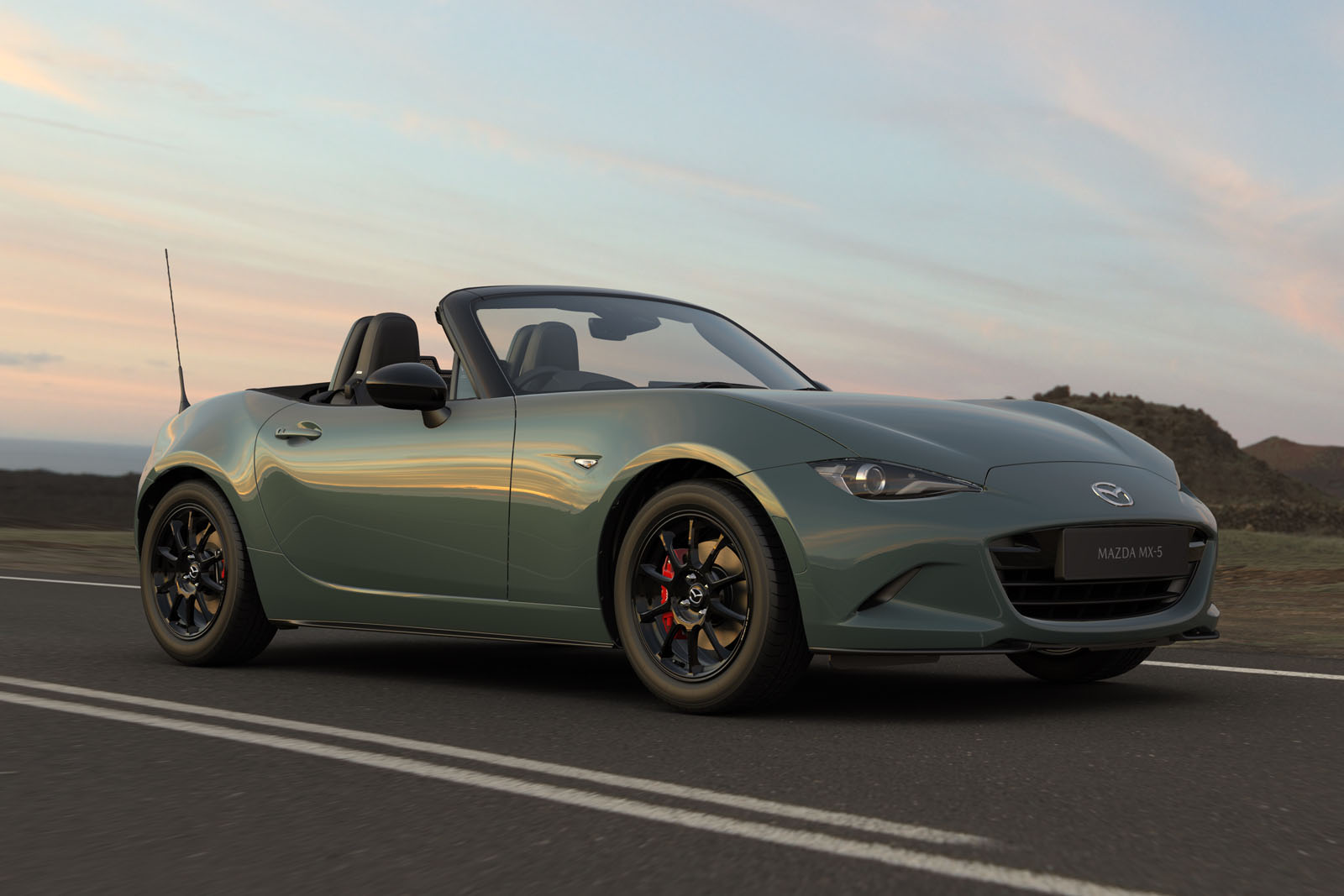
The landscape of the British sports car market is undergoing a significant shift as Mazda UK confirms a strategic realignment of its iconic MX-5 roadster lineup. In a move driven primarily by tightening environmental standards, the manufacturer has announced the permanent withdrawal of the range-topping 2.0-litre engine option from the United Kingdom. To compensate for the loss of the more powerful unit, Mazda is introducing a series of technical and equipment updates to the remaining 1.5-litre model, aiming to preserve the "Jinba Ittai" driving philosophy that has defined the nameplate for over three decades.
The revised 1.5-litre Skyactiv-G engine will see its output increase to 134bhp and 114lb ft of torque, representing a modest but notable gain of 4bhp and 3lb ft over the outgoing version. While these figures remain substantially lower than the 181bhp and 151lb ft provided by the now-defunct 2.0-litre engine, Mazda maintains that the 1.5-litre unit is the spiritual heart of the current "ND" generation roadster. The brand’s engineering team has also focused on sensory engagement, revising the engine’s acoustic profile to deliver a more resonant and involving soundtrack for the driver. Simultaneously, the updates have yielded a marginal improvement in efficiency, with CO2 emissions falling by 1g/km.
The End of the 2.0-Litre Era in Europe and the UK
The decision to axe the 2.0-litre engine is not an isolated event for the UK market but rather the final step in a broader European withdrawal. Mazda had already removed the larger displacement engine from its mainland European catalogues earlier in 2024 to comply with increasingly stringent fleet emission targets. The UK was granted a brief reprieve due to specific derogation timings—regulatory allowances that let manufacturers phase out certain models over a slightly longer period—but that window has now closed.
A spokesperson for Mazda UK clarified the timeline, stating that while the 2.0-litre model has officially ceased production for the region, sales will continue through the end of 2024 until existing port and dealer stock is exhausted. Mazda forecasts that the final units of the 181bhp roadster will be sold by January 2025, marking the end of a decade-long run for the high-output variant of the ND generation.
The 2.0-litre engine, particularly in its post-2018 "ND2" guise, was widely regarded by critics and enthusiasts as the definitive version of the car. It offered a 7500rpm redline and a level of mid-range punch that allowed the MX-5 to compete with more expensive performance machinery. Its departure leaves a void in the "affordable" sports car sector, as the 1.5-litre model now stands as the sole internal combustion powertrain for the MX-5 in the British Isles.
Technical Enhancements and Trim Restructuring
To bridge the gap left by the 2.0-litre model, Mazda is migrating several high-performance hardware components to the 1.5-litre range. The top-tier Homura and Homura Plus trim levels will now come equipped with Bilstein dampers and a front strut brace as standard. Previously, these handling-focused upgrades were exclusive to the 2.0-litre Sport Tech and Homura models. The inclusion of these components is intended to sharpen the 1.5-litre car’s turn-in and body control, catering to the "purist" demographic that typically opted for the larger engine.
However, the transition is not without its compromises. One of the most significant omissions in the updated 1.5-litre lineup is the asymmetrical limited-slip differential (LSD). In the outgoing range, the LSD was a hallmark of the 2.0-litre manual models, providing superior traction out of corners and allowing for the adjustable handling balance for which the MX-5 is famous. Due to the lower torque output and different transaxle requirements of the 1.5-litre engine, the LSD will not be carried over, a move that may disappoint track-day enthusiasts and those who prioritize ultimate mechanical grip.
A Decade of the ND Generation: A Chronology
The current Mazda MX-5, known internally as the ND, was first unveiled in late 2014 and entered the UK market in 2015. Its development was a masterclass in weight reduction, with Mazda engineers utilizing a "gram strategy" to ensure the car was approximately 100kg lighter than its predecessor, the NC.
- 2015: The ND launches with two engine options: a 129bhp 1.5-litre and a 158bhp 2.0-litre. The 1.5 was praised for its rev-happy nature, while the 2.0 offered more effortless touring capability.
- 2016: Mazda introduces the RF (Retractable Fastback), adding a power-folding hardtop to the lineup to appeal to a more premium segment of the market.
- 2018: A major mid-cycle update (ND2) sees the 2.0-litre engine receive a significant power hike from 158bhp to 181bhp, alongside a higher rev limit and improved torque delivery.
- 2021: Minor updates include the introduction of Kinematic Posture Control (KPC), a software-based braking system designed to suppress body roll in corners.
- 2024: The 2.0-litre engine is discontinued in Europe and the UK due to Euro 6e and subsequent emissions regulations, leaving the 1.5-litre as the sole survivor.
Throughout this timeline, the MX-5 has remained a outlier in the automotive industry. As other manufacturers pivoted toward heavy turbocharged engines and dual-clutch transmissions, Mazda stayed committed to naturally aspirated power and a lightweight six-speed manual gearbox.
Market Analysis: Sales Trends and Competitive Landscape
The streamlining of the MX-5 range comes at a challenging time for the sports car segment. In 2019, Mazda sold approximately 4,000 units of the MX-5 in the UK. By 2023, that figure had dwindled to roughly 1,500 units annually. Several factors contribute to this decline, including the rising popularity of performance crossovers, the aging nature of the ND platform, and a general increase in vehicle list prices across the industry.
Despite the sales dip, the MX-5 remains a vital "halo" model for Mazda, embodying the brand’s engineering prowess. Mazda UK has emphasized its commitment to keeping the roadster affordable, noting that it remains one of only three convertibles available in the UK for under £30,000. This price point is increasingly rare; the Fiat 124 Spider (which shared the MX-5’s platform) was discontinued years ago, and newer entries like the MG Cyberster occupy a significantly higher price bracket and utilize electric powertrains.
The removal of the 2.0-litre engine also reflects the pressures of the UK’s Zero Emission Vehicle (ZEV) mandate and corporate average fuel economy (CAFE) targets. For manufacturers, every gram of CO2 counts toward potential fines. By focusing on the 1.5-litre engine, which is inherently more efficient and emits less CO2, Mazda can maintain the model’s presence in the market without disproportionately skewing its fleet emissions average.
The Philosophy of Jinba Ittai
Mazda’s justification for the 1.5-litre’s supremacy centers on "Jinba Ittai," a Japanese phrase translating to "horse and rider as one." The company argues that the 1.5-litre engine provides a more balanced weight distribution and a purer connection between the driver and the machine. Because the 1.5-litre engine is lighter and sits further back in the engine bay, it enhances the car’s rotational inertia and steering feel.
"The 1.5-litre’s light weight, responsive and accessible performance perfectly reflect our philosophy," a Mazda representative noted. For many enthusiasts, the 1.5-litre has always been the "sweetheart" of the range, requiring the driver to work the gearbox and maintain momentum to extract performance—a hallmark of traditional British and Japanese roadsters.
Future Implications and the Path to Electrification
The discontinuation of the 2.0-litre engine raises questions about the long-term future of the MX-5 in its current form. The ND generation is now ten years old, which is long by modern automotive standards. While Mazda has not officially confirmed when a next-generation "NE" model will arrive, the company has dropped significant hints regarding the car’s future.
At the 2023 Tokyo Mobility Show, Mazda unveiled the Iconic SP concept, a sleek, rotary-ev-powered sports car that many believe previews the next MX-5. This concept uses a rotary engine as a generator to charge batteries for an electric motor, suggesting that the next generation will likely be electrified to some degree to meet future emissions laws.
In the immediate term, the updated 1.5-litre MX-5 will carry the torch. While it may lack the outright pace of the 2.0-litre, its improved sound, sharpened suspension on high-trim models, and continued commitment to a sub-£30,000 price tag ensure that the world’s best-selling roadster remains a relevant, if more specialized, option for driving enthusiasts.
The updated 1.5-litre Mazda MX-5 is scheduled to arrive in UK showrooms in January 2025. Final pricing and detailed specifications for the revised Homura and Homura Plus trims are expected to be released in the final quarter of 2024. For now, buyers seeking the 181bhp 2.0-litre experience are encouraged to act quickly before the remaining UK stock is depleted.