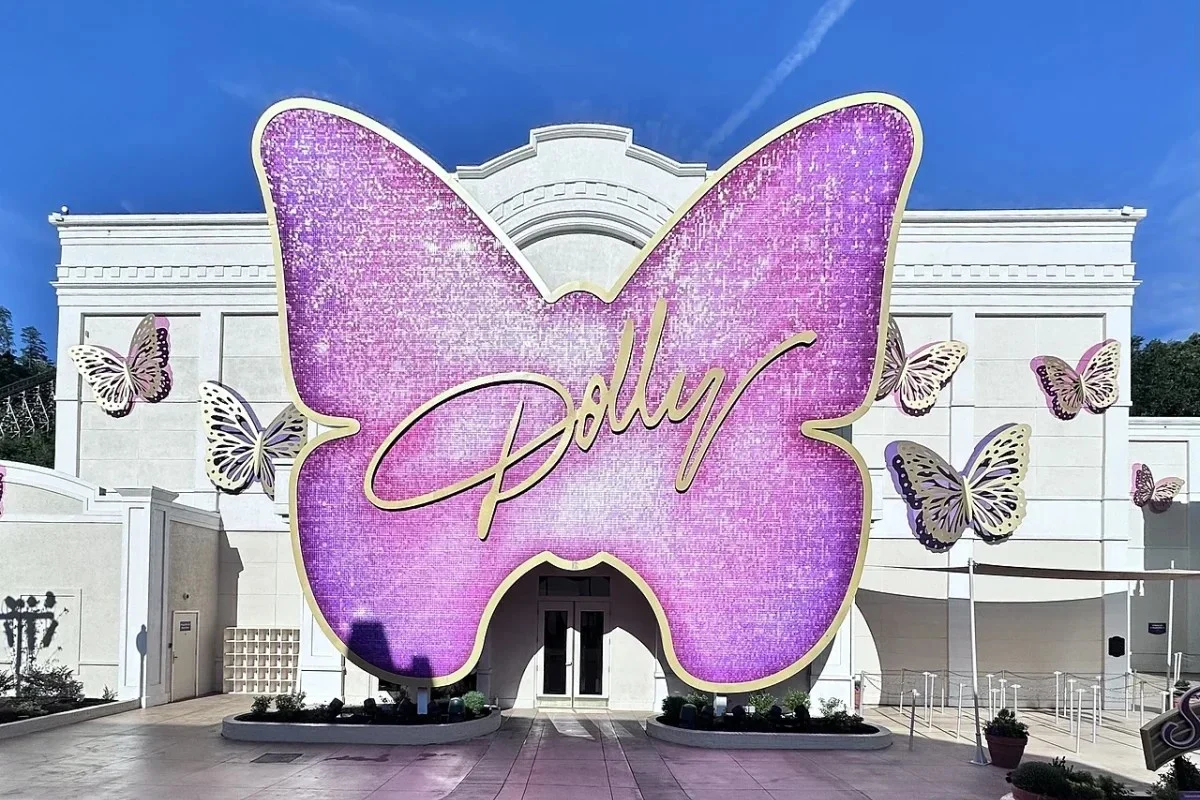
Dollywood opened its gates to the public on Wednesday, one day after namesake country music star Dolly Parton passed away at the age of 80. The opening marks a poignant moment for the Pigeon Forge, Tennessee, destination, which has evolved from a local attraction into a global tourism powerhouse. Despite the loss of its founder and visionary, the park’s management confirmed that operations would proceed without interruption, signaling a commitment to the long-term strategic growth plans Parton set in motion years prior. A statement released on the amusement park’s official website early Wednesday morning reflected this sentiment, noting that "the show must go on." The message emphasized that the park intended to honor Parton’s memory "not with silence, but with laughter, music, and shared dreams."
The transition comes at a critical juncture for the theme park industry. While regional operators across the United States struggle with declining attendance, rising operational costs, and significant debt burdens, Dollywood remains in the midst of a massive $500 million capital investment program. This expansion strategy, which rivals the per-project spending of industry titans like Disney and Universal, is designed to transform the park into a multi-day destination resort. The contrast between Dollywood’s financial trajectory and that of its competitors—most notably the newly merged Six Flags and Cedar Fair entity—highlights a diverging landscape in the American leisure sector.
The $500 Million Expansion Strategy
The current phase of growth at Dollywood is part of a decade-long investment plan announced in 2021. This $500 million commitment is focused on increasing the park’s capacity and enhancing its resort offerings to attract visitors from beyond its traditional regional base. A centerpiece of this expansion was the 2023 opening of Big Bear Mountain, a $25 million roller coaster that stands as the longest in the park’s history. However, the strategy extends far beyond thrill rides.
Central to the expansion is the development of the Dollywood HeartSong Lodge & Resort, a 302-room property that opened in late 2023. This addition followed the success of the DreamMore Resort and Spa, marking a shift toward a "resort-first" business model. By providing high-end on-site accommodations, Dollywood has successfully increased the average spend per visitor and extended the duration of guest stays. Management has indicated that additional lodging properties are in the planning stages, with the goal of creating a cohesive resort ecosystem that mirrors the "hub-and-spoke" model utilized by major Florida theme parks.
Industry analysts note that Dollywood’s investment is particularly aggressive given the current economic climate. While other parks are scaling back to preserve cash flow, Dollywood is doubling down on themed environments and "experiential" attractions. This includes the expansion of Wildwood Grove, an award-winning land designed to offer immersive storytelling experiences that appeal to multi-generational families—a demographic that Parton herself frequently identified as the park’s core audience.
A Chronology of Dollywood’s Evolution
To understand the park’s current resilience, it is necessary to examine its historical trajectory from a small roadside attraction to a multi-billion-dollar asset.
- 1961–1976: The site originally opened as "Rebel Railroad," featuring a steam train and a general store. It was later renamed "Goldrush Junction" and "Silver Dollar City Tennessee" as it grew under the ownership of the Herschend family.
- 1986: Dolly Parton joined the Herschends as a partner, rebranding the park as "Dollywood." Her involvement brought national media attention and a surge in attendance, nearly doubling the park’s visitors in its first year under the new name.
- 2001: The park opened Splash Country, a multi-acre water park, diversifying its offerings and establishing Pigeon Forge as a summer destination.
- 2015: The opening of the DreamMore Resort marked the park’s first major foray into the luxury lodging market, beginning its transition into a destination resort.
- 2021–Present: The announcement and execution of the $500 million expansion plan, aimed at solidifying the park’s status as the leading attraction in the American South.
Throughout this timeline, Parton’s role remained central. Unlike many celebrity-endorsed ventures, Parton was a hands-on partner who insisted on maintaining the cultural integrity of the Smoky Mountains within the park. This commitment to "Appalachian hospitality" has become the brand’s primary differentiator in a crowded market.
Divergent Industry Trends: Dollywood vs. Regional Competitors
Dollywood’s financial stability stands in stark contrast to the volatility seen elsewhere in the regional theme park sector. For several years, the industry has been characterized by "debt-fueled selloffs" and aggressive consolidation. The most prominent example is the merger between Six Flags and Cedar Fair, a move largely driven by the need to achieve economies of scale and service billions of dollars in corporate debt.
While Six Flags has been forced to shed non-core assets and streamline operations to appease shareholders, Dollywood has benefited from its status as a privately held, non-franchise entity. The partnership between Dolly Parton and Herschend Family Entertainment—the largest family-owned themed attractions corporation in the U.S.—has allowed the park to prioritize long-term growth over quarterly earnings reports.
Supporting data suggests that Dollywood’s "premiumization" strategy is paying off. According to industry reports, while some regional parks saw attendance plateaus in 2023, Dollywood reported record-breaking numbers, frequently exceeding 3 million visitors annually. Furthermore, the park has consistently ranked at the top of industry awards, such as the Golden Ticket Awards, for its food, guest service, and Christmas events. This high level of guest satisfaction allows the park to command higher ticket prices, which in turn funds the ongoing $500 million expansion without the need for high-interest external financing.
Official Responses and Economic Impact
The passing of Dolly Parton has prompted a wave of reactions from industry leaders and local officials, all of whom emphasized her role as an economic catalyst for the region. Tennessee Governor Bill Lee issued a statement noting that Parton’s vision for Dollywood "transformed the economy of East Tennessee," turning Sevier County into one of the state’s primary revenue generators.
Local economic data underscores this impact. Dollywood is the largest employer in Sevier County, providing jobs for more than 4,000 seasonal and full-time employees. The park’s success has a "multiplier effect" on the Pigeon Forge and Gatlinburg economies, supporting thousands of additional jobs in the hotel, restaurant, and retail sectors. In a statement, the Pigeon Forge Department of Tourism noted that the park serves as the "anchor tenant" for the entire region, with its $500 million investment providing a "security blanket" for local businesses for the next decade.
Parton herself was vocal about the park’s future in the months leading up to her passing. In an interview with the Wall Street Journal earlier this year, she expressed her hope that the park would continue to grow long after she was gone. She noted that the management structure was designed to ensure that the "Dolly brand"—defined by kindness, inclusivity, and mountain heritage—would remain the North Star for all future developments.
Analysis of Implications and the Post-Parton Era
The immediate challenge for Dollywood will be maintaining its brand identity in the absence of its living icon. For nearly four decades, Parton has been the face of the park, appearing at seasonal openings and serving as its most effective marketing asset. However, analysts believe the park is well-positioned for this transition.
The "Dolly brand" has been institutionalized within the park’s operations. From the "Imagination Library" initiatives to the specific focus on Southern gospel and bluegrass music, the park’s themes are deeply embedded in its physical infrastructure and corporate culture. Furthermore, the Herschend family’s management style is famously long-term, suggesting that there will be no sudden shifts in strategy or quality.
The broader implication for the theme park industry is the validation of the "niche-destination" model. While Disney and Universal focus on global intellectual property (IP) like Marvel, Star Wars, and Harry Potter, Dollywood has proven that a park built on regional culture and personal authenticity can be just as profitable. As regional parks like those in the Six Flags chain struggle to define their identity in a post-merger world, Dollywood’s success provides a blueprint for focusing on guest experience and local heritage.
As the $500 million expansion continues, the park is expected to announce its next major attraction for the 2026 season. Observers suggest this will likely be another resort property or a major new themed land, further pushing the boundaries of what a regional park can achieve. While the gates opened on Wednesday with a heavy heart, the activity within the park—the construction crews, the musicians, and the thousands of visiting families—serves as a living testament to Parton’s enduring influence on the American travel industry. The "shared dreams" she envisioned in 1986 have grown into a half-billion-dollar reality that shows no signs of slowing down.