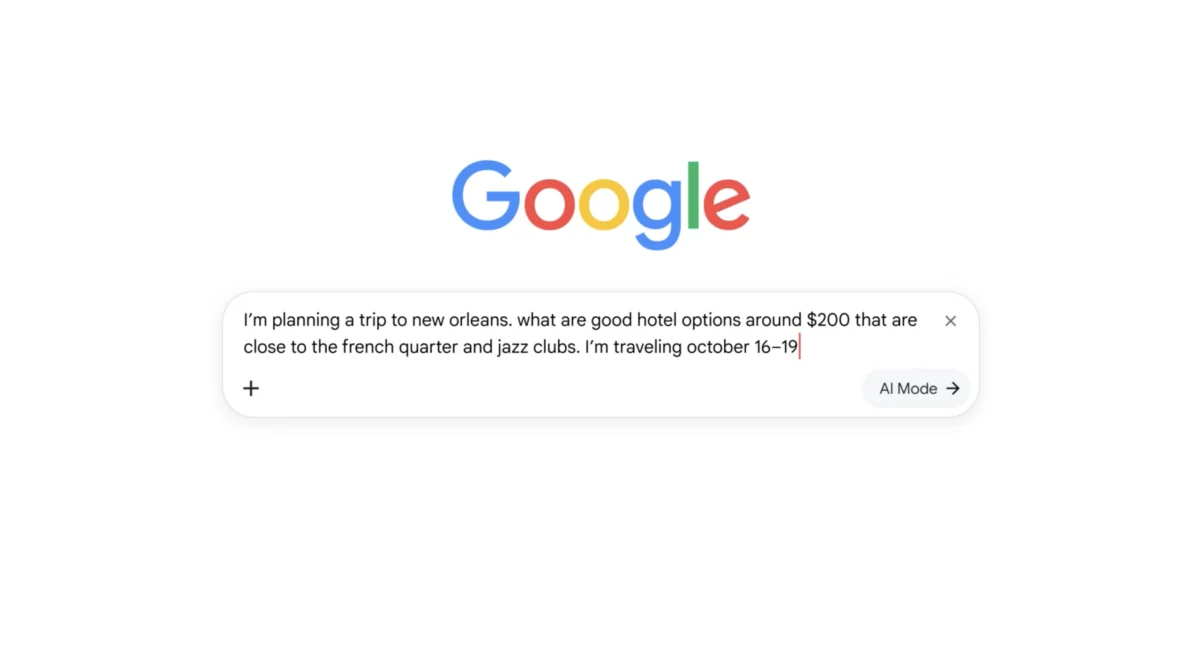
Google has officially transitioned from a travel intermediary to a transaction facilitator within its artificial intelligence ecosystem, launching a new "agentic" hotel booking feature in the United States. This rollout, which began on Thursday, represents a significant evolution in how the search giant handles travel queries, moving beyond the traditional model of providing outbound links to third-party sites. Under this new framework, users can research, compare, and complete hotel reservations directly within Google’s AI chat interface, leveraging Google Pay to finalize transactions without ever leaving the search environment.
The deployment marks the fulfillment of a vision first teased by Google executives nine months ago, signaling a strategic shift toward "agentic" computing. In this context, an AI agent does more than just summarize information; it executes complex tasks on behalf of the user. While the hotel or online travel agency (OTA) remains the merchant of record—handling the actual credit card charge and providing customer support—the entire front-end experience is now consolidated within Google’s AI Mode.
The Mechanics of Agentic Travel Booking
The user experience within Google’s AI Mode is designed to mimic a conversation with a travel consultant. When a traveler initiates a search for lodging, the AI prompts a series of clarifying questions regarding location, budget, amenities, and dates. Once a selection is made, the system displays the final price, including taxes and fees, alongside the specific cancellation policies of the provider.
The integration of Google Pay is the final piece of the transactional puzzle. By utilizing stored payment credentials, the system removes the friction of manual data entry, which has historically been a primary cause of cart abandonment in mobile travel bookings. Despite the seamless appearance, Google emphasizes that the "agentic" work occurs largely in the background. The AI coordinates with the APIs (Application Programming Interfaces) of partner organizations to verify real-time availability and pricing, ensuring that the information presented in the chat is accurate and bookable.
Launch partners for this initiative include a robust list of industry titans: Booking.com, Choice Hotels, Expedia, Hilton, Hotels.com, IHG, Marriott, Priceline, Trip.com, and Wyndham. This broad participation suggests that the hospitality industry is prioritizing distribution reach over the potential risks of platform consolidation.
A Chronology of Google’s Travel Ambitions
To understand the significance of this launch, one must view it through the lens of Google’s decade-long effort to dominate the travel vertical. The journey has been marked by both rapid innovation and high-profile retreats.
In 2011, Google completed its $700 million acquisition of ITA Software, which provided the foundational data for what would become Google Flights. This move sent shockwaves through the industry, leading to the formation of FairSearch, a lobbying group of competitors who feared Google would prioritize its own products over organic search results. By 2015, the company introduced "Book on Google," a feature that allowed users to book flights and hotels directly on Google’s platform.
However, "Book on Google" struggled to gain traction. Travelers often preferred the loyalty programs and direct communication channels offered by hotels and OTAs. Furthermore, the interface was often seen as a mere "skin" over existing booking engines rather than a transformative experience. In 2022, Google began sunsetting the feature, leading many analysts to believe the company was retreating to its core strength: being a high-intent traffic referral engine.
The pivot back to integrated booking in 2024 is powered by a fundamentally different technology: Generative AI. Unlike the static forms of the past, the new agentic model is dynamic. The timeline of this revival began in November 2023, when Google first demonstrated the capability of its Large Language Models (LLMs) to handle multi-step travel planning. Following the rebranding of its AI efforts under the Gemini umbrella in early 2024, the company accelerated the integration of transactional tools, leading to the current rollout.
Supporting Data and Market Dynamics
The move into agentic booking is supported by shifting consumer behaviors and massive market potential. According to data from Statista, the global online travel market is projected to exceed $1 trillion by 2030. Within this market, the role of mobile and AI-assisted search is growing exponentially.
Internal industry data suggests that nearly 60% of travelers feel that the time spent planning a trip is a significant pain point. By reducing the "search-to-book" window from several hours across multiple tabs to a single conversational thread, Google aims to capture a larger share of the "upper-funnel" intent.
Furthermore, Google’s existing dominance in the travel space provides a powerful springboard. Estimates suggest that Google Hotels and Google Flights already account for a significant plurality of all travel-related search traffic. By converting that traffic within its own ecosystem, Google can potentially increase its "take rate" or advertising value by offering partners higher conversion rates than a standard outbound link.
Industry Reactions and Strategic Partnerships
The reaction from the travel industry has been a mix of cautious optimism and strategic necessity. For major hotel chains like Marriott and Hilton, participating in Google’s AI booking is a way to ensure their inventory is present where the next generation of travelers is starting their journey.
"The goal is to meet the customer wherever they are," a spokesperson for a major hotel brand noted during a recent industry conference. "If the customer is living in an AI-driven interface, we have to be there, provided the transaction still flows through our systems and we retain the guest data."
OTAs like Expedia and Booking.com face a more complex calculation. These platforms spend billions of dollars annually on Google advertising. By participating in AI Mode booking, they risk becoming "white-label" backend providers for Google. However, the alternative—being excluded from the AI-driven search results of the world’s most popular search engine—is a far greater risk.
The current partnership model allows OTAs to maintain their role as the merchant of record. This is a critical distinction, as it means the OTAs still handle the payment processing, the customer service, and the post-booking relationship. This compromise appears to be the "middle ground" that allowed Google to secure such a high-profile list of launch partners.
Analysis of Implications: Why This Time is Different
Skeptics point to the failure of "Book on Google" as a reason to be wary of this new launch. However, several key factors suggest that the agentic AI model has a higher probability of success.
First, the technological interface has evolved. Generative AI allows for a level of personalization and nuance that static forms could never achieve. An AI agent can understand complex requests like, "Find me a hotel in Midtown Manhattan with a gym and a 24-hour business center that is under $400 and has a flexible cancellation policy because my meeting might move."
Second, the integration of Google Pay provides a level of transactional security and convenience that was less ubiquitous during the previous decade. As digital wallets become the standard for mobile commerce, the friction of "checking out" on a new platform is significantly diminished.
Third, the shift in Google’s business model is becoming more apparent. As traditional search engine results pages (SERPs) are replaced by AI-generated answers, Google must find new ways to monetize its traffic. Facilitating transactions within the AI provides a clearer path to value than simply displaying ads next to a list of links.
Broader Impact on the Travel Ecosystem
The long-term implications of Google’s agentic booking are profound. For small and independent hotels, the barrier to entry may rise. If Google’s AI prioritizes partners with sophisticated API integrations and high-volume partnerships, independent players may find themselves further marginalized unless they work through the major OTAs.
For the SEO and digital marketing industry, the "zero-click" reality is becoming more entrenched. If a user can find and book a hotel within the AI, the necessity of visiting a hotel’s website or an OTA’s landing page vanishes. This will force travel marketers to shift their focus from website optimization to "LLM optimization"—ensuring their data is structured in a way that AI agents can easily ingest and recommend.
Moreover, this launch is likely just the beginning. While the current rollout focuses on hotels, the logical next steps include flights, car rentals, and local experiences. If Google successfully integrates the entire travel "stack" into its AI, it could become the ultimate "super app" for travel, rivaling platforms like WeChat in China.
In conclusion, Google’s launch of agentic hotel booking in AI Mode is more than a technical update; it is a redefinition of the search engine’s role in the global economy. By merging the capabilities of generative AI with the financial infrastructure of Google Pay and the inventory of the world’s largest travel brands, Google is attempting to create a frictionless commerce engine. Whether travelers fully embrace this conversational commerce remains to be seen, but the industry’s largest players have already placed their bets that the future of travel planning is agentic.