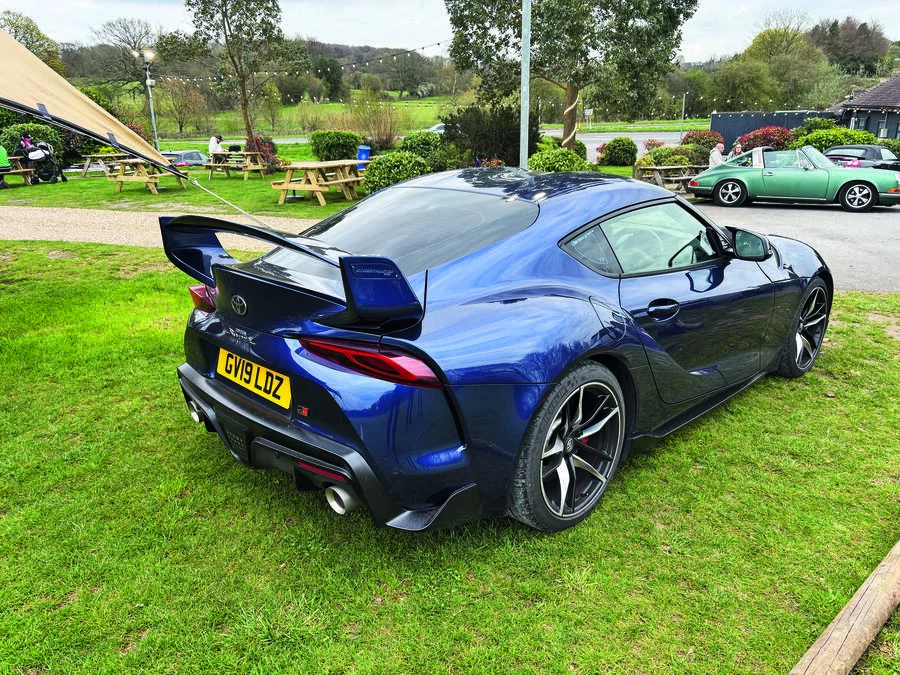
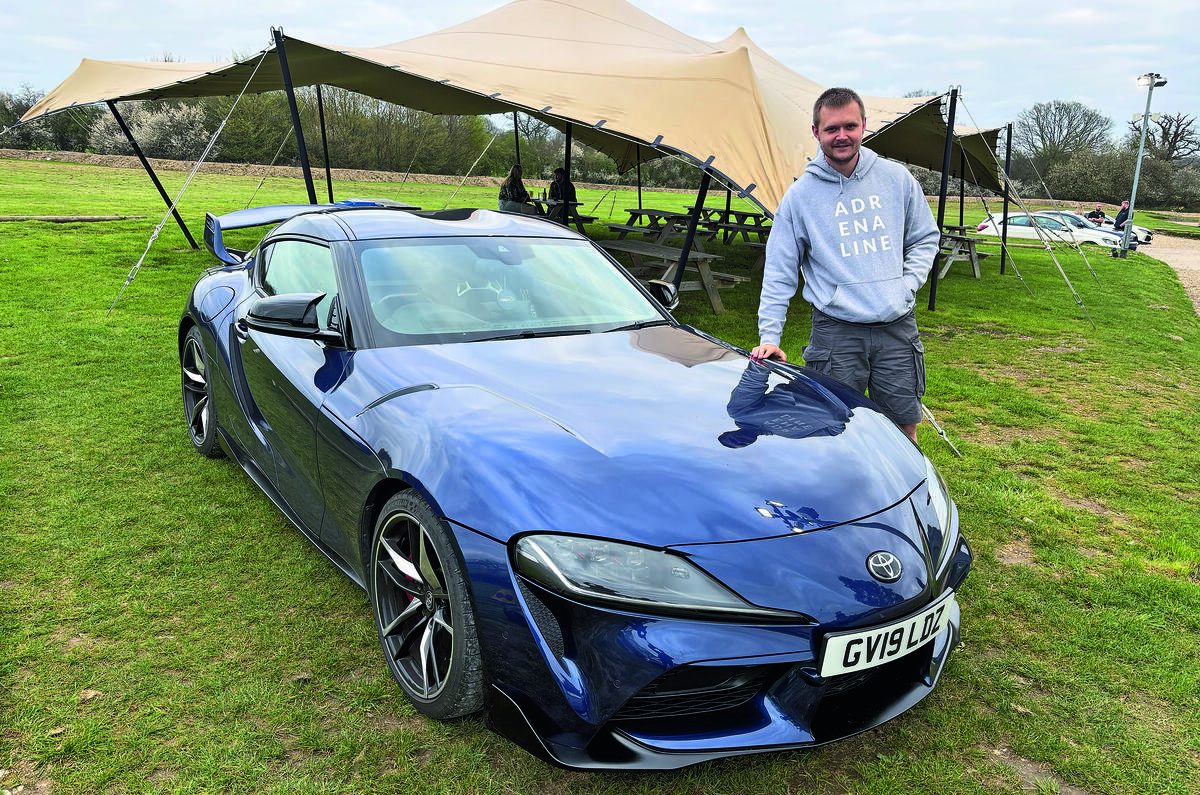
The acquisition of a high-performance vehicle is often the culmination of years of aspiration, but for 28-year-old Reece Atherton, purchasing a Toyota GR Supra 3.0 was merely the opening chapter of a much more radical narrative. Driven by a desire to match the performance of his peers and eventually surpass the benchmarks set by some of the world’s most renowned hypercars, Atherton’s journey into the world of elite automotive tuning highlights the enduring appeal of the Supra nameplate and the burgeoning potential of modern engineering. His goal is as clear as it is audacious: to transform a factory-spec Toyota into a machine capable of challenging the Bugatti Veyron, the car that redefined the limits of speed in the 21st century.
The Foundation: Selecting the GR Supra Platform
The Toyota GR Supra, specifically the A90 generation, has remained a focal point of automotive discourse since its debut. For Atherton, the decision to purchase the vehicle was influenced heavily by his social circle. "Two of my mates have one, and when I saw them, I thought I just have to have my own," he noted. While the manual transmission variant of the Supra has garnered significant praise for its driver engagement, Atherton opted for the eight-speed automatic. This choice was dictated by both financial pragmatism and performance strategy. Used automatic models currently command a lower entry price than their manual counterparts, and for a project aimed at extreme speed, the rapid-fire shifts of the ZF-sourced automatic transmission offer a distinct advantage in maintaining boost and maximizing acceleration.
The heart of Atherton’s ambitions lies in the Supra’s 3.0-liter turbocharged inline-six engine, the B58. Originally developed by BMW and refined through Toyota’s stringent quality standards, the B58 has earned a reputation as a "modern-day 2JZ"—a reference to the legendary engine found in the fourth-generation Supra (A80) that became a staple of the 1,000-plus horsepower tuning scene. In its stock form, the 2024-2026 era GR Supra produces between 335 and 382 horsepower depending on the specific model year and regional tuning. However, the internal architecture of the B58, featuring a closed-deck block and a forged crankshaft, provides a robust foundation for the massive power increases Atherton envisions.
Chronology of an Ambition: From Showroom to Super-Tuner
Atherton’s journey began in late August 2026, when he secured his Supra as a self-gifted birthday present. The timeline for his project is expected to follow a traditional trajectory of incremental performance gains, though his ultimate target—"Veyron-baiting"—requires a leap into the upper echelons of aftermarket engineering.
- Phase One: Acquisition and Assessment (August 2026): Atherton secured a used 3.0-liter automatic model. The initial weeks involved benchmarking the car’s stock performance to establish a baseline for future modifications.
- Phase Two: Bolt-on Enhancements (Late 2026): The first stage of tuning typically involves "Stage 1" and "Stage 2" modifications, including a high-flow downpipe, intake system upgrades, and an ECU remap. These changes can reliably push the B58 engine toward the 450-500 horsepower mark.
- Phase Three: Turbocharger and Fueling Upgrades (2027): To approach hypercar territory, the stock turbocharger must be replaced with a larger, more efficient unit. This phase also necessitates a comprehensive overhaul of the fueling system, potentially including Port Injection (PI) to supplement the direct injection system, allowing the engine to run on high-octane or E85 ethanol blends.
- Phase Four: Internal Strengthening and Transmission Calibration (2027-2028): At the levels of power required to "bait" a Veyron—roughly 900 to 1,000 horsepower—the engine internals (pistons and rods) must be swapped for reinforced components. Simultaneously, the ZF eight-speed transmission requires a "Stage 3" TCU (Transmission Control Unit) flash or physical clutch pack upgrades to handle the massive torque loads.
The Benchmark: Defining "Veyron-Baiting"
To understand the scale of Atherton’s ambition, one must look at the specifications of the Bugatti Veyron 16.4. When it launched, the Veyron was a marvel of engineering, featuring an 8.0-liter W16 engine with four turbochargers, producing 1,001 metric horsepower (987 bhp) and 1,250 Nm of torque. It achieved a 0-100 km/h (62 mph) time of 2.5 seconds and a top speed of 253 mph.
For a Toyota Supra to compete with these figures, it must overcome significant physical and aerodynamic hurdles. While a tuned Supra can be made lighter than the nearly two-ton Veyron, it lacks the Bugatti’s sophisticated all-wheel-drive system. Consequently, Atherton’s project will likely focus on "rolling races"—accelerating from speeds of 60 mph or 100 mph—where the Supra’s power-to-weight ratio can be leveraged without the limitations of standing-start traction.
Comparative Data Table: Stock vs. Targeted Performance
| Specification | Toyota GR Supra (Stock) | Bugatti Veyron 16.4 | Atherton’s Target |
|---|---|---|---|
| Engine | 3.0L I6 Turbo | 8.0L W16 Quad-Turbo | 3.0L I6 (Built/Big Turbo) |
| Horsepower | 382 bhp | 987 bhp | 1,000+ bhp |
| Torque | 369 lb-ft | 922 lb-ft | 850+ lb-ft |
| 0-60 mph | 3.9 seconds | 2.5 seconds | < 3.0 seconds (with tires) |
| Top Speed | 155 mph (limited) | 253 mph | 200+ mph |
Industry Perspectives and Technical Challenges
Automotive engineers and professional tuners suggest that while the 1,000-horsepower mark is achievable on the B58 platform, it is not without significant risk and expense. "The B58 is an incredible engine, but once you cross the 800-horsepower threshold, you are operating in a zone where thermal management becomes the primary challenge," says Marcus Thorne, a performance specialist at a leading UK tuning house. "You aren’t just building an engine; you’re managing a miniature furnace. Cooling the intake air, the oil, and the transmission fluid becomes as important as the turbo size."
Furthermore, the "Veyron-baiting" claim implies more than just straight-line speed. The Bugatti was designed for high-speed stability, featuring active aerodynamics and a bespoke braking system. For Atherton’s Supra to safely navigate the speeds he intends to reach, the project will require:
- Aerodynamic Stability: Upgraded front splitters and rear wings to prevent lift at speeds exceeding 180 mph.
- Braking Performance: Transitioning from the stock Brembo setup to carbon-ceramic or larger multi-piston steel discs to handle high-speed deceleration.
- Tire Technology: Utilizing R-compound or drag-radial tires capable of transferring 1,000 horsepower to the tarmac without disintegrating.
Broader Impact and the Legacy of the Supra
Reece Atherton’s project is emblematic of a larger trend within the automotive enthusiast community. As the industry shifts toward electrification, there is a renewed fervor for the "last of the greats"—internal combustion engines that can be modified and personalized. The GR Supra represents the bridge between the analog legends of the 1990s and the digital precision of the 2020s.
The social aspect of Atherton’s motivation—buying a car because his friends had them—speaks to the "car club" culture that continues to thrive. This culture is fueled by social media platforms where builds are documented, analyzed, and celebrated. By aiming for the "Veyron-baiting" tier, Atherton isn’t just building a car for himself; he is participating in a global competition of engineering one-upmanship that has defined the tuning scene for decades.
The economic implications are also noteworthy. The used market for the GR Supra has remained remarkably resilient. By opting for the automatic transmission, Atherton highlighted a market inefficiency where the "purist" demand for manuals has made the arguably more capable (in a drag racing context) automatic models more affordable. This allows enthusiasts to allocate more of their budget toward performance modifications rather than the initial purchase price.
Conclusion: The Road to 1,000 Horsepower
Reece Atherton’s ambition to take a Toyota Supra into the realm of hypercar performance is a testament to the engineering potential of the A90 platform. While the journey from a 382-horsepower daily driver to a 1,000-horsepower "Veyron-baiter" is fraught with technical challenges and significant financial investment, the path is well-trodden by those who refuse to accept factory limitations.
As Atherton begins the process of dismantling and rebuilding his Supra, he carries with him the legacy of the Supra name—a name synonymous with giant-killing performance. Whether he successfully "baits" a Veyron remains to be seen, but the pursuit itself serves as a reminder of why the tuning culture remains a vital, high-octane pillar of the automotive world. In an era of increasing automation and electrification, Atherton’s quest for raw, mechanical speed is a defiant nod to the "Too Fast, Too Furious" spirit that inspired a generation.