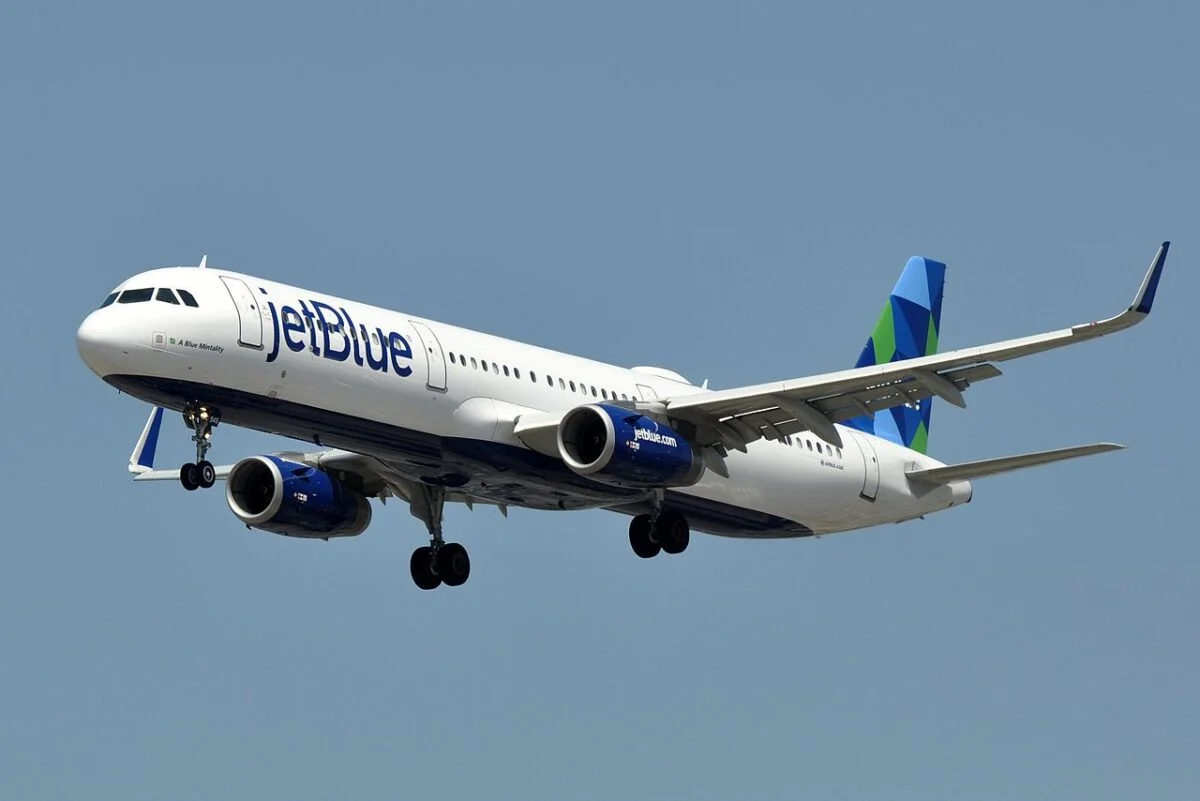
JetBlue Airways announced a significant restructuring of its leadership governance on Thursday, confirming that two board members appointed by activist investor Carl Icahn will resign their positions following a reduction in Icahn’s equity stake in the carrier. The departures of Jesse Lynn, general counsel of Icahn Enterprises, and Steve Miller, a portfolio manager at Icahn Capital, are effective immediately, marking a pivotal shift in the relationship between the New York-based airline and one of Wall Street’s most formidable activist investors.
The exit of the Icahn nominees comes less than a year after the billionaire investor first disclosed a substantial stake in JetBlue, characterizing the airline’s stock as undervalued. While the departure of board representatives often signals a cooling of relations or a change in investment thesis, both JetBlue and Icahn characterized the transition as a natural progression following the investor’s decision to trim his holdings. The move leaves JetBlue’s board with 11 members as the company continues to navigate a complex turnaround strategy dubbed "JetForward," aimed at restoring profitability after years of financial and regulatory turbulence.
A Brief History of the Icahn-JetBlue Partnership
Carl Icahn’s involvement with JetBlue began in early 2024, a period of intense vulnerability for the airline. In February, Icahn disclosed a 9.91% stake in the carrier, making him one of its largest shareholders. At the time, JetBlue was reeling from the collapse of its planned $3.8 billion acquisition of Spirit Airlines, which had been blocked by a federal judge on antitrust grounds. Simultaneously, the airline was dealing with the forced dissolution of its "Northeast Alliance" with American Airlines, another regulatory casualty that stripped JetBlue of a key growth engine in the competitive New York and Boston markets.
Icahn’s entry was initially viewed by industry analysts as a precursor to a potential proxy fight. However, the situation resolved quickly and amicably. By mid-February, JetBlue agreed to grant Icahn two seats on its board of directors. This "constructive partnership," as Icahn described it, was intended to provide oversight and shareholder perspective as JetBlue’s new CEO, Joanna Geraghty, took the helm. Geraghty, the first woman to lead a major U.S. airline, inherited a company facing high operational costs, debt from aircraft orders, and a fleet hindered by ongoing issues with Pratt & Whitney Geared Turbofan (GTF) engines.
In a statement released on Thursday, Icahn expressed confidence in the airline’s current trajectory. “We appreciate the constructive partnership with JetBlue over the years as they have reshaped the airline and we look forward to seeing them continue to successfully execute the JetForward strategy,” he said. The reduction in his stake, the exact size of which was not immediately disclosed in the resignation announcement, suggests that Icahn may be reallocating capital while maintaining a supportive stance toward Geraghty’s leadership.
The JetForward Strategy: A Path to Profitability
The departure of the Icahn nominees occurs as JetBlue enters a critical phase of its "JetForward" strategic plan. Introduced earlier this year, the plan is designed to deliver $800 million to $900 million in incremental earnings before interest and taxes (EBIT) by 2027. The strategy is built on four primary pillars: operational reliability, network optimization, loyalty program expansion, and cost control.
Under Geraghty’s leadership, JetBlue has moved aggressively to cut unprofitable routes and double down on its strongholds in the Northeast and the Caribbean. The airline has significantly reduced its footprint in markets like Los Angeles and various cities in South America, refocusing its fleet on high-margin leisure routes and premium "Mint" business-class service.
A central component of JetForward is the expansion of JetBlue’s loyalty program and its co-branded credit card offerings, which provide high-margin, recurring revenue. Additionally, the airline is investing in its first-ever airport lounges at New York’s John F. Kennedy International Airport and Boston Logan International Airport, a move aimed at capturing a larger share of the premium travel market currently dominated by legacy carriers like Delta and United.
Financial Performance and Market Pressures
JetBlue’s financial health has been a primary concern for investors and was likely a driving force behind Icahn’s initial intervention. For the third quarter of 2024, JetBlue reported a net loss of $60 million, or $0.17 per share. While still in the red, the results outperformed some analyst expectations and showed signs of stabilization. Revenue for the quarter reached $2.4 billion, supported by strong demand for premium seating and a 4.3% increase in per-unit revenue.
The airline’s balance sheet remains a point of scrutiny. JetBlue has been forced to take on significant debt to finance its fleet renewal and maintain liquidity during the post-pandemic recovery. Furthermore, the carrier continues to grapple with the grounding of multiple Airbus A321neo aircraft due to the Pratt & Whitney engine recalls. At any given time, JetBlue has several aircraft out of service, which limits capacity and increases maintenance costs.
Despite these headwinds, the airline has successfully identified over $175 million in cost savings through its structural cost program. The management team has also deferred approximately $3 billion in planned capital expenditures for new aircraft, opting to extend the life of its existing Embraer E190 and Airbus A320 fleets to preserve cash.
Chronology of Key Events
To understand the significance of the board reshuffle, it is essential to look at the timeline of JetBlue’s recent corporate evolution:
- July 2022: JetBlue wins a bidding war against Frontier Airlines to acquire Spirit Airlines for $3.8 billion.
- May 2023: A federal judge rules against the JetBlue-American Airlines "Northeast Alliance," forcing the carriers to unwind their partnership.
- January 2024: A federal judge blocks the JetBlue-Spirit merger, citing concerns that it would harm budget-conscious travelers.
- February 2024: Carl Icahn discloses a 9.91% stake in JetBlue. Within days, JetBlue grants Icahn two board seats (Jesse Lynn and Steve Miller).
- February 2024: Joanna Geraghty officially begins her tenure as CEO, succeeding Robin Hayes.
- July 2024: JetBlue unveils the "JetForward" strategy during its Q2 earnings call, outlining a multi-year plan for financial recovery.
- October 2024: JetBlue reports Q3 earnings that show narrowing losses and improved unit revenue.
- November 2024: JetBlue announces the resignation of Jesse Lynn and Steve Miller as Icahn reduces his equity position.
Broader Implications for the Airline Industry
The exit of Icahn’s nominees from JetBlue is part of a broader trend of activist involvement in the U.S. airline sector. Earlier this year, Southwest Airlines faced a high-stakes battle with Elliott Investment Management, which resulted in a massive board overhaul and the announced retirement of Southwest’s executive chairman.
Unlike the contentious Elliott-Southwest saga, Icahn’s involvement with JetBlue appears to have concluded with less friction. Analysts suggest this may be due to JetBlue’s management proactively adopting many of the changes an activist would typically demand—such as aggressive cost-cutting, network rationalization, and a focus on shareholder returns.
However, the departure of the Icahn representatives also leaves JetBlue more independent at a time when the industry faces significant uncertainty. With a new presidential administration taking office in 2025, the regulatory environment for airline mergers and alliances could shift. JetBlue, now unburdened by the Spirit merger attempt, may look for new, less intensive ways to partner with other carriers or explore niche acquisitions that do not trigger the same level of antitrust scrutiny.
Leadership and Governance Outlook
CEO Joanna Geraghty thanked the outgoing board members for their service, noting that the carrier remains committed to the goals established during their tenure. “We would like to thank Jesse and Steve for their dedication and many contributions to JetBlue over the past several months,” Geraghty said. “We continue to work toward our goal of returning to sustained profitability and creating long-term value for our shareholders.”
The reduction in Icahn’s stake and the subsequent board resignations may be interpreted by the market as a sign that the "activist phase" for JetBlue is ending, and the "execution phase" is in full swing. Investors will now focus squarely on the airline’s ability to meet its 2025 and 2026 financial targets. The primary metrics for success will be the stabilization of the GTF engine issues, the successful launch of its airport lounges, and the continued growth of its loyalty revenue.
As Jesse Lynn and Steve Miller depart, JetBlue’s remaining board members will need to maintain the same level of fiscal discipline that the Icahn nominees championed. The airline still faces a competitive landscape where larger legacy carriers have more significant resources to weather economic downturns.
Conclusion
The resignation of Carl Icahn’s nominees marks the end of a brief but impactful chapter in JetBlue’s history. While Icahn is stepping back, his influence remains visible in the airline’s renewed focus on core profitability and its disciplined approach to capital allocation. JetBlue now stands at a crossroads: it has a clear strategic roadmap in JetForward, but the path to executing that plan is fraught with operational and macroeconomic challenges. For now, the carrier appears to have the "constructive" blessing of one of the world’s most influential investors as it attempts to fly toward a more profitable future.