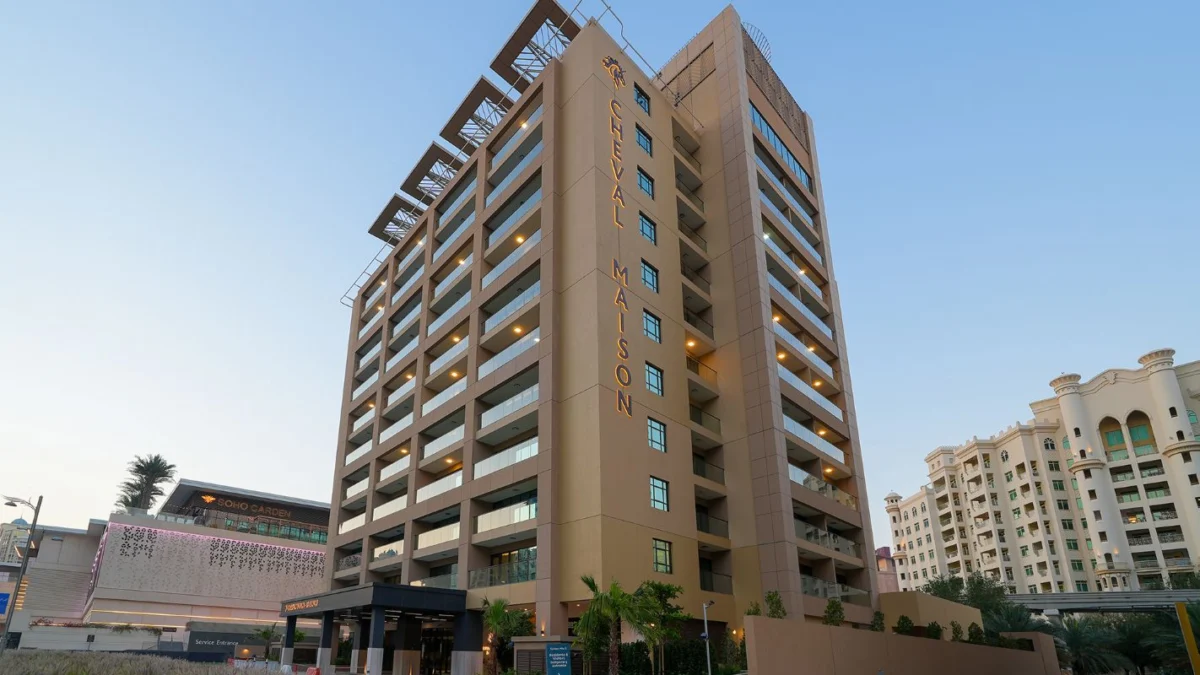
The United Kingdom-based luxury hospitality leader, Cheval Collection, has announced an ambitious strategic roadmap aimed at doubling its global footprint within the next several years. Central to this aggressive growth trajectory is the Middle East, a region that has rapidly evolved into the company’s primary engine for development and investment. According to Daniel Johansson, Cheval Collection’s Director of Development and Acquisitions, the group is transitioning from a boutique operator primarily focused on the British market to a diversified global powerhouse with a significant presence in the high-growth corridors of the United Arab Emirates and beyond.
Currently, Cheval Collection manages a sophisticated portfolio of 16 projects across the United Kingdom and the Middle East. However, the company’s latest projections indicate a move toward a much larger operational scale, leveraging the increasing demand for luxury extended-stay accommodations and high-end branded real estate. This expansion is not merely a quantitative increase in keys but a qualitative shift in the company’s business model, marking its entry into the lucrative branded residences sector.
The Strategic Shift: From Serviced Apartments to Branded Residences
For decades, Cheval Collection established its reputation through its "Cheval Maison" and "Cheval Residences" brands, which primarily operated as serviced apartments. These units offer a hybrid experience, combining the privacy and space of a self-contained apartment—complete with fully equipped kitchens and living areas—with the premium services associated with five-star hotels, such as 24-hour concierge desks and professional housekeeping. This model has historically appealed to medium-to-long-stay guests, including corporate executives on assignment and affluent families traveling for leisure.
However, the announcement of the Cheval Residences Dubai Islands project, scheduled for completion in 2029, signals a pivotal evolution. Unlike the serviced apartment model, where the operator or a single entity typically retains ownership of the entire building, the branded residences model involves selling individual units to private investors and homeowners. These owners then have the option to enter their units into a managed rental pool, allowing Cheval to operate the property as a luxury hotel while providing owners with a return on investment.
This shift mirrors a broader global trend in the hospitality industry. According to industry data from Savills and Knight Frank, the branded residences sector has grown by over 150% in the last decade. For operators like Cheval, this model provides a dual benefit: it allows for rapid scaling through third-party capital (the buyers) while maintaining brand standards and generating long-term management fees.
Chronology of Expansion in the Middle East
Cheval’s foray into the Middle Eastern market was a calculated progression that began with establishing a foothold in Dubai’s most prestigious districts. The timeline of this expansion illustrates the company’s methodical approach to regional growth:
- Cheval Maison – The Palm Dubai: This property marked the company’s inaugural entry into the UAE. Located on the iconic Palm Jumeirah, it served as a proof-of-concept for Cheval’s luxury serviced apartment model in a non-UK environment. Its success was driven by high occupancy rates from European and regional travelers seeking luxury without the constraints of a traditional hotel room.
- Cheval Maison – Expo City Dubai: Building on the momentum of the 2020 World Expo, Cheval expanded into the Expo City district. This project targeted the growing professional community and the "digital nomad" demographic that emerged post-pandemic, offering high-spec living spaces in a hub designed for the future of work and innovation.
- Cheval Residences Dubai Islands (April 2024): The most recent milestone in the company’s timeline, this project represents the first major venture into the branded residences space. By partnering with local developers on the Dubai Islands—a massive waterfront master development—Cheval is positioning itself at the forefront of Dubai’s next real estate frontier.
Supporting Data: The Economic Drivers of Growth
The decision to double the portfolio is supported by robust economic indicators within the hospitality and real estate sectors. In the United Kingdom, despite economic fluctuations, the demand for high-end serviced apartments has remained resilient, with London maintaining some of the highest Average Daily Rates (ADR) in Europe.
However, the Middle East offers a different set of growth catalysts. Dubai, in particular, has seen a record-breaking surge in its real estate market. In 2023 alone, the city recorded over 133,000 real estate transactions, a significant increase from previous years. Furthermore, the UAE’s "Golden Visa" program, which offers long-term residency to property investors, has made branded residences like those offered by Cheval highly attractive to international buyers from India, Europe, and China.
Data from the Dubai Department of Economy and Tourism (DET) indicates that the city welcomed 17.15 million international overnight visitors in 2023, a 19.4% increase over 2022. This influx of tourists, combined with a 20% increase in the number of high-net-worth individuals (HNWIs) residing in the city, creates a perfect storm of demand for the "lifestyle" living that Cheval provides.
Official Perspectives and Market Reactions
While official statements from Daniel Johansson emphasize the "key growth driver" status of the Middle East, market analysts suggest that Cheval’s expansion is also a response to the changing nature of corporate travel. "The line between business and leisure—often called ‘bleisure’—has blurred," notes a hospitality analyst at a leading global consultancy. "Cheval is capitalizing on the fact that modern travelers want more than a 30-square-meter hotel room; they want a home environment where they can work, cook, and live for weeks at a time."
Investors have reacted positively to the branded residence model because it offers a tangible asset backed by a reputable luxury brand. For the developer, partnering with a brand like Cheval provides a "brand premium," often allowing them to sell units at a 20% to 35% higher price point than unbranded developments in the same area.
Broader Impact and Implications for the Hospitality Industry
The expansion of Cheval Collection carries significant implications for the wider hospitality landscape. First, it underscores the growing dominance of the "serviced living" niche. As traditional hotel chains like Marriott and Hilton expand their own extended-stay and branded residence wings, Cheval’s growth proves that independent, specialized operators can compete effectively by focusing on high-touch service and localized luxury.
Second, the focus on the Middle East highlights the shifting center of gravity for luxury hospitality. With Saudi Arabia’s "Vision 2030" and the continued development of the UAE, the region is becoming the world’s most competitive laboratory for new hospitality concepts. Cheval’s move into Dubai Islands suggests that the company may soon look toward Riyadh, Jeddah, or Doha as potential sites for its next 16 projects.
Finally, the 2029 completion date for the Dubai Islands project indicates a long-term commitment to the region’s stability. By moving into the ownership-based model, Cheval is tying its brand equity to the long-term health of the Middle Eastern real estate market. This transition from an operator to a brand partner marks a new chapter in the company’s history, moving away from its origins as a London-centric property manager toward becoming a global lifestyle curator.
Future Outlook: Reaching the 30-Project Milestone
As Cheval Collection works toward its goal of 30+ properties, the industry will be watching how the brand maintains its "boutique" feel while operating on a larger scale. The company’s success will likely depend on its ability to navigate the complexities of international real estate law and its capacity to maintain consistent service standards across different cultures and regulatory environments.
With the Dubai Islands project serving as the flagship for this new era, Cheval is not just building apartments; it is building a global ecosystem of luxury living. If the current trajectory holds, the next few years will see the "Cheval" name become as synonymous with the skylines of the Middle East as it is with the prestigious streets of Kensington and Chelsea. The doubling of the portfolio is more than a business goal—it is a statement of intent that the future of luxury hospitality lies in the fusion of residential comfort and hotel-grade service, anchored in the world’s most dynamic emerging markets.