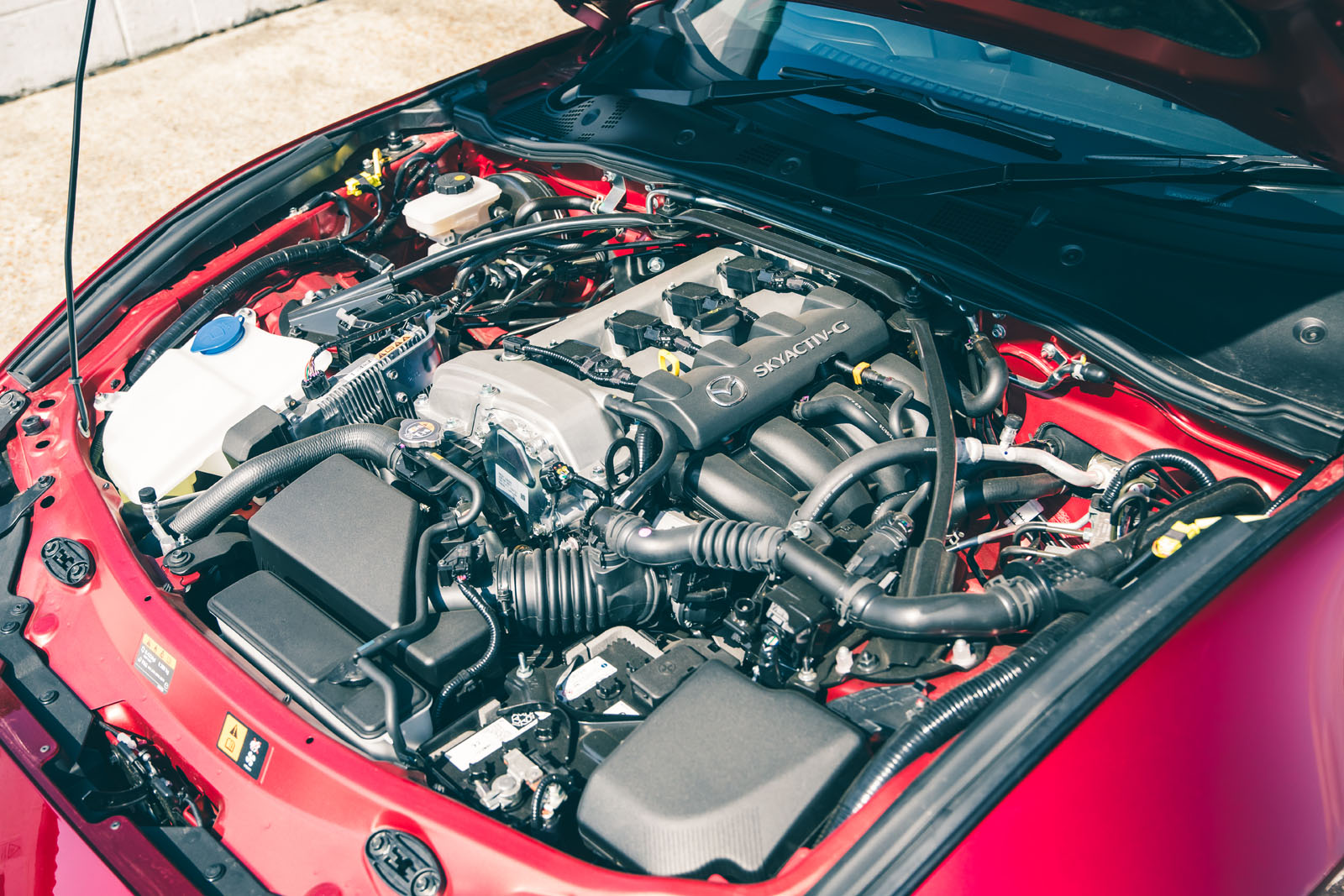
The automotive landscape in the United Kingdom has reached a significant turning point with the official discontinuation of the 2.0-litre Mazda MX-5. While the 1.5-litre variant remains a staple of the lightweight sports car segment, the departure of the larger-capacity engine marks the end of an era for one of the most celebrated naturally aspirated powerplants of the modern age. This decision, driven primarily by tightening emissions regulations and the corporate necessity to lower fleet-wide CO2 averages, leaves a void in the affordable enthusiast market.
The 2.0-litre Skyactiv-G engine was more than just a power upgrade; it represented the peak of Mazda’s "Gram Strategy" and its commitment to internal combustion refinement. However, as Mazda navigates the transition toward electrification, the 13g/km CO2 penalty associated with the 2.0-litre unit compared to its 1.5-litre sibling became an unsustainable burden. With the UK government’s Zero Emission Vehicle (ZEV) mandate placing immense pressure on manufacturers to balance their portfolios, the highest-emitting enthusiast models are often the first to face the chopping block.
The Regulatory Squeeze: Why the 2.0-Litre Had to Go
The primary catalyst for the removal of the 2.0-litre MX-5 is the increasingly stringent Corporate Average Fuel Economy (CAFE) standards and the specific UK ZEV mandate requirements. For a manufacturer like Mazda, which maintains a relatively small portfolio of battery electric vehicles (BEVs) such as the MX-30, every gram of carbon dioxide emitted by its internal combustion engine (ICE) fleet is scrutinized.
The 1.5-litre MX-5 emits approximately 142g/km of CO2, whereas the 2.0-litre version produced roughly 155g/km. While a 13g/km difference may seem negligible to the individual driver, across thousands of units, it significantly impacts the manufacturer’s fleet average. Under current regulations, manufacturers face heavy fines if they exceed their carbon targets. Consequently, Mazda has opted to streamline the MX-5 range to the more efficient 1.5-litre unit, which recently received a modest power bump and technological updates to help mitigate the loss of its larger counterpart.
This trend is not isolated to Mazda. The industry has seen a broader "downsizing" movement where characterful engines are replaced by smaller, turbocharged units or hybrid powertrains. A notable example is the Ford Puma ST, which saw its 1.5-litre three-cylinder engine and manual gearbox—a combination praised for its tactile engagement—replaced by a 1.0-litre mild-hybrid engine paired exclusively with an automatic transmission. Such shifts often prioritize efficiency on paper over the visceral driving experience that defines the sports car category.
A Legacy of High-Revving Performance
The 2.0-litre Mazda MX-5 reached its zenith with the 2018 update, often referred to by enthusiasts as the "ND2." Mazda engineers performed an extensive overhaul of the engine, increasing the redline from 6,800rpm to 7,500rpm and boosting output from 158bhp to 181bhp. This was achieved through lightweight pistons, a new crankshaft, and optimized intake and exhaust ports.
The result was an engine that felt truly "alive," offering a linear power delivery that encouraged drivers to explore the upper reaches of the tachometer. Beyond the engine itself, the 2.0-litre models in the UK were typically equipped with hardware that the 1.5-litre lacked, including a limited-slip differential (LSD), Bilstein dampers, and a front strut brace. These components transformed the MX-5 from a charming cruiser into a focused B-road tool. The removal of this variant means that new buyers seeking that specific factory-spec mechanical grip and top-end urgency must now look elsewhere or turn to the used market.
Comparative Data: The 1.5L vs. The 2.0L
To understand the impact of this loss, one must examine the performance delta between the two powerplants:
| Specification | 1.5-Litre Skyactiv-G | 2.0-Litre Skyactiv-G (ND2) |
|---|---|---|
| Horsepower | 132 PS | 184 PS |
| Torque | 152 Nm | 205 Nm |
| 0-62 mph | 8.3 Seconds | 6.5 Seconds |
| Top Speed | 127 mph | 136 mph |
| CO2 Emissions | ~142 g/km | ~155 g/km |
| Weight (approx.) | 1,032 kg | 1,057 kg |
While the 1.5-litre engine is often praised for its sweeter balance and the way it encourages the driver to use every single horsepower, the 2.0-litre provided the torque necessary for effortless overtaking and a more muscular character that many UK drivers preferred for longer tours and track days.
The Best Fun Engines Remaining Under £100,000
With the MX-5 2.0 gone, the market for "fun" internal combustion engines under the £100,000 threshold is shrinking, but several notable contenders remain for those who prioritize mechanical engagement.
1. Toyota GR86 (The Natural Successor)
The Toyota GR86 is perhaps the closest spiritual successor to the 2.0-litre MX-5. Powered by a 2.4-litre naturally aspirated boxer engine, it delivers 231bhp and a focus on rear-wheel-drive purity. However, like the MX-5, the GR86 has faced its own regulatory hurdles, with production runs for Europe being strictly limited due to safety and emissions legislation. It remains one of the few cars left that offers a raw, mechanical connection for under £35,000.
2. Honda Civic Type R (The Turbocharged Benchmark)
While it utilizes turbocharging, the K20C1 engine in the Honda Civic Type R (FL5) is a masterclass in engineering. It offers 325bhp and remains one of the most evocative four-cylinder engines on sale. Its ability to combine daily usability with track-ready performance makes it a standout, though its price point has crept closer to the £50,000 mark.
3. Alpine A110 (The Lightweight Specialist)
The Alpine A110 proves that you don’t need a massive engine to have fun. Its 1.8-litre turbocharged engine is paired with a chassis that weighs barely 1,100kg. The Alpine’s engine is punchy and vocal, providing a mid-engine experience that rivals cars twice its price. It serves as a reminder that power-to-weight ratio is often more important than outright displacement.
4. Porsche 718 Cayman/Boxster (The Precision Tool)
Under the £100,000 ceiling, the Porsche 718 range offers everything from the 2.0-litre turbocharged flat-four to the glorious 4.0-litre naturally aspirated flat-six in the GTS models. The 4.0-litre unit, in particular, is widely regarded as one of the best engines currently in production, offering a 7,800rpm redline and a soundtrack that defines the sports car experience.
5. Lotus Emira (The Last Hurrah)
The Lotus Emira represents the final internal combustion car from the Norfolk-based manufacturer. Available with either a Toyota-sourced 3.5-litre supercharged V6 or an AMG-sourced 2.0-litre turbocharged four-cylinder, the Emira is a visual and visceral celebration of the ICE era. The V6, paired with a manual gearbox, is a particularly rare breed in the 2024 market.
Industry Implications and the Road Ahead
The death of the 2.0-litre MX-5 is a symptom of a larger shift in the automotive industry. As manufacturers pivot toward electric drivetrains, the "middle ground" of performance cars is disappearing. We are entering an era of extremes: highly efficient, often heavy, electric commuters on one side, and ultra-expensive, limited-run hypercars on the other.
The "affordable" sports car—once the heart of the UK car culture—is becoming a niche within a niche. This has significant implications for the used car market, where values for well-maintained 2.0-litre ND2 MX-5s are expected to remain high as enthusiasts scramble to secure the last of the naturally aspirated, manual, rear-wheel-drive roadsters.
Furthermore, this move by Mazda suggests that the next generation of the MX-5 (likely designated the ‘NE’) will almost certainly feature some form of electrification. Whether that takes the form of a full BEV or a high-performance hybrid remains to be seen, but the simplicity of a large-displacement, naturally aspirated four-cylinder engine in a small frame is unlikely to return.
Conclusion
The departure of the 2.0-litre Mazda MX-5 from the UK market is a sobering reminder of the pace of change in the automotive sector. While the 1.5-litre model continues to carry the torch for the "Jinba Ittai" (horse and rider as one) philosophy, the loss of the more powerful, LSD-equipped variant leaves the market poorer.
For the enthusiast, the message is clear: the window of opportunity to buy a new, simple, driver-focused internal combustion sports car is closing. While options from Toyota, Porsche, and Alpine still exist, they too are operating on borrowed time. The 2.0-litre MX-5 may be dead, but its legacy as one of the most balanced and joyful cars of the 21st century is firmly secured in the annals of motoring history. As the industry moves toward a silent, electrified future, the mechanical symphony of a 7,500rpm Skyactiv engine will be sorely missed on the UK’s backroads.