Norway is steeped in a profound period of national mourning following the peaceful passing of its beloved monarch, King Harald V, at the age of 89. The news, announced early on Friday, August 28, 2026, from Rikshospitalet in Oslo, marked the end of an era defined by stability, inclusivity, and a deep connection between the sovereign and his people. As the nation grapples with its loss, Crown Prince Haakon, 53, has ascended to the throne as King Haakon VIII, immediately commencing his reign and inheriting the mantle of a modern, unifying monarchy.
A Nation United in Grief and Gratitude
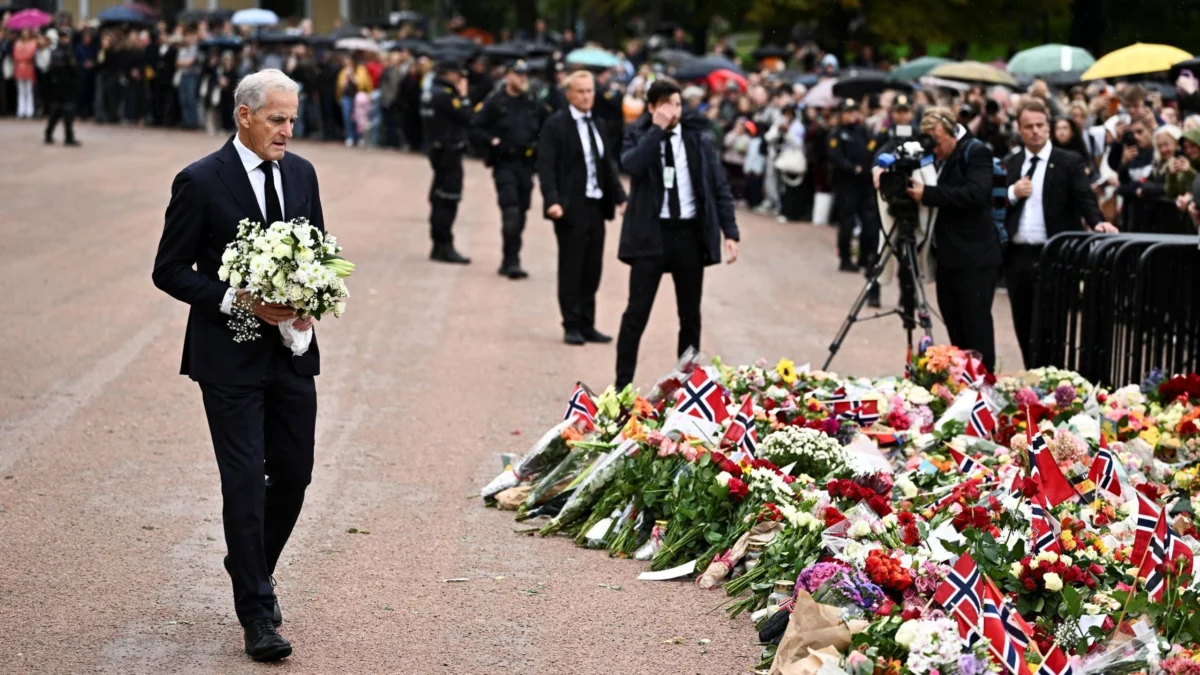
The somber announcement, made at 06:35 local time (04:35 GMT), quickly resonated across the country. Within hours, the forecourt of the Royal Palace in Oslo transformed into an impromptu shrine. Hundreds, then thousands, of Norwegians gathered, their faces etched with grief, to lay flowers, light candles, and drape Norwegian flags in a heartfelt tribute to a king who had reigned for over three decades. Many mourners were visibly in tears, reflecting the deep personal bond many felt with Harald V, whom they affectionately knew as "folkekongen" – the people’s king. Memorials included touching gestures, such as a candle bearing the word "thanks," underscoring the widespread gratitude for his service.
The transition of power was swift and constitutional. Just hours after his father’s death, the newly proclaimed King Haakon VIII met with government ministers for an extraordinary council of state meeting. In his first public statement as monarch, he affirmed his commitment to the nation by adopting the royal family’s enduring motto, "All for Norway" – a phrase that encapsulates the constitutional monarchy’s dedication to the welfare of its citizens. This continuity provided a vital anchor for a grieving nation.

The Enduring Legacy of King Harald V
King Harald V’s reign, which began in 1991, was characterized by a profound commitment to his people and a pioneering spirit in modernizing the Norwegian monarchy. He was widely lauded as an inclusive, transparent, and empathetic leader who successfully navigated the institution through a rapidly changing world. His speeches often championed diversity and unity, famously declaring in 2016 that "Norwegians are girls who love girls, boys who love boys, and boys and girls who love each other." Such statements cemented his image as a king for all Norwegians, regardless of background, faith, or sexual orientation.
Throughout his time on the throne, Harald V fostered an image of accessibility and humility, eschewing much of the pomp associated with other European monarchies. He was known for his genuine interactions with ordinary citizens, his passion for sailing, and his steadfast dedication to his duties even amidst recurring health challenges. These traits endeared him to generations of Norwegians and earned him respect far beyond the country’s borders.
Tributes from Home and Abroad
The outpouring of condolences spanned the globe, reflecting King Harald V’s stature and the deep respect he commanded. Norway’s Prime Minister, Jonas Gahr Støre, articulated the nation’s collective sentiment, stating that the country was "united in grief and gratitude." After laying flowers outside the palace and signing a book of condolences, Støre delivered a televised memorial address, eulogizing the late king and affirming that his "legacy lives on." He also extended heartfelt condolences to the royal family, particularly to Queen Sonja, who would have celebrated her 58th wedding anniversary with Harald V the following day.

European royals, many of whom were close relatives, also offered their sympathies. King Charles III of the United Kingdom, whose mother Queen Elizabeth II was Harald’s second cousin, was among those who paid tribute to his cousin’s long service and the stability he brought to Norway. Statements from other Nordic royal houses, including those of Sweden and Denmark, highlighted the strong familial and historical ties within the region. International political leaders and organizations also acknowledged Harald V’s significant contributions to Norway and his role in fostering international understanding.
Beyond political and royal circles, ordinary citizens and public figures expressed their personal sorrow. Norwegian national football sensation Erling Haaland, for instance, took to Instagram to thank Harald for "everything you meant to Norway," recalling the honor of meeting him at the palace after the Fifa World Cup earlier in the summer. Biteya Terfassa, an Oslo resident born in Ethiopia, shared a particularly poignant reflection with news agency Reuters outside the palace: "I personally will say he was everything for us, especially being an immigrant. He made us feel at home and he made us feel loved. So he was like a grandfather that I never had." Such testimonials underscored the truly inclusive nature of his reign.
A Nation in Mourning: Rituals and Protocols
In solemn observance of the monarch’s passing, Norway has declared a comprehensive period of national mourning. This period will extend until the day of King Harald V’s state funeral, the date of which is yet to be announced. Across the country, flags will be flown at half-mast, a visible sign of national sorrow. Public and private institutions will display his portrait, and moments of silence will be observed at professional events. Candles will be lit in homes and public spaces, creating a nationwide tapestry of remembrance.
In a mark of profound respect, all non-work-related social events across Norway have been canceled or postponed. This directive extended even to personal milestones, exemplified by Oslo Mayor Anne Lindboe, who made the decision to postpone her own wedding, originally scheduled for Friday, August 28, to honor the late king.

At noon on Friday, the Norwegian Armed Forces performed a traditional funeral salute, firing 21 shots from Akershus Fortress in central Oslo, a ceremonial tribute befitting a head of state and commander-in-chief. Later in the day, a solemn procession transported the late king’s remains from Rikshospitalet, where he had passed away after receiving treatment for a rare blood condition since the previous week, to the Royal Palace. This procession marked a poignant moment of public farewell and respect.
The New Reign: King Haakon VIII and the Future of the Monarchy
With the passing of King Harald V, his younger child, Haakon, automatically assumed the throne as King Haakon VIII. His wife, Mette-Marit, now holds the title of Queen. The ascension marks a new chapter for the Norwegian monarchy, one that will blend tradition with the demands of the 21st century.
King Haakon VIII is scheduled to take his constitutional oath before the Norwegian parliament (Storting) on Tuesday, further formalizing his role. This will be followed by a consecration service, a stripped-down version of a coronation, reflecting Norway’s modern approach to its monarchy. While traditional coronations were abolished in Norway in 1908, a consecration serves as a religious blessing for the monarch’s reign, affirming their spiritual commitment to the nation.
The line of succession also highlights the monarchy’s adaptation to modern values. King Haakon’s daughter, the 22-year-old Ingrid Alexandra, is now the Crown Princess and next in line to the throne. Her position is a direct result of a significant constitutional amendment in 1990, which changed the rules of succession to allow firstborn women to inherit the crown, regardless of younger male siblings. Crown Princess Ingrid Alexandra was present alongside her father during his meeting with government ministers at the palace on Friday, signifying her emerging role and the continuity of the royal line.

Challenges and Optimism for the New Era
King Haakon VIII assumes his new role at a juncture marked by both national grief and existing challenges for the royal family. Queen Mette-Marit’s health has been a concern, as she has suffered from pulmonary fibrosis since 2018 and recently underwent a lung transplant. While her recovery is progressing, doctors have indicated that she will not be declared stable until next year. This means the new king will balance his demanding official duties with providing care and support for his wife.
The royal family has also faced public scrutiny over past and recent controversies. Earlier this year, Queen Mette-Marit publicly apologized for a three-year friendship with the late convicted sex offender Jeffrey Epstein, an association that drew considerable media attention and public debate. Additionally, Mette-Marit’s son from a previous relationship, Marius Borg Høiby – who, while not a member of the royal family, was raised within the household since the age of four – was convicted in June of rape and other offenses and sentenced to four years in prison. He is currently appealing the verdict. While the royal family has maintained a degree of distance from Høiby’s legal troubles, such events inevitably cast a shadow and contribute to public discourse surrounding the monarchy.
Indeed, recent polls indicate a shift in public sentiment towards the monarchy. A survey conducted for the newspaper Aftenposten earlier this year showed a notable drop in support for the institution, from 72% in 2024 to 54% in the most recent findings. This decline suggests that while King Harald V enjoyed immense personal popularity, the monarchy as an institution faces ongoing questions and the need to continually demonstrate its relevance in contemporary Norwegian society.
Despite these challenges, Norwegian royal experts express optimism about King Haakon VIII’s ability to lead. They describe him as a respected, hardworking, and thoughtful individual, well-prepared for the responsibilities of kingship. While acknowledging the turbulence surrounding his family, experts believe his steady demeanor and commitment to public service will enable him to navigate the complexities ahead and maintain the monarchy’s vital role as a symbol of national unity and continuity. His reign, while beginning in sorrow, is poised to build upon the enduring legacy of his father, adapting the Norwegian monarchy for future generations.