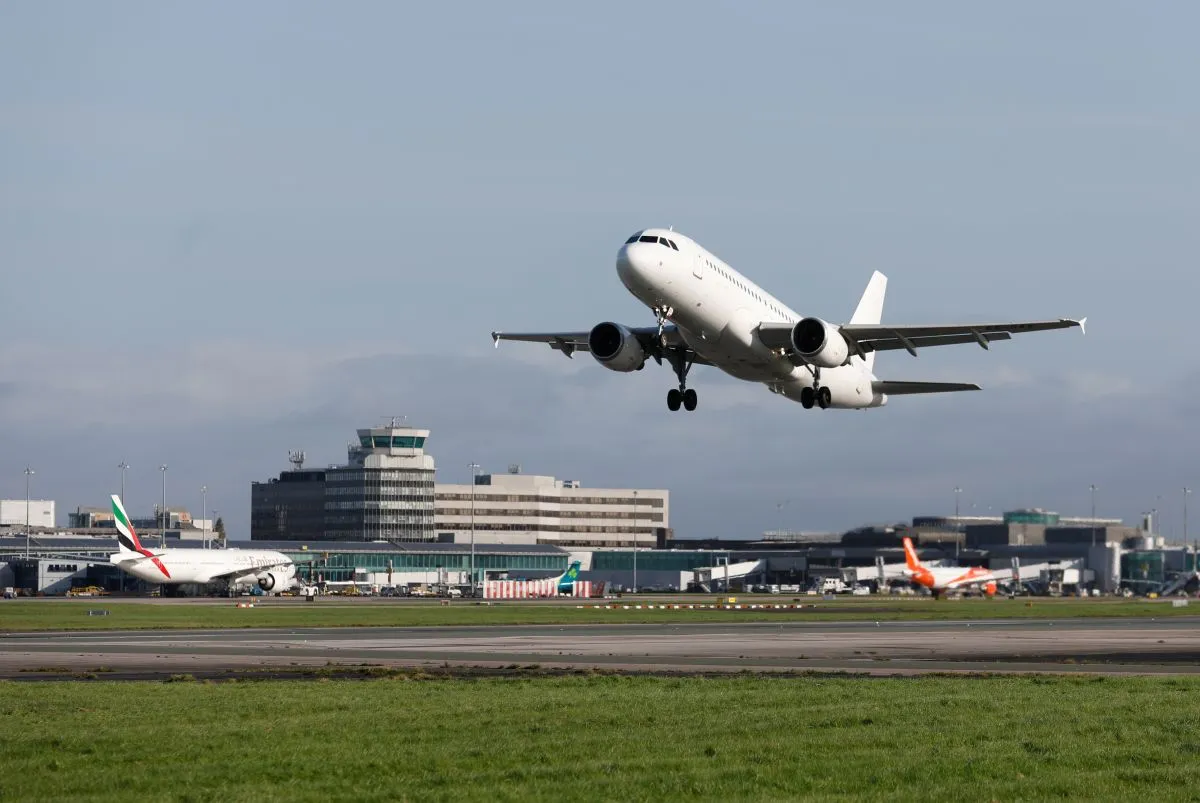
United Kingdom airports processed a record-breaking 81 million passengers during the second quarter of the year, marking the highest volume for any comparable three-month period in the nation’s aviation history. Data released by the UK Civil Aviation Authority (CAA) indicates that between April and June, exactly 81,034,212 passengers arrived at or departed from British terminals, representing a modest but significant increase of approximately 0.15% over the same period last year. While the headline figure suggests a period of robust health for the industry, a granular analysis of the data reveals a dramatic and unprecedented shift in global traffic patterns. This record milestone was achieved in the face of a near-total collapse in travel to and from the Persian Gulf, a downturn directly attributed to the geopolitical instability following the outbreak of hostilities in the Iran region.
The marginal growth of 123,000 passengers year-on-year masks a profound realignment of the UK’s international connectivity. Historically, the "Middle East Three"—Emirates, Qatar Airways, and Etihad—along with regional partners, have served as the primary conduits for UK passengers traveling to Asia, Africa, and Australasia. However, the second quarter saw this vital artery constricted. The total loss of traffic across five key Gulf markets—the United Arab Emirates, Qatar, Saudi Arabia, Bahrain, and Kuwait—amounted to nearly 1.5 million passengers. That the UK aviation sector was able to absorb this loss and still post a record-breaking total underscores a massive surge in short-haul European tourism and a resilient North Atlantic market.
Geopolitical Impact on the Gulf Corridor
The primary driver behind the shifting metrics is the regional conflict involving Iran, which effectively closed significant portions of Middle Eastern airspace and deterred discretionary travel to the region. The UK Civil Aviation Authority’s detailed breakdown illustrates the severity of the decline. Traffic between the United Kingdom and the United Arab Emirates (UAE) fell by 42%, while Qatar saw a 45% reduction. Other regional players were even more severely impacted: Saudi Arabia recorded a 40% drop, Bahrain a 54% decrease, and Kuwait a staggering 68% collapse in passenger volumes.
Dubai, which has long been a top-five international destination for UK travelers and a critical global transit hub, bore the brunt of the downturn. Passenger numbers to Dubai fell by 50% during the quarter, causing the city to plummet to 15th place on the CAA’s destination league table. In a typical year, Dubai competes with the likes of Dublin, Amsterdam, and New York for the top spot. The sudden vacancy left by these high-volume routes forced a rapid pivot in airport operations, particularly at London Heathrow, where the Gulf carriers usually command a significant portion of daily slot allocations.
At the airline level, the impact was equally stark. Emirates, the world’s largest operator of the Airbus A380 and a staple at major UK airports including London Heathrow, Gatwick, Manchester, Birmingham, Newcastle, and Glasgow, saw its UK passenger numbers decline by 46%. Qatar Airways experienced a similar contraction, with figures falling by 42%. The reduction in these services did not merely affect point-to-point travel; it disrupted the global "hub and spoke" model that millions of UK passengers rely on for long-haul connectivity.
Chronology of the Second Quarter Transition
The transformation of the UK’s traffic mix occurred over a volatile thirteen-week period. In early April, aviation analysts had predicted a record-breaking summer based on high forward-booking data for both the Middle East and Europe. However, the escalation of regional tensions in mid-April led to immediate rerouting of flight paths to avoid Iranian and neighboring airspace.
By early May, as the conflict intensified, several major carriers suspended operations to the Gulf entirely or significantly reduced frequencies. This period saw a massive spike in "re-accommodation" bookings, where passengers originally scheduled to fly via Doha or Dubai were rebooked onto direct flights to the West or via alternative hubs such as Singapore or Istanbul.
Throughout June, the aviation industry reached a state of "new normalcy." While the Gulf routes remained depressed, the demand for Mediterranean "sun and beach" destinations reached an all-time high. UK airports reported that the capacity vacated by long-haul widebody aircraft was quickly utilized by short-haul narrowbody jets, as low-cost carriers (LCCs) like Ryanair and EasyJet increased frequencies to Spain, Greece, and Italy to meet a surge in domestic demand for safer, closer-to-home holiday options.
Supporting Data: The Rise of Alternative Routes
The resilience of the Q2 figures is explained by the compensatory growth in other sectors. To offset the loss of 1.5 million Gulf-bound passengers, other markets saw double-digit growth. Analysis of the CAA data suggests the following shifts:
- The Transatlantic Surge: Travel to the United States and Canada grew by 8% year-on-year. With the Gulf route to the East restricted, business travel to the West intensified, and the North Atlantic corridor benefited from increased capacity as airlines redeployed aircraft.
- The European Short-Haul Boom: Routes to Spain, the UK’s most popular international destination, saw a 6.5% increase in volume. Turkey also emerged as a major beneficiary, with a 12% rise in passengers as it positioned itself as both a holiday destination and a safer alternative transit hub for those still needing to reach Asian markets.
- Domestic Resilience: Internal UK flights saw a 3% uptick, partly driven by travelers choosing "staycations" over international travel amidst global uncertainty, and partly by an increase in connecting flights to London for those seeking direct long-haul departures to the Americas.
These shifts resulted in a "density over distance" trend. While the total number of passengers rose slightly, the average distance flown per passenger decreased, as the high-mileage Gulf routes were replaced by shorter European sectors.
Industry Reactions and Official Statements
The UK Civil Aviation Authority has remained objective in its assessment, focusing on the logistical challenges of such a rapid shift in traffic. A spokesperson for the CAA stated, "The second quarter data demonstrates the extraordinary adaptability of the UK’s aviation infrastructure. While the geopolitical situation in the Middle East has created significant headwinds for certain long-haul sectors, the overall demand for air travel remains at an all-time high. Our focus remains on ensuring that safety standards are maintained as airlines navigate complex airspace restrictions."
Airport operators have expressed a mix of relief and caution. A representative for Heathrow Airport noted that while the reduction in A380 movements from Gulf carriers was "unprecedented," the demand for slots from other international partners remained "insatiable." At Manchester Airport, which serves as a secondary hub for many Gulf carriers, the management highlighted the importance of a diversified route network. "The record numbers show that when one market closes, others expand. However, the loss of direct connectivity to the East is a concern for the regional economy that we hope to see addressed as the global situation stabilizes," the statement read.
Airlines have been more vocal about the operational costs. Industry trade bodies have noted that rerouting flights around the conflict zone has added up to two hours of flight time on certain routes, significantly increasing fuel burn and crew costs. "The industry is absorbing massive operational overheads to keep the world moving," said an aviation analyst for a leading London consultancy. "The fact that 81 million people still flew during this quarter is a testament to the essential nature of air travel in the modern economy."
Broader Impact and Market Implications
The long-term implications of this traffic shift are multifaceted. Economically, the UK has seen a change in the "quality" of its aviation exports. The Gulf carriers traditionally provide high-yield business class and first-class traffic, which contributes significantly to airport revenue through landing fees and premium lounge services. The shift toward low-cost, short-haul carriers may maintain passenger volumes, but it offers lower margins for airport operators.
Furthermore, the "Iran war" context has accelerated a trend of "regionalization" in travel. Travelers are increasingly prioritizing destinations that are perceived as geopolitically stable, even if it means sacrificing the luxury or convenience of traditional hub-and-spoke routes. This has provided a competitive advantage to European carriers like Air France-KLM and Lufthansa, who have been able to capture some of the diverted traffic through their respective hubs in Paris, Amsterdam, and Frankfurt, which are further removed from the immediate conflict zone.
From a structural perspective, the Q2 record may lead to a permanent reassessment of airport slot allocations. If the Gulf carriers cannot restore their previous frequencies in the coming quarters, there will be mounting pressure from European and Transatlantic airlines to permanently acquire those highly coveted slots. This could lead to a long-term reorientation of the UK’s primary gateways toward Western markets, potentially making the UK more reliant on a narrower set of geographical regions.
Conclusion
The achievement of 81 million passengers in the second quarter is a landmark for UK aviation, but it serves as a stark reminder of how quickly the global travel map can be redrawn. The 0.15% growth is not a sign of a stagnant market, but rather a sign of a market in deep transition. As the UK looks toward the second half of the year, the industry’s focus will be on whether the European and American markets can continue to sustain this record-breaking pace, or if the continued absence of a stable Middle Eastern corridor will eventually begin to drag the headline numbers down. For now, the British public’s appetite for travel appears to be decoupled from global instability, as millions continue to take to the skies, albeit via different routes and with different carriers than they might have chosen only a year ago.