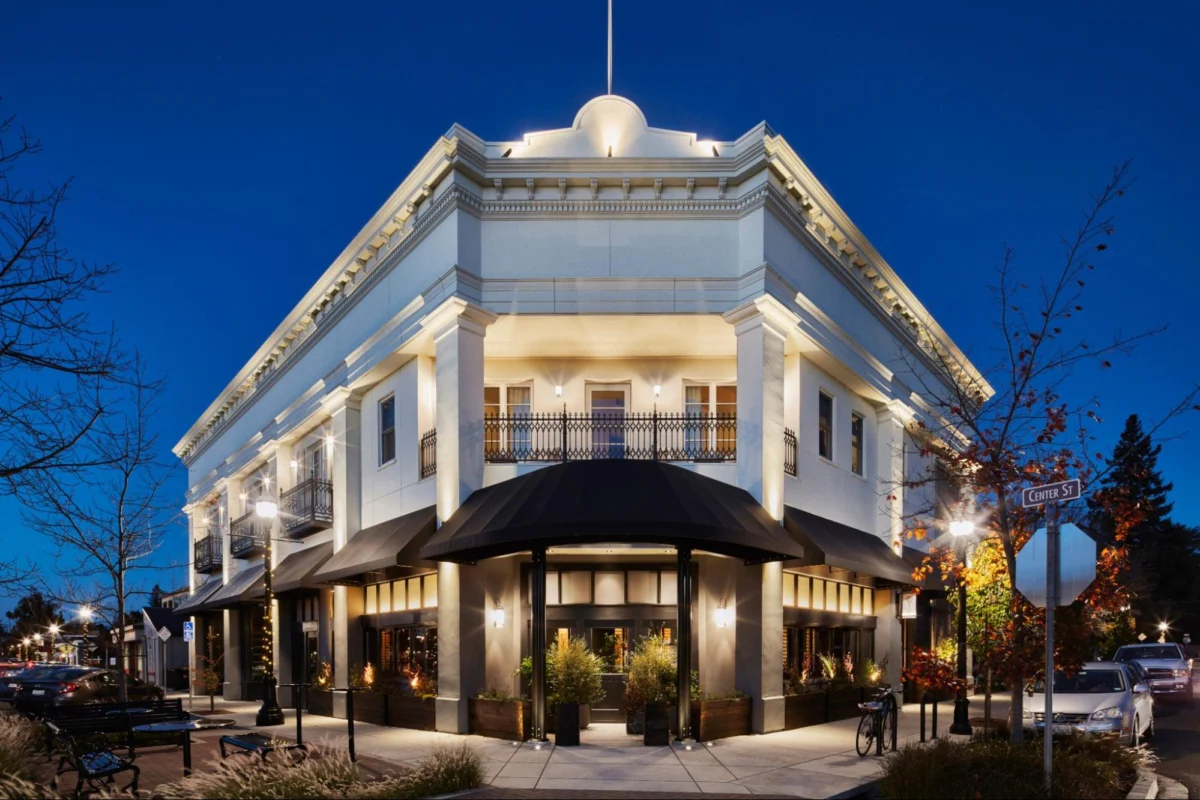
The global luxury hospitality sector is currently navigating a period of rapid geographical proliferation, characterized by a "flag-planting" strategy where established brands race to secure presence in key international markets. However, as luxury footprints expand from the vineyards of Northern California to the historic districts of Kyoto, a critical tension has emerged between the efficiency of brand replication and the preservation of authentic "soul." The recent opening of SoNoMa by SingleThread within the Capella Kyoto, alongside the development of The Selvedge in Healdsburg, suggests a shift in this expansion model. Rather than exporting a rigid conceptual template, the industry is seeing the rise of "cultural transfer"—a method where the underlying values and creative philosophy of a brand are translated to fit a new local context, rather than merely duplicated.
The Evolution of SingleThread and the Healdsburg Blueprint
To understand the significance of the Kyoto expansion, one must first analyze the foundation established by Kyle and Katina Connaughton in Healdsburg, California. SingleThread, which opened in 2016, was never designed as a conventional restaurant; it was conceived as an integrated ecosystem comprising a five-acre farm, a boutique inn, and a three-Michelin-starred dining room. The project was rooted in the Japanese philosophy of omotenashi—the art of selfless hospitality—which Kyle Connaughton refined during his years working in Japan, notably at Michel Bras Toya Japon in Hokkaido.
The success of the Healdsburg flagship was built on a hyper-local feedback loop between the farm’s seasonal output and the kitchen’s technical execution. This "source code" of SingleThread—a blend of Japanese hospitality and Sonoma County’s agricultural abundance—provided a unique identity that resisted easy categorization. As the brand matured, the introduction of The Selvedge in Healdsburg further solidified this ecosystem. The Selvedge represents a refinement of the brand’s local footprint, acting as a more focused, specialized extension that reinforces the original site’s dominance while allowing the team to experiment with new service formats.
The Flag-Planting Phenomenon and Brand Dilution
The broader luxury hospitality industry is currently experiencing a surge in expansion. Major players such as Aman, Nobu, and various LVMH-owned properties have transitioned from niche, singular locations to global portfolios. Data from recent hospitality market analyses indicates that the luxury hotel market is projected to reach a valuation of over $230 billion by 2028, driven largely by an appetite for "experiential luxury."
However, this aggressive growth often comes at a cost. In many instances, the expansion of a luxury brand results in the reduction of its most distinctive qualities to a set of visual codes—specific furniture styles, signature scents, or standardized service scripts. This "atomization" of the brand allows for operational efficiency but often leaves the "soul" of the original concept behind. When a restaurant or hotel feels like an imported piece of "culinary theater" rather than a living part of its environment, it risks alienating the sophisticated demographic it seeks to attract.
SoNoMa by SingleThread: A Study in Elegant Translation
The opening of SoNoMa by SingleThread inside the Capella Kyoto in 2024 serves as a counter-narrative to the standard expansion model. Located in the Miyagawa-cho district, one of Kyoto’s historic hanamachi (geisha districts), the project faced the significant challenge of introducing a Northern California identity into a city that is arguably the world’s most protective of its culinary and cultural traditions.
Instead of attempting to replicate the Healdsburg experience, the Connaughtons opted for what industry observers call an "elegant translation." SoNoMa is not a "California restaurant in Japan"; it is a Northern California restaurant refracted back through the lens of Kyoto. The team recognized that while SingleThread’s origins are in Sonoma, its spiritual roots are deeply Japanese. By returning to Japan, they were not importing a foreign concept but engaging in a dialogue between two distinct but complementary cultures.
The menu at SoNoMa utilizes Kyoto’s legendary produce and seafood but applies the creative techniques and aesthetic sensibilities developed in Healdsburg. This approach avoids the pitfalls of "imported theater" because it acknowledges the specificity of the new location. It is a model of expansion that prioritizes the transfer of culture—the "how" and "why" of the brand—over the rigid concept—the "what."
Chronology of the Expansion
The path from the hills of Sonoma to the temples of Kyoto was marked by several key milestones that reflect a deliberate and cautious approach to growth:
- 2016: SingleThread opens in Healdsburg, quickly ascending to international acclaim and securing three Michelin stars and a spot on the World’s 50 Best Restaurants list.
- 2021: Capella Hotel Group announces its entry into the Japanese market with Capella Kyoto, designed by Kengo Kuma and Associates. Discussions begin regarding a partnership with the SingleThread team.
- 2022-2023: The Connaughtons and their lead staff spend significant time in Kyoto, establishing relationships with local farmers, ceramicists, and artisans, mirroring the community-building they performed in Sonoma.
- Early 2024: SoNoMa by SingleThread officially opens within Capella Kyoto. The project is received not as a franchise, but as a homecoming for the founders’ culinary philosophy.
- Mid-2024: The Selvedge in Healdsburg continues to evolve, serving as the domestic anchor and experimental hub for the brand’s expanding creative team.
Supporting Data and Market Context
The success of the "culture-first" expansion model is supported by shifts in consumer behavior within the ultra-high-net-worth (UHNW) segment. According to a 2023 report on global luxury trends, 78% of luxury travelers now prioritize "local authenticity" and "cultural immersion" over brand consistency. Furthermore, the "branded residence" and "signature restaurant" sectors within luxury hotels have seen a 150% increase in investment over the past decade, as developers realize that a generic luxury offering is no longer sufficient to command premium rates.
The Capella Kyoto project itself is a significant data point in the hospitality real estate market. The Miyagawa-cho development represents a multi-million dollar investment in one of Kyoto’s most sensitive historical zones. For Capella, partnering with a brand like SingleThread—which understands the nuances of Japanese omotenashi—was a strategic move to mitigate the local "cultural friction" that often accompanies foreign luxury developments in Japan.
Stakeholder Perspectives and Industry Reactions
While official statements from the Connaughtons emphasize the "synergy" and "shared values" between Sonoma and Kyoto, industry analysts have noted the broader implications of this partnership. Culinary critics have praised SoNoMa for its "specific and assured" identity, noting that it feels like a natural evolution rather than a forced expansion.
"The danger for a three-star brand moving abroad is becoming a caricature of itself," says one hospitality consultant. "What SingleThread has done in Kyoto is prove that you can maintain high-level creative control while surrendering to the local environment. They didn’t bring California to Kyoto; they brought their way of thinking to Kyoto’s ingredients."
From the perspective of Capella Hotel Group, the collaboration represents a move toward "place-making." By hosting a restaurant that is a "translation" rather than a "replica," the hotel anchors itself more firmly in the local community, offering an experience that cannot be found at any other Capella property or any other restaurant in Kyoto.
Broader Impact and Implications for Global Hospitality
The "culture over concept" model demonstrated by SingleThread and Capella Kyoto has significant implications for the future of luxury hospitality expansion. It suggests that the next generation of global brands will not be those that can replicate a room or a menu most efficiently, but those that can most effectively translate their core values into diverse cultural contexts.
This shift requires a different type of leadership and operational structure. It demands that expansion teams be composed not just of operations managers and accountants, but of cultural ambassadors who can spend years—not months—integrating into a new market. It also suggests a move away from the "hub-and-spoke" model of brand management, where the headquarters dictates every detail, toward a more decentralized model where local outposts have the creative freedom to adapt.
As luxury brands continue to plant flags in new territories, the distinction between "imported theater" and "elegant translation" will likely become the primary factor in determining long-term brand equity. For the industry at large, the lesson of SoNoMa and The Selvedge is clear: to grow without losing one’s soul, a brand must be willing to let its concept evolve, provided its culture remains intact. The future of luxury expansion lies not in the repetition of the past, but in the creative synthesis of a brand’s history with its new surroundings.