



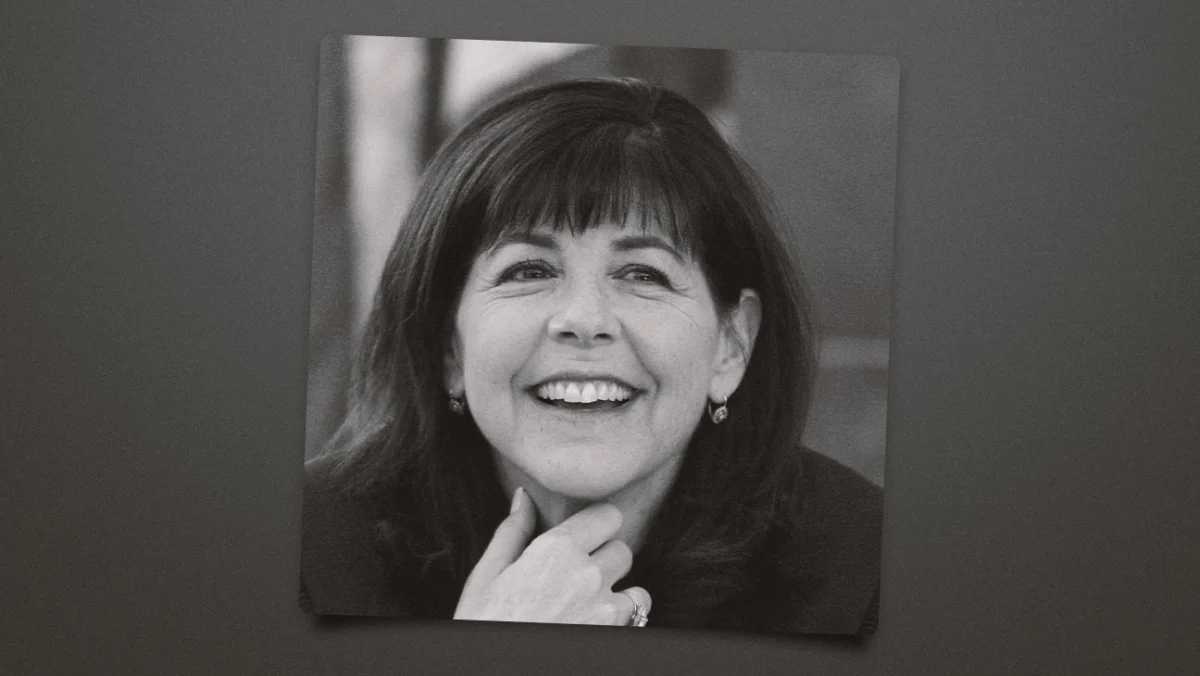
Judge Jackie Glass, a formidable legal figure who brought her sharp courtroom presence to the syndicated television show Swift Justice and previously presided over high-profile cases as a Clark County judge, has died. She was 70. Her passing was confirmed by her daughter, Rachel Wolfson, in a heartfelt announcement on Facebook. Judge Glass died on Friday in Las Vegas, according to reports from TMZ.
Wolfson shared her profound grief and love for her mother, posting, "Rip my rock, I don’t know how I’ll do this life without you, I love you so much mommy Jackie Glass, I’ll see you again someday." A subsequent post on her Facebook profile featured a poignant collection of photographs, offering a visual testament to their bond and her mother’s vibrant life.
Judge Glass’s career in law spanned decades, marked by significant achievements in both the public and private sectors. Before her foray into television, she served as a long-standing Clark County judge, a role she held after a distinguished career in private practice. Her transition to Swift Justice in 2011 saw her step into a role previously held by Nancy Grace, another prominent legal personality. The show, which aimed to resolve disputes in a reality-television format, showcased Glass’s no-nonsense demeanor and her ability to cut through complex legal arguments.
Executive producer John Terenzio expressed his enthusiasm when Glass took over the reins of Swift Justice, stating at the time, "I am excited to introduce viewers to another true original Judge Jackie Glass – we are confident our viewers will enthusiastically embrace her." This sentiment underscored the belief in Glass’s capacity to connect with an audience and deliver compelling legal narratives. The show aired its final season in 2012, concluding a significant chapter in Glass’s multifaceted career.
A Defining Moment in Judicial History: The O.J. Simpson Sentencing
Judge Glass’s judicial tenure was indelibly marked by her role in sentencing O.J. Simpson to 33 years in prison in 2008. The conviction stemmed from an armed robbery and kidnapping incident at a Las Vegas hotel, a case that captivated national attention. Simpson, a former football star and actor, was found guilty of multiple felonies. Judge Glass’s sentencing decision reflected the gravity of the crimes committed. Simpson was later granted parole in 2017, and sadly passed away in 2024 at the age of 76, following a battle with prostate cancer. This particular case, while a singular event, cemented Judge Glass’s reputation as a jurist who adhered strictly to the law, even when faced with immense public scrutiny.
From Private Practice to Public Service: The Early Career of Jackie Glass
Born into a family with a strong connection to the legal profession, Jackie Glass dedicated herself to the pursuit of justice. Prior to her election as a Clark County judge in 2003, she amassed 18 years of experience as a lawyer in private practice. A significant portion of this time, 12 years, was spent at the firm Wolfson & Glass, a practice she co-founded with her husband, Steve Wolfson. This partnership not only showcased her entrepreneurial spirit but also highlighted her collaborative approach to law. Her transition from private practice to the bench represented a profound commitment to public service, where she would influence countless legal proceedings within the Clark County court system.
The Impact of Swift Justice and Judge Glass’s Television Persona
Swift Justice, under Judge Glass’s guidance, offered viewers a dramatized yet grounded perspective on legal disputes. The show typically featured real-life litigants presenting their cases, with Judge Glass acting as the arbiter. Her on-screen persona was characterized by her directness, her keen intellect, and her unwavering commitment to dispensing what she deemed fair and impartial justice. This approach resonated with a broad audience, making her a recognizable figure in legal entertainment. The syndicated nature of the show meant that her presence reached households across the nation, bringing a taste of courtroom drama into everyday life.
The success of Swift Justice can be partly attributed to its ability to tap into the public’s fascination with the legal system. By featuring relatable disputes and a judge who was perceived as both authoritative and approachable, the show provided an accessible entry point into understanding legal principles and their application. Judge Glass, with her background as a seasoned jurist, lent an air of authenticity to the proceedings, distinguishing the show from more sensationalized legal dramas.
A Legacy of Legal Acumen and Family Devotion
Judge Jackie Glass’s passing leaves a void in the legal community and in the hearts of her loved ones. Her career trajectory, from founding a law firm with her husband to presiding over high-stakes cases and then engaging a national television audience, is a testament to her diverse talents and unwavering dedication. Her commitment to justice, evident in her judicial decisions and her television work, has left an indelible mark.
She is survived by her husband, Steve Wolfson, and their two daughters, Rachel Wolfson being one of them. The outpouring of grief from her daughter underscores the personal impact of her loss, while her professional achievements speak to her broader contributions to the field of law and public discourse. The legacy of Judge Jackie Glass is one of legal rigor, public service, and a deep commitment to family. Her memory will undoubtedly be cherished by those who knew her personally and by the many who were influenced by her presence in the courtroom and on television.
Broader Context and Analysis of Judicial Presence in Media
The phenomenon of judges and legal figures transitioning to television has become increasingly common, offering both benefits and potential drawbacks. For Judge Glass, her role on Swift Justice allowed her to extend her influence beyond the confines of the courtroom, educating the public about legal processes and the importance of due process. However, it also raises questions about the blurring lines between genuine legal proceedings and entertainment.
The success of shows like Swift Justice indicates a public appetite for accessible legal content. These programs can demystify the legal system, but they can also oversimplify complex issues or present dramatized versions of reality. Judge Glass, with her background as a legitimate jurist, brought a level of credibility that was crucial to the show’s appeal. Her ability to command respect and deliver reasoned judgments, even in a television format, was a key factor in her success.
The era of television programming featuring real-life legal figures, while perhaps at its peak with shows like Swift Justice, continues to evolve. The impact of these shows extends beyond simple entertainment; they contribute to the public’s perception of the justice system, the role of judges, and the importance of legal recourse. Judge Glass’s contribution to this landscape, through her assertive and principled approach, remains a significant element of this ongoing narrative.
Her passing marks the end of an era for those who followed her career, both in the courts of Clark County and on their television screens. The legal world and the realm of legal commentary have lost a prominent voice, whose presence will be deeply missed.