


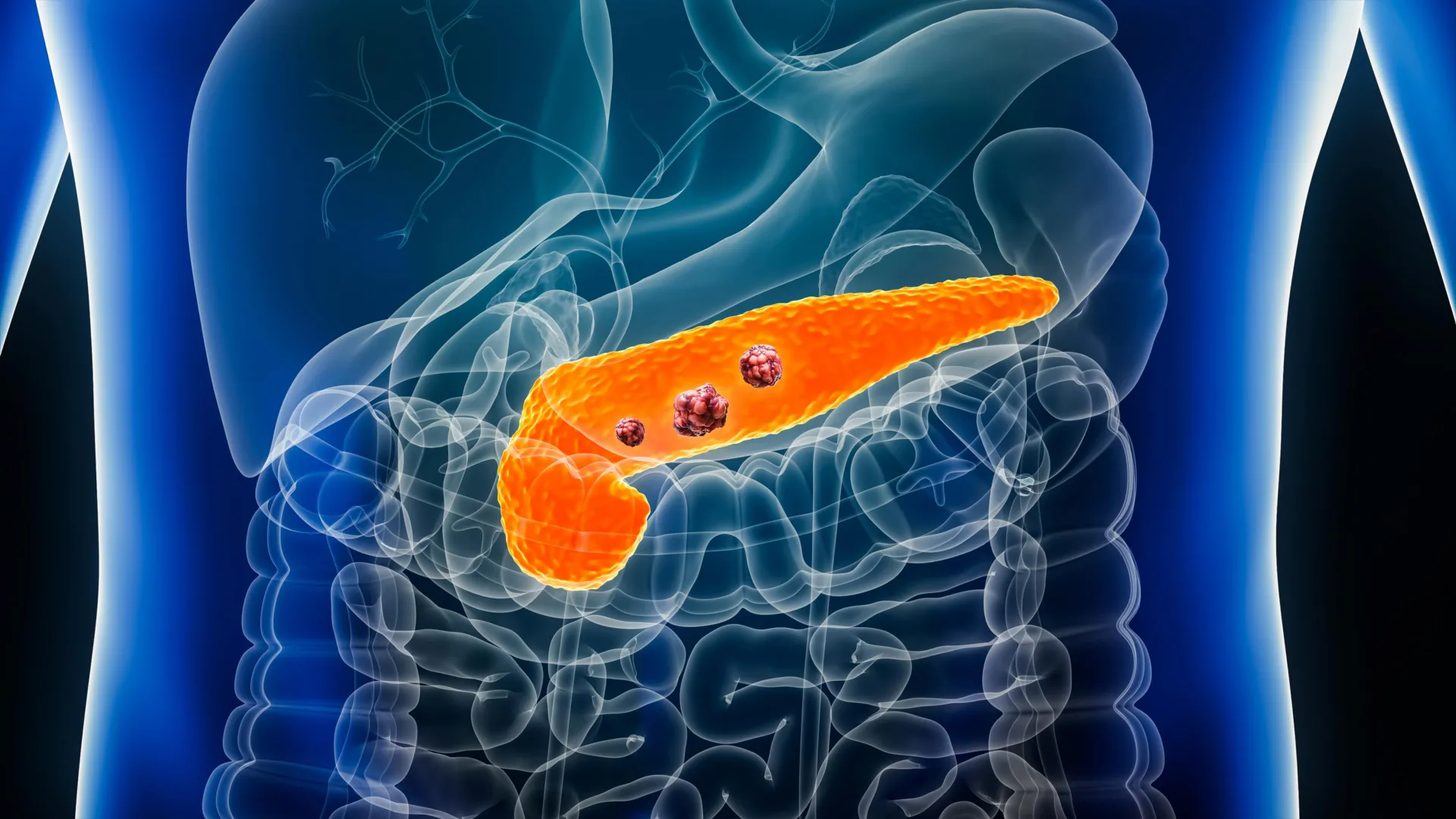
A groundbreaking artificial intelligence model, dubbed REDMOD (Radiomics-based Early Detection MODel), is demonstrating an unprecedented ability to identify extremely subtle changes in pancreatic tissue that may signal the presence of pancreatic cancer long before the disease becomes detectable by human physicians or conventional imaging technologies. This pioneering research, published online in the esteemed journal Gut, reveals that REDMOD can pinpoint early indicators of pancreatic ductal adenocarcinoma (PDAC), the most prevalent and aggressive form of pancreatic cancer. The implications of this advancement are profound, offering a potential paradigm shift in how this notoriously lethal disease is detected and treated, moving from late-stage, often untreatable diagnoses to proactive, pre-clinical interception.
The Silent Threat of Pancreatic Cancer
Pancreatic ductal adenocarcinoma is characterized by a grim prognosis, with survival rates that have remained stubbornly low for decades. This bleak outlook is largely attributable to the disease’s insidious nature: it often progresses silently, producing few, if any, discernible symptoms in its nascent stages. The cellular and architectural alterations that signify early PDAC are exceedingly subtle, rendering them invisible to the naked eye and challenging even for experienced radiologists to discern on standard computed tomography (CT) scans. Furthermore, PDAC has a propensity for rapid growth and metastasis, underscoring the critical importance of an early and accurate diagnosis. Historically, patients have frequently been diagnosed only when the cancer has already advanced to a late stage, significantly diminishing the efficacy of available treatments and drastically reducing the chances of survival.
REDMOD: Unveiling Hidden Signatures
In response to these formidable diagnostic challenges, researchers have developed REDMOD, an innovative AI framework that leverages the power of radiomics. Radiomics involves the extraction of a large number of quantitative features from medical images, such as CT scans, which go beyond what the human eye can perceive. REDMOD meticulously analyzes incredibly fine patterns within the textural characteristics of pancreatic tissue, identifying these subtle radiomic signatures that are indicative of early-stage cancer.
Beyond its advanced pattern recognition capabilities, REDMOD incorporates an automated segmentation function. This feature allows the AI to precisely identify and delineate the boundaries of the pancreas, effectively separating it from surrounding organs and tissues. This automated process is a significant advancement, as it eliminates the need for manual tracing by human specialists. Manual segmentation can be a time-consuming task and is subject to inter-observer variability, meaning different radiologists might outline the pancreas slightly differently, potentially introducing inconsistencies into the analysis. REDMOD’s automated approach ensures objectivity and reproducibility, further enhancing the reliability of its findings.
A Groundbreaking Study: Detecting Cancer Years in Advance
To rigorously evaluate REDMOD’s efficacy, the research team conducted a comprehensive study analyzing abdominal CT scans from 219 patients who were subsequently diagnosed with pancreatic cancer. Crucially, at the time these scans were initially reviewed by experienced radiologists, there was no evidence of pancreatic cancer detected. The scans were acquired at varying intervals prior to the definitive diagnosis. Specifically, images for 87 patients (approximately 40%) were obtained between three and 12 months before their diagnosis. Another 76 patients (about 35%) had undergone scanning 12 to 24 months earlier, and a further 56 patients (25%) were scanned more than 24 months prior to diagnosis, with some images dating back as far as three years before the clinical detection of cancer. The study also noted that in nearly two-thirds (64%) of these patients, the cancer originated in the head of the pancreas, a common anatomical location for PDAC.
These patient scans were then meticulously compared against CT scans from a control group of 1243 individuals who remained cancer-free for a period of up to three years following their scans. This control group was carefully matched to the patient cohort based on key demographic factors, including age, sex, and the dates of their CT scans, to ensure a robust and fair comparison. The average age of patients who eventually developed pancreatic cancer was 69, with ages ranging from 34 to 88. The control group had an average age of 64, with a similar age range of 34 to 88.
The results of this comparative analysis were striking. REDMOD successfully identified subtle imaging signatures associated with pancreatic cancer an average of 475 days – more than 15 months – before these patients received their clinical diagnoses. These early warning signs, present in the radiomic patterns of the pancreatic tissue, had previously gone entirely undetected during routine radiological assessments by human experts.
The Criticality of Early Detection: A Temporal Advantage
The research team emphasized the profound significance of this temporal window. "This temporal window holds profound significance, as attaining such early detection would substantially augment the probability of cure and improved survival," the researchers stated in their publication. They further elaborated on the impact of early diagnosis, citing modeling studies that indicate a dramatic increase in survival rates. "In fact, modelling studies indicate that increasing the proportion of localized [pancreatic ductal carcinomas] from 10% to 50% would more than double survival rates, thereby underscoring that the timing of diagnosis is the single most critical determinant of survival outcomes," they added. This highlights that identifying cancer at a localized stage (stage 0 or stage I) rather than a metastatic stage can fundamentally alter the patient’s prognosis.
AI’s Superior Performance Against Expert Radiologists
Perhaps one of the most compelling findings of the study is REDMOD’s superior performance compared to experienced radiologists in identifying these early cancer signals. The AI achieved a sensitivity rate of 73%. Sensitivity, in diagnostic testing, is a crucial metric that measures the proportion of actual positives that are correctly identified (i.e., the ability to detect those who truly have the disease and not miss genuine cases). In stark contrast, the experienced radiologists in the study demonstrated a sensitivity of only 39% for detecting these early signs.
The disparity in performance became even more pronounced when the researchers focused on scans taken more than two years prior to diagnosis. In these challenging cases, where the visual cues of cancer are exceptionally faint, REDMOD achieved a detection rate of 68%. This was nearly three times the 23% recorded by the radiologists, underscoring the AI’s remarkable ability to perceive abnormalities that remain invisible to even highly trained human eyes.
The researchers also assessed REDMOD’s accuracy in correctly identifying scans from individuals who did not have pancreatic cancer. In an independent evaluation involving 539 patients from multiple hospitals, REDMOD correctly classified just over 81% of scans as cancer-free. Its performance was even stronger when tested on the publicly available US National Institutes of Health (NIH)-PCT dataset, comprising 80 patients, where it correctly identified 87.5% of scans as free of pancreatic cancer.
Further validation of REDMOD’s reliability came from an analysis of its consistency. When researchers examined CT scans taken from the same patients at different intervals, separated by several months, the AI produced matching results in 90% to 92% of cases. This high degree of consistency strengthens the evidence that REDMOD is not merely identifying random patterns but is consistently detecting meaningful, disease-associated changes within the pancreatic tissue.
The Path Forward: Clinical Translation and Future Prospects
Despite the exceptionally promising findings, the researchers are careful to temper expectations and emphasize the need for further rigorous investigation before REDMOD can be integrated into routine clinical practice. Several limitations and unanswered questions remain. One notable limitation cited is that the study population did not include a sufficiently diverse range of ethnic backgrounds. This is a critical consideration, as the performance of AI models can sometimes vary across different demographic groups due to variations in tissue characteristics or other biological factors.
Moreover, the study was retrospective, meaning it analyzed past data. Prospective testing, where the AI is applied to new cases in real-time and its predictions are followed up with actual clinical outcomes, is paramount. This prospective validation is particularly crucial when testing the system in patient populations known to be at increased risk of developing pancreatic cancer. This includes individuals experiencing unexplained weight loss, a significant symptom that can be an indicator of various serious illnesses, including pancreatic cancer, or those who have recently been diagnosed with diabetes, as diabetes can be an early sign of pancreatic cancer in some individuals.
Even with these necessary caveats, the study’s findings offer a tangible beacon of hope. They strongly suggest that AI, embodied by systems like REDMOD, could eventually revolutionize pancreatic cancer detection. The potential to identify the disease at its earliest, most treatable stages, when it is still considered stage 0 PDAC and confined to the pancreas, could dramatically improve survival rates for patients who would otherwise face a grim prognosis due to late diagnosis.
A Paradigm Shift in Pancreatic Cancer Management
The researchers concluded their publication with a strong endorsement of REDMOD’s capabilities: "This study validates REDMOD as a fully automated AI framework capable of identifying the imaging signatures of stage 0 [pancreatic ductal adenocarcinoma] in normal pancreas, achieving this with substantial lead times and performance superior to expert radiologists."
They further articulated the transformative potential of their work: "While prospective validation is paramount to confirm clinical utility, the REDMOD framework represents a significant advance towards shifting the paradigm for sporadic [pancreatic ductal adenocarcinoma] from a late-stage symptomatic diagnosis to proactive pre-clinical interception, offering tangible hope for improving outcomes in this challenging disease." This vision paints a future where AI-driven diagnostics are not just tools for confirming existing disease, but proactive agents capable of intercepting cancer before it even manifests clinically, fundamentally altering the landscape of patient care and survival for one of the deadliest cancers. The implications for global health are immense, offering a potential pathway to save countless lives through early, AI-assisted detection.