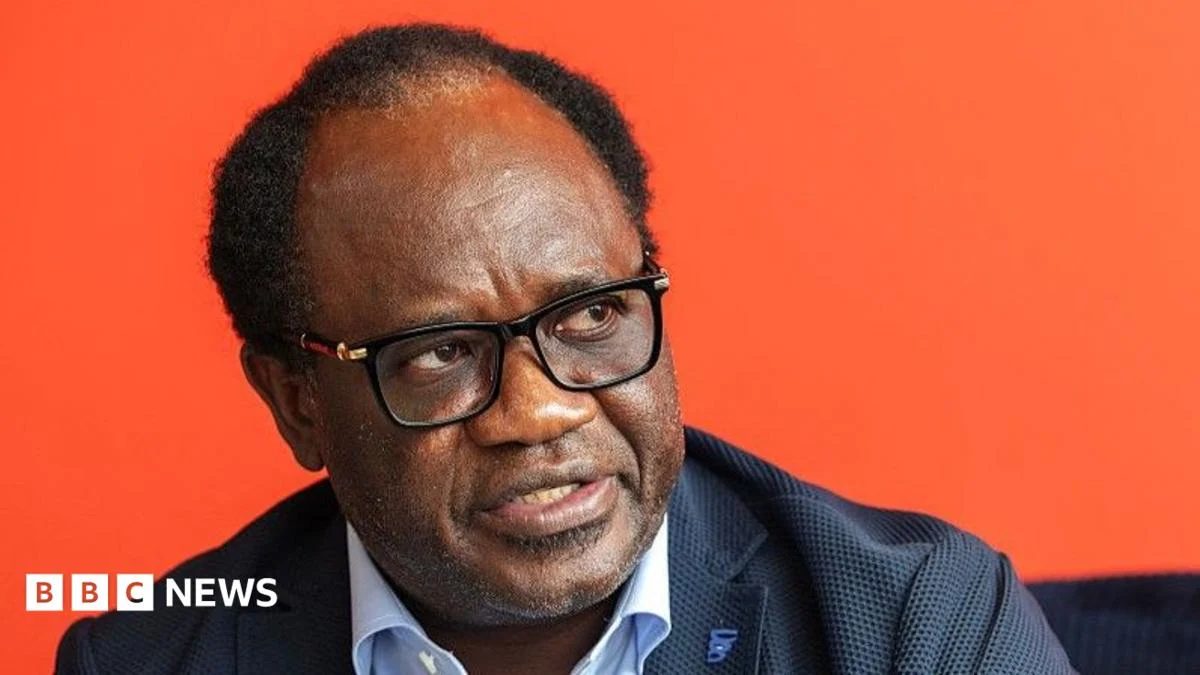
Zambian opposition leader Brian Mundubile has been formally charged with treason, his lawyer confirmed, a development that has significantly escalated political tensions in the Southern African nation following a contentious presidential election. The announcement of the charges against Mundubile, leader of the National Restoration Party for Upright People (NRPUP), and seventeen other individuals, including his running mate Makebi Zulu, signals a deepening political crisis and raises serious questions about the state of democracy and rule of law in Zambia. The charges come in the wake of a deadly security raid, disputed election results, and an unprecedented move to seal off courts, preventing legal challenges to the poll outcome.
The Formal Charges and Arrests
On Saturday night, Milner Katolo, legal counsel for Brian Mundubile, publicly announced that his client had been charged with treason. Speaking to the Zambian Eye, Katolo affirmed Mundubile’s intention to answer the grave accusations in court. The lawyer further disclosed that a total of eighteen individuals, encompassing Mundubile, his vice-presidential candidate Makebi Zulu, and sixteen others, now face the capital offense of treason. Treason charges in Zambia carry severe penalties, potentially including life imprisonment or even the death penalty, underscoring the gravity of the allegations. The arrests and subsequent charges have sent shockwaves through the country’s political landscape, prompting immediate concerns from civil society organizations and international observers about the treatment of opposition figures and the potential for a broader crackdown on dissent. The accused were reportedly moved to a detention facility following their formal charging.
A Contentious Electoral Landscape
The current crisis stems from the country’s recent presidential election held on August 13, in which incumbent President Hakainde Hichilema secured a second term. Official results released by the Electoral Commission of Zambia (ECZ) declared President Hichilema the winner with 60% of the vote, while Brian Mundubile garnered 38%. These figures indicated a clear victory for Hichilema, building on his previous electoral success in 2021 when he unseated the Patriotic Front (PF) in a landslide victory. However, Mundubile and the NRPUP vehemently disputed these results, alleging widespread irregularities and a lack of transparency in the electoral process. The opposition’s claims ranged from voter suppression tactics in certain strongholds to concerns over the integrity of the vote tabulation system. Historically, Zambian elections, while often competitive, have frequently been marred by accusations of malfeasance, contributing to a persistent atmosphere of mistrust between political rivals. Mundubile’s outright rejection of the results laid the groundwork for the ensuing political standoff.
Escalation: Raid, Death, and Pursuit
The political tensions dramatically escalated the day after the poll. On August 14, Zambian security forces launched a raid on a property in the capital, Lusaka, reportedly linked to Brian Mundubile. The operation turned deadly, resulting in the killing of a former cabinet minister, whose identity was later confirmed as Anthony Mwandila, a prominent figure in the NRPUP. Several other politicians associated with the opposition were also arrested during the raid. The government, through official channels, justified the operation by claiming that security forces had seized a cache of weapons at the premises, asserting that the NRPUP party was planning an armed insurgency to destabilize the nation. This accusation was swiftly and emphatically denied by the NRPUP, which labeled the raid and subsequent allegations as a politically motivated fabrication designed to silence legitimate opposition. The party maintained that the property was a campaign office and that the claims of an armed insurgency were baseless and a pretext for a political witch-hunt. The raid, its violent outcome, and the government’s narrative immediately raised alarms among human rights advocates and international bodies regarding the use of force against political opponents.
Seeking Refuge and Controversial Detention
In the immediate aftermath of the deadly raid and facing imminent arrest, Brian Mundubile and his running mate Makebi Zulu sought refuge at a United Nations building in Lusaka. This act of seeking asylum within a diplomatic or international compound is a rare and significant move for high-profile political figures, often signaling a deep fear for personal safety and a lack of trust in domestic protective mechanisms. While the precise details of their time within the UN premises remain confidential, it became clear that their stay was short-lived. President Hakainde Hichilema reportedly exerted considerable pressure on the United Nations to hand over the two opposition leaders. This move by the head of state to compel the UN to relinquish individuals seeking refuge within its jurisdiction is highly unusual and has drawn scrutiny regarding international protocols for protection and the principle of non-refoulement. Ultimately, Mundubile and Zulu were detained by Zambian authorities after they were handed over by the UN. The circumstances of this handover, particularly the degree of pressure applied and the UN’s justification, have not been fully disclosed, leaving many questions unanswered about the implications for diplomatic immunity and the safety of those seeking international protection in politically charged environments.
Legal Roadblocks and Constitutional Crisis
Perhaps one of the most concerning developments in the post-election period was the unprecedented sealing off of courts by Zambian authorities. This action occurred on Monday, August 16, which was the final day that a legal challenge to the election outcome could be filed under Zambian law. The sealing of the courts effectively prevented the opposition from exercising its constitutional right to seek legal redress regarding the disputed election results. This move has been widely condemned by legal experts and civil liberties advocates as a direct assault on the rule of law, the independence of the judiciary, and fundamental democratic principles. The inability of the opposition to mount a legal challenge deprives them of a crucial non-violent avenue to address their grievances, thereby potentially exacerbating political frustrations and creating a perception that legal channels are being manipulated for political ends. Such actions risk undermining public trust in democratic institutions and could set a dangerous precedent for future electoral processes in Zambia.
Background: Zambia’s Political Landscape and Democratic Trajectory
To fully comprehend the gravity of the current situation, it is essential to contextualize it within Zambia’s broader political history. Zambia has often been lauded as one of Africa’s more stable democracies, having undergone several peaceful transitions of power since its independence in 1964. However, this democratic façade has occasionally been tested by periods of political tension, particularly around elections. President Hakainde Hichilema himself rose to power in 2021 after years as an opposition leader, during which he faced numerous arrests and political persecution under previous administrations. His victory was widely celebrated as a triumph for democracy and a testament to the resilience of the Zambian people’s desire for change. Hichilema campaigned on a platform of good governance, anti-corruption, and strengthening democratic institutions, including respecting the rule of law and political freedoms. The current events, particularly the treason charges against a leading opposition figure and the sealing of courts, stand in stark contrast to these promises and Hichilema’s own past experiences. This apparent contradiction raises critical questions about the trajectory of his presidency and the commitment to the very democratic principles he once championed. The NRPUP, while not as historically dominant as the former ruling Patriotic Front, represents a significant segment of the opposition and Mundubile’s 38% vote share underscores his substantial popular backing.
International and Domestic Scrutiny
The unfolding events have not gone unnoticed by the international community and domestic human rights organizations. Regional and international observers, including missions from the African Union (AU) and the Southern African Development Community (SADC), had generally described the election day itself as "largely peaceful." However, their post-election reports are likely to reflect concerns about the subsequent developments. Zambia’s own Human Rights Commission (ZHRC) has already issued a strong call for accountability regarding individuals whose whereabouts remain unknown following arrests and security operations conducted around the elections. The ZHRC’s statement underscores the importance of due process, transparency, and respect for human rights, particularly in periods of heightened political tension. International human rights organizations such as Amnesty International and Human Rights Watch are expected to closely monitor the situation, potentially issuing statements condemning any abuses of power or violations of fundamental freedoms. The European Union, the United States, and other democratic nations, which often provide significant development aid to Zambia, are also likely to express concerns, emphasizing the need for adherence to democratic norms, respect for the opposition, and the independence of the judiciary.
Implications for Zambia’s Democracy and Stability
The charging of a prominent opposition leader with treason, coupled with the sealing of courts and a deadly security operation, carries profound implications for Zambia’s democratic health and future stability. Firstly, it risks eroding the hard-won democratic gains and the country’s reputation as a beacon of stability in a sometimes volatile region. Investor confidence, which is crucial for Zambia’s struggling economy, could be negatively impacted by perceptions of political instability and a deteriorating rule of law. Secondly, it sends a chilling message to the opposition and civil society, potentially stifling dissent and curtailing freedoms of expression and assembly. A vibrant opposition is a cornerstone of any healthy democracy, providing checks and balances against government power. The suppression of legitimate political opposition, particularly through severe charges like treason, can lead to increased polarization and a breakdown of trust between the government and its citizens. Thirdly, the actions taken against the judiciary, by physically barring access to courts, represent a direct attack on the separation of powers and the independence of legal institutions. This undermines the constitutional framework and sets a dangerous precedent for future political disputes. The long-term consequences could be a weakened judiciary, less capable of upholding justice and protecting citizens’ rights.
The Road Ahead
President Hakainde Hichilema is scheduled to be sworn in for his second term on September 1. This ceremony will take place against a backdrop of deep political division and mounting international scrutiny. The legal process for Brian Mundubile and the seventeen others charged with treason is expected to be protracted and highly politicized. The fairness of their trial, the transparency of proceedings, and adherence to due process will be critical indicators of Zambia’s commitment to the rule of law. The international community will be closely watching how the Zambian government handles these cases, as well as its response to calls for accountability regarding human rights concerns. The coming months will be a crucial test for Zambia’s democratic institutions and for President Hichilema’s commitment to the principles of democracy, good governance, and respect for human rights that he himself once championed from the opposition benches. The nation stands at a critical juncture, with its democratic future hanging in the balance as political tensions continue to simmer beneath the surface.