A significant escalation in the ongoing regional conflict unfolded today as a US military strike targeted Iran’s Larak Island, a strategic outpost in the Strait of Hormuz, prompting a swift and forceful ballistic missile response from Iran’s Islamic Revolutionary Guard Corps (IRGC) against US military installations in Jordan. The US attack, marking the first known direct assault on Iranian territory since a pause in renewed military operations in late July, reportedly resulted in at least two fatalities and two injuries on Larak Island. Hours later, the IRGC claimed responsibility for launching ballistic missiles at the US bases of King Hussein and al-Azraq in Jordan, alleging "heavy damage" to vital infrastructure. Jordan’s army confirmed the interception of eight missiles that breached its airspace, underscoring the immediate and dangerous ripple effects of the unfolding confrontation.
The Larak Island Incident: A New Front in the Conflict
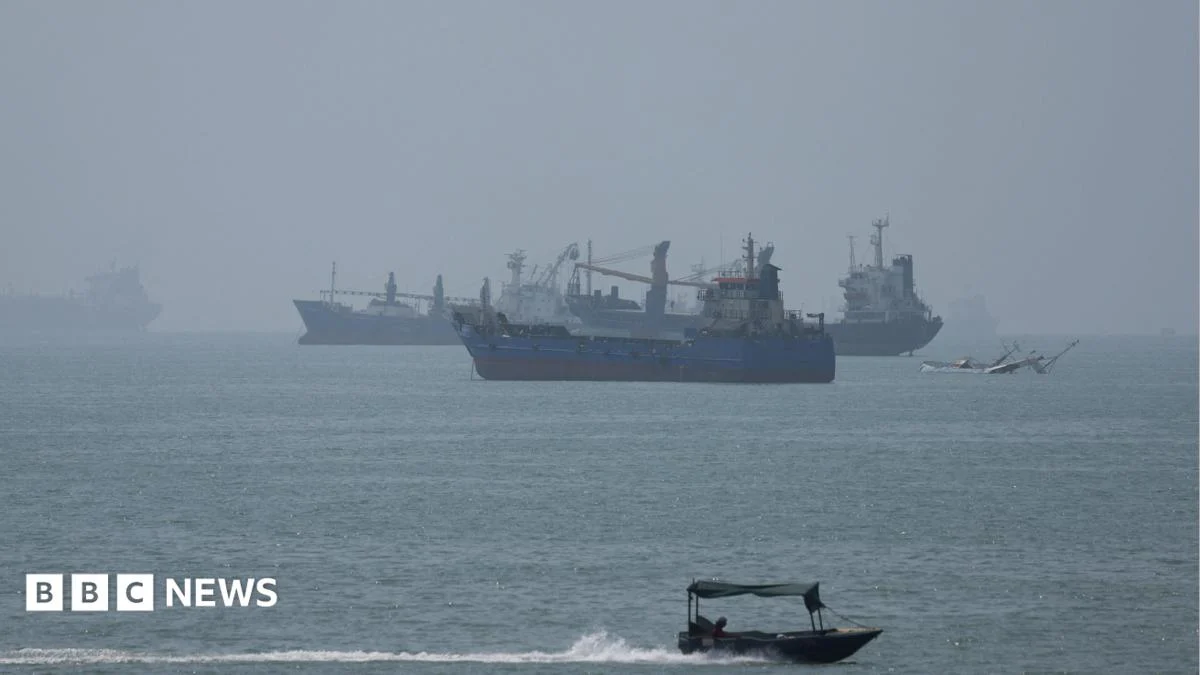
The initial US strike, described by Iran’s Tasnim news agency as being carried out by drones, focused on Larak Island. This small, arid island holds immense strategic importance due to its proximity to the key Iranian port of Bandar Abbas and its direct frontage on the Strait of Hormuz, the world’s most critical chokepoint for maritime oil transit. According to reports, Iran had been utilizing Larak Island as a point of control, reportedly forcing commercial tanker traffic to pass by for inspection and demanding a substantial payment of $2 million (approximately £1.5 million) to cross the vital waterway. This coercive practice, viewed by many international observers as a direct challenge to the principle of freedom of navigation, likely served as a primary catalyst for the US military intervention.
The attack on Larak Island marks a significant shift in the US military posture, following a period of relative calm since President Donald Trump reportedly paused a renewed military campaign in late July. The casualties reported by Tasnim—two killed and two injured—highlight the kinetic nature of the strike and its immediate human cost. While details of the specific targets on Larak Island remain sparse, military analysts suggest the operation likely aimed at disrupting Iran’s capacity to interfere with international shipping or to degrade infrastructure associated with such activities. Hossein Mohebbi, the IRGC’s spokesperson, swiftly condemned the US action, labeling it a "strategic and fatal mistake by the Trump regime." He warned unequivocally that "the enemy will pay the consequences of this miscalculation in both the economic and military fields," signaling an immediate and robust Iranian response.
Iran’s Swift Retaliation: Ballistic Missiles Target US Bases in Jordan
True to Mohebbi’s pledge, the IRGC wasted no time in executing its promised retaliation. Hours after the Larak Island strike, Iranian state media carried a statement from the IRGC asserting responsibility for launching ballistic missiles at two prominent US military installations in Jordan: King Hussein Air Base and al-Azraq Air Base. According to a translation provided by the AFP news agency, the IRGC claimed its missiles caused "heavy damage" and specifically targeted "technical infrastructure, maintenance facilities, and enemy fighter jet positions."
Jordan, a crucial US ally in the region, found itself directly in the crosshairs of this escalating conflict. Shortly after the IRGC’s statement, Jordan’s armed forces confirmed the incident, stating via the state Petra News Agency that "air defense systems intercepted eight missiles that breached the Kingdom’s airspace at dawn today, Monday." The successful interception of these missiles underscores the advanced capabilities of Jordan’s air defense, likely bolstered by US military assistance, and prevented potentially devastating impacts on the bases and surrounding areas. The targeting of these specific bases, which host significant US military assets and personnel, represents a direct and audacious challenge to American presence and influence in the Middle East. Al-Azraq Air Base, for instance, has been a key operational hub for coalition air operations in the region, including those against extremist groups, housing fighter jets, drones, and support personnel. The decision by Iran to strike these facilities signals a willingness to engage US forces directly beyond proxy confrontations.
A Volatile Chronology of Escalation and Pressure
This latest exchange of fire is not an isolated incident but rather the latest chapter in a protracted period of heightened tension and open conflict between the United States and Iran. The broader "Iran war," as some have termed it, officially crossed its six-month mark recently, originating from wide-ranging strikes launched by the US and Israel on Iran on February 28. That initial offensive triggered a retaliatory wave from Iran, which attacked Israel, various US bases, and allied states in the Gulf, effectively closing the Strait of Hormuz to marine traffic for a period.
Following this initial surge, a relative lull in direct military engagement occurred, with President Trump reportedly pausing significant offensive operations in late July. However, the underlying strategic confrontation continued unabated, primarily through renewed economic pressure. On August 24, Washington announced a fresh campaign of sanctions aimed at further isolating Tehran and expanding secondary sanctions against its allies, intensifying the "maximum pressure" strategy. Iranian officials and state media have largely dismissed this campaign as a continuation of previous US economic measures, which they argue followed Washington’s perceived military failure in the initial phases of the recent conflict.
Adding to the pre-existing tensions, President Trump had claimed just last week that all mines previously placed in the Strait of Hormuz by Iran, as part of its efforts to blockade the route, had either been detonated or removed. He issued a stern warning that any ship or boat deploying new mines would be destroyed. Iran’s Deputy Foreign Minister Kazem Gharibabadi quickly refuted Trump’s assertion, describing it as "propaganda" and a deception, further highlighting the deep chasm of mistrust and conflicting narratives defining US-Iran relations. The Larak Island strike and subsequent Iranian retaliation directly challenge the fragile equilibrium that had emerged, pushing the region closer to a wider conflagration.
The Strategic Chokepoint: Strait of Hormuz and Global Energy
At the heart of this geopolitical friction lies the Strait of Hormuz, a narrow waterway connecting the Persian Gulf to the Arabian Sea and beyond. Its strategic significance cannot be overstated: prior to the current conflict, approximately 20% of the world’s total oil consumption and a substantial portion of its liquefied natural gas (LNG) traversed through this strait. This translates to roughly 21-22 million barrels of crude oil and petroleum products daily, making it the most important oil transit chokepoint in the world. Any disruption to traffic through the Strait has immediate and profound implications for global energy markets, leading to sharp increases in oil prices and threatening the stability of the world economy.
Iran has historically threatened to close the Strait in response to perceived external threats or sanctions, viewing it as a powerful leverage point. Its recent practice of stopping and inspecting tankers near Larak Island, coupled with the demand for payments, represents a tangible and economically damaging manifestation of these threats. Such actions not only impede the free flow of commerce but also drive up shipping insurance premiums, adding further costs to global trade. International efforts, primarily led by the United States and its allies, have focused on ensuring the freedom of navigation through this critical international waterway, deploying naval assets and forming maritime security coalitions. The Larak Island strike can be interpreted within this context, as an effort to counter Iran’s perceived attempts to exert undue control over international shipping lanes.
Deepening Economic Pressure and Iran’s Resilience
The military escalation comes amidst a backdrop of intensifying economic pressure on Iran. The US "maximum pressure" campaign, reinvigorated by the August 24 announcement of fresh sanctions, aims to cripple Iran’s economy, cut off its revenue streams, and force it to renegotiate its nuclear program and regional activities. These sanctions target various sectors, including oil exports, banking, and shipping, and extend to "secondary sanctions," which penalize foreign entities that continue to do business with sanctioned Iranian entities. The objective is to further isolate Tehran financially and politically.
Despite the severe impact of these sanctions, which have undoubtedly contributed to significant economic hardship within Iran, the Iranian government has consistently demonstrated a degree of resilience and defiance. Officials and state media have frequently dismissed the US economic measures as a continuation of a failed policy, arguing that Washington resorts to economic warfare when military options prove ineffective. This narrative, while serving domestic political purposes, also reflects a deep-seated conviction within the Iranian leadership that they can withstand external pressure. The recent military retaliation, despite the risks, also serves to project strength and an unwillingness to capitulate under duress, both domestically and internationally.
Reactions and International Scrutiny
The latest round of military exchanges has drawn immediate attention and concern from the international community. While official statements from the US and Israel regarding the Larak Island strike were not immediately available, US officials are expected to justify the action as a necessary measure to protect international shipping and deter Iranian aggression in the Strait of Hormuz. Israel, a staunch US ally and a primary target of Iranian regional influence, would likely view the US strike as a commendable act of deterrence and support its continuation of a firm stance against Tehran.
Conversely, calls for de-escalation are anticipated from international bodies such as the United Nations and the European Union, who have consistently advocated for diplomatic solutions to the US-Iran standoff. The potential for miscalculation leading to a wider regional war remains a paramount concern for many global actors. Regional allies of the US in the Gulf, while generally supportive of efforts to contain Iran, will also be acutely aware of the risks to their own security and economic stability posed by an escalating conflict. The targeting of US bases in Jordan, a country that has historically maintained a delicate balance in regional politics, further complicates the geopolitical landscape and underscores the broadening scope of the conflict.
Analysis: Implications for Regional and Global Security
The events of today carry profound implications for regional and global security. The direct US strike on Iranian territory, followed by Iran’s direct ballistic missile response against US assets, shatters any illusion of a contained conflict. The crossing of this threshold significantly raises the stakes and increases the probability of a broader, more devastating confrontation.
Economically, the immediate aftermath is likely to be felt in global energy markets, with oil prices potentially spiking as concerns over the security of the Strait of Hormuz intensify. The cost of shipping through the region will undoubtedly rise, affecting global supply chains. For Iran, the renewed military engagement, while a display of defiance, will further strain its already crippled economy, potentially making it harder to find international partners willing to defy US sanctions.
Militarily, the exchange tests the capabilities of both sides. Jordan’s successful interception of missiles demonstrates the effectiveness of modern air defense systems, but the sheer volume and persistence of Iranian missile capabilities remain a significant threat. The targeting of specific military infrastructure by Iran suggests intelligence gathering and strategic planning, indicating a sophisticated response capacity.
Geopolitically, the incident places immense pressure on diplomatic efforts, which appear to be at an impasse. The current trajectory suggests a deepening cycle of action and reaction, with little room for de-escalation unless a concerted international effort can be mobilized. The role of Jordan, a critical ally bordering both Iraq and Syria, as a direct target also highlights the widening geographical scope of the conflict and the risks faced by countries attempting to maintain neutrality or stability in a volatile neighborhood. The coming days will be crucial in determining whether this latest escalation can be contained or if it marks a dangerous turning point towards a full-scale regional war.