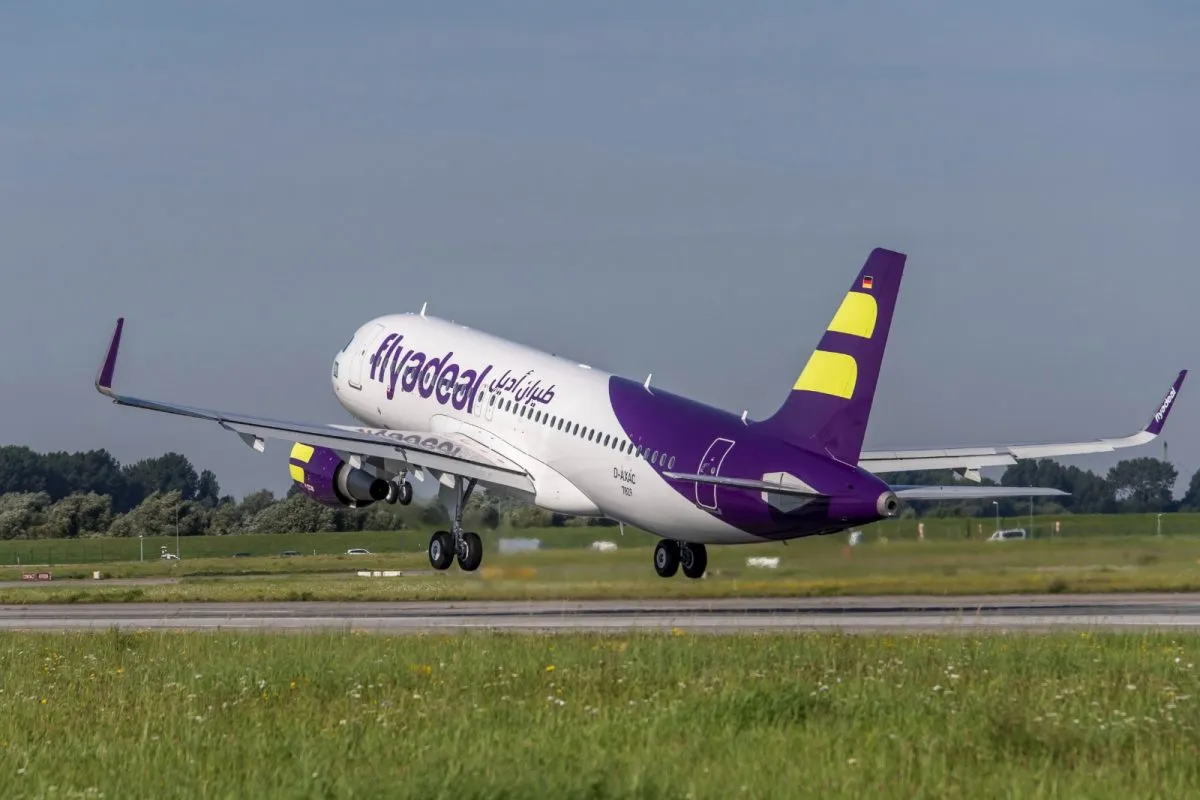
Flyadeal, the low-cost subsidiary of Saudi Arabia’s national flag carrier, Saudia, has announced a fundamental shift in its operational philosophy, moving away from a strictly point-to-point model to embrace a connecting flight strategy. This strategic pivot, confirmed by acting CEO Sanjiv Kapoor, marks a significant milestone in the airline’s evolution as it prepares to integrate advanced aircraft into its fleet and align itself with the Kingdom’s ambitious "Vision 2030" aviation objectives. For the first time since its inception in 2017, the budget carrier will offer "origin and destination" fares, allowing passengers to book multi-leg journeys with seamless baggage transfers and synchronized scheduling through its primary hubs in Jeddah and Riyadh.
The transition to a connecting model is designed to maximize the utility of Flyadeal’s growing network and capture a larger share of the transit market within the Middle East and beyond. Historically, Flyadeal focused on high-demand, direct routes, primarily serving domestic travelers and regional commuters. However, as the Saudi aviation market undergoes a multi-billion-dollar transformation, the airline is repositioning itself to serve as a high-efficiency feeder for international traffic and a primary carrier for the burgeoning religious and leisure tourism sectors.
The Evolution of the Flyadeal Business Model
Since its first flight on Saudi National Day in 2017, Flyadeal has operated as a "pure" low-cost carrier (LCC). The point-to-point model served the airline well during its initial growth phase, minimizing operational complexity and allowing for high aircraft utilization. By avoiding the logistical overhead of baggage transfers and missed connection protection, Flyadeal was able to maintain a lean cost structure that appealed to price-sensitive domestic passengers.
The shift toward a connecting model, as outlined by Sanjiv Kapoor, represents a "hybridization" of the LCC strategy. This move is increasingly common among mature budget carriers globally, such as IndiGo in India or EasyJet in Europe, which have recognized that facilitating connections can significantly increase load factors on thinner routes. By introducing "seamless connections," Flyadeal will enable a passenger from a secondary Saudi city, such as Abha or Tabuk, to book a single ticket to an international destination like Dubai or Cairo via Jeddah, without the need to re-check baggage or navigate separate booking systems.
Kapoor noted that the implementation of these changes is imminent, with the airline expected to roll out the new fare structures and booking capabilities in the coming weeks. This infrastructure upgrade is a prerequisite for the next phase of Flyadeal’s expansion, which involves a massive influx of new generation aircraft capable of flying longer distances with greater efficiency.
Fleet Expansion: A321neos and the Widebody Leap
Central to Flyadeal’s new strategy is a comprehensive fleet renewal and expansion program. The airline currently operates an all-Airbus A320 family fleet, which has been the workhorse of its short-to-medium haul operations. However, the capacity requirements of the Saudi market are outstripping the capabilities of the current fleet.
In the second half of 2025, Flyadeal is scheduled to take delivery of the Airbus A321neo. The A321neo offers a significant increase in seating capacity—typically accommodating up to 240 passengers in a high-density LCC configuration—while reducing fuel burn and carbon emissions by 20% compared to previous-generation aircraft. This aircraft will allow Flyadeal to increase capacity on slot-constrained routes, particularly between Riyadh and Jeddah, which is one of the busiest domestic corridors in the world.
Perhaps more transformative is the airline’s plan to introduce widebody aircraft. Flyadeal is slated to receive Airbus A330neo widebodies starting in the fourth quarter of 2027. The decision to operate widebody aircraft is a bold move for a low-cost carrier, placing Flyadeal in a specialized category of "long-haul low-cost" operators. The A330neo will provide the range and capacity necessary to target high-density markets in South Asia, Southeast Asia, and Europe. This fleet addition is directly linked to the new connecting flight strategy, as the A330neo will require a robust feeder network to fill its 300+ seats on long-haul sectors.
Strategic Context: Saudi Vision 2030 and the National Aviation Strategy
Flyadeal’s expansion is not occurring in a vacuum; it is a critical component of the Saudi National Aviation Strategy, which aims to turn the Kingdom into a global logistics and tourism hub. Under the leadership of Crown Prince Mohammed bin Salman, Saudi Arabia has set a target of 330 million annual passengers by 2030—a tripling of current traffic levels.
The Kingdom’s strategy involves a two-pronged approach to its national carriers. While Saudia (the full-service carrier) is being repositioned to focus heavily on religious tourism and the Hajj and Umrah sectors from its base in Jeddah, Flyadeal is tasked with capturing the budget-conscious segment of both the domestic and international markets. Meanwhile, the newly launched Riyadh Air is expected to serve as a premium global connector based in the capital, competing with the likes of Emirates and Qatar Airways.
By adopting a connecting model, Flyadeal ensures it can contribute to the goal of connecting Saudi Arabia to over 250 destinations worldwide. The ability to funnel passengers from across the Kingdom into international gateways is essential for achieving the scale required by Vision 2030.
Overcoming Industry-Wide Supply Chain Challenges
Despite the ambitious growth plans, Flyadeal and its peers face significant headwinds in the form of global aircraft delivery delays. The aerospace industry is currently grappling with a "perfect storm" of supply chain disruptions, labor shortages, and engine reliability issues.
Boeing and Airbus have both struggled to meet delivery targets, which has had a cascading effect on airline networks globally. In his comments, Sanjiv Kapoor acknowledged that delivery schedules remain a critical variable. Flyadeal’s timeline for the A321neo and A330neo is subject to the production stability of Airbus.
This challenge is echoed across the region. Riyadh Air, the Kingdom’s second national carrier, has had to manage expectations regarding its launch date due to similar supply chain constraints. Outside of Saudi Arabia, Air India is currently navigating a massive integration and expansion phase, hampered by the slow arrival of new aircraft from its record-breaking 470-plane order. For Flyadeal, the transition to a connecting model provides a way to optimize existing capacity and increase revenue per available seat kilometer (RASK) even if fleet growth is temporarily throttled by manufacturer delays.
Competitive Landscape and Market Implications
The move to a connecting model places Flyadeal in more direct competition with Flynas, Saudi Arabia’s other major low-cost carrier. Flynas has long utilized a connecting model and has already expanded its reach into Europe and Asia. By modernizing its booking systems and fleet, Flyadeal is signaling its intent to challenge Flynas’s dominance in the regional LCC space.
Furthermore, the introduction of "origin and destination" fares allows Flyadeal to compete for "sixth-freedom" traffic—passengers traveling between two foreign countries via a hub in Saudi Arabia. While Flyadeal is unlikely to compete for luxury transit passengers, it could become a formidable player for labor traffic between the Levant, Egypt, and South Asia, as well as for budget-conscious religious tourists.
Industry analysts suggest that Flyadeal’s shift is also a defensive move against the entry of ultra-low-cost carriers (ULCCs) from Europe, such as Wizz Air, which has aggressively expanded its footprint in the Saudi market. By offering connections, Flyadeal provides a level of network depth and convenience that point-to-point ULCCs cannot easily replicate without significant local infrastructure.
Chronology of Flyadeal’s Growth and Future Milestones
- September 2017: Flyadeal launches operations on Saudi National Day with a flight from Jeddah to Riyadh.
- 2018-2019: Rapid domestic expansion, establishing bases in Jeddah, Riyadh, and Dammam.
- July 2019: Saudia Group cancels a commitment for Boeing 737 MAX aircraft in favor of an all-Airbus A320neo fleet for Flyadeal.
- 2021: Flyadeal begins international operations, launching flights to Dubai.
- 2022-2023: Network expansion continues into Egypt, Jordan, and Turkey.
- Late 2024 (Expected): Implementation of origin-and-destination fares and seamless connection protocols.
- H2 2025: Scheduled delivery of the first Airbus A321neo, enabling higher capacity on core routes.
- Q4 2027: Scheduled delivery of the first Airbus A330neo, marking Flyadeal’s entry into the widebody, long-haul market.
- 2030: Target date for the full integration of Flyadeal into the Vision 2030 aviation ecosystem, contributing to the 330-million passenger goal.
Analysis of Economic and Operational Impact
The transition to a hub-and-spoke model is a complex operational undertaking. It requires sophisticated Revenue Management Systems (RMS) to price connecting itineraries dynamically. It also necessitates ground handling upgrades to ensure that baggage transfer "misconnect" rates remain low—a critical metric for maintaining the brand reputation of a budget carrier.
Economically, the move is expected to improve Flyadeal’s margins. Connecting traffic allows an airline to fill seats that might otherwise go empty on less popular flight times, as those seats can now be sold as part of a longer journey. For the Saudi economy, a more robust Flyadeal contributes to the "Giga-projects" such as NEOM, the Red Sea Project, and Qiddiya by providing affordable access for the thousands of workers and future tourists these sites will require.
In conclusion, Flyadeal’s evolution from a simple point-to-point operator to a sophisticated connecting carrier with widebody aspirations is a microcosm of the broader changes occurring in the Saudi Arabian economy. As Sanjiv Kapoor and his leadership team prepare for the roll-out of these new services, the global aviation industry will be watching closely to see if the "low-cost connecting" model can thrive in one of the world’s fastest-growing aviation markets. The arrival of the A321neo and A330neo in the coming years will provide the physical tools necessary to realize this vision, provided the global aerospace supply chain can keep pace with the Kingdom’s soaring ambitions.