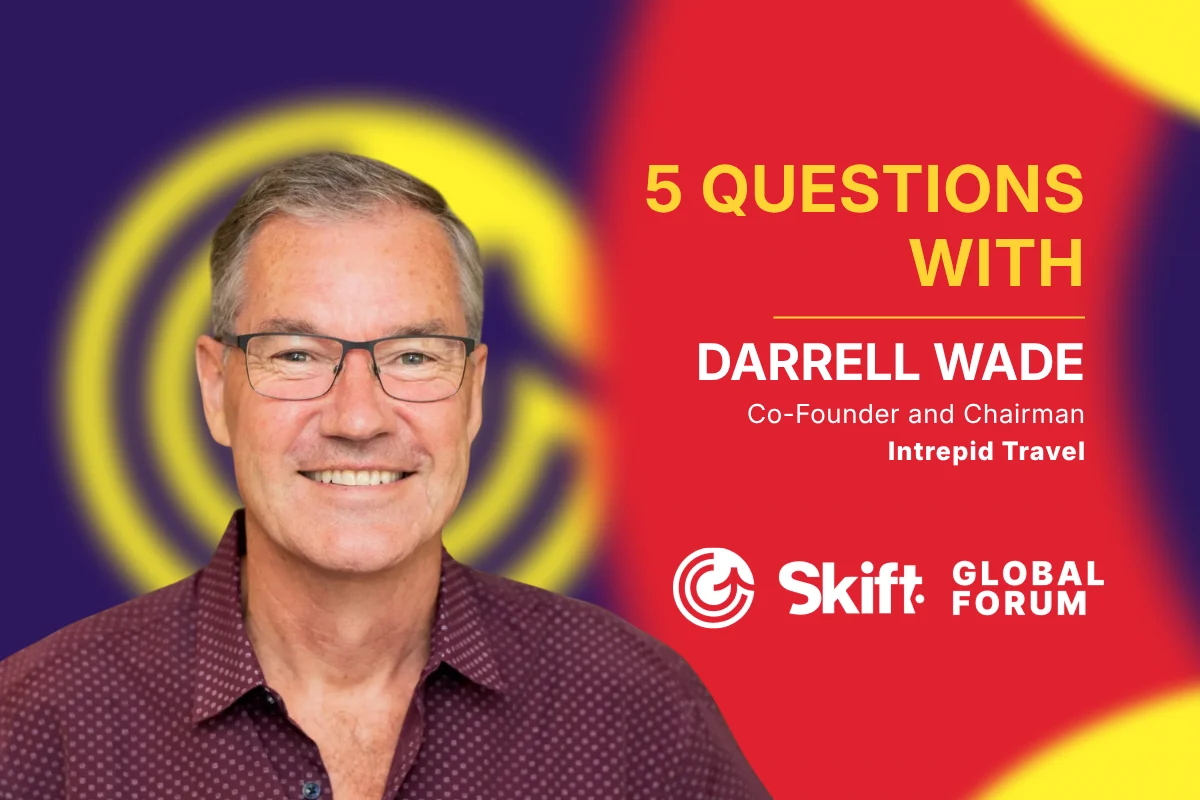
The global tourism industry is facing a critical juncture in its approach to environmental sustainability, led by a significant strategic shift from one of its most prominent players. Intrepid Travel, the world’s largest travel B Corp, has officially overhauled its climate playbook to include the carbon emissions generated by customer flights to and from their destinations. This move, spearheaded by co-founder and chairman Darrell Wade, marks a departure from standard industry practices where tour operators typically account only for the emissions generated during the ground portion of a trip. By internalizing these "Scope 3" emissions—those not directly controlled by the company but linked to its value chain—Intrepid is challenging the sector to take full responsibility for the demand it generates.
This strategic pivot comes as the travel industry prepares for the Skift Global Forum in New York, scheduled for September 22–24, where Wade will join other global leaders to discuss the future of the sector. The decision to redraw the boundaries of carbon accounting is not merely a technical adjustment; it represents a fundamental change in the logic of sustainable tourism, moving away from a reliance on carbon offsets and toward a "total product lifecycle" target.
The Evolution of Intrepid’s Climate Strategy: A 35-Year Chronology
To understand the significance of Intrepid’s current shift, it is necessary to examine the company’s long-standing commitment to responsible travel. Founded in 1989 by Darrell Wade and Geoff Manchester, Intrepid was built on the premise that travel should be beneficial for both the traveler and the host community. Over three decades, the company has consistently sought to lead the industry in ethical standards.
In 2010, Intrepid became a carbon-neutral business, a milestone that at the time placed it at the vanguard of the industry. For the next decade, the company relied heavily on purchasing carbon offsets to balance the emissions generated by its offices and its trips. However, as the global climate crisis intensified, the limitations of offsetting became increasingly apparent to both scientists and corporate leaders.
In 2018, Intrepid achieved B Corp certification, a rigorous designation that requires a company to meet high standards of social and environmental performance, accountability, and transparency. This was followed in 2020 by the adoption of Science Based Targets (SBTi), making Intrepid the first global tour operator with verified targets to reduce emissions in line with the 1.5°C goal of the Paris Agreement.
The January 2024 relaunch of the climate playbook represents the latest phase in this evolution. Wade acknowledges that the previous focus on offsets and technical targets for ground operations was a necessary step, but one that ignored the "elephant in the room": international aviation. By including customer-booked flights in their lifecycle analysis, Intrepid is now addressing the single largest source of emissions associated with its product.
The Data Behind the Decision: Aviation and the Tourism Footprint
The decision to include flight emissions is backed by sobering data regarding the environmental impact of global tourism. According to research published in Nature Climate Change, global tourism accounts for approximately 8% of total greenhouse gas emissions. Within that figure, transport is the primary contributor, with aviation responsible for the largest share of transport-related emissions.
For a typical international tour operator, the carbon footprint of a guest’s round-trip flight often dwarfs the emissions generated by their accommodation and local transport combined. Under traditional accounting methods, these flights are categorized as the responsibility of the airline or the individual consumer. However, Intrepid’s new stance argues that because the tour operator creates the demand for the trip, they are inherently responsible for the emissions required to reach it.
By moving to a total product lifecycle target, Intrepid is now tracking and reporting on a much larger volume of CO2. This transparency is intended to drive more aggressive investment in decarbonization projects. The company is currently exploring various avenues, from supporting the development of Sustainable Aviation Fuel (SAF) to promoting "slow travel" options that encourage longer stays and fewer short-haul flights.
The Strategic Test: Long-Term Logic vs. Short-Term Reporting
A central theme of Wade’s philosophy is the rejection of short-termism. As a privately owned business, Intrepid is shielded from the quarterly reporting pressures that often force public companies to prioritize immediate profits over long-term sustainability. Wade utilizes what he calls the "ten-year test" for every major decision: will the company be proud of this choice a decade from now?
This long-term perspective allows the company to adopt a multiple-stakeholder approach. Rather than focusing solely on shareholder returns, Intrepid considers the impact of its operations on partners, local communities, and the environment. While this approach requires a constant balancing of competing interests, Wade argues it is the only way to build a resilient business in a changing world.
The "rewrite" of the climate playbook is a direct application of this logic. While accounting for customer flights may make the company’s carbon books look "worse" in the short term compared to competitors who ignore those figures, Wade believes it is the only authentic way to operate. This transparency is seen as a way to build "trust as an asset," which Intrepid views as a critical competitive advantage.
Industry Reactions and the Competitive Landscape
The reaction from the broader travel industry to Intrepid’s move has been a mix of admiration and caution. Many operators acknowledge the ethical validity of Wade’s argument but express concerns about the financial implications. Including flight emissions in corporate targets can lead to increased costs, particularly if those targets are tied to carbon taxes or the purchase of high-quality removals.
Industry analysts suggest that Intrepid’s move may set a new benchmark for "Scope 3" reporting in the travel sector. As regulatory bodies in the European Union and the United States move toward more stringent ESG (Environmental, Social, and Governance) disclosure requirements, other large operators may soon find themselves legally mandated to report on the very emissions Intrepid is now voluntarily including.
Major players such as Accor, Expedia, and TUI are also facing pressure from a more conscious consumer base. Data from the 2023 Booking.com Sustainable Travel Report indicated that 76% of travelers want to travel more sustainably over the coming year. However, there remains a "say-do" gap, where consumers express a preference for sustainability but are often unwilling to pay a premium for it. Intrepid’s strategy gambles on the idea that authenticity and radical transparency will eventually close this gap by building deeper brand loyalty.
Tourism as a Vehicle for Wealth Creation and Poverty Alleviation
Beyond environmental concerns, Wade is vocal about the role of the travel industry in addressing global inequality. He argues that the industry often overlooks its potential as a tool for wealth creation and poverty alleviation. Tourism is one of the world’s largest employers, and in many developing nations, it serves as a vital source of foreign exchange and infrastructure development.
Intrepid’s model for social impact is structured around three pillars:
- Earning Opportunities: Providing stable, fair-wage employment for local tour leaders.
- Supplier Growth: Prioritizing local, small-scale businesses in the supply chain to ensure travel spend remains within the community.
- Employee Shareholding: Intrepid currently has approximately 1,000 employee shareholders. This program is designed to allow the team to share in the company’s financial success, creating a cycle of wealth that extends to their families and communities.
Wade’s focus on these areas stems from a belief that the "social" aspect of ESG is just as critical as the "environmental." By fostering economic independence among its global workforce, Intrepid aims to create a more equitable industry that can withstand the challenges of the coming decades.
Broader Implications and the Path to Skift Global Forum
The shift in Intrepid’s carbon accounting and its focus on social equity serve as a prelude to the discussions that will take place at the Skift Global Forum. Wade will share the stage with leaders like Sébastien Bazin of Accor and Ariane Gorin of Expedia Group, representing a cross-section of the industry’s most influential voices.
The implications of Intrepid’s "rewrite" extend far beyond the tour operator niche. It raises fundamental questions for the entire travel ecosystem:
- Accountability: If tour operators "own" the emissions of the flights they inspire, do travel agents and booking platforms share that responsibility?
- Pricing: Will the industry eventually have to price the "true cost" of carbon into every ticket and tour package, and how will that affect global mobility?
- Innovation: Does this shift accelerate the need for government-led investment in green hydrogen and electric aviation?
As the industry navigates a post-pandemic world characterized by "overtourism" concerns and a worsening climate crisis, the "Intrepid model" offers a potential blueprint for a more honest form of corporate responsibility. Whether the rest of the industry can—or will—follow Wade’s lead remains to be seen, but the conversation has undoubtedly been moved forward.
The upcoming forum in New York will likely serve as a testing ground for these ideas. As Wade prepares to lay out the thinking behind his company’s transformation, the industry will be watching to see if the "long-term logic" of total product lifecycle accounting can become the new standard for global travel. In an era where trust is easily lost, Intrepid’s bet on radical transparency may prove to be its most significant legacy.