United States forces launched targeted strikes against five Iranian tankers on Tuesday, successfully sinking one, in a direct response to Tehran’s repeated attempts to target an American warship in the volatile Gulf region, as confirmed by US Central Command (Centcom). This assertive action marks a significant escalation in the ongoing tit-for-tat exchanges that have characterized US-Iran relations for months, sending immediate ripples across global energy markets and raising concerns about broader regional stability.
Four of the Iranian oil tankers, identified as being linked to Iran’s Islamic Revolutionary Guard Corps (IRGC), were targeted in the Gulf of Oman, a crucial maritime corridor. A fifth tanker was struck near Kharg Island, a strategically vital location off Iran’s coast that serves as the country’s primary oil export terminal. The sunken vessel was later identified by Centcom as the M/T Riesco, with video evidence of the damaged ship subsequently posted on social media platform X.
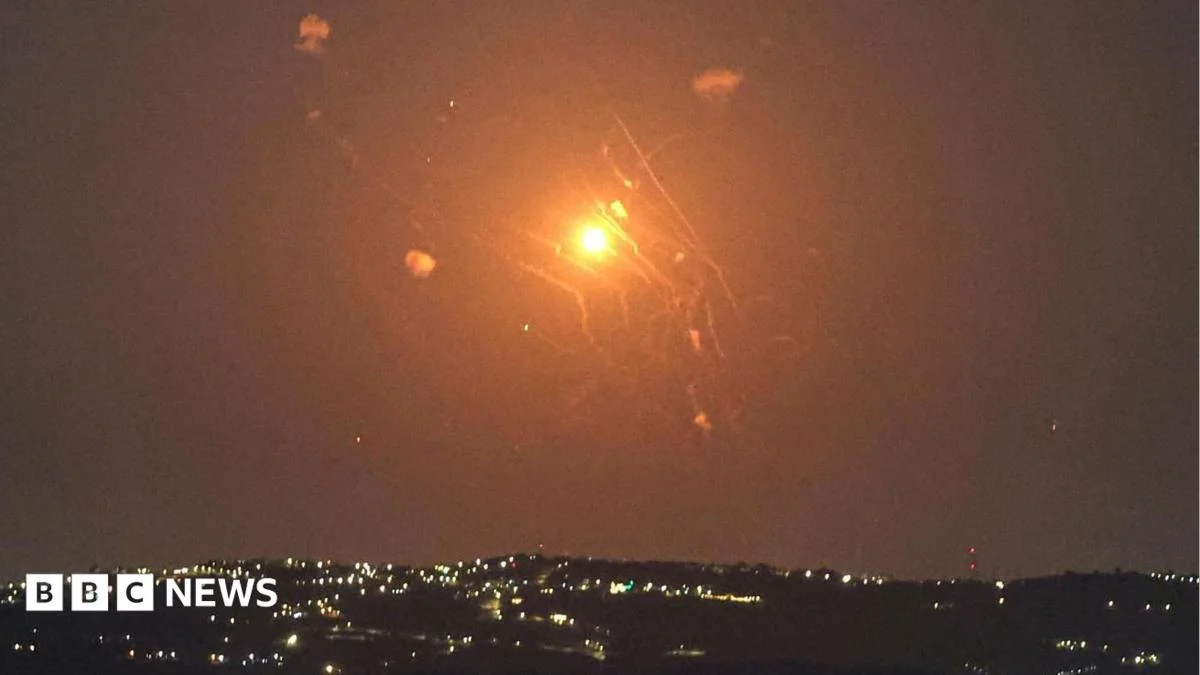
Tehran quickly retaliated, launching a barrage of missiles towards a US base in Jordan. Jordanian authorities reported a robust defense, stating that 18 of the 20 incoming Iranian missiles were successfully intercepted and shot down, with the remaining two falling in unpopulated areas without causing casualties. Adding to the complex narrative, Iran’s Revolutionary Guards claimed on Wednesday to have attacked two US vessels, eight oil tankers, and ten "non-compliant vessels" attempting to traverse the Strait of Hormuz, though these claims were not independently verified by international sources or confirmed by the United States.
A Week of Retaliation and Counter-Retaliation
The current surge in hostilities represents a sharp intensification of tensions that have been simmering for an extended period, particularly following US and Israeli attacks on Iranian targets on February 28, more than six months prior. The past week, however, has seen a rapid acceleration of direct and indirect confrontations.
The prelude to Tuesday’s US strikes involved Iran’s attempts to target a US warship with ballistic missiles. Centcom reported that these missile attacks were "successfully evaded," and critically, no American troops were harmed during these incidents. This direct threat to US naval assets prompted the decisive American response against the Iranian tankers.
Hours before the US tanker strikes, another incident added to the charged atmosphere: Iran’s navy claimed to have seized an uncrewed US submarine in the Strait of Hormuz. US Navy Captain Tim Hawkins, a spokesperson for Centcom, swiftly clarified the situation, stating that the "underwater drone operated by US forces malfunctioned more than a day ago" and was being used for surveying regional waters "in support of ongoing operations." Captain Hawkins further elaborated that the defective drone was "an older model that neither collected sensitive data nor carried any classified sonar or radar equipment," underscoring that US operations in regional waters were continuing unhindered. This incident, despite the US clarification, highlighted the close proximity and frequent interactions between the two nations’ military assets in sensitive waterways.
Strategic Targets: Oil and Maritime Pathways
The US decision to target Iranian oil tankers was not arbitrary. Centcom explicitly stated that the five targeted vessels were "part of a multi-billion-dollar shadow network that funds the IRGC and its regional proxies." The IRGC, a powerful and influential branch of Iran’s armed forces, is designated as a terrorist organization by the United States and plays a significant role in Iran’s economy and its projection of power across the Middle East through various proxy groups. Disrupting this illicit funding network is a long-standing US policy objective aimed at curbing Iran’s destabilizing activities.
The sinking of the M/T Riesco in the Gulf of Oman and the strike near Kharg Island carry significant symbolic and economic weight. Kharg Island is Iran’s largest oil export terminal, handling approximately 90% of the country’s crude oil exports, which are transported from the mainland via a network of pipelines. Any disruption to operations around Kharg Island directly impacts Iran’s ability to generate revenue from its most vital export, placing economic pressure on the regime. The Gulf of Oman, leading into the Strait of Hormuz, is a critical maritime chokepoint through which a substantial portion of the world’s seaborne oil passes daily.
The Vital Strait of Hormuz
The Strait of Hormuz, a narrow waterway separating Iran from Oman and the United Arab Emirates, remains at the heart of the regional tensions. It is one of the world’s most strategically important chokepoints, with approximately one-fifth of global oil consumption, or about 21 million barrels per day, passing through it. Any threat or disruption to shipping in the Strait has immediate and profound implications for global energy security and international trade. Iran has, on multiple occasions, threatened to close the Strait in response to international pressure or sanctions, a move that would have catastrophic global economic consequences. The recent Iranian claims of attacking US vessels and other tankers in this waterway, even if unverified, serve as a stark reminder of its vulnerability and strategic importance.
Statements and Official Responses
Following the US strikes, Secretary of State Marco Rubio, speaking to reporters during a trip to Colombia, articulated the US policy in stark terms. When asked about the latest tit-for-tat exchanges, Rubio stated the situation was "pretty straightforward." He elaborated: "Iran continues to try to hit US naval ships. And, for every time they do that or try to do that, they’re going to lose tankers. And I think you’ll see that again today." This statement signals a clear and uncompromising stance from Washington, indicating a proportional and economically impactful response to any Iranian aggression against US assets.
From the Iranian side, state media, often quoting IRGC officials, presented a narrative of successful retaliation and defiance. While acknowledging the US strikes, the focus shifted to their alleged counter-attacks, aiming to project strength and resolve in the face of American pressure. The claims of targeting US vessels and other tankers in the Strait of Hormuz, although lacking independent confirmation, are intended to demonstrate Iran’s capability to disrupt regional maritime traffic and inflict costs on its adversaries.
Jordanian authorities, through an official spokesperson for the Jordanian Armed Forces, confirmed their defensive actions, highlighting the efficacy of their air defense systems against the incoming Iranian missiles. This swift and effective interception underscores the regional security challenges faced by US allies and partners in the Middle East, often caught between the escalating US-Iran rivalry.
Economic Repercussions: Oil Markets React
The immediate economic impact of the escalating tensions was evident in global oil markets. Benchmark Brent crude oil prices rose by 1.5% in Asia trading, reaching $99.35 (£73.35) a barrel. US-traded oil also saw an increase, climbing 1.3% to $94.23 a barrel. These price hikes reflect market anxiety over potential supply disruptions, especially given the strategic importance of the Gulf of Oman and the Strait of Hormuz for global oil transit.
Analysts warn that continued escalation could lead to further significant price increases, impacting consumer economies worldwide. The vulnerability of shipping lanes and oil infrastructure in the region creates a risk premium on crude oil, as traders factor in the increased geopolitical risk. The targeting of tankers and the critical Kharg Island export terminal directly threaten the flow of oil, making markets particularly sensitive to such events.
Broader Regional Instability and Proxy Conflicts
The direct US-Iran confrontations are unfolding against a backdrop of wider regional instability, where various proxy conflicts continue to fuel tensions. On the same Tuesday that US forces struck Iranian tankers, Yemen’s Iran-backed Houthi movement launched a significant attack on energy facilities and civilian infrastructure in Saudi Arabia. Saudi authorities reported that the drone and missile attack injured 73 people and caused fires at oil facilities and installations, leading to a temporary halt in operations.
This Houthi attack on Saudi Arabia serves as a stark reminder of Iran’s extensive network of regional proxies, which are often utilized to project influence and exert pressure on adversaries without direct Iranian state involvement. The Houthis, engaged in a protracted conflict with the Saudi-led coalition in Yemen, frequently target Saudi territory with drones and missiles, often supplied or enabled by Iran. These simultaneous events underscore the interconnected nature of security challenges in the Middle East, where local conflicts are frequently intertwined with the broader geopolitical rivalry between Washington and Tehran.
The targeting of Saudi energy infrastructure not only adds to the regional security concerns but also exacerbates pressure on global oil prices, as Saudi Arabia is the world’s largest oil exporter and a crucial player in stabilizing energy markets. Any threat to its production or export capabilities sends immediate shockwaves through the global economy.
Geopolitical Outlook and Risks of Miscalculation
The current trajectory of US-Iran relations suggests a perilous path of escalation, characterized by a cycle of action and reaction. The direct targeting of Iranian economic assets by the US, and Iran’s retaliatory missile strikes, represent a dangerous shift from proxy skirmishes to more direct confrontations. The risk of miscalculation remains exceptionally high in such a volatile environment, where unintended consequences could rapidly spiral into a broader, more devastating conflict.
International observers are closely monitoring the situation, urging de-escalation and diplomatic engagement. However, the deep-seated mistrust and conflicting strategic objectives between the two nations make a swift resolution challenging. The US aims to curb Iran’s nuclear ambitions, its ballistic missile program, and its support for regional proxy groups, while Iran seeks to challenge US hegemony in the region and alleviate crippling international sanctions.
The events of the past week, culminating in the US strikes on Iranian tankers and Iran’s missile response, have undeniably ratcheted up the pressure. The world watches anxiously as Washington and Tehran navigate this fraught landscape, with the implications extending far beyond the immediate confines of the Gulf, potentially affecting global trade, energy security, and international peace. The need for clear communication channels and mechanisms to prevent accidental escalation has never been more critical.