The head of the world’s nuclear watchdog, Rafael Grossi, announced this week that North Korea has constructed a new two-storey uranium enrichment facility at its main Yongbyon nuclear complex, describing the development as a cause for "serious concern." This latest revelation underscores a persistent and alarming expansion of Pyongyang’s sanctioned nuclear infrastructure, intensifying global anxieties over regional stability and the international non-proliferation regime. The International Atomic Energy Agency (IAEA), which has been without inspectors in North Korea since their expulsion in 2009, relies heavily on satellite imagery and open-source intelligence for its assessments, providing a crucial, albeit limited, window into the reclusive state’s nuclear activities.
The newly identified building at Yongbyon is reportedly capable of housing up to 28 centrifuge cascades, intricate arrays of machines used to enrich uranium. This expansion is not an isolated incident; a report published by the IAEA late last month also indicated that Pyongyang has commenced operations at an expanded annex at another enrichment site, believed to be in Kangson. These findings collectively paint a stark picture of North Korea’s unwavering commitment to advancing its nuclear weapons program despite stringent international sanctions and widespread condemnation. Grossi, in a statement earlier this week, reiterated that "The continuation and further development of the DPRK’s nuclear programme are clear violations of relevant UN Security Council resolutions and are deeply regrettable."
A History of Defiance: North Korea’s Nuclear Trajectory
North Korea’s pursuit of nuclear weapons has been a defining feature of its foreign policy for decades, rooted in a deeply ingrained sense of insecurity and a desire for deterrence against perceived external threats, particularly from the United States and its allies. The nation’s nuclear ambitions can be traced back to the 1950s and 1960s, with initial assistance from the Soviet Union in establishing a rudimentary nuclear research program. However, it was in the early 1990s that the program began to draw serious international scrutiny.
Pyongyang signed the Treaty on the Non-Proliferation of Nuclear Weapons (NPT) in 1985 but consistently resisted full compliance with IAEA safeguards. Tensions escalated in 1993 when North Korea threatened to withdraw from the NPT, only to temporarily reverse course after a period of intense diplomatic engagement. The Agreed Framework between the U.S. and North Korea in 1994 aimed to freeze Pyongyang’s plutonium program in exchange for light-water reactors and heavy fuel oil, but this agreement ultimately collapsed in the early 2000s amid accusations of a clandestine uranium enrichment program.
In 2003, North Korea formally withdrew from the NPT, signalling its intent to openly pursue nuclear weapons. This was followed by its first successful nuclear weapons test in October 2006, a seismic event that sent shockwaves across the globe and triggered the first of many UN Security Council resolutions imposing sanctions on the country. Subsequent nuclear tests in 2009, 2013, 2016 (twice), and most recently in September 2017, alongside a rapid acceleration of its ballistic missile program, have solidified its status as a de facto nuclear power, albeit one that is unrecognized by the international community.
The IAEA’s presence in North Korea was terminated in 2009 when Pyongyang expelled its inspectors, effectively cutting off direct international oversight of its nuclear facilities. Since then, the agency has relied on sophisticated satellite imagery, open-source intelligence, and nuclear forensics to monitor the developments, making precise assessments challenging but not impossible.
The Yongbyon Complex: A Proliferation Epicenter
The Yongbyon Nuclear Scientific Research Center, located approximately 100 kilometers north of Pyongyang, has long been the heart of North Korea’s nuclear program. It houses a variety of critical facilities, including a 5 MWe experimental graphite-moderated reactor (capable of producing plutonium), a reprocessing facility (known as the Radiochemical Laboratory, used to extract plutonium from spent fuel rods), and a known uranium enrichment plant that was first publicly revealed to visiting American nuclear expert Siegfried Hecker in 2010.
The new two-storey building now reported by the IAEA is an addition to this already extensive complex. Its estimated capacity to accommodate up to 28 centrifuge cascades is significant. Centrifuges are key to enriching uranium, a process that increases the concentration of the fissile isotope Uranium-235. Natural uranium contains only about 0.7% U-235, which is insufficient for nuclear weapons. Low-enriched uranium (LEU), with U-235 concentrations typically between 3% and 5%, is used as fuel for nuclear power reactors. However, highly enriched uranium (HEU), with U-235 concentrations exceeding 20%, and typically above 90% for weapons-grade material, is crucial for building atomic bombs. The addition of more centrifuges directly translates to an increased capacity to produce HEU, accelerating North Korea’s ability to manufacture more nuclear warheads.
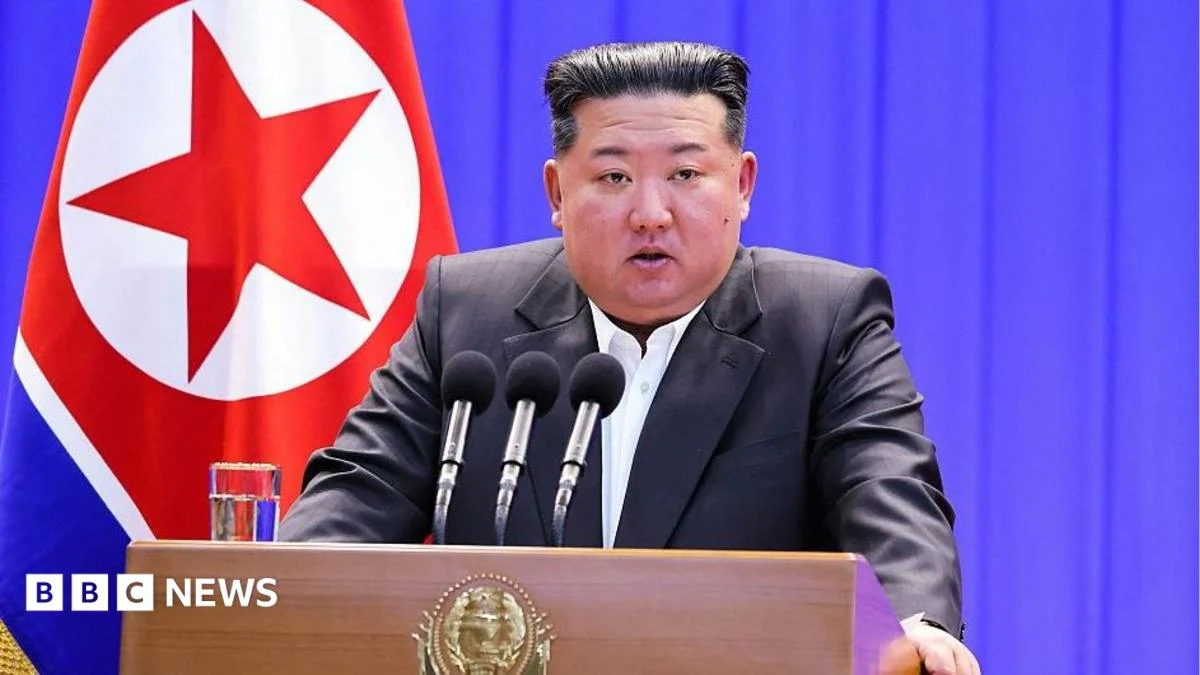
The IAEA first hinted at the existence of this new building in June 2023, though Director Grossi had mentioned the possibility earlier in the year. This timeline aligns with reports of North Korean leader Kim Jong Un’s visit on June 3rd to a "newly inaugurated nuclear materials production factory," which the IAEA subsequently identified as the Yongbyon enrichment facility. During his visit, Kim Jong Un reportedly praised the country’s "greatly expanded production capacity," adding that this would "offer the possibility of carrying out larger plans," according to the agency’s report. These statements, delivered by the supreme leader himself, underscore the strategic importance Pyongyang places on the continuous expansion of its nuclear capabilities.
The Shadowy Sites: Kangson and Beyond
While Yongbyon remains the most well-known nuclear site in North Korea, intelligence agencies and experts have long suspected the existence of other covert facilities. Kangson, located near the capital Pyongyang, is one such site that has increasingly come under international scrutiny. The IAEA’s latest report indicates that operations had started at another enrichment facility in Kangson in January of this year, following the construction of an annex there in 2024.
The identification of facilities like Kangson highlights a critical challenge for international non-proliferation efforts. As Edward Howell, a lecturer at the University of Oxford, told the BBC, "What makes North Korea’s nuclear programme so concerning is that many of its facilities are unknown, concealed, and thus difficult to target." He further elaborated, "Beyond Yongbyon, we know that other facilities exist: Kangson, for instance. The embeddedness of North Korea’s nuclear doctrine within its foreign and domestic policy means that we should expect there to be more concealed production sites." This strategy of obfuscation and decentralization complicates monitoring efforts and raises the specter of a much larger, more resilient nuclear arsenal than publicly understood.
North Korea’s nuclear program is characterized by a dual-track approach, simultaneously pursuing both plutonium and uranium enrichment pathways. The Yongbyon reactor and reprocessing plant are central to its plutonium production, while the centrifuge facilities at Yongbyon and Kangson are dedicated to uranium enrichment. This redundancy provides North Korea with multiple avenues for producing fissile material, enhancing the robustness and survivability of its nuclear deterrent.
Financial Investment Amidst Poverty
Despite presiding over one of the poorest countries in the world, Kim Jong Un dedicates substantial resources to developing a secretive nuclear arsenal. A 2022 report by a non-proliferation think-tank estimated this figure at an astonishing $640 million annually. This significant expenditure comes at a dire cost to the North Korean populace, who frequently face food shortages, inadequate healthcare, and widespread poverty, often exacerbated by international sanctions intended to curb the very program these funds support. The regime prioritizes its "byungjin" policy – simultaneous development of nuclear weapons and economic growth – though the former consistently appears to take precedence.
The accelerated development under Kim Jong Un has not been limited to fissile material production. He has overseen a record number of missile tests, demonstrating a sophisticated and rapidly advancing delivery capability for potential nuclear warheads. Since it began testing its long-range system in 2017, the country has fired numerous intercontinental ballistic missiles (ICBMs), which theoretically could reach the continental United States. Beyond ICBMs, North Korea has also developed and tested various short-range ballistic missiles (SRBMs), medium-range ballistic missiles (MRBMs), and submarine-launched ballistic missiles (SLBMs), diversifying its arsenal and complicating regional defense strategies. The last of its six nuclear weapons tests was conducted in September 2017, a reported hydrogen bomb test that marked a significant leap in its destructive capability.
International Response and Geopolitical Implications
The IAEA’s findings immediately prompted renewed calls for international vigilance and adherence to non-proliferation norms. Rafael Grossi’s statements reflect the consensus of the international community: North Korea’s actions are in direct violation of multiple UN Security Council resolutions, including Resolution 1718 (2006), 1874 (2009), 2094 (2013), 2270 (2016), 2321 (2016), 2371 (2017), 2375 (2017), and 2397 (2017), all of which demand Pyongyang cease its nuclear and ballistic missile programs.
The United States, through its State Department, typically responds to such developments with condemnations, reiterating its commitment to the complete denuclearization of the Korean Peninsula and pledging to work with allies to hold North Korea accountable. South Korea and Japan, directly within range of North Korean missiles, invariably express grave concern, emphasize the strengthening of their defense alliances with the U.S., and call for robust international cooperation to address the threat. These nations also often advocate for diplomatic solutions, though sustained denuclearization talks have remained elusive for years.
China and Russia, while officially supporting the denuclearization of the Korean Peninsula and having voted for some UN sanctions, have historically been more cautious in applying pressure on Pyongyang. They often emphasize the need for dialogue and de-escalation, and have occasionally blocked or watered down more stringent sanctions proposals, citing humanitarian concerns or the need to avoid further destabilizing the region. This division among permanent members of the UN Security Council complicates efforts to present a united front and enforce sanctions effectively.
The broader implications of North Korea’s expanding nuclear program are profound. Regionally, it fuels an arms race, potentially prompting South Korea and Japan to enhance their own defense capabilities, possibly even exploring nuclear options in the future, thereby eroding the non-proliferation architecture. Globally, it undermines the NPT and could embolden other states to pursue nuclear weapons, perceiving that defying international norms carries limited consequences. Diplomatically, the stalemate persists, with North Korea consistently refusing to negotiate away its nuclear arsenal, which it views as its ultimate guarantor of survival. The cycle of provocations, condemnations, sanctions, and limited, often fruitless, diplomatic overtures continues, with no clear path to resolution on the horizon.
In conclusion, the confirmation of a new, two-storey uranium enrichment facility at Yongbyon, alongside an expanded site at Kangson, represents a deeply troubling escalation of North Korea’s nuclear ambitions. These developments are not mere technical advancements; they signify a determined effort to increase its capacity for producing fissile material, thereby enabling the manufacture of more nuclear weapons. The international community faces an enduring and complex challenge in curbing Pyongyang’s defiant pursuit of nuclear armament, demanding a coordinated, resolute, and creative approach to prevent further proliferation and safeguard global security.