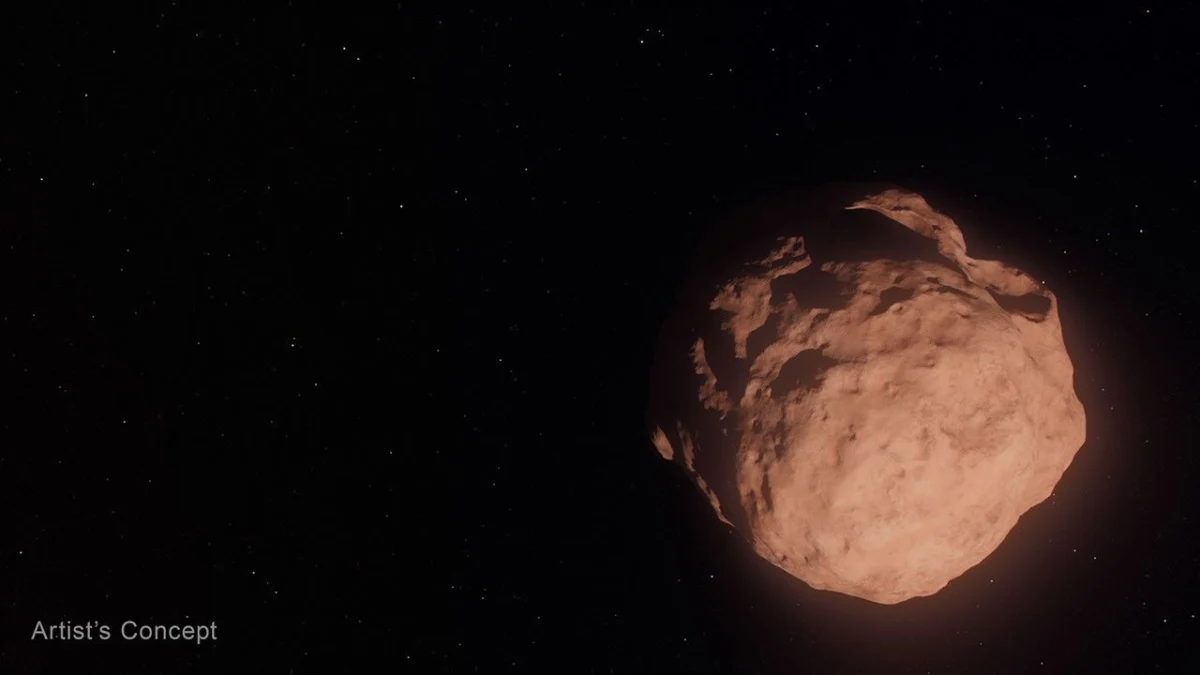
In a groundbreaking collaborative effort, NASA’s venerable Hubble Space Telescope and the cutting-edge James Webb Space Telescope have for the first time synergistically peered into the frigid depths of our solar system, revealing unprecedented details about Trans-Neptunian Objects (TNOs). This dual observation campaign, the deepest TNO survey to date, has yielded surprising discoveries regarding the size distribution and surface compositions of these primordial relics, challenging existing models of early planet formation. Among the most notable findings are a lower-than-anticipated number of small TNOs and the perplexing observation that these distant, icy bodies retain their original colors, mirroring their larger counterparts despite expectations of collisional alteration.
These elusive objects, typically small, faint, and icy, reside in orbits beyond Neptune, predominantly within the vast expanse of the Kuiper Belt. They represent a crucial, "frozen" population of planetesimals—the solid building blocks that coalesced from a disk of dust and pebbles around the young Sun, eventually forming planets. Unlike the inner solar system where these planetesimals merged into full-sized worlds, beyond Neptune, this secondary accretion stage largely stalled, preserving a pristine record of the solar system’s nascent years. Observing them is an immense challenge; most TNOs are more than 100 million times dimmer than objects visible to the unaided eye, demanding the combined, specialized capabilities of humanity’s most powerful space observatories.
The Collaborative Observational Campaign
The coordinated observations involved research teams led by PhD candidates from the University of Victoria in Canada, operating under the guidance of the National Research Council of Canada, and Northern Arizona University in Flagstaff. These teams simultaneously focused on a specific patch of sky, leveraging Hubble’s unparalleled sensitivity in visible light and Webb’s acute vision in infrared wavelengths. This dual-wavelength approach was critical, as it allowed researchers to gather comprehensive data. Hubble captured the visible light reflected from the TNOs, providing insights into their general properties, while Webb’s infrared capabilities allowed for precise measurements of their thermal emission and spectral signatures, which are key to determining composition and accurate sizing.
The primary objective was to analyze the color, composition, and size distribution of 27 newly discovered, remarkably tiny and dim TNOs. One of these newly detected objects was so faint that observing it is akin to seeing a small swarm of fireflies on the Moon from Earth, highlighting the extraordinary sensitivity required for this research. The smallest TNO observed in this study measures approximately 3 miles (5 kilometers) in diameter, a feat that pushes the boundaries of detection five times beyond what is possible with the most sensitive ground-based telescopes. The findings from this extensive analysis were detailed in two complementary papers published recently in The Astronomical Journal.
Differentiating TNO Populations: Hot and Cold
The study meticulously examined two distinct dynamic classes of TNOs, each offering unique clues about the solar system’s evolutionary history:
-
Dynamically "Cold" TNOs: These objects are characterized by their relatively circular orbits around the Sun, which lie close to the plane of the solar system. Their orbital characteristics suggest they have remained largely undisturbed since their formation, effectively acting as "fossils" of the pristine outer solar nebula. They are believed to have formed in situ at their current distant locations.
-
Dynamically "Hot" TNOs: In contrast, these TNOs follow highly elliptical orbits and are often tilted significantly relative to the solar system’s plane. Their chaotic orbits are a testament to a more turbulent past. Scientists hypothesize that these "hot" TNOs originated closer to the Sun, specifically between the current orbits of Uranus and Neptune. They were subsequently scattered outwards to their present positions during a violent period early in the solar system’s history, likely driven by the gravitational migration of the gas giants—a phenomenon central to the "Nice model" of solar system evolution. This model posits that Jupiter, Saturn, Uranus, and Neptune underwent a period of orbital instability and migration, significantly reshaping the architecture of the outer solar system and scattering vast numbers of planetesimals.
Unexpected Findings: Color Consistency and Size Discrepancies
One of the most profound and unexpected discoveries from this study concerns the surface colors of these small TNOs. Prior to these observations, astronomers largely theorized that smaller TNOs, irrespective of their dynamic classification, would have undergone numerous collisions over billions of years. Such impacts were expected to alter their surface compositions, leading to observable differences in color compared to their larger, more massive counterparts, which might be more resistant to surface alteration or have deeper layers.
However, the Hubble and Webb data presented a different picture. The small bodies appear to retain surface colors consistent with their larger family members. This implies that collisions in the outer solar system may not be as frequent or as disruptive as previously modeled, or that TNOs possess an inherent ability to preserve their primordial, pre-collision compositions, perhaps through processes not yet fully understood.
Anastasia Morgan, a PhD candidate at Northern Arizona University who led the study on color and composition, articulated the significance of this finding: "You could imagine a scenario where getting knocked around and fragmented would change the surface composition, and then you would see a different surface color for tiny TNOs compared to their larger siblings. So it’s really fascinating to see that the smallest objects are somehow ‘remembering’ and preserving the history of how they were made." Co-author David Trilling, also from Northern Arizona University, added, "These dynamically ‘hot’ TNOs retain a signature of where they were born, even though they’ve been orbitally scrambled since then." Both the "hot" and "cold" populations, therefore, seem to have largely maintained their original surface colors since the very birth of the solar system, offering an unprecedented window into the chemical makeup of the early solar nebula.
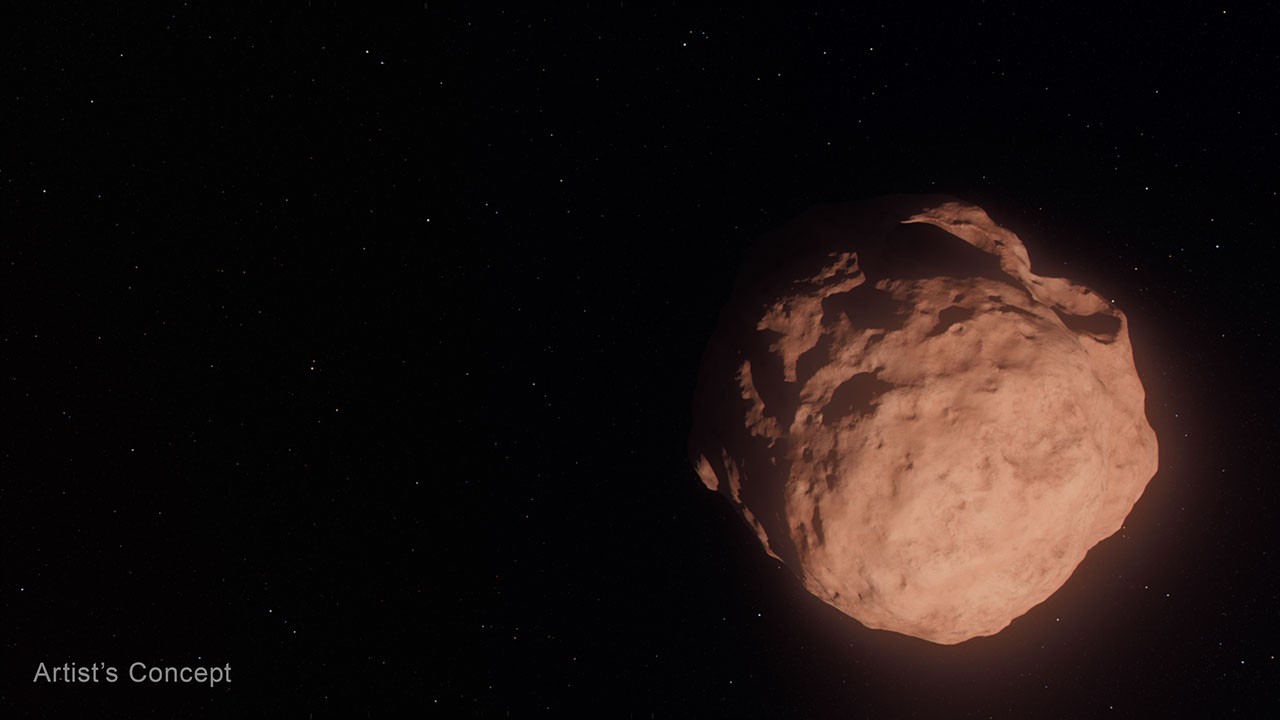
Furthermore, the Webb data allowed researchers to precisely measure the number of objects within each size category, yielding another surprising result. The overall size distributions for both the dynamically "cold" and "hot" populations were found to be remarkably similar. This consistency challenges some prevailing planet formation models which might predict different size distributions based on the varying conditions (temperature, density, turbulence) of the distinct regions where these populations are thought to have originated.
Marielle Eduardo, a PhD candidate at the University of Victoria who spearheaded the study on size distribution, commented on this uniformity: "It’s very interesting that the process of planetesimal formation ends up producing the same distribution of sizes for both cold and hot populations, despite forming in different regions of the early solar system. The process seems to be insensitive to disk conditions, producing similar planetesimal sizes whether the disk is hot or cold, and dense or fluffy." This suggests a more universal mechanism for planetesimal formation than previously assumed, one that is robust across different environmental parameters within the protoplanetary disk.
Perhaps the most significant quantitative finding was the unexpected scarcity of these very small bodies. Researchers found fewer of these diminutive TNOs than some planet formation models had predicted. These models often project a greater abundance of smaller fragments resulting from a cascade of collisions and accretion events during the early stages of planet formation. The observed deficit of small TNOs could imply that the initial processes of accretion were more efficient at sweeping up smaller particles into larger bodies, or that the collision rates in the early outer solar system were less fragmenting than anticipated.
Implications for Solar System Evolution and Planetesimal Theory
These findings carry profound implications for our understanding of how planets, including Earth, came to be. Trans-Neptunian Objects are effectively "time capsules" from the solar system’s infancy, preserving the conditions and processes that existed billions of years ago.
The consistency in surface colors, particularly among the dynamically "hot" TNOs, suggests that the intense scattering events associated with the gas giant migration did not significantly resurface these objects. This could mean that the surfaces are more resilient than thought, or that the material making up these surfaces is homogenous throughout the object’s interior, making surface alterations less discernible. Alternatively, the rate of destructive collisions in the outer solar system might have been lower than theoretical predictions, leaving their primordial surfaces relatively intact. This forces a re-evaluation of the collisional environment in the Kuiper Belt and beyond.
The uniformity in size distribution between the "hot" and "cold" populations also presents a compelling puzzle. If "hot" TNOs formed in a denser, warmer region closer to the Sun and were later scattered, one might expect their formation environment to imprint a different size distribution compared to "cold" TNOs that formed further out in a colder, perhaps less dense, part of the disk. The observed similarity suggests that the fundamental physics governing planetesimal formation—the initial clumping of dust and pebbles—might be remarkably consistent across varying conditions within the protoplanetary disk. This insight could help refine models that describe how centimeter-sized pebbles aggregate into kilometer-sized planetesimals, a critical and still not fully understood step in planet formation.
The deficit of small TNOs, compared to some theoretical predictions, also prompts a re-examination of accretion models. It may indicate that the growth process from small particles to larger planetesimals was either more rapid and efficient, sweeping up smaller fragments before they could accumulate, or that disruptive collisions were less prevalent than models suggest, leading to fewer small remnants. This could necessitate adjustments to the parameters used in simulations of the early solar nebula.
The Enduring Legacy of Space Telescopes
This project stands as a testament to the unparalleled capabilities unlocked when advanced space observatories work in concert. Hubble, with its sharp vision across ultraviolet and visible light, has provided a continuous stream of groundbreaking discoveries for over three decades, fundamentally shaping our understanding of the universe. Its ability to resolve distant objects with exquisite detail allowed for the initial detection and characterization of these faint TNOs in the visible spectrum.
The James Webb Space Telescope, the world’s premier space science observatory, then complemented Hubble’s observations with its unparalleled infrared sensitivity. Webb’s ability to detect the faint thermal glow and subtle spectral signatures of these extremely cold and distant objects was indispensable for determining their precise sizes and compositions. Without Webb’s infrared data, the detailed analysis of surface composition and the accurate measurement of the objects’ diameters would have been impossible. The synergy between these two iconic telescopes provided a holistic view that neither could have achieved alone.
This collaborative triumph underscores the ongoing importance of NASA’s space telescope fleet, developed through international partnerships with agencies like ESA (European Space Agency) and CSA (Canadian Space Agency). As scientists continue to unravel the mysteries of our solar system and beyond, the combined power of instruments like Hubble and Webb will remain crucial, pushing the boundaries of discovery and refining our understanding of our cosmic origins. Future observations, perhaps with even longer exposure times or focusing on different regions of the Kuiper Belt, will undoubtedly build upon these surprising findings, helping to solve the enduring puzzles of planet formation and the evolution of our solar neighborhood.
To learn more about NASA’s space telescopes, visit:
https://science.nasa.gov/universe