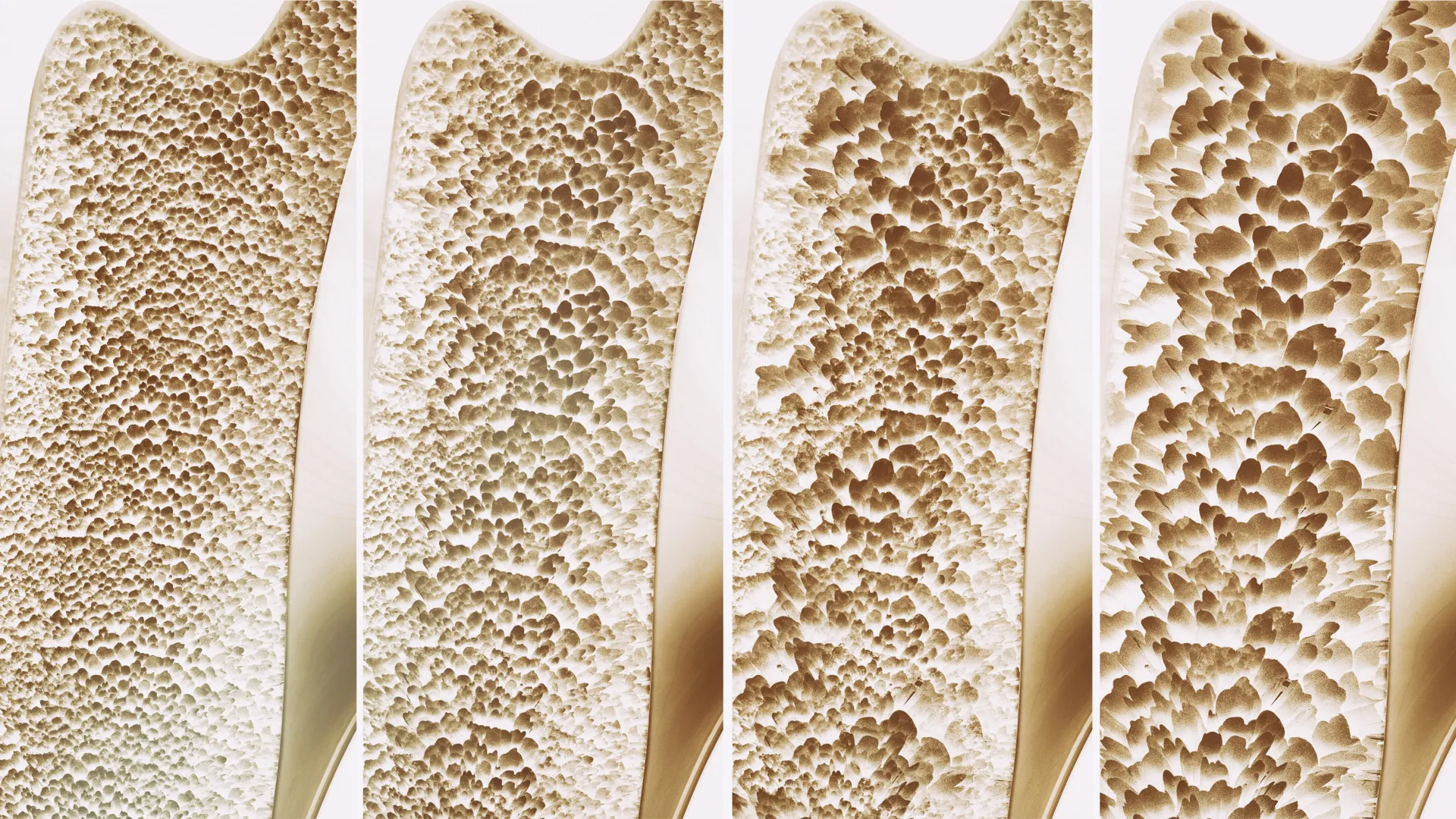
Osteoporosis, a debilitating condition characterized by weakened bones and an elevated risk of fractures, affects an estimated 200 million people worldwide, presenting a persistent and significant challenge for medical professionals seeking long-term, safe therapeutic interventions. In Germany alone, approximately six million individuals grapple with this disease, with women disproportionately affected. The limitations and potential side effects associated with current treatments have spurred a global quest for novel biological targets that could facilitate the preservation or regeneration of bone tissue. In a significant stride forward, scientists at Leipzig University have identified a key player in maintaining bone integrity: the G-protein coupled receptor 133 (GPR133), a receptor that appears to hold substantial promise in fortifying bone structure.
Unveiling GPR133: A Critical Regulator of Bone Health
GPR133 belongs to the Adhesion G protein-coupled receptors (aGPCRs) family, a group of cell surface receptors crucial for cellular communication and response to external stimuli. While this family remains an area of intensive research with many aspects still under investigation, the recent findings from Leipzig University underscore GPR133’s pivotal role in the intricate processes that govern bone formation and maintenance.
The study, published in a leading peer-reviewed scientific journal, details how genetic impairments affecting GPR133 in laboratory mice led to early-onset bone density loss, mirroring the progression of osteoporosis in humans. This observation provided a critical clue to the receptor’s significance. Furthermore, the research team utilized a recently identified compound, AP503, a stimulator of GPR133 discovered through advanced computer-assisted screening, to investigate its therapeutic potential. The results were compelling: AP503 demonstrated a remarkable ability to significantly enhance bone strength in both healthy mice and those exhibiting osteoporotic bone loss.
"Our findings suggest that GPR133 is not merely a passive participant in cellular signaling but an active regulator of bone homeostasis," stated Professor Ines Liebscher, the lead investigator of the study and a distinguished researcher at the Rudolf Schönheimer Institute of Biochemistry at Leipzig University’s Faculty of Medicine. "The observation of accelerated bone density loss in mice with compromised GPR133 function provides strong genetic evidence for its critical role. More importantly, our intervention with AP503 offers a tangible demonstration of how stimulating this receptor can translate into tangible improvements in bone quality."
The implications of this discovery are substantial, positioning GPR133 as a highly promising target for the development of next-generation osteoporosis therapies. The ability of AP503 to not only prevent but also potentially reverse bone loss by increasing bone strength in models of osteoporosis signifies a major breakthrough in the search for effective treatments.
The Mechanistic Pathway: How GPR133 Orchestrates Bone Remodeling
Delving deeper into the mechanisms underlying GPR133’s influence on bone health, the research revealed its intricate interaction with the physical forces and cellular communications within bone tissue. The receptor appears to act as a sensor, responding to mechanical cues and the signals exchanged between adjacent bone cells. Upon activation, GPR133 initiates a cascade of intracellular signaling events that precisely modulate the delicate equilibrium between bone-forming cells and bone-resorbing cells.
Bone tissue is a dynamic and constantly remodeling structure, maintained by a perpetual interplay between osteoblasts and osteoclasts. Osteoblasts are the architects of new bone, responsible for synthesizing and depositing the mineralized matrix. Conversely, osteoclasts are the demolition crew, responsible for breaking down and reabsorbing old or damaged bone tissue. This continuous cycle of formation and resorption is essential for maintaining skeletal integrity, adapting to mechanical stress, and repairing micro-damage. A healthy skeleton relies on a finely tuned balance between these two cellular populations.
The study demonstrated that activation of GPR133 favorably shifts this balance. By promoting the activity of osteoblasts and concurrently suppressing the function of osteoclasts, GPR133 stimulation steers the remodeling process towards increased bone formation and reduced bone breakdown. This dual action is crucial for building denser, stronger, and more resilient bone.
AP503, by mimicking the natural activating signals of GPR133, offers a potential therapeutic avenue to harness this beneficial signaling pathway. The prospect of a compound that can either bolster existing bone strength or facilitate the restoration of bone mass in individuals suffering from osteoporosis is particularly exciting. This could hold significant promise for conditions such as postmenopausal osteoporosis, where a sharp decline in estrogen levels accelerates bone loss, significantly increasing fracture risk in women.
Beyond Bone: GPR133’s Potential Impact on Skeletal Muscle
Adding another layer of significance to these findings, the research suggests that the benefits of GPR133 activation may extend beyond skeletal health to encompass muscle function as well. In a related earlier study conducted by the same Leipzig University research group, activation of GPR133 with AP503 was found to significantly strengthen skeletal muscle.
"The simultaneous demonstration of bone strengthening in our latest study, following our previous findings on muscle enhancement, underscores the profound therapeutic potential of GPR133 for an aging population," commented Dr. Juliane Lehmann, the lead author of the current study and a dedicated researcher at the Rudolf Schönheimer Institute of Biochemistry. "As individuals age, they often experience a concurrent decline in both bone density and muscle mass and strength. A treatment that can positively impact both of these critical tissues could offer a holistic approach to improving healthspan and quality of life in older adults."
The synergistic benefits of improved bone and muscle health are particularly relevant for the elderly. Robust skeletal muscles contribute to improved mobility, balance, and stability, thereby reducing the risk of falls, which are a major cause of fractures in individuals with osteoporosis. Stronger bones, in turn, offer a crucial defense against the devastating consequences of fractures, such as chronic pain, loss of independence, and reduced life expectancy.
The Leipzig team is actively pursuing several follow-up research projects to deepen their understanding of GPR133’s complex functions. These investigations aim to elucidate the precise molecular mechanisms through which GPR133 influences bone and muscle cells and to explore its potential applications in treating other diseases where these tissues are compromised. Furthermore, the researchers are continuing to map the broader physiological roles of GPR133 throughout the body, seeking to uncover its full spectrum of biological activities.
A Decade of Pioneering Research into GPCRs at Leipzig University
The groundbreaking work on GPR133 builds upon a long-standing commitment by Leipzig University to advance the understanding of adhesion G protein-coupled receptors. For over a decade, these receptors have been a central research focus, significantly driven by the establishment of the Collaborative Research Center 1423, "Structural Dynamics of GPCR Activation and Signaling." This interdisciplinary initiative brings together leading scientists to unravel the complex conformational changes, activation pathways, and signal transduction mechanisms employed by GPCRs. Leipzig University has firmly established itself as an internationally recognized hub for cutting-edge research in this field, fostering an environment conducive to significant scientific discoveries.
The ongoing research into GPR133 exemplifies the university’s dedication to translating fundamental biological insights into potential clinical applications. The journey from identifying a receptor’s role in a disease model to developing a viable therapeutic agent is a long and complex one, involving rigorous preclinical testing, extensive clinical trials, and regulatory approvals. However, the current findings offer a beacon of hope for millions affected by osteoporosis and age-related muscle decline, paving the way for a future where skeletal health can be more effectively maintained and restored.