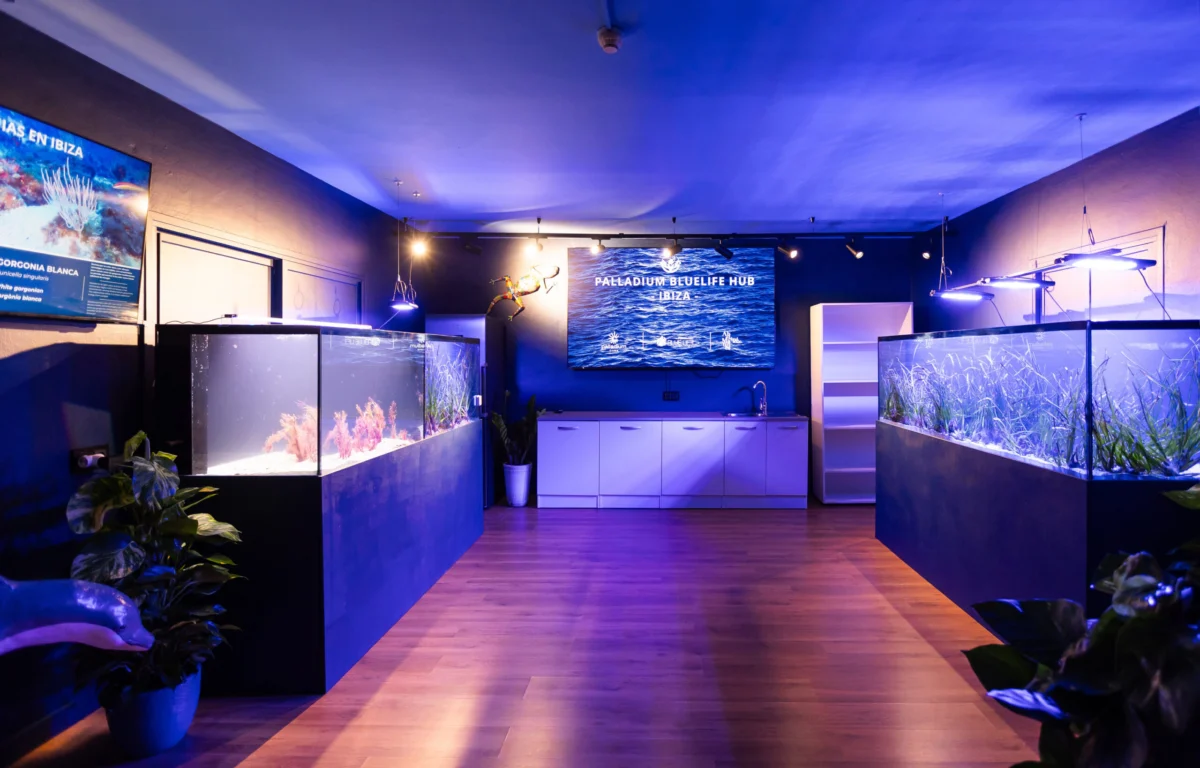
The hospitality sector has long prioritized coral reef restoration as the centerpiece of its marine environmental efforts, but a significant shift is occurring as industry leaders recognize the foundational role of other aquatic flora. Palladium Hotel Group, a major international hotel operator based in Spain, has officially inaugurated a state-of-the-art marine conservation lab at the Grand Palladium Select Palace Ibiza. This facility is specifically designed to study, cultivate, and protect seagrass—a critical yet frequently overlooked component of the Mediterranean’s ecological health. By integrating a seagrass nursery directly into the resort infrastructure, the group is providing guests with an immersive educational experience while contributing tangible scientific data to regional conservation efforts.
The initiative represents a strategic pivot in how luxury resorts approach corporate social responsibility (CSR) and Environmental, Social, and Governance (ESG) criteria. Beyond mere aesthetic preservation, the project targets the biological engine of the Balearic Islands’ coastal waters. Guests at the Grand Palladium Select Palace Ibiza can now participate in guided tours of the nursery and join specialized diving expeditions to witness restoration sites firsthand. This "citizen science" approach aims to bridge the gap between high-end tourism and active environmental stewardship, fostering a deeper understanding of the fragile balance required to maintain the pristine conditions that draw millions of visitors to Ibiza annually.
The Ecological Significance of Posidonia Oceanica
To understand the weight of Palladium Hotel Group’s investment, one must look at the specific species at the heart of the project: Posidonia oceanica. Often referred to as the "lungs of the Mediterranean," this seagrass is endemic to the region and forms vast underwater meadows that are among the most productive ecosystems on Earth. The meadows surrounding Ibiza and its sister island, Formentera, were declared a UNESCO World Heritage site in 1999, highlighting their global importance.
Seagrass serves several vital functions that directly impact both the environment and the tourism economy. Firstly, it acts as a massive carbon sink. Despite covering less than 0.2% of the ocean floor, seagrass meadows are responsible for storing approximately 10% to 18% of the total oceanic carbon. In terms of efficiency, Posidonia oceanica can sequester carbon at rates significantly higher than tropical rainforests, making it a front-line defense against anthropogenic climate change.
Secondly, these meadows are essential for maintaining water clarity and coastal stability. The dense blades of seagrass trap sediments and particulate matter, filtering the water and preventing the turbidity that can turn crystal-clear bays cloudy. Furthermore, the root systems stabilize the seabed, while the accumulation of dead leaves and rhizomes forms "mats" that break the energy of incoming waves, significantly reducing coastal erosion. The white sand beaches for which Ibiza is world-renowned are often the result of calcium carbonate produced by organisms living within these seagrass meadows. Without the protection of Posidonia, many of the Mediterranean’s iconic beaches would eventually disappear.
A Chronology of Conservation and Sustainability in the Balearics
The launch of the marine conservation lab at Grand Palladium Select Palace Ibiza is the latest milestone in a decades-long timeline of environmental awareness in the Balearic Islands.
- 1999: UNESCO recognizes the Posidonia oceanica meadows between Ibiza and Formentera as a World Heritage site, citing their role in maintaining the Mediterranean’s marine biodiversity.
- 2018: The Balearic Islands Government passes a landmark decree for the protection of Posidonia oceanica, prohibiting the anchoring of boats on seagrass meadows and establishing a permanent monitoring network.
- 2021: Palladium Hotel Group accelerates its "Palladium Cares" program, focusing on reducing single-use plastics and improving energy efficiency across its global portfolio.
- 2023: Initial planning for a dedicated marine lab begins, with scientific consultants brought in to design a facility capable of growing seagrass in a controlled resort environment.
- 2024: The marine conservation lab officially opens at the Grand Palladium Select Palace Ibiza, marking the first time a major resort in the region has integrated a functional seagrass nursery into its guest experience.
This timeline illustrates a transition from government-led regulation to private-sector proactive participation. By moving from compliance to active restoration, Palladium Hotel Group is setting a precedent for how the hospitality industry can utilize its resources to support local environmental legislation.
Supporting Data and the Economic Case for Seagrass
The decision to invest in seagrass restoration is supported by compelling environmental and economic data. According to the United Nations Environment Programme (UNEP), the world loses an area of seagrass roughly the size of two football fields every hour. In the Mediterranean, it is estimated that between 13% and 50% of Posidonia meadows have been lost since the mid-20th century due to coastal development, pollution, and mechanical damage from boat anchors.
The economic value of these ecosystems is equally staggering. Researchers estimate that the ecosystem services provided by seagrass—including carbon sequestration, fisheries support, and coastal protection—are worth over $19,000 per hectare per year. For a tourism-dependent economy like Ibiza, the value is even higher. Clear water and stable beaches are the primary drivers of the island’s multi-billion-dollar tourism industry. A decline in seagrass health leads directly to a decline in water quality and beach width, which in turn reduces the "destination appeal" and property values of coastal resorts.
Furthermore, the lab’s focus on carbon storage aligns with the growing "Blue Carbon" market. As corporations look for high-quality carbon offsets, the restoration of seagrass meadows represents one of the most effective nature-based solutions available. Palladium’s nursery serves as a pilot for how large-scale restoration might be funded and executed through public-private partnerships.
Official Responses and Strategic Implications
While specific executive quotes were not released in the initial announcement, the project aligns with the stated goals of Palladium Hotel Group’s leadership regarding sustainability. In previous industry forums, the group has emphasized that "sustainability is no longer an option but a necessity for the survival of the tourism model."
Regional environmental authorities have also signaled their support for such initiatives. Representatives from the Balearic Ministry of the Environment have frequently called for greater involvement from the private sector in protecting the islands’ natural assets. The integration of the lab within a resort environment is seen as a major win for public awareness. While the government can enforce laws, a resort can provide the "emotional connection" needed to change tourist behavior, such as educating boaters on the importance of not anchoring in seagrass zones.
The lab also serves a strategic function within the competitive luxury market. Today’s high-net-worth travelers are increasingly seeking "purpose-driven" travel. By offering guests the opportunity to participate in conservation, Palladium is differentiating its brand and appealing to a demographic that values environmental ethics as much as luxury amenities.
Broader Impact and the Future of Regenerative Tourism
The opening of the marine conservation lab signifies a move toward "regenerative tourism"—a concept that goes beyond "sustainable tourism." While sustainability aims to minimize the negative impact of travel, regenerative tourism seeks to actively improve and restore the destination.
The success of the Grand Palladium Select Palace Ibiza lab will likely be monitored by other global hotel chains. If the model proves successful in both biological output and guest engagement, it could lead to a proliferation of similar labs across the Mediterranean and beyond. For instance, hotels in the Caribbean could adapt this model for mangroves, while those in the Indo-Pacific could focus on kelp forests.
However, the project faces significant challenges. Posidonia oceanica is a slow-growing species, with some meadows estimated to be thousands of years old. Restoration is a long-term commitment that requires consistent scientific oversight and funding. Furthermore, rising ocean temperatures—a result of global climate change—pose a constant threat to newly planted seagrass. The Mediterranean is warming faster than the global average, which could lead to "thermal stress" that inhibits the growth of Posidonia.
Conclusion: A New Standard for Coastal Hospitality
The Palladium Hotel Group’s marine conservation lab at the Grand Palladium Select Palace Ibiza is a sophisticated response to the dual pressures of climate change and tourism-related environmental degradation. By focusing on seagrass, the group is addressing a fundamental pillar of the marine ecosystem that has historically been overshadowed by more "charismatic" conservation targets like coral reefs or marine megafauna.
Through a combination of scientific research, guest education, and active restoration, the project creates a circular model of conservation where the resort’s success is directly tied to the health of the surrounding sea. As the hospitality industry continues to evolve, the integration of science-based environmental restoration into the guest experience may become the new standard for luxury travel, ensuring that the natural beauty that attracts visitors today remains intact for future generations. The lab in Ibiza is not just a facility; it is a statement that the future of tourism must be rooted in the preservation of the very ecosystems that make travel possible.