Three prominent Hong Kong pro-democracy activists, key figures in the organization of annual vigils commemorating the 1989 Tiananmen Square crackdown in Beijing, have been handed lengthy prison sentences ranging up to seven years and three months. The convictions, under the city’s sweeping national security law, underscore the dramatic shift in Hong Kong’s political landscape and the tightening grip on dissent, effectively silencing public remembrance of one of modern China’s most sensitive historical events.
Sentencing Details and Courtroom Demeanor
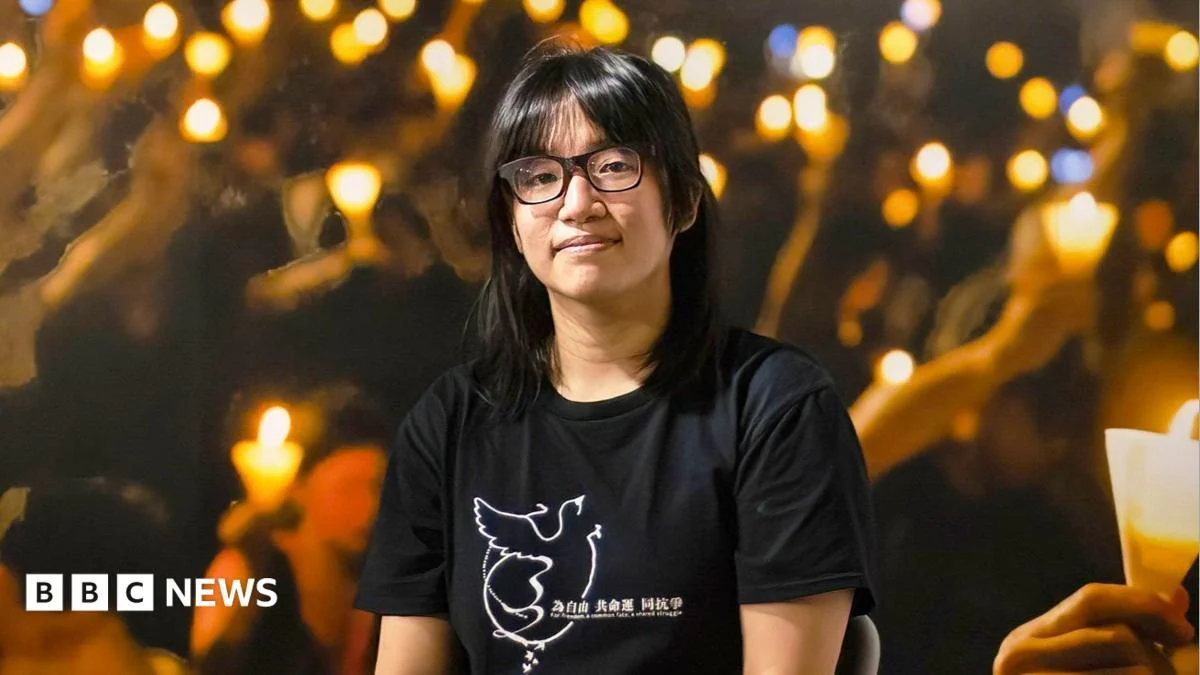
On a somber Friday in Hong Kong, former lawmaker Lee Cheuk-yan, 69, and barrister Chow Hang-tung, 41, received sentences of seven years and seven years and three months, respectively. Both were convicted last month of "inciting others to subvert state power," a serious charge under the National Security Law (NSL) that carries a maximum penalty of 10 years in prison. A third defendant, veteran activist Albert Ho, 74, who had pleaded guilty to the same charge in January, was sentenced to five years in prison.
The court proceedings revealed moments of defiance and emotion. As the session began, Chow and Lee stood, offering smiles to a public gallery filled with supporters, while Ho maintained a serious expression. Following the pronouncement of their sentences, Lee was observed in what appeared to be a moment of prayer as he was escorted from the dock, while Chow blew a kiss to those gathered in the public gallery, a gesture of continued resolve amidst adversity. Lee’s wife, Elizabeth Tang, conveyed her profound sadness to Reuters, stating, "I cannot imagine that he has to spend another three years in jail, it is really unacceptable," and indicated Lee’s intention to appeal. Chow’s mother, Medina, addressed a crowd outside the courthouse, urging them not to be "overly saddened" by the verdict, encouraging them to "not lose heart" and "above all, do not feel guilty."
The Hong Kong Alliance and its Legacy of Remembrance
The defendants were leading figures of the now-disbanded Hong Kong Alliance in Support of Patriotic Democratic Movements of China (HK Alliance). Founded in May 1989, amidst the burgeoning pro-democracy protests in Beijing, the Alliance quickly became a pivotal force in advocating for democratic reform and accountability for the Tiananmen crackdown. For over three decades, the Alliance championed five core demands: release of dissidents, vindication of the 1989 pro-democracy movement, accountability for the crackdown, an end to one-party rule, and the establishment of a democratic China.
Central to the Alliance’s mission, and indeed to Hong Kong’s identity as a beacon of freedom within China, were the annual candlelight vigils held in Victoria Park. These gatherings, attracting tens of thousands, and sometimes over 100,000 according to organizers, served as a poignant public commemoration of the events of June 4, 1989. For years, Hong Kong and Macau stood as the sole territories on Chinese soil where such public memorials were tolerated, allowing a collective expression of grief and a demand for justice that was fiercely suppressed in mainland China. The court, in its August summary, specifically cited the Alliance’s slogan of "ending one-party dictatorship" as having incited people to undermine the Chinese Communist Party, forming a key part of the prosecution’s case.
In addition to the prison sentences, the court also imposed a hefty fine of HK$1.5 million (approximately $191,000; £142,000) on the Hong Kong Alliance itself, further cementing the authorities’ efforts to erase the group’s legacy and financial capacity.
A Brief Chronology of the Tiananmen Square Crackdown
To fully appreciate the significance of these sentences, it is crucial to revisit the historical context they commemorate. The Tiananmen Square protests of 1989 began in mid-April as student-led demonstrations in Beijing, advocating for greater political freedoms, democracy, and an end to corruption. What started as a student mourning for reformist Communist Party leader Hu Yaobang quickly escalated into a mass movement, drawing in workers, intellectuals, and citizens across various cities. By late May, hundreds of thousands had gathered in Tiananmen Square, occupying the area and engaging in hunger strikes.
The Chinese Communist Party leadership initially wavered but ultimately decided on a forceful suppression. On May 20, martial law was declared in parts of Beijing. In the early hours of June 4, 1989, the People’s Liberation Army (PLA) moved into Beijing, using tanks and armed troops to clear the square and surrounding areas. The crackdown resulted in an unknown number of casualties. While official Chinese sources initially reported hundreds of deaths, Western estimates and eyewitness accounts suggest a death toll ranging from several hundred to several thousands, with many more injured. The event remains a deeply sensitive and heavily censored topic in mainland China, where any public discussion or commemoration is strictly forbidden. The Chinese government maintains that its actions were necessary to restore order and stability.
The Erosion of Freedoms: From Vigil Bans to the National Security Law
The ability to openly commemorate Tiananmen Square in Hong Kong was a powerful symbol of the city’s unique autonomy under the "One Country, Two Systems" framework, which guaranteed its separate legal system and civil liberties for 50 years after the 1997 handover from British rule. However, this freedom began to systematically erode in recent years.
In 2020, for the first time in three decades, Hong Kong authorities banned the annual Tiananmen vigil, citing public health concerns related to the COVID-19 pandemic. The ban, which has never been lifted, was widely seen by critics as a politically motivated move to suppress dissent rather than a genuine health measure.
That same year, in June 2020, Beijing imposed the National Security Law (NSL) on Hong Kong, bypassing the city’s legislature. The law criminalizes a broad range of acts under four categories: secession, subversion, terrorism, and collusion with foreign forces. Critics, including international legal experts and human rights organizations, argue that the NSL has fundamentally undermined Hong Kong’s autonomy, rule of law, and guaranteed freedoms, including freedom of speech, assembly, and association. They contend that its vague definitions and extraterritorial reach have created a pervasive "chilling effect," fostering a climate of fear and self-censorship among the populace, civil society groups, and media.
Authorities in Hong Kong and Beijing, however, steadfastly maintain that the NSL is a necessary measure to restore stability and order after the widespread pro-democracy protests of 2019, asserting that it targets only a small number of criminals and is vital for national security. They argue that the law has brought an end to chaos and ensured Hong Kong’s long-term prosperity.
The Legal Battle and Defence Stance
The charges against Lee, Chow, and Ho were initiated in 2021. The prosecution focused heavily on the Alliance’s long-standing calls for an end to one-party rule and their efforts to encourage public participation in the banned vigils. The court’s interpretation of "subverting state power" under the NSL has been a point of contention. Legal scholars and human rights advocates argue that applying this charge to peaceful advocacy and historical remembrance sets a dangerous precedent, effectively criminalizing political speech that is critical of the Chinese Communist Party.
During her trial, Chow Hang-tung, a vocal advocate and human rights lawyer, adopted a defiant stance, famously telling the court in May that "the law itself was on trial." She consistently argued that the Alliance’s actions were protected under Hong Kong’s Basic Law and that commemorating historical events and advocating for democratic reform were legitimate exercises of fundamental rights. Her willingness to "pay the price for fighting for democracy," as she told the BBC before her 2022 arrest, exemplifies the resolve of many activists facing increasingly severe legal consequences.
Widespread International Condemnation and Reactions
The sentences have drawn sharp condemnation from international bodies and human rights organizations, highlighting global concerns about the erosion of civil liberties in Hong Kong.
The office of United Nations Human Rights Chief Volker Türk issued a strong statement, calling for "these sentences to be quashed." The UN’s consistent stance has been that the NSL’s broad provisions are inconsistent with international human rights law and have led to a rapid deterioration of fundamental freedoms in Hong Kong.
Amnesty International’s Deputy Regional Director Sarah Brooks described the sentencing as a "triple tragedy: for the activists being unjustly punished; the survivors and victims of the Tiananmen crackdown itself; and the generations of Hongkongers denied the space to discuss one of the most consequential events in modern Chinese history." Her statement underscores the layered impact of these judicial outcomes, affecting not just the individuals but the collective memory and future discourse of an entire city.
Human Rights Watch echoed this sentiment, stating that "the harsh sentences against peaceful Tiananmen vigil organisers expose the cruelty and insecurity of a government afraid of memory and the people." This critique suggests that the government’s actions are driven by a fear of historical truth and popular dissent, rather than a genuine concern for national security.
These international reactions align with broader concerns expressed by Western governments, including the United States, United Kingdom, and European Union, which have repeatedly voiced alarm over the implementation of the NSL and its impact on Hong Kong’s autonomy and human rights. While Beijing and Hong Kong authorities consistently dismiss such criticism as interference in internal affairs, the international pressure continues to mount.
Broader Implications for Hong Kong’s Future
The sentencing of Lee Cheuk-yan, Chow Hang-tung, and Albert Ho marks a profound moment in Hong Kong’s post-handover history, signaling an unequivocal end to public commemoration of Tiananmen Square and a severe contraction of the city’s civic space.
- Chilling Effect: The lengthy prison terms are expected to intensify the "chilling effect" already prevalent in Hong Kong. Civil society organizations, independent media, and even individual citizens will likely exercise extreme caution in expressing dissenting views or participating in any form of protest, fearing similar charges under the NSL.
- Redefinition of "Subversion": The court’s interpretation of "inciting subversion" to include peaceful advocacy for democratic change and criticism of the Communist Party sets a dangerous legal precedent. It effectively redefines legitimate political discourse as a national security threat, fundamentally altering the parameters of free speech and assembly in Hong Kong.
- Erosion of "One Country, Two Systems": These convictions further dismantle the framework of "One Country, Two Systems." The unique freedoms and autonomy promised to Hong Kong are increasingly being superseded by mainland China’s political imperatives and legal interpretations, blurring the lines between Hong Kong’s common law system and mainland China’s authoritarian legal framework.
- International Standing: Hong Kong’s reputation as a global financial hub built on the rule of law and respect for freedoms is under severe strain. The increasing political risk and shrinking civic space may deter international businesses and talent, impacting the city’s long-term economic prosperity and global standing.
- Historical Memory: Perhaps most significantly, these sentences represent a concerted effort to erase historical memory. By criminalizing the commemoration of Tiananmen, authorities aim to control the narrative and prevent any challenge to Beijing’s official version of history, effectively severing Hong Kong’s unique link to a critical moment in Chinese history.
The sentences handed down to these three veteran activists are more than just legal judgments; they are a powerful statement about the future of dissent, memory, and freedom in a city grappling with its rapidly transforming identity under an increasingly assertive Beijing. The fight for democracy and human rights in Hong Kong continues, albeit under increasingly challenging and perilous circumstances.