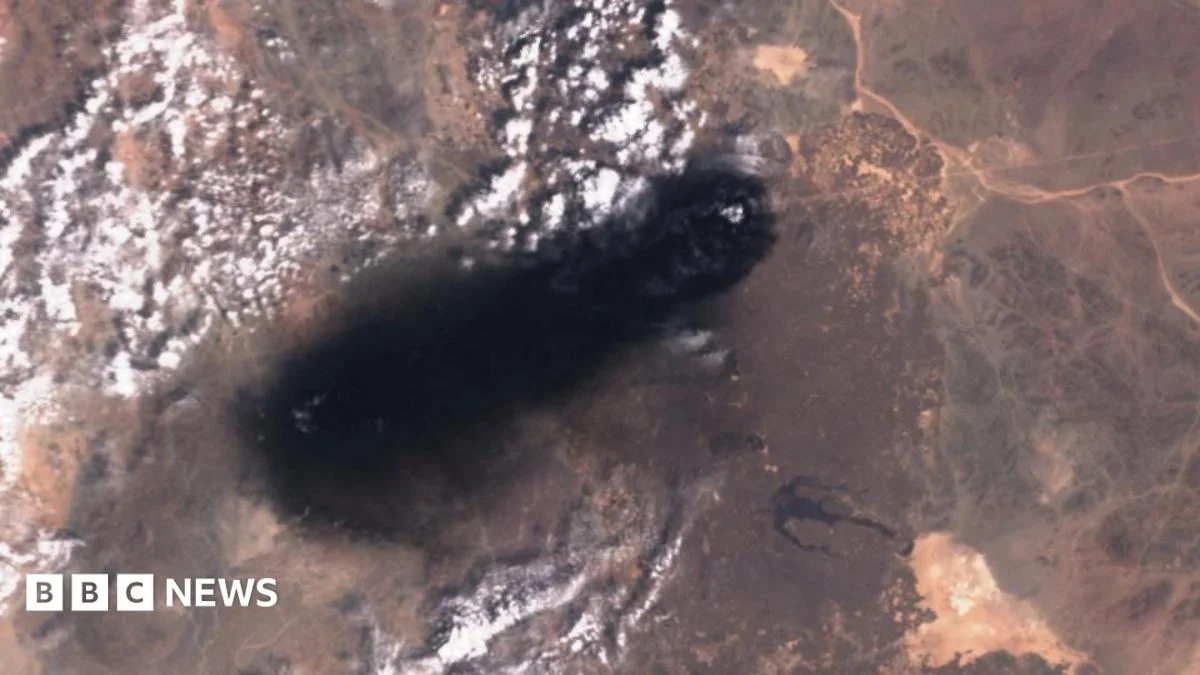
Saudi Arabia, the world’s foremost crude oil exporter, has confirmed the operational closure of its critical East-West pipeline following a sophisticated drone attack launched from Iraqi territory. The incident, which caused physical damage and resulted in some injuries, represents a significant escalation in regional hostilities, placing renewed pressure on global oil shipping routes and highlighting the precarious nature of Middle Eastern stability amidst ongoing geopolitical friction. The 1,200-kilometer (745-mile) pipeline, also known as Petroline, serves as a vital artery allowing Saudi Arabia to bypass the geopolitically sensitive Strait of Hormuz, making its disruption a matter of grave concern for global energy markets and international security.
The attack has been officially acknowledged by Iraq, which promptly launched an investigation and took disciplinary action against a senior military official. Baghdad confirmed that the drones originated from its Maysan governorate, a province bordering Iran, signaling potential complexities within Iraq’s own security apparatus and raising questions about the influence of various armed groups. This development unfolds against a backdrop of intensifying regional conflict, including a major advance by Iranian-backed Houthi rebels in Yemen and the protracted US-Iran standoff, now stretching into its seventh month of heightened tensions. Riyadh’s immediate response included the precautionary shutdown of the pipeline, with satellite imagery corroborating reports of scorched ground and smoke near the attack sites. While the full extent of the damage is still under assessment, initial reports from news agencies, citing ship tracking companies and energy analysts, indicate that the pipeline typically transports between 4% and 5% of the global oil supply, underscoring the potential for substantial market impact if the closure is prolonged.
The East-West Pipeline: A Strategic Lifeline and Its Vulnerability
The East-West pipeline, officially known as the Petroline, is an integral component of Saudi Arabia’s energy infrastructure and a strategic asset of global importance. Constructed in the early 1980s, its primary purpose was to provide an alternative export route for Saudi crude oil, allowing it to reach Red Sea terminals at Yanbu without having to transit the Persian Gulf and the Strait of Hormuz. This bypass capability is critical given the Strait of Hormuz’s geopolitical volatility, where approximately one-fifth of the world’s total oil consumption, or about 21 million barrels per day (bpd), passes through its narrow chokepoint. The Petroline’s original capacity was around 3 million bpd, which was later expanded to 5 million bpd, making it a crucial safety valve for global energy security in times of heightened tensions in the Persian Gulf.
The pipeline originates from the Abqaiq processing facility in the Eastern Province, one of the world’s largest oil stabilization plants, and stretches across the vast Saudi desert to its terminal on the Red Sea. Its ability to move significant volumes of crude oil directly to the Red Sea bypasses the need for supertankers to navigate the Strait of Hormuz, offering both strategic flexibility and enhanced security for Saudi oil exports. The targeting of such a vital piece of infrastructure underscores a concerning shift in tactics by non-state actors, demonstrating an evolving capability to strike at the heart of state-level economic lifelines. This incident reveals a critical vulnerability that global energy markets had largely considered a robust alternative to the Strait of Hormuz, forcing a re-evaluation of regional infrastructure security protocols.
Chronology of the Attack and Immediate Aftermath
The drone attack unfolded with alarming speed and precision, marking a new chapter in the regional conflict. While the exact time of the assault has not been publicly detailed by Saudi authorities, reports indicate it occurred in the early hours of Friday, impacting two pumping stations along the pipeline. These stations, specifically those located in Afif and Dawadmi regions, were reportedly targeted, leading to fires and operational disruptions.
- Early Friday: Unidentified drones strike two pumping stations (Afif and Dawadmi) along the East-West pipeline in Saudi Arabia. Initial reports suggest multiple drones were involved, indicating a coordinated strike.
- Friday Morning: Saudi Aramco, the state oil company, confirms the attack and initiates emergency protocols. As a precautionary measure to assess damage and ensure safety, the East-West pipeline is shut down.
- Friday Afternoon: Satellite imagery and local reports begin to emerge, showing signs of fire and smoke near the affected pumping stations, corroborating the extent of the incident. Saudi officials confirm the attack resulted in some injuries to personnel and structural damage, though a full assessment is ongoing.
- Later Friday: The Iraqi Prime Minister’s office issues a statement, admitting that the drone attack originated from its territory, specifically the Maysan governorate. Concurrently, Baghdad announces the removal of the operations commander in Maysan and initiates a comprehensive investigation into the incident, signaling an effort to distance itself from direct involvement while acknowledging the attack’s origin.
- Saturday: The Saudi Foreign Ministry issues a formal statement, confirming the attack, reiterating its right to self-defense, but also expressing support for Iraq’s efforts to prevent future attacks from its territory. This diplomatic overture follows a direct communication between the Saudi leadership and the Iraqi Prime Minister, indicating a desire to de-escalate tensions directly between the two states.
This sequence of events highlights the swift escalation and the rapid diplomatic response aimed at containing the immediate fallout between Saudi Arabia and Iraq, while the broader implications for regional security and global energy markets continue to unfold.
Iraq’s Response and Internal Dynamics: A Complex Picture
Iraq’s prompt admission of the attack’s origin and its subsequent actions reflect a complex interplay of internal political dynamics, security challenges, and regional pressures. The Maysan governorate, from where the drones reportedly launched, is a southern Iraqi province with a significant Shiite population and a long, porous border with Iran. This region, like many others in post-2003 Iraq, has seen the rise of various armed groups, including factions of the Popular Mobilization Forces (PMF or Hashd al-Shaabi), many of which have strong ideological and material ties to Iran.
The Iraqi government, led by its Prime Minister, faced immediate pressure to respond to the incident, both domestically and internationally. Admitting the attack originated from Iraqi soil was a politically sensitive move, risking accusations of complicity or inability to control its own territory. However, the swift removal of the Maysan operations commander and the launch of an investigation were designed to demonstrate Baghdad’s commitment to upholding its sovereignty, preventing its territory from being used as a launchpad for attacks against neighbors, and mitigating potential retaliatory measures from Saudi Arabia.
The incident underscores the profound challenges facing the Iraqi state. Despite efforts to rebuild its national institutions and consolidate control, the presence of various non-state armed actors, some operating with a degree of autonomy and external allegiances, remains a significant hurdle. These groups often possess advanced weaponry, including drones, and may act independently of, or even in defiance of, central government directives. The drone attack on the Saudi pipeline serves as a stark reminder of the broader regional proxy conflicts playing out within Iraq’s borders, with potential severe consequences for its stability and international relations. The Iraqi government’s pledge to "prevent attacks" launched from the country against neighboring states, as welcomed by Saudi Arabia, signals a mutual interest in de-escalation, yet the practicalities of enforcing such control over powerful, entrenched militias remain a formidable task.
The Broader Regional Context: A Crucible of Tensions
The drone attack on the East-West pipeline did not occur in a vacuum; it is a symptom of a deeply volatile Middle East, currently gripped by a confluence of escalating tensions. The broader regional context is characterized by the ongoing "US-Iran war," a phrase now commonly used to describe the protracted period of heightened confrontation, sanctions, and proxy engagements that has followed the US withdrawal from the Joint Comprehensive Plan of Action (JCPOA) in May 2018.
This strategic competition manifests in several key theaters:
- US-Iran Standoff: Since the re-imposition of crippling US sanctions on Iran’s oil exports and financial sector, Tehran has sought to exert pressure on the international community and its regional adversaries. This has included threats to close the Strait of Hormuz, alleged attacks on oil tankers in the Gulf of Oman, and the downing of a US drone. The drone attack on Saudi infrastructure could be interpreted as part of this broader strategy of asymmetric warfare, aimed at demonstrating Iran’s capacity to disrupt global energy flows and inflict economic pain without direct state-on-state confrontation.
- Yemen Conflict: The seven-year-long civil war in Yemen has become a primary arena for the Saudi-Iran proxy conflict. The Iranian-backed Houthi rebels have significantly advanced their capabilities, regularly launching drones and ballistic missiles into Saudi territory, targeting critical infrastructure like airports, oil facilities, and cities. The pipeline attack resonates with Houthi tactics, further blurring the lines of accountability and making it difficult to definitively attribute such sophisticated attacks without a thorough investigation. The ongoing Houthi advance puts additional pressure on global oil shipping routes, particularly those passing near Yemen, such as the Bab al-Mandab strait.
- Strait of Hormuz: The strategic waterway connecting the Persian Gulf to the open ocean remains a critical chokepoint. Iran has repeatedly threatened to close the Strait in response to US sanctions, creating constant anxiety in global oil markets. The East-West pipeline offers Saudi Arabia a degree of insulation from these threats, making the attack on it particularly significant as it targets this very bypass capability.
- Regional Proxy Networks: Iran’s foreign policy relies heavily on cultivating and supporting a network of allied non-state actors across the Middle East, including Hezbollah in Lebanon, various Shiite militias in Iraq, and the Houthis in Yemen. These proxies provide Tehran with strategic depth and the ability to project power and exert influence without direct military engagement, complicating attribution and response. The alleged origin of the drones from an Iraqi province bordering Iran fits within this broader pattern of proxy warfare.
The drone attack is a potent reminder that the Middle East remains a crucible of tensions, where localized conflicts and proxy battles can rapidly escalate into broader regional confrontations with global economic and security implications.
Global Oil Markets and Energy Security Implications
The attack on Saudi Arabia’s East-West pipeline sent immediate ripples through global oil markets, underscoring the extreme sensitivity of energy prices to geopolitical instability in the Middle East. While the pipeline was shut down as a precaution, the mere threat of prolonged disruption to a facility capable of transporting 4-5% of global oil supply (roughly 4-5 million barrels per day at full capacity) triggered a notable market reaction.
- Oil Price Spike: Following news of the attack, crude oil futures saw an immediate upward movement. Brent crude, the international benchmark, and West Texas Intermediate (WTI), the US benchmark, both registered increases, reflecting heightened supply concerns. Although initial price spikes often moderate as markets assess the actual damage and duration of disruption, the incident injected a new layer of geopolitical risk premium into oil prices.
- Supply Concerns: The closure of the East-West pipeline, even if temporary, reduces the flexibility of Saudi Arabia, the world’s largest crude exporter, to deliver oil to global markets, particularly those accessible via the Red Sea. While Saudi Arabia possesses substantial spare production capacity and strategic oil reserves, a prolonged outage of this magnitude could strain global supply, especially if other disruptions occur concurrently.
- Shipping Routes and Insurance: The attack further highlights the vulnerability of critical energy infrastructure, both on land and at sea. With renewed concerns over the safety of transit through the Strait of Hormuz and now the apparent vulnerability of land-based alternatives, shipping insurance premiums for vessels operating in the region could see an increase, adding to the cost of oil transportation.
- Impact on Saudi Economy: For Saudi Arabia, a sustained closure of the Petroline would necessitate diverting more crude through the Strait of Hormuz, potentially increasing its reliance on the very chokepoint it sought to bypass for security reasons. It could also impact the kingdom’s revenue streams if export volumes are significantly curtailed over an extended period, though this is unlikely given its alternative export capabilities and strategic reserves.
- Energy Security Reassessment: The incident forces a re-evaluation of energy security strategies globally. Nations dependent on Middle Eastern oil must consider the increasing sophistication and reach of non-state actors capable of targeting vital infrastructure. This could lead to calls for greater international cooperation in protecting critical energy assets and for exploring diversification of supply sources where feasible.
The drone attack serves as a stark reminder that even with robust bypass options and strategic reserves, the global oil supply chain remains inherently vulnerable to regional conflicts and asymmetric threats.
International Reactions and Calls for De-escalation
The drone attack on Saudi Arabia’s critical oil pipeline drew swift attention and expressions of concern from the international community, reflecting widespread apprehension about escalating tensions in the Middle East and their potential global repercussions. While specific, named statements might be limited in the immediate aftermath, the general tenor of international responses typically coalesces around several key themes:
- Condemnation of Attacks: International bodies and allied nations generally condemn attacks on civilian infrastructure, particularly those targeting critical energy facilities, as acts that destabilize the region and threaten global economic stability.
- Calls for De-escalation: A predominant message from international actors, including the United Nations, the European Union, and individual nations like the United States, is an urgent call for all parties to exercise restraint, avoid further escalation, and engage in diplomatic solutions. The US, a close ally of Saudi Arabia, would likely reiterate its commitment to Saudi security while urging a measured response to prevent a wider conflict.
- Support for Investigations: The international community typically supports efforts by affected nations, in this case, Iraq, to thoroughly investigate the origins and perpetrators of such attacks. Transparency in these investigations is often emphasized as crucial for accountability and preventing future incidents.
- Concerns over Regional Stability: Many nations express deep concern about the deteriorating security situation in the Middle East, particularly the increasing frequency and sophistication of attacks involving drones and missiles. There’s a shared understanding that instability in this region has far-reaching consequences for global trade, energy prices, and security.
- Emphasis on Sovereignty and Non-Interference: Statements often underscore the importance of respecting national sovereignty and territorial integrity, implicitly urging states to prevent their territory from being used as a staging ground for attacks against neighbors.
The United Nations, for instance, would likely issue a statement through its Secretary-General, urging all regional actors to de-escalate tensions and uphold international law. Similarly, the European Union would emphasize the importance of regional dialogue and cooperation to address the underlying causes of instability. These collective calls underscore a global desire to prevent the current trajectory of regional tensions from spiraling into a full-scale conflict that would have devastating humanitarian and economic consequences worldwide.
Saudi Arabia’s Measured Response and Future Posture
Saudi Arabia’s initial response to the drone attack on its East-West pipeline has been characterized by a measured approach, combining a clear assertion of its sovereign rights with a diplomatic overture towards Iraq. This calculated stance reflects a complex strategic calculus aimed at de-escalating immediate tensions with a neighbor while reserving the right to defend its interests.
Following a direct communication between the Saudi leadership and the Iraqi Prime Minister, Riyadh publicly stated its decision not to retaliate at this stage. Instead, its foreign ministry affirmed its support for "the efforts of the Iraqi government" to "prevent attacks" launched from the country against neighboring states. This diplomatic engagement suggests a recognition by Saudi Arabia of Iraq’s internal challenges and a willingness to work with Baghdad to address the root causes of such cross-border incidents, rather than immediately resort to punitive measures that could further destabilize the region.
However, this measured response is coupled with a firm declaration of its inherent rights. The Saudi Foreign Ministry explicitly stated, "The Kingdom of Saudi Arabia affirms that it reserves its right to take all necessary measures to safeguard its sovereignty and security, protect its facilities, and ensure the safety of its citizens and residents." This statement serves as a clear warning that while immediate retaliation might be withheld, Riyadh will not hesitate to act in self-defense if its security or critical infrastructure remains under threat. It signals that future attacks originating from Iraqi territory could provoke a different, potentially more forceful, response.
This dual strategy highlights Saudi Arabia’s careful navigation of a precarious geopolitical landscape. On one hand, it seeks to avoid inadvertently drawing Iraq into a wider regional conflict, particularly given Iraq’s own struggles with internal and external influences. On the other hand, it must project strength and resolve to deter future aggression and reassure its population and international partners of its capacity to protect its vital interests. The long-term posture will likely involve enhanced security measures for critical infrastructure, intensified intelligence gathering, and continued diplomatic pressure on Iraq to assert full control over its borders and non-state actors operating within its territory.
Conclusion and Outlook
The drone attack on Saudi Arabia’s East-West pipeline represents a significant and concerning escalation in the already fraught geopolitical landscape of the Middle East. It underscores the expanding capabilities of non-state actors, the intricate web of proxy conflicts, and the persistent vulnerability of critical energy infrastructure to asymmetric threats. While Saudi Arabia’s measured response and Iraq’s swift action to investigate and discipline officials offer a glimmer of hope for containing the immediate fallout between the two nations, the broader implications for regional stability and global energy security remain profound.
The incident forces a critical re-evaluation of energy supply chain resilience, the effectiveness of existing security protocols, and the urgent need for de-escalation across multiple regional flashpoints. As long as the underlying tensions between major regional powers persist, fueled by proxy engagements and a lack of constructive dialogue, the risk of similar, or even more severe, disruptions to global energy flows and international peace will remain alarmingly high. The international community, therefore, faces a renewed imperative to support diplomatic efforts, enforce accountability, and collectively work towards a more stable and secure Middle East.