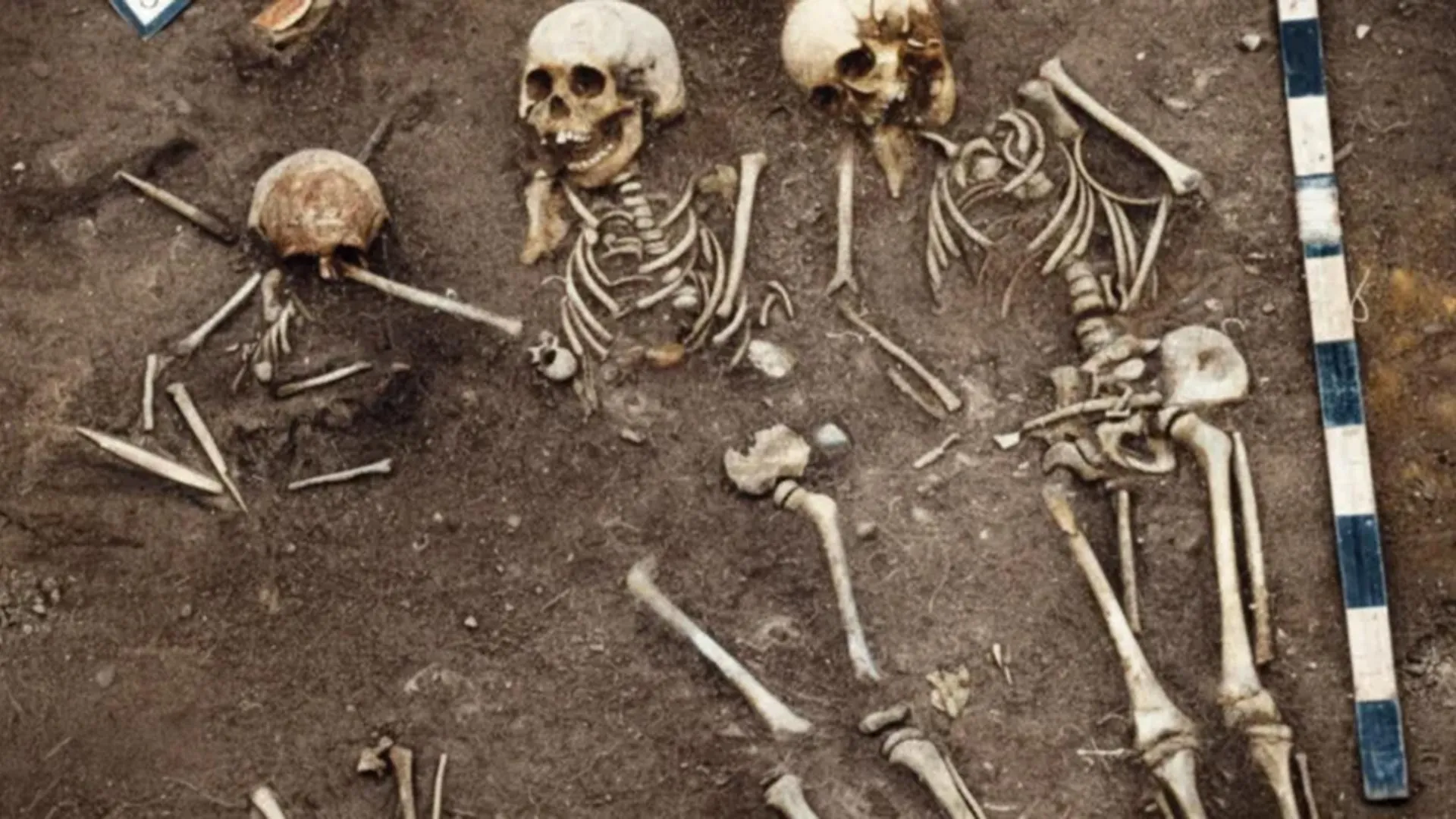
The chilling specter of plague, often conjuring images of teeming medieval cities and ravenous rats, has long been etched into humanity’s collective memory as a harbinger of widespread devastation. However, groundbreaking new research published in the prestigious journal Nature is dramatically rewriting this historical narrative, pushing back the known origins of this deadly pathogen by millennia. Scientists have unearthed compelling evidence suggesting that Yersinia pestis, the bacterium responsible for plague, was a formidable threat to small, mobile hunter-gatherer groups as far back as 5,500 years ago. This discovery predates the advent of widespread agriculture and the dense urban settlements that were previously considered the breeding grounds for devastating plague epidemics.
Unearthing Ancient Microbial Warfare: DNA Evidence from Siberia
The revolutionary findings stem from an ambitious international research effort that meticulously analyzed ancient DNA extracted from human remains at four distinct hunter-gatherer burial sites in the ecologically significant Lake Baikal region of East Siberia. By employing sophisticated techniques to sequence genetic material preserved within the dental structures of these ancient individuals, the research team was able to reconstruct fragmented bacterial genomes. This intricate process allowed for the identification of previously unknown, early iterations of the plague bacterium.
"Whether the earliest forms of plague were mild or virulent has been a matter of debate, but our findings demonstrate that these ancient strains were already highly lethal," stated senior author Eske Willerslev, a distinguished Professor at the University of Copenhagen and a fellow at the University of Cambridge. His assertion directly challenges long-held assumptions about the evolutionary trajectory of plague’s virulence.
To construct a comprehensive understanding of the events that unfolded within these prehistoric communities, the researchers integrated their genetic discoveries with meticulous archaeological investigations and precise radiocarbon dating. This multidisciplinary approach proved crucial in painting a vivid and coherent picture of the disease’s impact.
"Based on the plague DNA, the genetic relationships between the victims, the archaeological analysis and the radiocarbon dating, we’ve built a really clear, complete picture of what happened during these outbreaks," explained lead author Ruairidh Macleod, who undertook this pivotal work as a PhD student at the University of Cambridge and is now a Research Fellow at the University of Oxford. His detailed account underscores the power of combining disparate scientific disciplines to illuminate the past.
The genetic analysis yielded a striking revelation: DNA from Yersinia pestis was detected in an astonishing 18 out of the 46 individuals examined. This translates to a detection rate of nearly 40 percent, a figure that remarkably rivals or even surpasses the prevalence observed in some medieval plague burial sites, which are famously associated with high mortality. This high incidence rate within a relatively small sample size strongly indicates that plague was not an isolated incident but a significant factor in the mortality patterns of these ancient populations.
Rethinking Plague’s Lethality: Early Strains Were Formidable Killers
Previous scientific understanding of ancient Yersinia pestis strains had been shaped by the observation that they often lacked certain genetic adaptations that later facilitated the highly efficient bubonic plague transmission through flea vectors and rodent hosts. This led to a prevailing hypothesis that these primordial versions of the bacterium were likely less virulent and incapable of triggering widespread, catastrophic outbreaks. The new findings, however, decisively overturn this long-standing assumption.
The evidence for plague’s significant impact on these early communities is particularly compelling when examining the demographic profiles of the deceased at the two largest burial sites. Researchers observed an unusually high proportion of children and young teenagers among those interred. For decades, archaeologists had grappled with the perplexing phenomenon of so many young individuals being buried within a compressed timeframe at these locations, lacking a clear explanation for this localized mortality spike.
"The unusually high number of children and the short timespan was a real puzzle that we’ve been trying to solve since the 1990s. Finding out that plague was the cause is extraordinary, but it makes so much sense," commented archaeologist Andrzej Weber of the University of Alberta, who serves as a Principal Investigator for the Baikal Archaeology Project. His reaction highlights the profound significance of the study in resolving long-standing archaeological enigmas.
The chronometric data obtained through radiocarbon dating further strengthens the argument for rapid, devastating outbreaks. The analysis indicated that a significant number of deaths occurred in close temporal proximity. In some instances, evidence suggests that siblings may have perished together, while other graves contained parents and children, pointing towards familial groups succumbing to the same epidemic event. This clustering of deaths, particularly among the young and within family units, is a classic indicator of a highly contagious and deadly disease.
A Potent Toxin: The Superantigen Factor
A key discovery that sheds light on the formidable lethality of these ancient plague strains is the presence of a distinctive superantigen. This genetic factor, responsible for producing potent toxins, was notably absent in later, historically documented plague strains. Superantigens are known to trigger an extreme and dysregulated immune response in the host. This hyperactive immune reaction can lead to severe inflammation and significantly amplify the pathogenicity of an infection, making it far more dangerous and potentially fatal.
"This finding changes our understanding of the earliest plague outbreaks: Even before the bacterium evolved efficient flea-borne transmission, these ancient strains appear to have carried a potent combination of virulence factors that could make infection highly lethal," explained senior author Martin Sikora, an Associate Professor at the University of Copenhagen. His statement emphasizes that Yersinia pestis possessed intrinsic lethal capabilities long before it acquired mechanisms for widespread dissemination.
Collectively, the accumulated evidence strongly suggests that some of the earliest identifiable plague outbreaks were as devastating as the major epidemics that would later plague Europe during the Middle Ages. This level of mortality, especially among vulnerable populations like children, appears to have been achievable even in the absence of the efficient flea-based transmission pathways that characterize later forms of bubonic plague. This implies that direct transmission, or other less efficient modes, could still lead to catastrophic outcomes in small, interconnected communities.
The Marmot Connection: Tracing the Plague’s Genesis
The research also provides crucial support for a leading theory regarding the geographical origin and initial spread of the plague. The findings bolster the hypothesis that Yersinia pestis may have first emerged in Central or North-East Asia, subsequently disseminating across Eurasia through populations of wild rodents.
The archaeological record from the Lake Baikal region reveals that the hunter-gatherer populations living in the vicinity maintained close ecological interactions with marmots. These large, burrowing rodents are known to be significant reservoirs for plague even today. Consequently, the researchers posit that some of these prehistoric outbreaks may have been initiated by the direct transmission of the disease from infected marmots to humans. This zoonotic spillover event would have introduced the pathogen into naive human populations, where it could then spread locally.
If this scenario is accurate, it signifies that plague was already capable of precipitating deadly outbreaks in small, mobile human communities thousands of years before the development of large-scale agriculture, sedentary living, and the eventual rise of the flea-driven epidemics that would later cast a long, dark shadow over human history and cement the disease’s infamous reputation. This research not only pushes back the timeline of plague but also refines our understanding of its ecological origins and its persistent threat to human health throughout different stages of societal development.
Broader Implications for Public Health and Evolutionary Biology
The implications of this study extend beyond historical understanding, offering valuable insights for contemporary public health and evolutionary biology. Recognizing the ancient and inherent virulence of Yersinia pestis underscores the bacterium’s formidable adaptive capacity. It suggests that plague has been a persistent biological challenge for humanity for a much longer period than previously thought, shaping human populations and their interactions with the environment over millennia.
Furthermore, the identification of the superantigen in ancient strains provides a critical piece of the puzzle in understanding the mechanisms of severe plague infection. This knowledge could potentially inform future research into therapeutic interventions by highlighting specific virulence factors that could be targeted. The study also reinforces the importance of studying ancient DNA as a window into the evolutionary history of pathogens, offering a more nuanced perspective on how diseases emerge, adapt, and impact human societies. The ongoing surveillance of rodent populations for plague remains a critical component of global health security, a practice underscored by the deep historical roots of this zoonotic threat.