The United States Federal Reserve has announced its first interest rate increase in over three years, elevating the benchmark federal funds rate to a target range of 3.75%-4% from its previous 3.5%-3.75%. This unanimous decision by the Federal Open Market Committee (FOMC) signals a resolute stance against persistent inflationary pressures, despite significant political opposition from President Donald Trump, who has consistently advocated for rate reductions. The move underscores the central bank’s commitment to its dual mandate of price stability and maximum employment, prioritizing the former in an economy grappling with sustained cost-of-living increases.
The Fed’s Rationale: Taming Persistent Price Rises
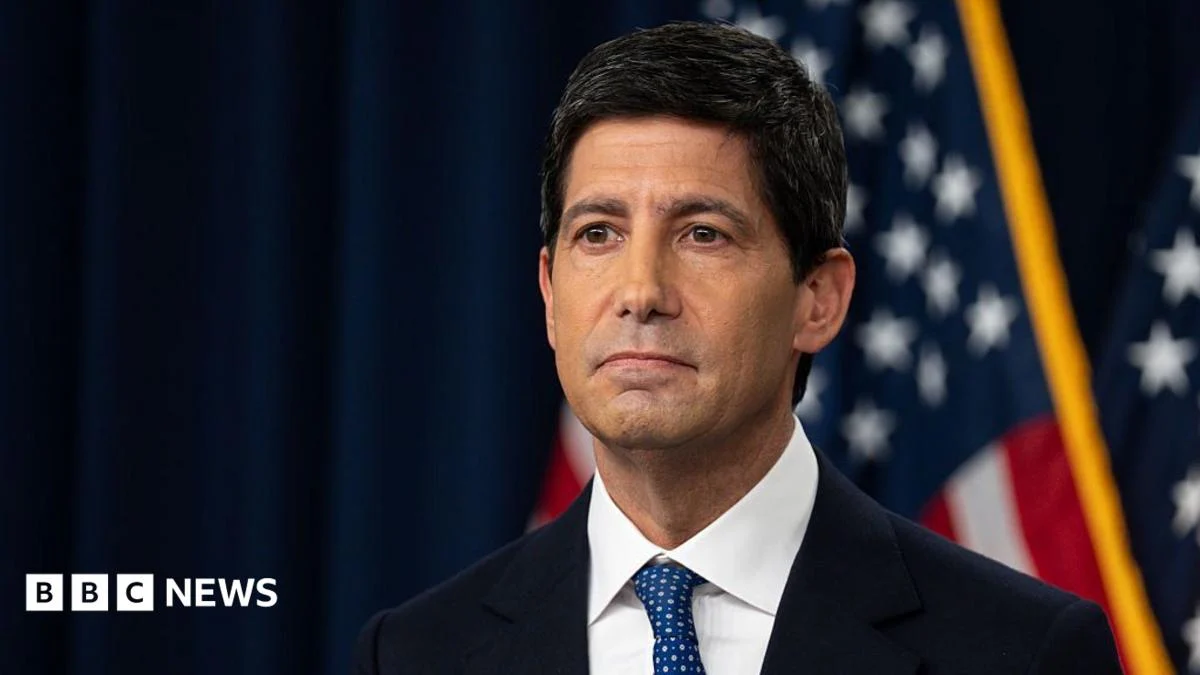
In a press conference following the announcement, Fed Chair Kevin Warsh articulated the central bank’s reasoning, stating unequivocally that "inflation is too high and has been for too long." He characterized the rate hike as a "sober" and "responsible decision," acknowledging the gravity of the economic environment. The Federal Reserve, like many of its global counterparts, aims to maintain inflation at or below a 2% target. However, Warsh noted that U.S. inflation has stubbornly remained above this threshold for more than five years, eroding household purchasing power and fueling widespread economic anxiety.
This prolonged period of elevated inflation has made affordability a paramount concern for American voters. Consumers have witnessed a significant surge in everyday expenses, particularly in energy markets. Diesel prices, for instance, have reached an all-time high, while the average price of petrol has climbed above $4 (£3) per gallon. These spiraling energy costs, largely attributed to global oil price surges stemming from the ongoing Iran war, have created a ripple effect across the economy, driving up the cost of a vast array of goods and services, from groceries to transportation and manufacturing inputs.
While the Fed’s tools do not allow it to directly influence individual prices, such as oil or food commodities, Warsh emphasized the central bank’s capacity to prevent these specific price increases from broadening into a more generalized and entrenched inflationary spiral across the entire economy. He highlighted the underlying strength of the jobs market and the broader economic activity as factors that provide the Fed with the necessary room to focus on stabilizing prices without immediately jeopardizing employment gains. Furthermore, Warsh underscored that those least well-off in society stand to gain the most from lower inflation, as they are disproportionately affected by rising costs for essential goods and services.
Monetary Policy in Action: The Mechanics of Rate Hikes
Central banks typically employ interest rate adjustments as a primary tool to manage economic activity and inflation. When inflation is high, as it currently is, increasing the benchmark interest rate makes borrowing more expensive across the financial system. This, in turn, discourages consumer spending and business investment, while simultaneously encouraging saving. The theoretical aim is to cool down aggregate demand, thereby reducing the pace of price increases.
The mechanism is multifaceted. Higher federal funds rates translate into higher rates for commercial banks to borrow from each other, which then passes through to a higher prime lending rate—the rate banks offer to their most creditworthy customers. This prime rate serves as a reference for a host of other consumer and business loans, including credit cards, personal loans, and variable-rate mortgages. When borrowing becomes more costly, individuals and businesses may postpone major purchases, delay expansion plans, or reduce discretionary spending, collectively contributing to a deceleration in economic activity and, consequently, a moderation in price pressures.
However, this is a delicate balancing act. While necessary to combat inflation, excessively high interest rates can also stifle economic growth, deter businesses from investing in new projects or hiring, and potentially lead to job losses. The Fed’s challenge is to find the optimal path that brings inflation back to its target without pushing the economy into a severe downturn.
Political Headwinds and the Fed’s Independence
The Federal Reserve’s decision was met with immediate and vocal opposition from President Donald Trump, who publicly called for interest rates to be cut, suggesting they "should be 1%, or less, because we are the Best Credit in the World – BY FAR." This stance is consistent with the President’s historical criticism of the central bank’s monetary policy, including his past admonishments of Warsh’s predecessor, Jerome Powell, for not pursuing more accommodative policies.
The appointment of Kevin Warsh to the Fed Chairmanship had been viewed with skepticism by some Democratic lawmakers, who had expressed concerns that he would act as Trump’s "sock puppet," bending to political pressure to slash rates. Many Fed watchers, observing the President’s persistent demands for lower rates, had anticipated a more dovish approach. However, the unanimous vote for a rate hike signals a strong commitment to the Fed’s institutional independence and its mandate-driven approach to monetary policy, even in the face of significant executive branch pressure.
During the press conference, when asked directly about the message the rate hike sent to President Trump, Chair Warsh offered a slight chuckle before politely declining to comment, stating, "I have got nothing for you on a discussion with the president." This measured response underscored the Fed’s traditional separation from political influence. Nonetheless, shortly after the announcement, President Trump took to social media, reiterating his demand: "LOWER THE INTEREST RATES FOR THE UNITED STATES OF AMERICA, AND FAST!"
On Capitol Hill, Democratic lawmakers voiced their concerns regarding the hike’s potential impact on American households. Senate Minority Leader Chuck Schumer warned that the rate increase would make loans costlier, inevitably leading to more Americans accumulating debt. "This is going to make everything become more expensive," Schumer stated, attributing the economic challenges to what he termed President Trump’s mismanagement of the economy. These statements highlight the deeply politicized nature of economic policy, with both sides framing the Fed’s actions through the lens of their broader political narratives.
A Chronology of Recent Rate Adjustments
This latest rate hike marks a significant shift in monetary policy, being the first upward adjustment in over three years. The Fed’s last rate move in any direction occurred in December 2025, when rates were cut, likely in response to emerging economic headwinds or a desire to stimulate growth. Prior to that, the last instance of a rate increase was in July 2023, suggesting a period of tightening before the subsequent easing. This recent history indicates a central bank actively responding to evolving economic conditions, navigating periods of both inflationary pressure and potential slowdowns. The current decision, however, firmly pivots back towards a restrictive monetary stance to combat persistent inflation.
Broader Impact and Implications for Households and Businesses
The immediate and most tangible impact of the rate hike will be felt by consumers and businesses through increased borrowing costs. Major U.S. banks, including JP Morgan, KeyCorp, and BNY, wasted no time in responding to the Fed’s move, raising their prime lending rates on Wednesday to 7% from 6.75%. This adjustment will directly affect the interest rates charged on credit cards, personal loans, and various other forms of consumer and commercial debt. For individuals carrying balances on variable-rate credit cards, monthly payments will likely increase, placing additional strain on household budgets already squeezed by high inflation.
Mortgage Market Dynamics: The housing sector is particularly sensitive to interest rate changes. While mortgage costs have already climbed over the past year, they remain below the peaks observed in 2023. According to figures from Freddie Mac, the average rate for a 30-year fixed mortgage currently stands at 6.76%, while a 15-year fixed deal averages 6.09%. For the many U.S. homeowners who secured 30-year and 15-year fixed-rate mortgages in previous periods, their monthly repayments will remain unaffected by this latest hike. However, prospective home buyers and those looking to refinance existing mortgages will face higher borrowing costs, potentially impacting affordability and demand in the housing market. Higher rates could also reduce the incentive for existing homeowners to sell, as they might be reluctant to trade a low-rate mortgage for a new, higher-rate one.
Savings and Investments: Conversely, higher interest rates offer a silver lining for savers. Returns on savings accounts, money market accounts, and certificates of deposit (CDs) are expected to improve, providing individuals with a better yield on their cash holdings. This could encourage a shift from spending to saving, further contributing to the Fed’s objective of cooling demand. In the broader financial markets, higher rates generally make fixed-income investments more attractive relative to equities, as the risk-free rate of return increases. This can sometimes lead to a rotation of capital out of the stock market, though other factors, such as corporate earnings and economic outlook, also play a significant role.
Business Investment and Economic Growth: For businesses, higher borrowing costs translate into increased expenses for financing expansion, capital expenditures, and even day-to-day operations. This can deter new investments, slow hiring, and potentially lead to a contraction in economic activity. Small businesses, often more reliant on variable-rate loans, may feel the pinch more acutely. The delicate balance for the Fed is to curb inflation without triggering a recession, a task made more challenging by the current global economic uncertainties.
Future Outlook: A Path of Continued Tightening
Looking ahead, the Federal Reserve’s policymakers have signaled a trajectory of continued tightening. While Chair Warsh refrained from offering his personal view on the future path of rates, the majority of his fellow policymakers indicated their belief that rates would be hiked again before the end of this year, reaching a range of 4-4.25%. A significant, though smaller, majority also projected that rates could rise further next year, potentially hitting 4.25-4.5%.
These projections, often visualized in the Fed’s "dot plot," suggest a sustained commitment to bringing inflation under control over the medium term. The consensus forecast indicates that price rises are expected to ease in the coming years, with inflation gradually declining towards the Fed’s 2% target by 2029. This implies a prolonged period of relatively higher interest rates, impacting financial markets and the broader economy for several years to come. The anticipated cuts in 2028 and 2029 suggest that policymakers foresee a successful disinflationary process that will eventually allow for a return to more neutral monetary policy settings.
Global Context: A Synchronized Battle Against Inflation
The U.S. Federal Reserve is not alone in its battle against surging inflation. Central banks worldwide are grappling with similar challenges, largely exacerbated by the ripple effects of the Iran war on global energy and commodity markets, as well as lingering supply chain disruptions and robust post-pandemic demand. Just last week, the European Central Bank raised its own benchmark rates, and the Bank of England is widely expected to follow suit with its decision scheduled for Thursday. This synchronized global tightening of monetary policy reflects a shared recognition among central bankers that inflation poses a significant threat to economic stability and living standards. The coordinated efforts, while potentially leading to a global economic slowdown, are deemed necessary to prevent a more severe and prolonged period of price instability. The interconnectedness of global financial markets means that actions by one major central bank often influence others, creating a complex web of policy decisions aimed at navigating a challenging economic landscape.