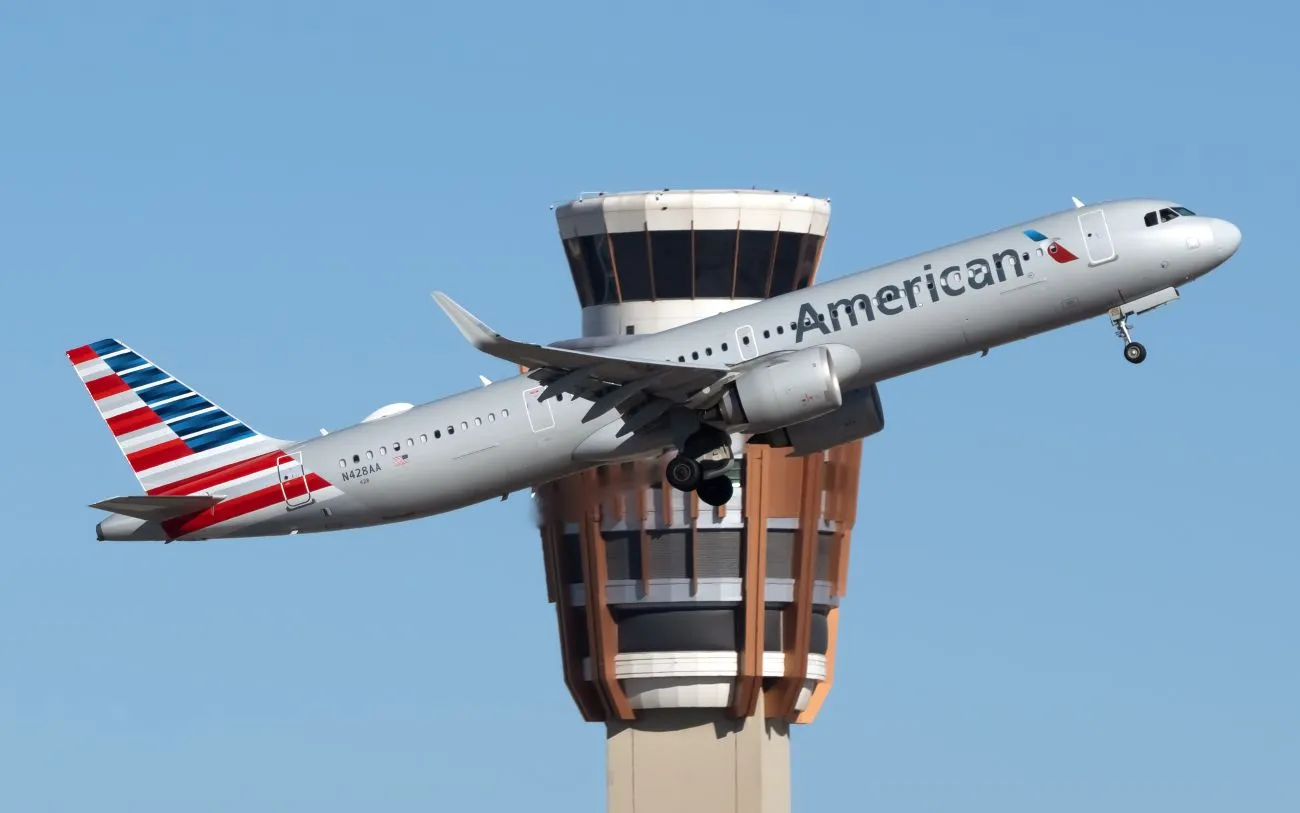
American Airlines Chief Executive Officer Robert Isom announced on Wednesday that the carrier is prepared to implement significant "trade-offs" regarding its flight capacity should jet fuel prices remain at their current elevated levels over the long term. Speaking at the Morgan Stanley Laguna investor conference, Isom indicated that the airline is recalibrating its expectations for 2027, projecting a period of slower growth as the company prioritizes fiscal health over aggressive expansion. The executive’s comments underscore a shift in strategy for the world’s largest airline by fleet size, as it grapples with the volatile economics of the post-pandemic aviation landscape and the persistent inflationary pressures affecting the global energy sector.
According to Isom, the necessity of these adjustments stems directly from the inability of current revenue streams to fully offset the surging costs of refined petroleum products. "If fuel prices remain as high as they are right now, I think that’s going to require some adjustments in terms of our capacity planning as we take a look out into the future," Isom told investors. This sentiment was echoed by American’s Chief Financial Officer, Devon May, who joined Isom at the conference to detail the carrier’s approach to maintaining a lean balance sheet. May emphasized that the airline would remain agile, adjusting its seat offerings and route frequencies to ensure that every mile flown contributes to the bottom line rather than merely chasing market share.
The Economic Weight of Rising Fuel Expenses
For major carriers like American Airlines, fuel represents the largest or second-largest operating expense, often rivaling labor costs. When the price of Brent crude or West Texas Intermediate (WTI) rises, the impact on airline margins is immediate and profound. Unlike some of its domestic competitors, American Airlines has historically opted not to engage in extensive fuel hedging—a financial strategy used to lock in lower prices for future fuel needs. While this approach allows the carrier to benefit more than its peers when prices drop, it leaves the company uniquely vulnerable to sudden and sustained price hikes.
As of late 2026, the aviation industry has seen a tightening of the global energy market, driven by geopolitical instability in key producing regions and limited refining capacity for specialized jet fuel. The "crack spread"—the difference between the price of crude oil and the price of refined products like kerosene-based jet fuel—has remained stubbornly high. For American Airlines, which operates a massive domestic and international network, even a few cents’ increase per gallon can result in hundreds of millions of dollars in additional annual expenses.
Isom’s acknowledgment of potential capacity cuts serves as a signal to the market that American is no longer willing to absorb these costs at the expense of its profit margins. By reducing capacity—essentially flying fewer planes or using smaller aircraft on certain routes—the airline can artificially limit supply. In economic terms, this allows the carrier to maintain higher ticket prices, or "yields," which helps offset the higher cost of operation.
Capacity Adjustments and the 2027 Growth Trajectory
The decision to target 2027 for a slowdown in growth is a strategic one, tied closely to the airline’s fleet delivery schedule and long-term network planning. Throughout 2024 and 2025, American Airlines focused on optimizing its "Sun Belt" hubs in Dallas-Fort Worth, Charlotte, and Miami, capitalizing on the migration of the U.S. population to warmer, lower-tax states. However, the aggressive expansion seen during this period is now meeting the reality of high overhead.
Capacity in the airline industry is measured by Available Seat Miles (ASM). When Isom speaks of "trade-offs," he is referring to the potential cancellation of planned new routes or the reduction of flight frequencies on underperforming segments. For 2027, the initial projections for ASM growth are being revised downward. This move is intended to ensure that American does not find itself with "excess capacity"—too many seats for the number of passengers willing to pay the higher fares necessitated by fuel costs.
Industry analysts suggest that this conservative approach to 2027 could lead to a leaner, more efficient operation. By focusing on high-demand corridors and "fortress hubs," American can maximize the utilization of its most fuel-efficient aircraft, such as the Airbus A321neo and the Boeing 737 MAX series. These newer models offer double-digit improvements in fuel burn compared to the older generation aircraft they are replacing, providing a natural hedge against energy price volatility.
Financial Discipline and the CFO’s Perspective
CFO Devon May provided additional context during the Morgan Stanley conference, highlighting the airline’s commitment to debt reduction. American Airlines emerged from the pandemic with a significant debt load, and the management team has made it a priority to return to an investment-grade credit rating.
"Our focus remains on generating free cash flow and strengthening the balance sheet," May stated. He explained that capacity planning is not just about fuel; it is about the "total cost of production." This includes the rising costs of labor following landmark contracts with pilots and flight attendants, as well as increased maintenance costs due to supply chain bottlenecks in the aerospace sector.
By moderating growth in 2027, American intends to avoid the capital expenditure required for rapid fleet expansion and the hiring of additional personnel. This "wait-and-see" approach allows the company to observe whether fuel prices stabilize or if the broader economy enters a cooling period. May indicated that the carrier’s flexibility is its greatest asset; if fuel prices were to drop unexpectedly, the airline could theoretically "spool up" capacity, but the current plan is built on a more cautious "higher-for-longer" fuel price scenario.

Comparative Analysis: American Airlines Versus Industry Peers
American’s pivot toward capacity discipline mirrors similar moves by its "Big Three" rivals, Delta Air Lines and United Airlines. Both Delta and United have recently signaled a departure from the "growth at all costs" mentality that characterized the immediate post-COVID era. However, each carrier faces unique challenges.
Delta, for instance, has a more robust fuel hedging program and owns its own refinery in Trainer, Pennsylvania, which provides a level of vertical integration that American lacks. United, meanwhile, is in the midst of its "United Next" strategy, which involves a massive influx of wide-body and narrow-body aircraft. American’s strategy appears more focused on domestic connectivity and maximizing the efficiency of its existing regional partnerships.
The shift toward slower growth in 2027 by American Airlines may also be a response to the "over-capacity" issues that plagued the domestic U.S. market in the summer of 2024. During that period, an abundance of seats led to a "fare war" among low-cost carriers and legacy airlines alike, which drove down unit revenues despite record passenger volumes. By signaling a pullback now, Isom is attempting to prevent a repeat of that scenario, ensuring that the industry remains disciplined and that pricing power remains in the hands of the carriers.
Fleet Modernization and Operational Efficiency
A critical component of American’s ability to manage high fuel costs is its ongoing fleet modernization program. The airline has one of the youngest fleets among U.S. network carriers, having invested billions in new technology over the last decade. The Airbus A321neo, in particular, has become the workhorse of American’s transcontinental and mid-haul network. These aircraft are significantly more aerodynamic and feature advanced engines that significantly reduce the cost per available seat mile (CASM).
However, fleet modernization is currently hampered by delays at both Boeing and Airbus. Supply chain disruptions, safety investigations, and labor strikes at manufacturing facilities have pushed back delivery dates for dozens of aircraft. Isom noted that these delays, while frustrating, actually assist in the airline’s goal of capacity discipline. If the planes aren’t delivered, the airline cannot grow, which naturally limits the number of seats in the market.
For the 2027 window, American is looking at how to best deploy its long-range narrow-body aircraft, such as the A321XLR. These planes allow the airline to fly "thin" international routes—long-distance flights with fewer passengers—that were previously only possible with large, fuel-hungry wide-body jets. This technological shift is a key part of the "trade-offs" Isom mentioned, as the airline seeks to maintain its global footprint while minimizing the fuel burn associated with larger aircraft.
Consumer Impact and the Future of Air Travel Pricing
For the traveling public, American Airlines’ decision to prioritize capacity discipline and respond to high fuel prices likely means one thing: higher airfares. When an airline reduces its capacity while demand remains steady or grows, the basic laws of supply and demand dictate that prices will rise.
Furthermore, the "adjustments" mentioned by Isom could result in fewer direct flights between secondary cities. Passengers may find themselves routed through major hubs like DFW or Charlotte more frequently, as the airline cuts non-stop services that do not meet the strict profitability thresholds required in a high-fuel-cost environment.
However, from an investor perspective, the news was received with cautious optimism. Wall Street has long called for U.S. airlines to show more restraint in capacity growth to protect margins. Following the presentation at the Morgan Stanley conference, several analysts noted that American’s willingness to "right-size" its 2027 ambitions is a sign of a maturing management team that is focused on long-term sustainability rather than short-term volume.
Conclusion: A Pivot Toward Sustainability
The statements made by Robert Isom and Devon May mark a defining moment for American Airlines as it navigates the mid-to-late 2020s. By identifying fuel prices as a primary driver of strategic change, the carrier is acknowledging the "new normal" of high energy costs and operational complexity. The planned "trade-offs" for 2027 represent a proactive attempt to shield the company from the volatility of the commodities market while continuing to pay down debt and reward shareholders.
As the industry moves toward 2027, the focus will remain on whether American can successfully balance its role as a global aviation leader with the cold realities of an expensive fuel environment. For now, the message to investors is clear: American Airlines is choosing profit over prestige, and the era of unbridled expansion has given way to a new chapter of calculated, disciplined growth. The success of this strategy will depend on the airline’s ability to maintain high load factors and pricing power in an increasingly expensive world.