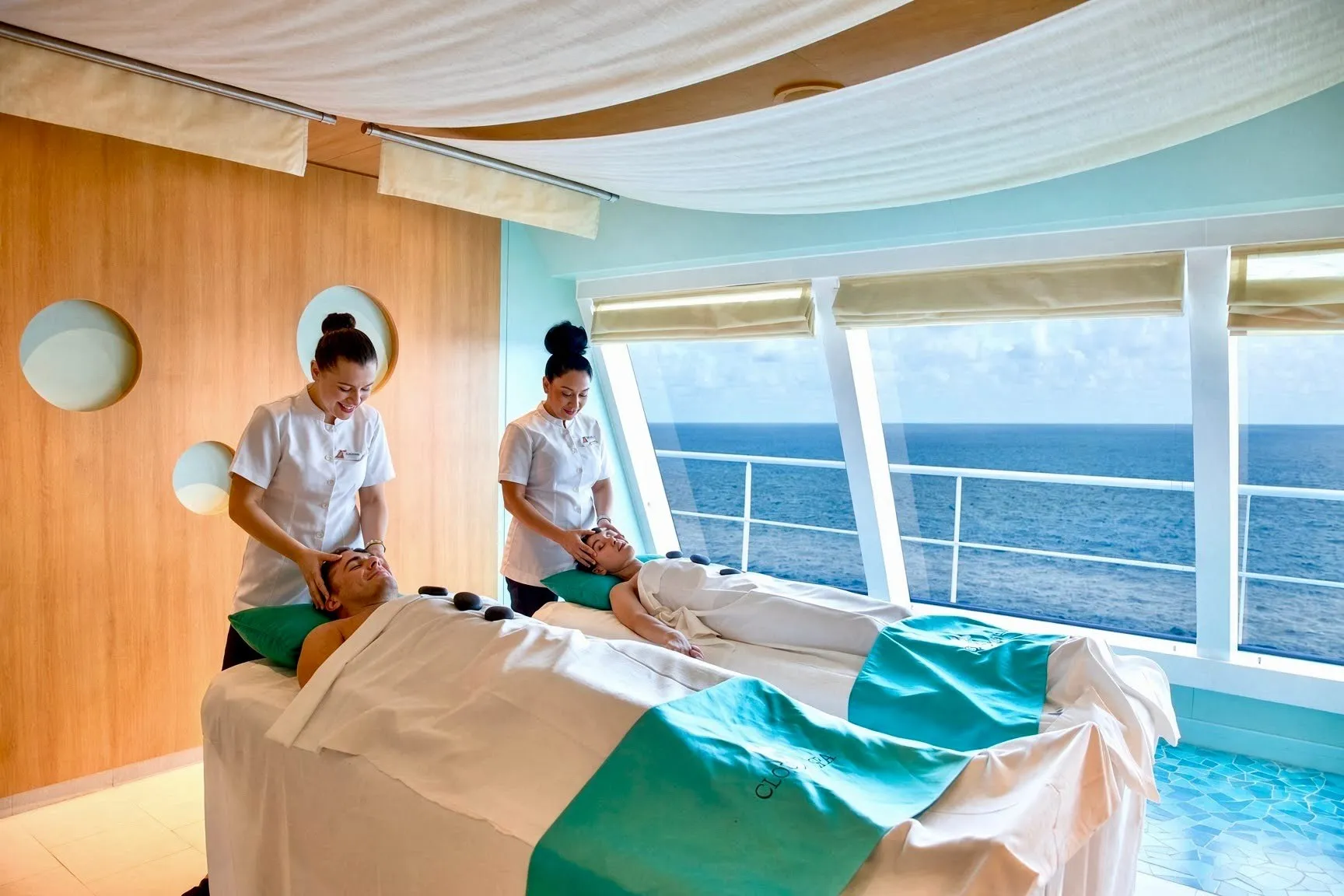
The global cruise industry is often characterized by the towering silhouettes of mega-ships and the logos of household-name cruise lines, yet much of the economic engine driving these floating cities operates beneath the surface of public recognition. Among the most significant players in this secondary economy is OneSpaWorld Holdings Limited, a company that has quietly secured a near-monopoly on the maritime wellness sector. As the travel industry enters a new era of premiumization and health-conscious consumerism, OneSpaWorld is on the verge of a historic milestone, projecting total annual revenues to surpass the $1 billion mark in 2024. This growth trajectory offers a rare window into the specialized business of outsourced cruise services and the strategic importance of controlling the high-margin wellness experience.
Operating as the preeminent provider of health, wellness, and beauty services at sea, OneSpaWorld manages spa facilities on more than 200 cruise ships. Its portfolio of partners reads like a directory of the industry’s elite, including Carnival Cruise Line, Royal Caribbean International, Norwegian Cruise Line, Princess Cruises, Celebrity Cruises, Disney Cruise Line, and Virgin Voyages. The company’s dominance is not merely significant; it is overwhelming. Industry analysts estimate that OneSpaWorld controls more than 90% of the outsourced maritime spa market, making it approximately 17 times the size of its nearest competitor. With over 28 million passengers sailing annually on the ships it services, the company sits at the epicenter of a massive, captive audience of consumers.
The Financial Ascent to a Billion-Dollar Milestone
The financial health of OneSpaWorld serves as a barometer for the broader cruise industry’s recovery and expansion. In the fiscal year 2023, the company reported a robust $961 million in total revenue, alongside an adjusted EBITDA (Earnings Before Interest, Taxes, Depreciation, and Amortization) of $123 million. These figures represent a dramatic escalation from the pandemic-era lows, driven by record-breaking passenger volumes and an increased propensity for travelers to spend on "self-care" and luxury experiences while on vacation.
The path to $1 billion in revenue is fueled by a combination of fleet expansion among major cruise lines and an increase in average spend per passenger. As cruise lines launch larger vessels with more expansive wellness decks—some spanning tens of thousands of square feet—OneSpaWorld has been able to scale its operations accordingly. The company’s business model is built on long-term, exclusive contracts that typically span five or more years, providing a stable and predictable revenue stream that is rare in the volatile travel sector.
A Chronology of Strategic Growth and Market Consolidation
The dominance of OneSpaWorld did not occur overnight; it is the result of decades of consolidation and strategic pivots. The company’s roots trace back to Steiner Leisure Limited, a historic name in the beauty and wellness industry.
In the 1960s and 70s, Steiner began establishing itself as a provider of salon services in London before expanding into the nascent cruise market. By the 1990s, the company had become the dominant force in shipboard spas. However, a major structural shift occurred in 2015 when the private equity firm Catterton (now L Catterton) acquired Steiner Leisure for approximately $925 million, taking the company private.
The most pivotal moment in the company’s recent history came in early 2019. OneSpaWorld was spun off from Steiner Leisure and went public via a merger with Haymaker Acquisition Corp., a special purpose acquisition company (SPAC). This transition allowed the company to trade on the Nasdaq under the ticker OSW, providing the capital necessary to further entrench its market position.
The onset of the COVID-19 pandemic in 2020 posed an existential threat to the maritime industry. With cruise ships docked globally for over a year, OneSpaWorld’s revenue effectively vanished. However, the company utilized this period to streamline operations and negotiate favorable terms with its cruise line partners. When the industry resumed operations in 2021 and 2022, OneSpaWorld was positioned to capture the immediate surge in demand. By 2023, the company had not only reached pre-pandemic performance levels but had significantly exceeded them, setting the stage for its current billion-dollar projections.
The Mechanics of the Maritime Spa Business Model
The success of OneSpaWorld is rooted in a highly specialized operational framework that few other companies can replicate. Managing a spa on land is a complex endeavor; managing hundreds of spas across a global fleet of moving vessels presents unique logistical hurdles.
One of the company’s primary competitive advantages is its vertical integration of recruitment and training. OneSpaWorld operates its own training academies, the most prominent of which is located in London. Here, therapists, stylists, and fitness instructors from around the world are trained not only in wellness techniques but also in the specific rigors of maritime life and the sales strategies required to maximize shipboard revenue. At any given time, the company employs thousands of staff members representing dozens of nationalities, managing the complex visa and maritime certification requirements necessary for their deployment.
The economic relationship between OneSpaWorld and the cruise lines is typically structured as a revenue-sharing model. OneSpaWorld pays the cruise line a percentage of its gross sales as a "rent" or commission for the space and the access to passengers. This arrangement is mutually beneficial: cruise lines can offer world-class wellness amenities without the operational headache of managing staff and inventory, while OneSpaWorld gains access to a high-intent, captive demographic.
Furthermore, a significant portion of OneSpaWorld’s revenue is derived from product sales. The company serves as a major retail channel for high-end skincare and wellness brands, most notably Elemis (which was formerly owned by the same parent company). By integrating product recommendations into its treatments, the company achieves high retail attachment rates, significantly boosting the total yield per guest visit.
Industry Reactions and Market Sentiment
Financial analysts have increasingly focused on OneSpaWorld as a "pure play" investment in the cruise sector’s recovery. Following the release of the 2023 year-end results, several investment banks raised their price targets for OSW, citing the company’s "unmatched scale" and "resilient margins."
"OneSpaWorld is essentially a toll booth on the cruise industry’s growth," noted one leisure industry analyst. "As long as people are sailing and as long as they value wellness, this company wins. Their 90% market share creates a moat that is almost impossible for a newcomer to cross because of the sheer complexity of the global logistics involved."
Cruise line executives have also signaled their continued reliance on the OneSpaWorld partnership. During recent earnings calls, leaders from Carnival and Royal Caribbean highlighted the importance of "onboard spend" as a key driver of profitability. By outsourcing spa operations to a specialist like OneSpaWorld, cruise lines ensure that this specific revenue stream is optimized by experts, allowing the cruise lines to focus on marine operations and hospitality.
Broader Implications for the Travel Economy
The rise of OneSpaWorld reflects a broader trend in the global travel economy: the shift from commoditized services to experiential luxury. Modern travelers are increasingly prioritizing health and longevity, even while on vacation. This has led to the "wellness-ification" of travel, where spas are no longer seen as secondary amenities but as primary drivers of booking decisions.
The company’s dominance also highlights the power of data and customer control. OneSpaWorld possesses decades of data on passenger spending habits, treatment preferences, and seasonal trends. This data allows them to dynamically price services and tailor offerings to the specific demographics of each ship, whether it is a family-oriented Carnival vessel or a luxury-focused Celebrity cruise.
However, the near-monopoly held by OneSpaWorld also raises questions about market competition. With a 90% market share, the company faces little pressure to lower prices, and cruise lines have few alternatives if they wish to outsource their wellness programs. While some lines, such as Viking Ocean Cruises and MSC Cruises, have opted to manage their spas in-house to maintain total brand control, the majority of the industry remains tethered to the OneSpaWorld ecosystem due to its efficiency and proven revenue generation.
Future Outlook: Beyond the Billion-Dollar Mark
As OneSpaWorld prepares to cross the $1 billion revenue threshold, its leadership is looking toward new avenues for growth. This includes the expansion into land-based wellness centers at destination resorts and the continued integration of medical-grade aesthetic treatments, such as Botox and dermal fillers, which have become high-growth categories for the company.
The company is also investing heavily in digital transformation. New mobile app integrations allow passengers to book treatments before they even step foot on a ship, capturing consumer interest earlier in the travel planning cycle. By smoothing the friction of the booking process, OneSpaWorld aims to increase the "pre-booked" portion of its revenue, which tends to be more stable and higher in value.
In conclusion, OneSpaWorld’s journey to a billion-dollar valuation is a testament to the power of specialization in the global travel market. By mastering the logistical complexities of the maritime environment and securing a dominant grip on the customer experience, the company has transformed the humble shipboard spa into a financial powerhouse. As the cruise industry continues its rapid expansion, OneSpaWorld stands as the invisible giant of the seas, capturing the economics of wellness one passenger at a time.